Rev. Jesse Jackson, civil rights icon, had rich Charlotte history
AI-generated summary reviewed by our newsroom.
- Jesse Jackson frequented North Carolina beginning in college at NC A&T.
- He visited Charlotte-area schools to advocate for education and anti-drug lifestyles.
- Jackson was a speaker at the DNC and other Charlotte-area conferences.
The Rev. Jesse Jackson, the civil rights leader who died Tuesday at 84, had deep Charlotte and North Carolina ties.
Jackson often passed through the Queen City for voter rallies, funerals and political conferences. Education and drug abuse were two common focal points in his messaging.
In a dramatic visit to West Charlotte High School in 1989, he inspired 250 students to publicly acknowledge they’d tried drugs or alcohol and pledge to avoid them in the future.
Jackson delivered a 35-minute address to nearly 1,000 students during the school rally, where he emphasized individual responsibility and discipline in his appeal against drugs, The Charlotte Observer reported at the time.
Students subsequently signed a pledge promising to say no to illicit substances and study two hours per night, and engaged in a call-and-response chant with Jackson.
“I want to be a better person … I have slipped ... and fallen ... onto the low road ... I want to do better … I will do better … I must do better,” he said, with each repeating.
Jackson was especially present during the height of his political career in the 1980s.
He visited the Marriott City Center in September 1988 to speak at a banquet for national minority enterprise development week, the Observer previously reported. That same month he met with supporters at Johnson C. Smith University.
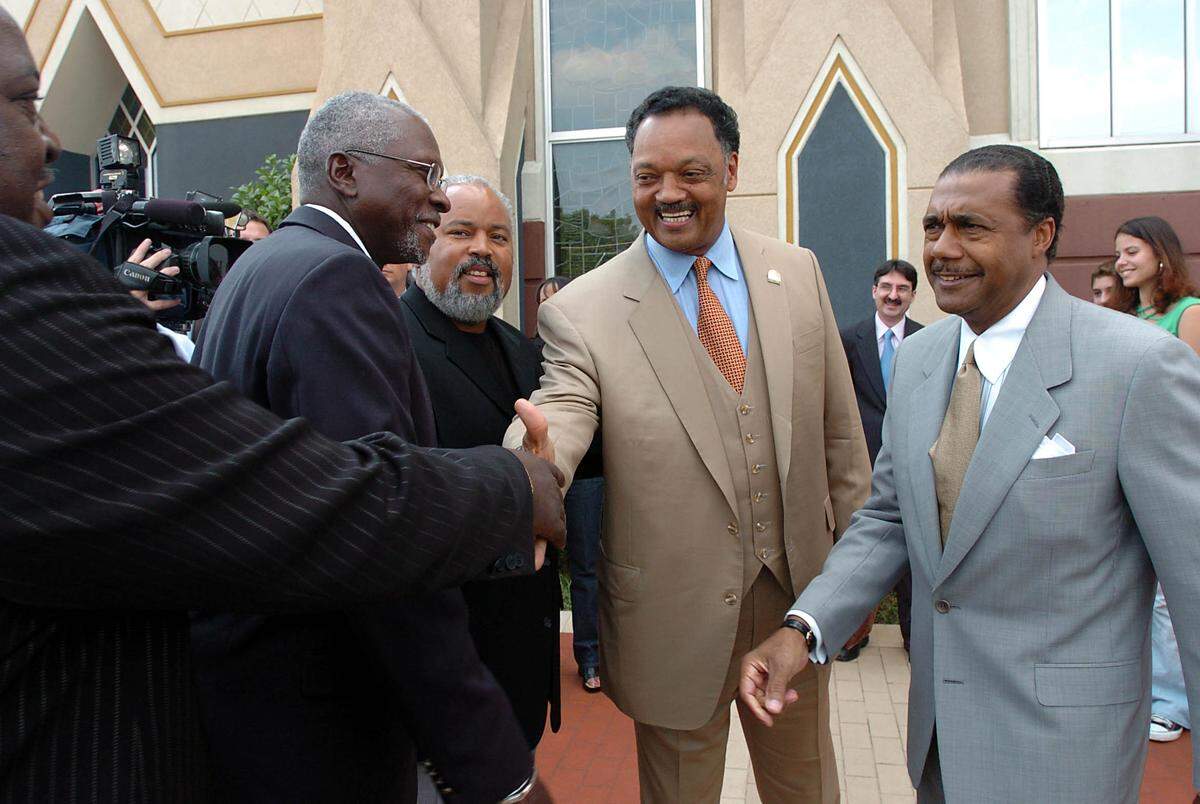
The United House of Prayer for All People on Beatties Ford Road welcomed him on multiple occasions, including for an October 1988 visit to encourage congregants to vote. The church’s bishop at the time was Walter McCollough, a fellow South Carolinian whom Jackson sometimes turned to for inspiration.
Jackson returned to the church with a similar message in 2004 during the Charlotte-Mecklenburg County branch of the NAACP’s “Taking Souls to the Polls” rally.
An education advocate, Jackson founded the PUSH/Excel program to motivate Black and impoverished students to achieve excellence through schooling. Charlotte hosted the annual PUSH/Excel Pro Basketball Classic event several times, which was the program’s biggest fundraiser.
In 1989 he spoke to a group of Black political and civic leaders at the former McDonald’s Inn on Beatties Ford Road, announcing Charlotte as the venue for its upcoming fundraiser.
“Our youth practice basketball on an average of four hours a day,” Jackson said at the time. “My friends, if we spent four hours a night working on reading, writing and problem-solving, we’ll be able to slam-dunk thoughts just like we slam-dunk basketballs.”
He joined Charlotte Hornet Larry Johnson at J.T. Williams Middle School in 1994 as part of the NBA’s stay-in-school program, incentivizing students with a free day at Carowinds if they maintained no unexcused absences, no suspensions and at least a 2.0 average.
Jackson also helped launch a national $4 million fundraising campaign in 1994 to help Barber-Scotia College in Concord with its financial problems. He raised more than $40,000 during two on-campus rallies alone.
In 1996 he spoke at the 87th annual NAACP Convention at the Charlotte Convention Center. And in 2012, while stumping for President Barack Obama, he spoke at the Democratic National Convention hosted at the Time Warner Cable Arena, now the Spectrum Center.
Jesse Jackson in North Carolina
A Greenville, S.C., native, Jackson frequented the Tar Heel state dating back to his college days. He moved to Greensboro in 1963 to attend what was then the N.C. Agricultural and Technical College. There, he became the star quarterback of the football team and was elected student body president of the historically Black university.
He spent the rest of his life filtering through North Carolina, often to advocate for voting rights, education and issues affecting Black citizens.
In 1984, he ran for president and supported Democratic North Carolina Gov. Jim Hunt in a tight battle for U.S. Senate against incumbent Republican Sen. Jesse Helms. He organized a voter registration drive to help Hunt and increased Black registration in the state by 37%, The News and Observer reported. Hunt and Jackson ultimately lost.
Jackson made many stops in North Carolina in the months leading up to the 1988 presidential election, delivering a number of speeches that emphasized the important role of young voters.
On the 25th anniversary of Martin Luther King Jr.’s famous March on Washington that August, Jackson spoke to 7,000 people during a Duke University freshman orientation event. He encouraged students to be a part of the vision Dr. Martin Luther King Jr. laid out in his “I Have a Dream” speech.
The crowd waited for two hours in the summer heat, the Associated Press reported.
“If I can aspire to be president of the United States of America, you can aspire to be president of Duke University,” Jackson told Black students in the audience.
Jackson ran for president in 1988 and outlasted most of the Democratic primary field before losing to Michael Dukakis, who would become his party’s nominee. Jackson helped Dukakis stump against then-Republican Vice President George H. W. Bush.
He also delivered remarks to an audience of 1,000 people at St. Augustine’s College, now University, in Raleigh and again encouraged civic participation.
“Hands that chopped lettuce and picked cotton can now pick Congresspeople and presidents,” Jackson said in his speech, according to previous reporting from The Charlotte Observer. “Don’t sit here cheering for change if you’re not registered to vote.”
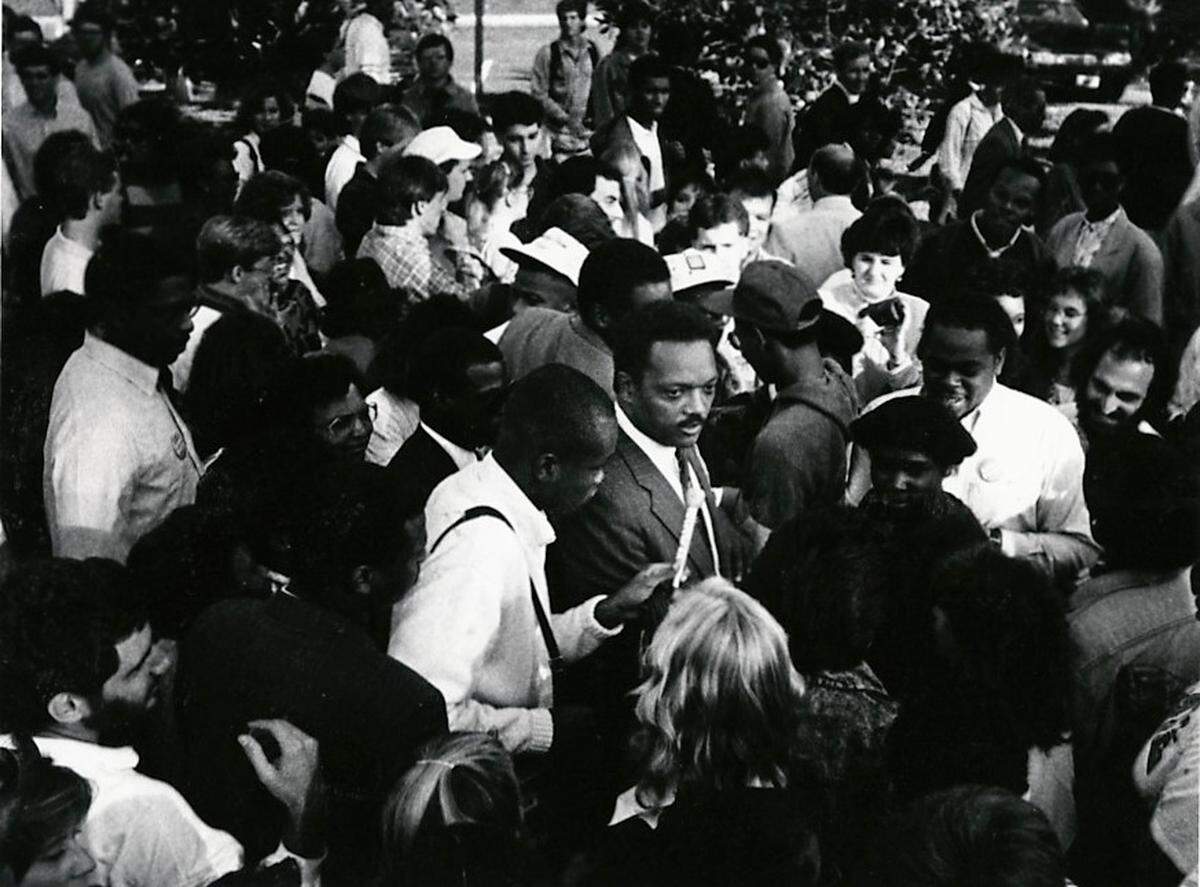
In 1993 he met with UNC Chancellor Paul Hardin in Chapel Hill to rally support for building a Black cultural center on campus, the News & Observer reported. UNC established the cultural center a few years later.
And in 1998 he joined a rally in Raleigh to bring attention to an array of issues facing the Black community, according to the News & Observer.
He returned to Greensboro in 2010 to help open the International Civil Rights Center and Museum in the old Woolworth building, where Greensboro’s civil rights movement began in earnest with a sit-in at a segregated lunch counter, according to the News & Observer. The museum honored him with a Lifetime Civil and Human Rights Award in 2017.