
This 45-acre Charlotte preserve isn’t identified on maps. Why is it off limits?
If Charlotte has anything akin to a mystery spot, it’s behind a long white fence along Whitehall Park Drive.
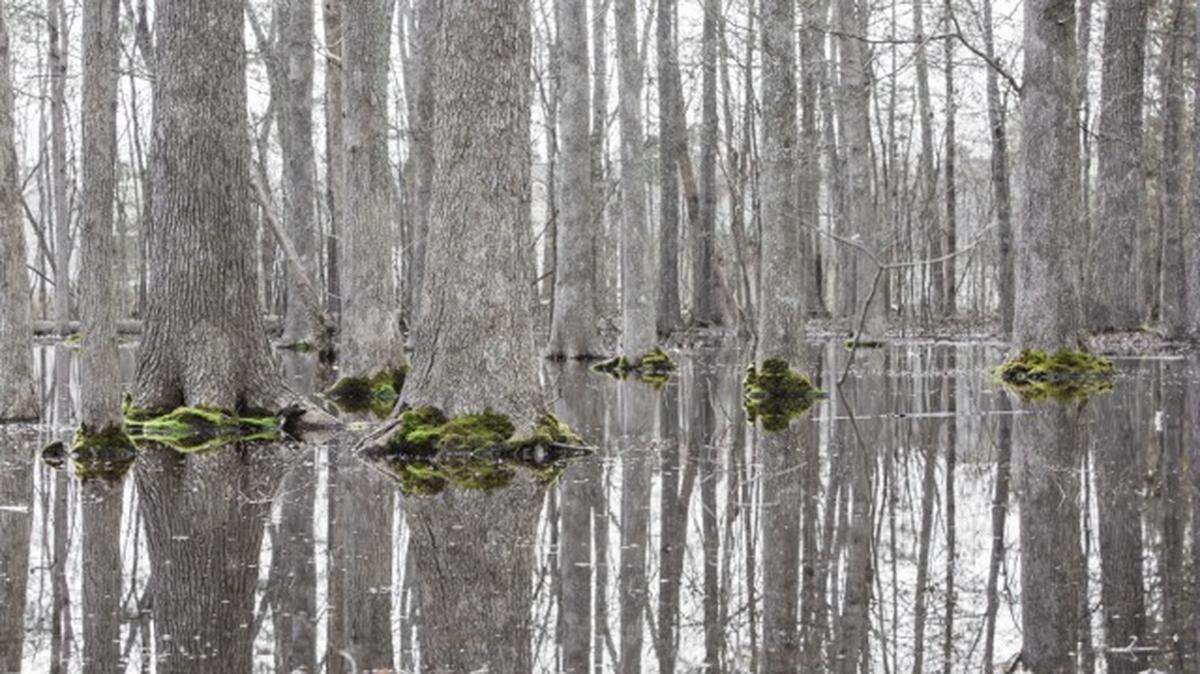
Through all those trees is a sight that feels out of place in the middle of one of the largest cities in the South: A 45-acre swamp that magically vanishes, disappears and then reappears due to a rare geological phenomenon.
It’s known as an upland depressional swamp, and such sites are considered rare and “nationally significant,” according to the Charlotte-based Catawba Lands Conservancy.
Two such swamps have survived in southern Mecklenburg County: One open to the visitors at Flathead Nature Preserve and the other hidden along Whitehall Park Drive.
“The site is largely unknown to the public. ... Most people would drive by without realizing there’s a unique wetland inside,” according to Will Ruark, Land Conservation Director for the Catawba Lands Conservancy.
“These wetlands are unique because their water source is solely precipitation. They form in depressions over an impervious clay or rock layer, creating ephemeral pools.”
In other words, they sit atop a giant rock bowl.
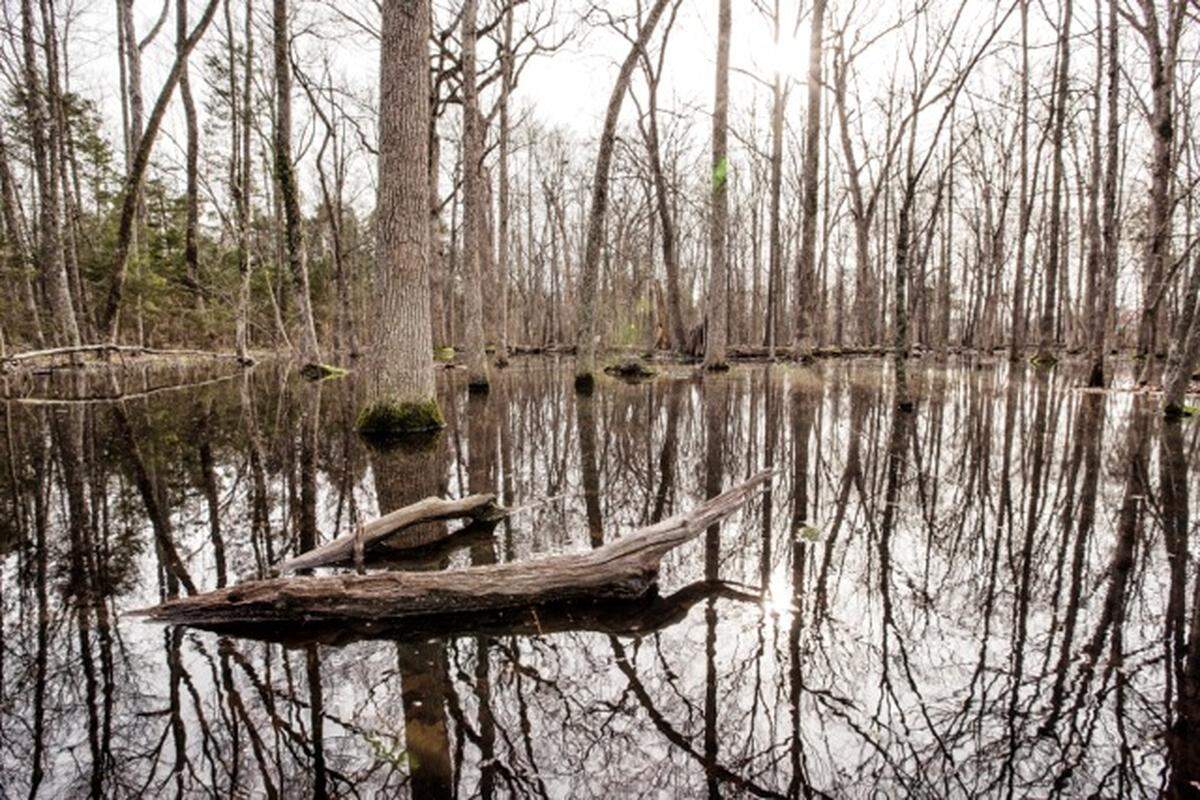
The pools form in the fall and winter, transforming a forest of oaks into something resembling the swamps of eastern North Carolina. The water can get up to a foot deep and is typically clear enough to see the bed of leaves under it, Ruark says.
Fish do not exist in the pools, but rare marbled and spotted salamanders somehow find their way to the water to breed each year, experts say.
“When the water is gone, the forest looks typical for this part of the Piedmont. There isn’t invasive growth in the depressions, so you notice that something special occurs there,” Ruark says.
A story of endurance
A photo taken at the Whitehall Nature Preserve was posted Feb. 20 on social media, prompting a lot of questions.
“Where is this?” Bryan Gabriel posted on the conservancy’s Facebook page. “I can’t find it on a map search.”
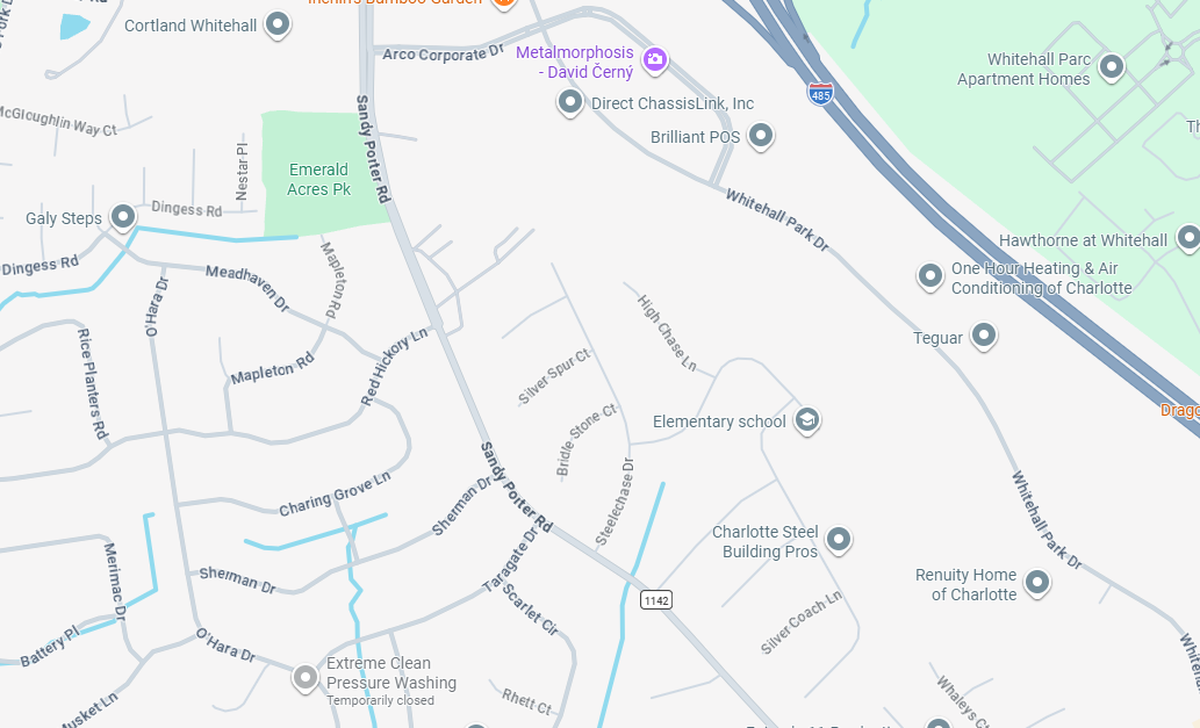
That’s because it’s not identified on Google Maps. Do a search of Whitehall Park Drive in Charlotte, and the preserve shows up as a big blank spot.
It’s located in a part of southwest Charlotte that saw a boom in development after the completion of Interstate 485, which parallels Whitehall Park Drive. As a result, the 45 acres are surrounded on all sides by office parks and subdivisions, maps show.
Multiple community efforts get credit for saving the swamp.
Mecklenburg County’s Natural Heritage Inventory identified the area as unique, and in 1994 the Citizens Environmental Advisory Council began lobbying the U.S. Army Corps of Engineers and N.C. Department of Transportation to designate it an official wetlands mitigation site, Ruark says.
The conservancy got involved in 1995, resulting in part of the property being donated to the organization for preservation in 1996.
“In the 1990s and 2000s, we used it for educational programs, but today access is by permission only,” Ruark says. “CLC staff, local college classes, and volunteer groups are the primary visitors.”
The strict admission policy is a matter of protecting the sensitive ecosystem, including preventing visitors from transmitting “outside diseases to the amphibians.”
“Throughout the year, staff monitors the salamanders to determine if changes in landscape are affecting the fragile populations.,” the conservancy says.
To find out more
Catawba Lands Conservancy is a nonprofit trust that permanently conserves land “for public benefit in the Southern Piedmont of North Carolina.” It currently manages more than 200 properties, amounting to nearly 18,000 acres, conservancy officials say. For details visit Catawbalands.org.