
JCSU students weigh in on proposed MLK, Holocaust memorial project in Charlotte
How do you merge two of the world’s most significant representations of resilience and perseverance into one display of public art?
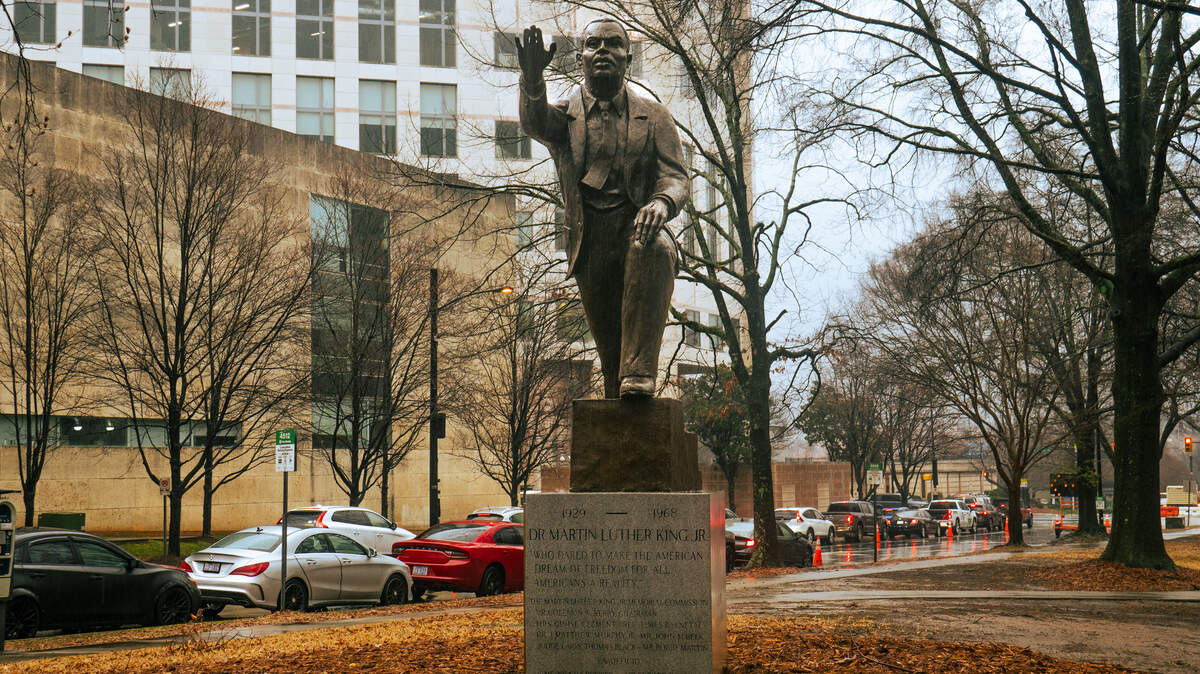
A proposed project — The Circle of Humanity: Monuments of Unity and Remembrance — would connect the Martin Luther King Jr. Memorial statue in Charlotte’s Marshall Park with a newly proposed Holocaust Memorial sculpture, creating a shared space focused on unity, justice and remembrance.
Johnson C. Smith University students participated this week in a community discussion on campus designed to collect feedback on the collaborative effort. It’s led by the Stan Greenspon Holocaust and Social Justice Education Center, the NAACP Charlotte-Mecklenburg chapter, Queens University and the Charlotte Black/Jewish Alliance.
Corine Mack, president of NAACP Charlotte-Mecklenburg, emphasized the importance of community involvement in shaping the memorial’s vision.
Organizers presented two design concepts and invited JCSU students and the community to weigh in. One proposal, known as “Transit,” features figures reaching toward one another. Organizers explained the sculpture could symbolize families separated during moments of historical trauma or individuals reuniting after hardship.
Jaslynn Vorachith, a JCSU student who attended the session, said the depiction resonated deeply.
“I liked the Transit concept because you could clearly understand the message,” Vorachith said. “It can represent separation or reunion, but either way it evokes emotion.”
The second concept includes a walk-through Star of David structure designed to illuminate at night. While visitors could stand inside the monument, the full star shape would be visible from an aerial perspective.
Students were encouraged to share which design felt more impactful and how the memorial could best serve the Charlotte community. Organizers noted the outdoor setting would make the space accessible and reflective for residents and visitors alike.
For JCSU students, the session provided an opportunity to not only learn about the vision for the project but also help shape a symbol intended to bridge African American and Jewish histories through art and shared remembrance.
Organizers said the responses will help guide the next phase of development for the Circle of Humanity project.