Homeowners fear ‘sticker shock’ as Carolina Water rate case nears decision
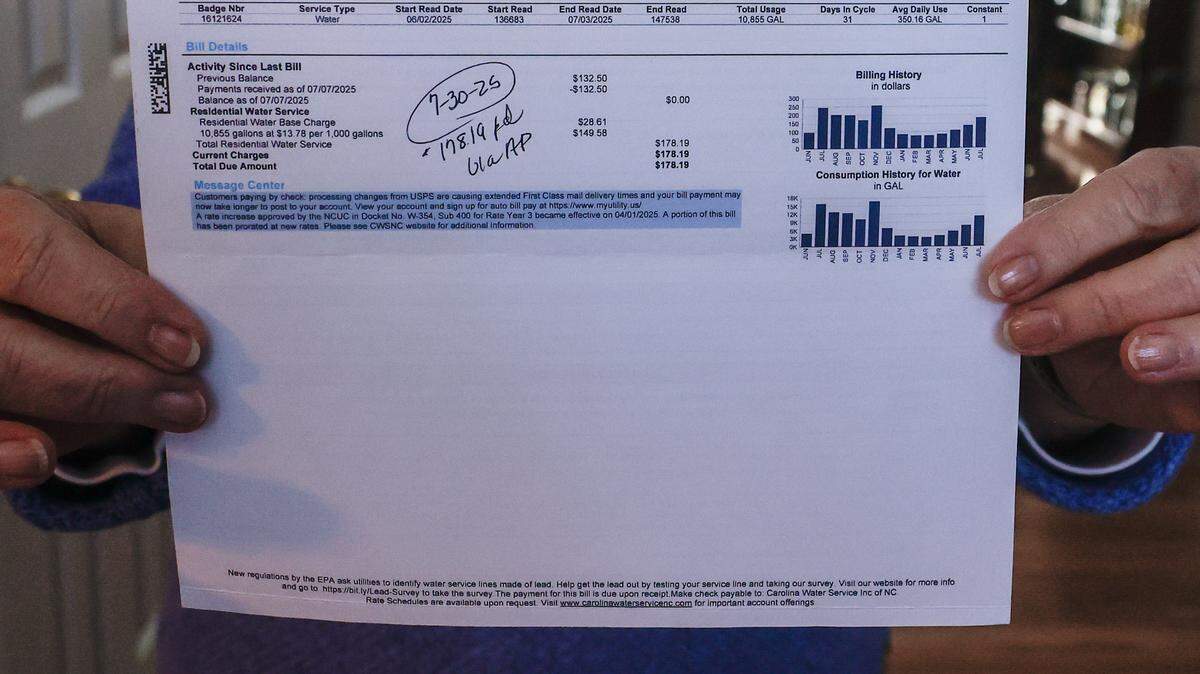
Even before state regulators decide whether to approve higher water rates, some N.C. homeowners say they’ve already lost faith in the process.
For months, thousands of customers across North Carolina have pushed regulators to reject Carolina Water Service’s proposed rate increases, arguing their bills are already unaffordable and should not rise further. But a newly filed settlement between the company and the state’s consumer watchdog has sparked backlash from customers who say they feel shut out — and, in some cases, worse off.
The agreement, which the Utilities Commission has not yet approved, includes changes that could push water rates for many customers higher than what the company initially proposed. And because the deal was negotiated and signed by the Public Staff, the state agency tasked with representing customers in rate cases, some residents say it leaves them without an advocate in a process they had hoped would bring relief.
“I think that despite all their statements to the contrary or to the fact that the Public Staff says they represent the public, they don’t do that,” said Fred Becker, a Carolina Water customer in the Lake Norman area. “They say, ‘we represent you,’ but I would point to the fact that they pretty much acquiesce in anything Carolina Water wants.”
The Utilities Commission is expected to issue a final decision in late May after reviewing legal briefs and proposed orders from the parties, according to the commission’s deputy general counsel Josh Sundt. But while the NCUC still has the ability to approve, reject, or modify the proposed settlement, for many customers, the filing of the settlement and the Public Staff’s support for it has already left them feeling betrayed.
Carolina Water Service provides water and sewer to more than 40,000 customers across the state, including in parts of Huntersville, Charlotte and Mooresville.
Affordability concerns and growing frustration
Carolina Water customers across more than 40 communities have spent months pushing back against the company’s proposal to raise water rates by roughly 34% over three years. Now, the uniform water rate could increase by about 45% over the next three years, according to Jeff Wennberg, who has been involved in the case as part of a group of intervening homeowner associations. That’s on top of a roughly 29% increase approved in a prior rate case just a few years ago.
Under the proposed settlement, the company is seeking to increase its total revenue by about $15.7 million across its water and sewer systems.
At public hearings, residents described monthly bills already reaching into the hundreds of dollars and warned that further increases could force them to cut back or even consider selling their homes. Now, some say the settlement has deepened those concerns.
Paul Dascoli, a Mooresville customer, said he believes regulators will ultimately approve the deal.
“I think they just kind of go along with whatever,” he said.
Others said the process itself has failed to address affordability.
Wennberg, the president of Carolina Trace Association, said regulators focused heavily on service quality during a hearing including some 1,100 complaints the utility received, but did not press as deeply on how rate increases would affect customers’ ability to pay. From the perspective of residents, he said, the details of rate structures matter less than the final bill.
“No one ever asked … how do we get a better result for the rate payers?” Wennberg said. “I pleaded with them in multiple conversations … to take a step outside the minutiae and look at the big picture.”
The issue has also drawn attention from state lawmakers.
Sen. Vickie Sawyer, a Republican who represents parts of the Lake Norman area, told The Charlotte Observer her office has received hundreds of calls, emails and letters from constituents concerned about rising water costs.
“Carolina Water Service is still a major concern for me, especially when it comes to water quality and rate increases,” Sawyer said. “The constituents that I represent were not happy with the prospect of having to pay more money for the same service.”
She said she is working on legislation aimed at increasing oversight and accountability in utility regulation and preventing unreasonable rate increases in the future.
“It is a major priority to protect my constituents from unnecessary financial burdens in a world of rising costs,” she said.
What the settlement says and what happens next
The agreement at the center of the controversy is a negotiated settlement between Carolina Water and the Public Staff, filed earlier this month. Such settlements are common in utility cases and are intended to resolve disputes without prolonged litigation. The Utilities Commission can approve, reject or modify the agreement.
The agreement modifies elements of the company’s original rate request, which sought to fund infrastructure upgrades and ongoing operations. The Public Staff said in a statement to the Observer it negotiated reductions to the company’s proposed revenue increase and lowered the return on equity compared with what Carolina Water initially requested.
But for customers and intervenors who have closely followed the case, the details are more complicated.
Wennberg said the settlement includes some improvements, such as the removal of certain proposed charges. At the same time, he said, the way the agreement is structured means some customers could see larger increases in the water portion of their bills than originally proposed, especially in the first year.
“For the uniform water rate … the settlement actually supports rate increases that are larger than what Carolina Water Service requested,” Wennberg said.
He noted that reductions in sewer rates offset some of those increases, meaning the overall combined bill may be similar to what was originally proposed. Still, Wennberg said, the scale of those increases raises concerns about affordability, particularly given past guidance from regulators on what constitutes “rate shock.”
“What it really boils down to is this is going to result in rate shock, an increase so substantial the customers will experience sticker shock,” he said. “It’s a 33% increase, and the Public Staff agreed to that. So if 25% over three years is rate shock, how would you describe 33% in the first year?”
The Public Staff defended its role, saying its job is to evaluate the company’s request under state law and pursue the best achievable outcome. Utilities are legally entitled to recover prudent investments and earn a reasonable return, the agency said, and challenging costs that are likely to be upheld in litigation can increase expenses that are ultimately passed on to customers.
“The Public Staff does not settle issues when it reasonably believes that it can obtain a better result through litigation,” the agency said.
Carolina Water said the settlement reflects a negotiated proposal that modifies parts of its original rate request, but emphasized that no changes have been finalized.
“No new rates have been approved or implemented at this time,” spokesperson Jessica Dey said, adding that any changes would take effect only if the commission issues a final order.