Charlotte sets mandatory water limits as drought worsens. Fines start at $100
Charlotte Water will institute its steepest water restrictions since 2009 as drought conditions continue to worsen.
Beginning May 15, residents will face new limitations on when they can water their lawns and will no longer be allowed to wash their cars at home, according to the Charlotte Water website. Violators could face fines starting at $100.
The measures are intended to reduce water use by at least 5-10% as Charlotte enters its ninth month of below-average rainfall. The 11 reservoirs in the Catawba-Wateree Basin — and the streams that feed into them — have depleted below normal levels, according to the local Drought Management Advisory Group. Charlotte’s tap water supply comes primarily from Mountain Island Lake and Lake Norman, both part of the Catawba-Wateree Basin.
Mecklenburg County Park and Recreation will also implement a burn ban across its park system Monday to reduce wildfire risk. Flame-producing items prohibited until conditions improve include: charcoal, propane and gas grills; fire pits and open flames; candles; and any outdoor burning.
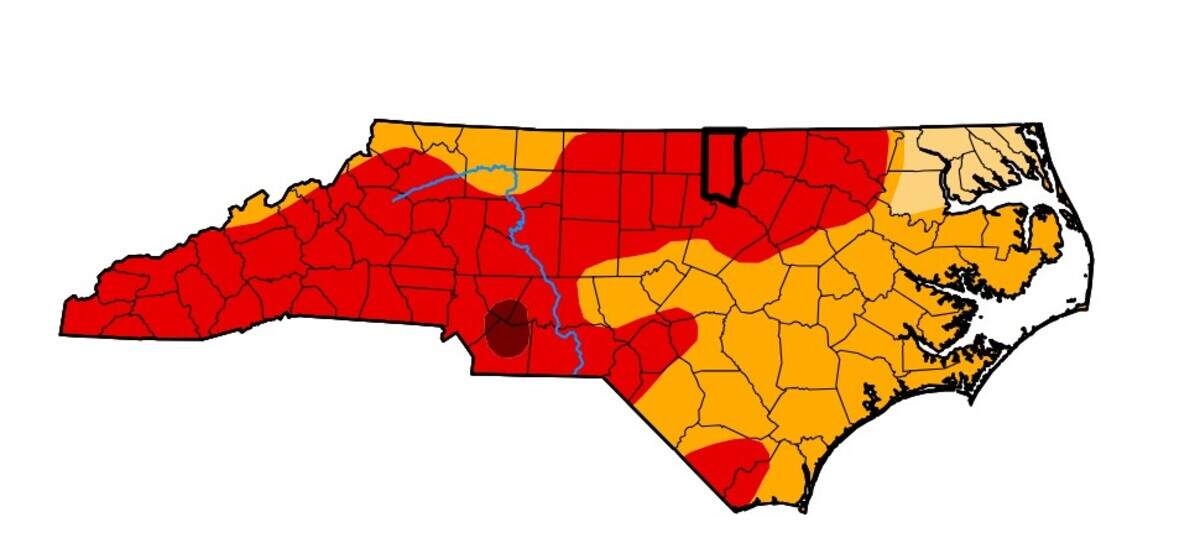
Parts of Mecklenburg, Cabarrus and Union counties are experiencing the worst drought conditions in the state, according to a U.S. Drought Monitor map released Thursday. All Charlotte-area counties are under extreme or exceptional drought, which are the worst of five classification levels.
“Utilities and large users are implementing the required protocol measures, and we need residents and businesses to immediately cut back on nonessential water use,” Jimmy Bagley, deputy city manager for Rock Hill and chair of the Catawba-Wateree Water Management Group, said in a news release. “Every day of conservation matters — and acting early can help prevent even tougher restrictions in the weeks ahead.”
Charlotte and surrounding areas instituted voluntary water restrictions in April, the second of five drought response stages. The city moved to the third stage on Friday, which is no longer optional.
Under this stage, the following restrictions are in effect for Charlotte:
- No washing vehicles at home. Commercial car washes are allowed
- No filling residential swimming pools. Pool top-offs are only allowed on Thursdays and Sundays before 6 a.m. or after 6 p.m.
- No power washing surfaces for non-essential purposes
- No operating decorative water features that don’t support aquatic animal life
- Lawn and landscape watering is limited to two days per week, before 6 a.m. or after 6 p.m.:
- Odd-numbered addresses: Tuesdays and Saturdays
- Even-numbered addresses: Wednesdays and Sundays
Hand watering and drip irrigation is still allowed for plants and gardens, according to Charlotte Water. Customers are asked to water their lawns only an inch per week and reduce any other water uses.
“Every drop counts,” Charlotte Water said.
The local Drought Management Advisory Group reviews data every other week and will update its restriction recommendations as conditions change.
Duke Energy posted a lake update on Friday morning for all 11 reservoirs on the Catawba River chain. Those lakes span both states, from Lake James in the North Carolina mountains to Lake Wateree in South Carolina.
Recreation flows, which paddlers can use to schedule outings, have been suspended due to declining lake levels. Some boat ramps may close temporarily.
On Friday morning, Lake Norman sat more than 3 feet above its minimum level. That’s the point where public water intakes, recreation and other uses could be impacted if a lake drops below it. Lake Norman was more than 5 feet below its full pond level. Lake Wylie was a little more than 2 feet above its minimum.
On April 23, Duke Energy announced barricades would be placed at Buster Boyd Access Area in Lake Wylie on boat ramps where less than three feet of water covered the concrete at the end. Many other public boat ramps are operated by counties. Ramp closings are posted for other lakes on the Catawba chain.
Mooresville issues water restrictions
Mooresville also announced mandatory water restrictions, which will begin May 8.
Customers can only use sprinkler irrigation systems between 7 and 11 a.m. or between 6 and 10 p.m., according to a news release from the town. Residents who ignore the restrictions in Mooresville could see a $100 fine on their next bill or lose their service. For businesses, the first violation will cost $200, the second will cost $500 and further violations will cost $1,000 each.
The town is urging residents to take shorter showers, run full loads of dishes and laundry, check for water leaks and limit vehicle or power washing.
Residences or facilities that use private wells or water systems are not subject to restrictions, including the Mooresville Golf Club and the Liberty Park splash pad.
John Marks contributed to the reporting of this story.
This story was originally published May 1, 2026 at 10:22 AM.