Charlotte legislator’s lawsuit over AI deepfake moves forward in federal court
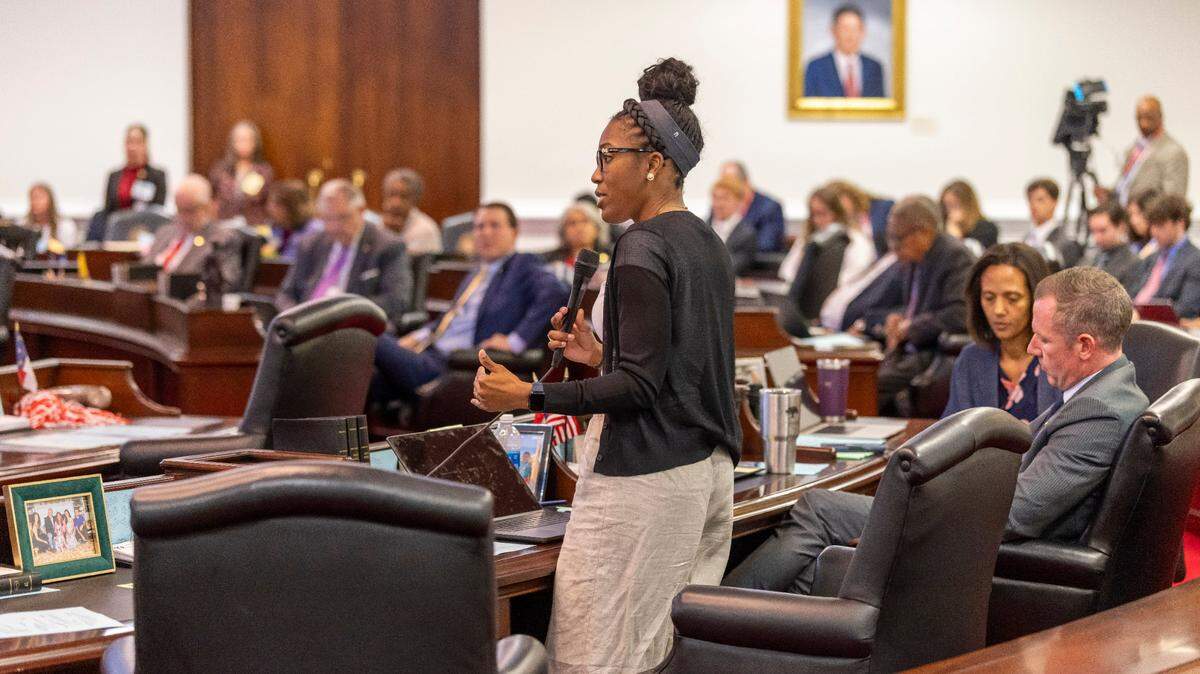
A North Carolina legislator’s lawsuit over an artificial intelligence-generated video that showed her endorsing home appliances is moving forward in federal court.
Lawyers for state Sen. DeAndrea Salvador, a Democrat who represents part of Mecklenburg County, got permission from a judge in Charlotte Wednesday to conduct limited depositions and questioning of Whirlpool and the parent company of the ad agency that produced the video, Omnicom.
The case stems from an ad for energy-efficient home appliances sold by a subsidiary of Whirlpool in Brazil. The video used artificial intelligence to manipulate Salvador’s words from a TED Talk she gave in 2018, and the ad won a prestigious award at the Cannes Lions International Festival of Creativity.
That award has since been revoked, and the agency that created the ad issued a public apology. But Salvador filed a lawsuit against the companies in August, alleging they engaged in unfair and deceptive trade practices by falsifying her endorsement of their products.
“I could not find an instance, particularly with an elected official involved, that utilized deepfakes and AI technology in this type of way, commercially,” Salvador told the Raleigh News and Observer previously. “That was another big reason for me to want to push forward on this case ... It can happen to anybody and everybody.”
At Wednesday’s hearing, lawyers for Salvador and the companies clashed over whether the lawmaker has a case.
Attorneys for Whirlpool and Omnicom argued there is no jurisdiction in North Carolina because neither company is based in the state and the ad was directed at a Brazilian audience marketing a product not sold in the U.S.
But Salvador’s legal team said getting more information from the defendants through a legal process called jurisdictional discovery — preliminary research to prove a court has authority to hear a case — can help show when or if the two companies knew Salvador was an elected official in North Carolina.
“We have a right to get to the bottom of that,” attorney Chris McHattie told the judge.
The judge ruled Salvador’s lawyers can request a limited number of documents from the current defendants and conduct up to five depositions in the coming weeks. The judge dismissed another motion by Salvador’s attorneys to add more information to their complaint and did not rule on the defendant’s motion to dismiss the case.
Salvador attorney David Redding told reporters after the hearing it’s important for the courts to consider how the internet and other new technologies are shaking up decisions about jurisdiction.
“AI is moving very fast. Technology is moving very fast, and it’s outpacing the law,” he said. “… It’s inherently unfair for someone that something like this happened to them and to have to go to Brazil or go to a distant courthouse in a distant place to get their remedy.”