Development claims more tree canopy so an East Charlotte community had a funeral
The air was as thick as the canopy over the Wilora Lake neighborhood in east Charlotte. Rain clouds had only just scattered, and the birds were active, their songs battling against the noise of nearby traffic.
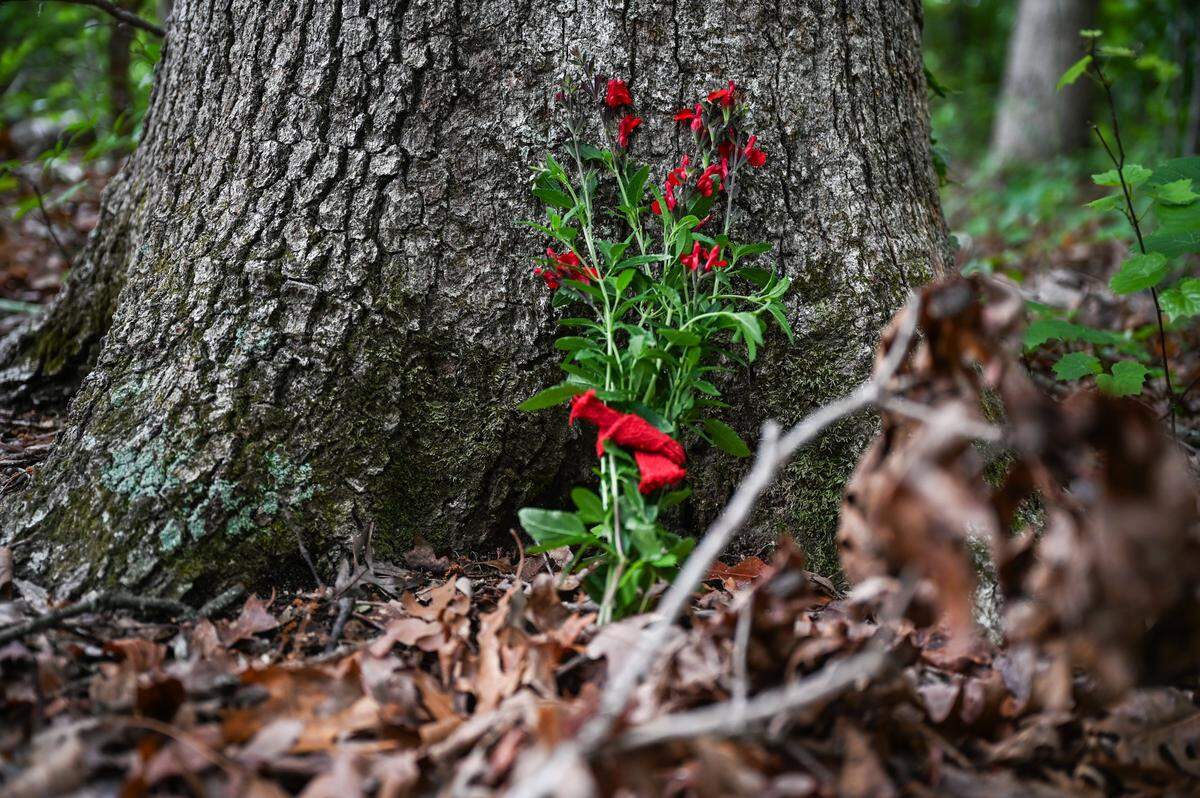
That scene will soon change. About two dozen people gathered the morning of May 9 to pay their respects not to a person, but to the trees they will lose.
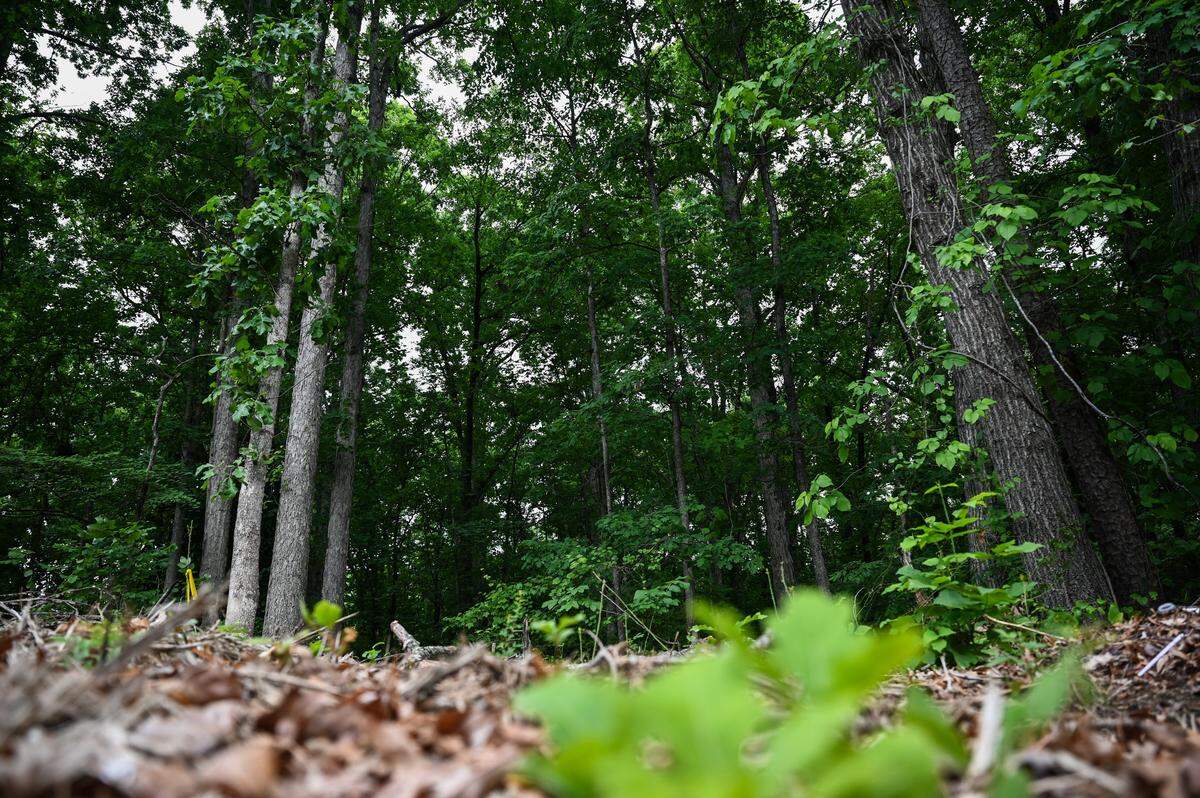
Most of the 6.6 wooded acres hemmed in by North Sharon Amity and Wilora Lake roads will be razed and replaced with income-restricted housing for seniors. Charlotte City Council paved the way for the development in March when it voted 6-4 in favor of rezoning the property for affordable housing.
Neighbors rallied in opposition, to no avail. Most argued the surrounding streets couldn’t handle a high density development, and traffic would become a problem. The rezoning posed an entirely different concern for resident Amy Williams, though, who pleaded with the City Council on behalf of the habitat their vote would destroy.
The decision was a blow for Williams. From her grief sprouted a simple idea: a memorial service.
“If I can’t help you, at least I want you to know I see you, and I’m going to miss you,” Williams said. “Even if I’m the only one or my partner and I are the only ones, we would go and just have a remembrance of the beings that live there.”
But Williams wasn’t the only one.
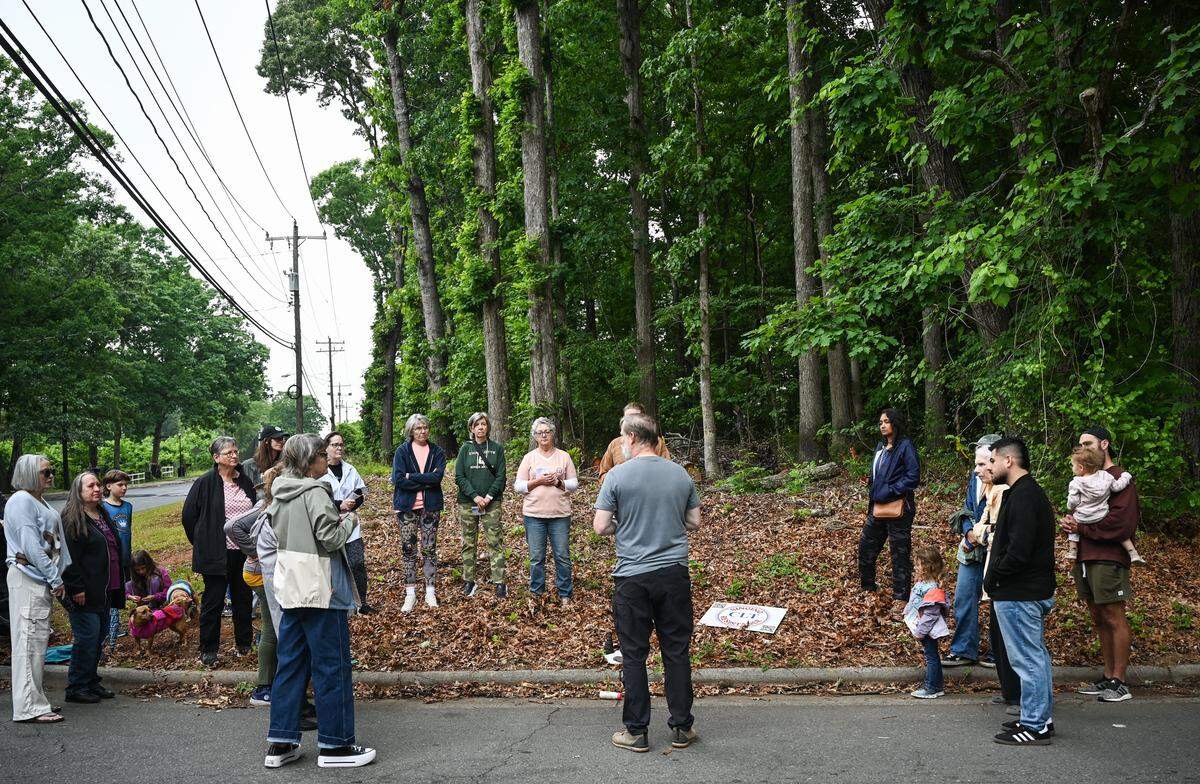
Performers with the Singing Resistance — a grassroots group that lends its voice to peaceful demonstrations — opened the program with a song.
A woman who traveled from Matthews, where she has watched green space “gobbled up” in the name of progress, read a poem.
Two teenage sisters who’ve lived in Wilora Lake their whole lives shared tearful words of gratitude for the trees.
And east Charlotte’s City Council member who fought against the rezoning encouraged residents to keep using their voices.
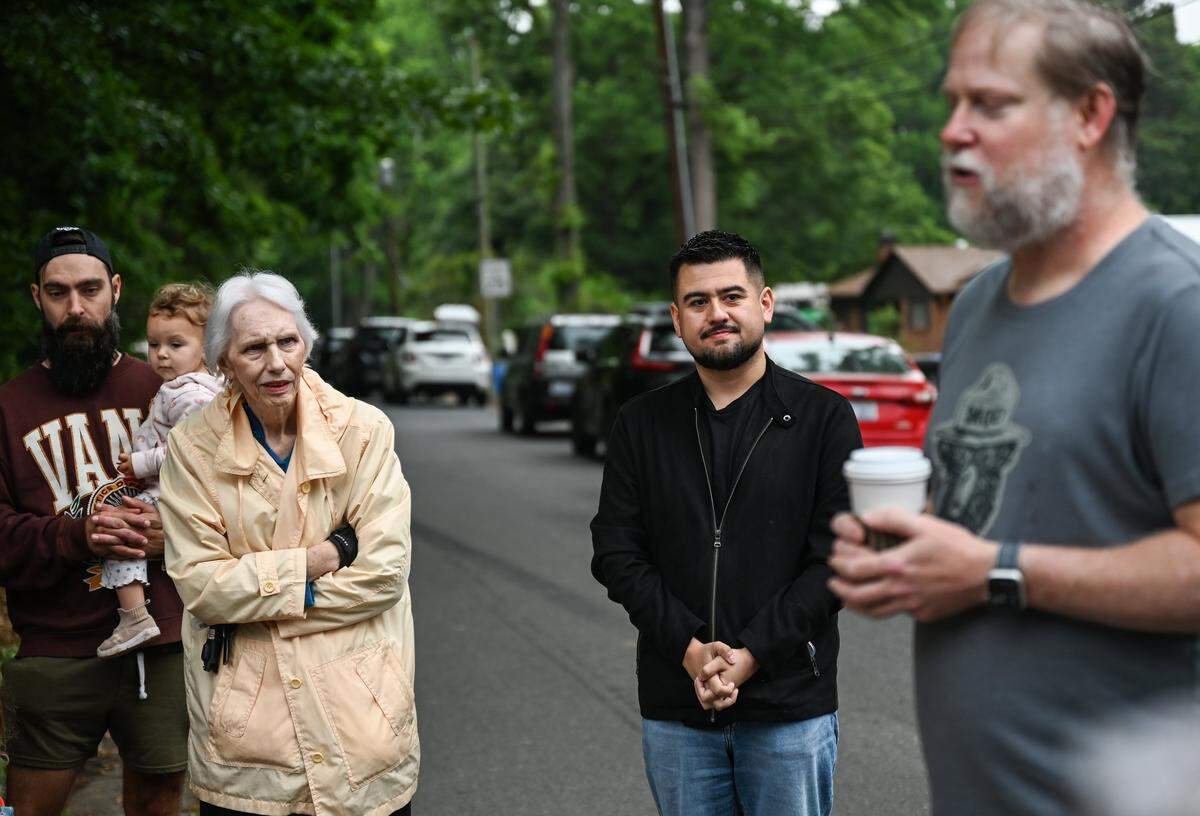
“Charlotte is changing way too quickly for a lot of us who have called this wonderful city home for many, many years,” District 5 councilman JD Mazuera Arias said. “We can grow as a city. We can welcome high density. But not at the expense of destructing our canopy or at the expense of neighborhoods.”
Affordable senior housing planned for Wilora Lake, but some plant life could be saved
In 2011, Charlotte set a goal to grow its citywide tree canopy coverage to 50% by 2050. It’s trending in the wrong direction, said Tim Porter, the city’s chief urban forester.
A 2023 analysis found tree canopy covered 47.3% of land and, if current trends continued, will fall to about 40% by 2050.
Charlotte has some preservation guardrails in place, Porter said. For example, heritage trees — native trees with a diameter greater than 30 inches — cannot be freely removed from private properties. Still, those protections are not rigid and can often be skirted by paying a $1,500 fee per tree and planting at least one tree in its place.
The city is launching a tree canopy policy initiative this summer to reevaluate its practices, Porter said.
“We feel we need to, at minimum, add to it, be more intentional on multiple scales to try to get the tree canopy to where it’s needed most,” Porter said. “Ultimately we want council and the community to chart a new path forward.”
City staff does not consider the nuances of tree canopy loss when reviewing rezoning petitions, Porter said. They don’t look at the existing canopy size or whether a proposed development is in a high-priority canopy area. Rather, staff must only consider whether the petitions meet regulatory requirements before advancing them to the City Council.
“We don’t really have any rezoning-specific policy that could give us an opportunity to do that,” Porter said. “It’s not really an endorsement or a recommendation at all. We’re just looking for compliance.”
Tim Sittema, managing partner of Crosland Southeast, the developer behind the Wilora Lake project, said the rezoned property is “an excellent site” for senior housing. His firm will meet all tree save requirements and is doing everything it can to minimize its environmental footprint, he said.
“It’s always a balancing act between concerns for habitat for plants and animals and habitat for people that need housing,” Sittema said.
Williams reached out to Sittema in April to pitch an effort to rehome plants on the property. She’s been in touch with Constructive Plant Rescue, a local nonprofit that gives new homes to native plants that would otherwise be destroyed.
Nobody has ever made that request of him before, Sittema said. He applauded Williams for reaching out and was open to her idea.
Construction likely won’t begin for more than a year as the project awaits tax credit approval. In an email, Sittema asked Williams to keep in touch in the meantime to “allow adequate time to coordinate those efforts.”
“We do our best to listen to the concerns of all parties, and sometimes we can satisfy everybody, and sometimes we can’t. But we certainly want people to feel heard and share their concerns,” Sittema told The Charlotte Observer.
A spokesperson with Constructive Plant Rescue said volunteers use hand tools for their rescues and often rehome low-growing plants like ferns and sedges or young trees under a few feet tall. They cannot save the tall canopy, however.
East Charlotte grieves habitat loss to come
Williams always hated “The Giving Tree.” The children’s classic from author Shel Silverstein chronicles the relationship between a growing boy and an apple tree, which gives more and more of itself until it is whittled down to a stump.
Life follows a similar narrative at times.
Williams recalled a huge, “glorious” tree on the corner near her old home in Cotswold. It must’ve been hundreds of years old, she said, and was a highlight of her walks.
Until, one day, the tree was gone.
“I just went over and laid on the trunk,” Williams said. “I was devastated.”
Speaking to the crowd gathered outside the forest for the memorial, Williams read a “healthier version” of the familiar tale, called “The Growing Tree” by Lissa Rankin. In this version, the tree provides apples and shade to the boy, but it rejects his request to build a house from its wood and directs him elsewhere for resources.
The boy and the tree grow together — rather than the boy growing at nature’s expense.
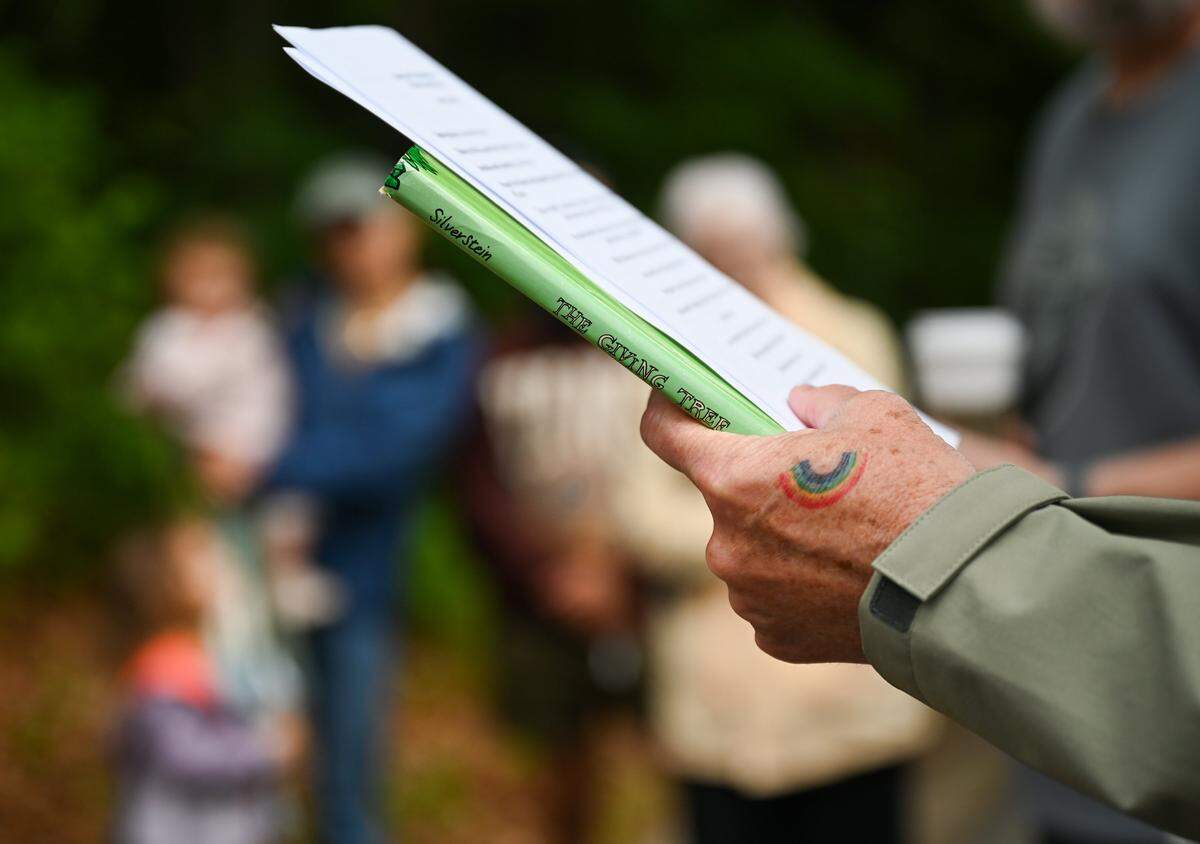
Others in the crowd offered their own poems and reflections.
Wilora Lake resident Sara Kay Mooney remembered the magnolia tree across the street from her childhood home in Williamsburg, Virginia, where she used to build forts and climb “maybe a little too high for comfort.” She thought about the mulberry tree in her yard up the street, where she’s hung iterations of swings that have gotten bigger with her son.
She thought about the redbud tree she and her husband planted after losing a baby to miscarriage.
“I thought about all the gorgeous trees in this neighborhood that attracted us to even want to move here,” Mooney said. “It is a sad thing to see these go.”
For now, neighbors are enjoying the habitat they have, and hoping for a better balance in the future.
“We shall love the Earth. We shall love the Earth. We shall love the Earth some day,” the Singing Resistance caroled to close out the memorial service. “Oh, deep in my heart, I do believe that we shall love the Earth some day.”
This story was originally published May 21, 2026 at 5:30 AM.