Growth jolt: Charlotte added more people over the past year than any other US city
Census data continues to show that Charlotte and the region are among the top growth areas in the U.S. In fact, no other U.S. city added more people in the past year than Charlotte.
From July 2024 to July 2025, Charlotte added 20,731 people, and also nudging its population total closer to the 1 million mark, according to Census Bureau estimates released Thursday. Its population now stands at 964,784.
Charlotte topped major cities such as Fort Worth (2), Houston (6), Nashville (8) and Atlanta (11) for numeric growth over the past year.
Meanwhile, York County has two of the fastest growing cities and towns in the country in Fort Mill and York.

It’s part of a trend noted by the Census Bureau. While some large cities have maintained their population growth, the surrounding smaller cities are growing far faster. The Charlotte metro area is the leading example in that trend, particularly on the South Carolina side of the Carolinas border.
Fort Mill topped the growth rate chart in the Charlotte region for cities or towns with a population over 20,000. From July 2024 to July 2025, Fort Mill added over 2,460 people. That’s a growth rate of almost 7%. Nationally, Fort Mill ranks 20th out 1,926 cities.
Charlotte’s year-to-year growth rate was 2.2%, putting the city at 208th place, nationally.
Over the past five years, between April 2020 to July 2025, Fort Mill saw the highest growth rate at almost 58%, putting the city in the top ten nationally in 6th place. Charlotte saw a 10% change.
For places with a population of under 20,000 people, York is leading the pack for growth rate.
From year to year, York saw an 8% change in population. And looking back to 2020, York is second in the region with an almost 25% increase.
Overall, growth has slowed across the U.S., particularly because of a decrease in international migration. While Charlotte topped the charts in numeric growth last year, the overall number was still less than the prior year estimates. Between July 2023 and July 2024, Charlotte added 25,783 people. The latest numbers represent a 20% drop-off from the earlier total.

And while international migration plays a large role in Charlotte’s population, the city also is a magnet for domestic movement too, according to Chuck McShane, senior director of market analytics for CoStar Group/Homes.com.
“The Carolinas are outperformers when it comes to domestic migration,” McShane said. “That source of population growth has been more stable.
“It doesn’t surprise me that Charlotte is the fastest growing even though it’s slowing a little bit slower. It’s moving up the ranks, and we see that across the North and South Carolina.”
Fort Mill laps the Charlotte metro area in population growth
Charlotte is undoubtedly the region’s population magnet, but the city can’t compete with its neighbor to the south in growth rate. Fort Mill had an estimated 38,673 residents last year, a 57.7% increase since 2020. That’s No. 6 across the country for cities and towns with 20,000 or more people.
For perspective, York and Monroe had the next two highest growth rates in the Charlotte metro region in that span. Their rates combined are 48%.
Fort Mill was No. 20 in size among all South Carolina municipalities in 2020. By 2024 it was No. 16, and the latest estimates put it at No. 14.
Just from 2024 to last year, Fort Mill was No. 20 in the nation with a 6.8% growth rate among places with 20,000 or more people. Greer, between Greenville and Spartanburg in South Carolina, is the only municipality in the Carolinas with a higher rate at 7.3%.
Expanding to cities and towns of all sizes, though, there is another community that outpaced Fort Mill in one-year growth rate. And it’s much closer to home.
South Carolina growth in the Charlotte metro area
York grew by 8% from 2024 to last year. Its latest estimate tops 10,000 residents for the first time, at 10,620. The western York County city added 787 residents, which is a little more than Cornelius added (769).
Cornelius had the seventh highest single-year growth rate in the Charlotte region (2.2%) among places with 5,000 or more people, and is more than triple the size of York with 35,094 residents.
York moved from South Carolina’s No. 45 biggest municipality in 2020 to No. 42 last year.
The city’s 24.9% growth rate in that span trails only Fort Mill in the Charlotte region, among places with 5,000 or more people. Fort Mill and York are part of a trend, where people moving to the Charlotte region increasingly look south of the state line.
From 2020 to last year, five of the top seven cities and towns in the Charlotte region for population growth rate are in South Carolina. Fort Mill and York are highest, followed by Monroe (23.1%) and Kannapolis (16%) in North Carolina. Next are Clover (14%), Lancaster (13.2%) and Tega Cay (13.1%) in South Carolina.
The exception is the largest municipality south of the state line.
Among 35 municipalities in the Charlotte region with at least 5,000 residents, Rock Hill ranks last with a 2.1% population growth rate from 2020 to last year. No other community has less than 5.3% growth. Rock Hill had an estimated 75,911 residents last year.
Single-year growth tells a similar story.
York, Fort Mill and Lancaster (3%) are top five in growth rate for the Charlotte region. Rock Hill’s 0.2% growth ranks ahead of only Waxhaw, the only community in the region to lose population (-0.3%) from 2024 to last year.

A North Carolina deep dive
Charlotte is the 14th most populous city in the U.S., with 964,784 people.
But while Charlotte might be the largest city, it’s suburban sisters in North Carolina are growing at a rapid pace.
Monroe added over 8,000 people between April 2020 to last July, bringing its population in Union County to 42,644. That’s a growth rate of about 23%, the largest change among Charlotte’s North Carolina counterparts.
Monroe also saw the highest year-to-year change at 6.2%.
Compared nationally among cities with a population over 20,000, Monroe ranks 26th in year to year and 65 in the five-year span.
A close second is Kannapolis, which has a total population of 61,708. Between April 2020 to July 2025, Kannapolis added over 8,500 people. That’s a growth rate of over 23%.
Kannapolis also surpassed Burlington for the 18th largest city in North Carolina, Michael Cline, North Carolina’s state demographer with the Office of State Budget and Management, noted.
But from a year-to-year perspective, July 2024 to July 2025, Statesville saw the second-highest percentage change on the North Carolina side of the border at over 3%. Statesville has a population of almost 32,200 people.
North Carolina’s leader in growth rate is Wendell in Wake County. The town with a population of 19,687 doubled its growth rate from April 2020 to July 2025. From July 2024 to last July 2025, Wendell saw a 17% change.
Looking at municipalities with a population over 20,000, Leland in Brunswick County, is also a growth leader in North Carolina
Nationally, it ranked ninth in growth rate between April 2020 to last July at almost 53%.
Both the Charlotte and Raleigh regions are being fueled by suburban growth, Cline and McShane agreed. And there are a few reasons why.

Why is Charlotte’s suburbs growing so quickly?
Suburban growth accelerated during COVID, McShane said, especially with flexible working options. But for the Charlotte region it became noticeable in 2017.
There was more land to develop housing and retail options in the suburbs and, typically, the surrounding areas of Charlotte provided cheaper housing options.
The suburbs also are becoming more appealing to aging millennials looking to settle down or newcomers looking for lower prices.
“The amenities there are rising to levels that, in the past, we’ve only seen in urban areas,” McShane said.
The only thing that would stop the suburban growth is their own willingness to grow.
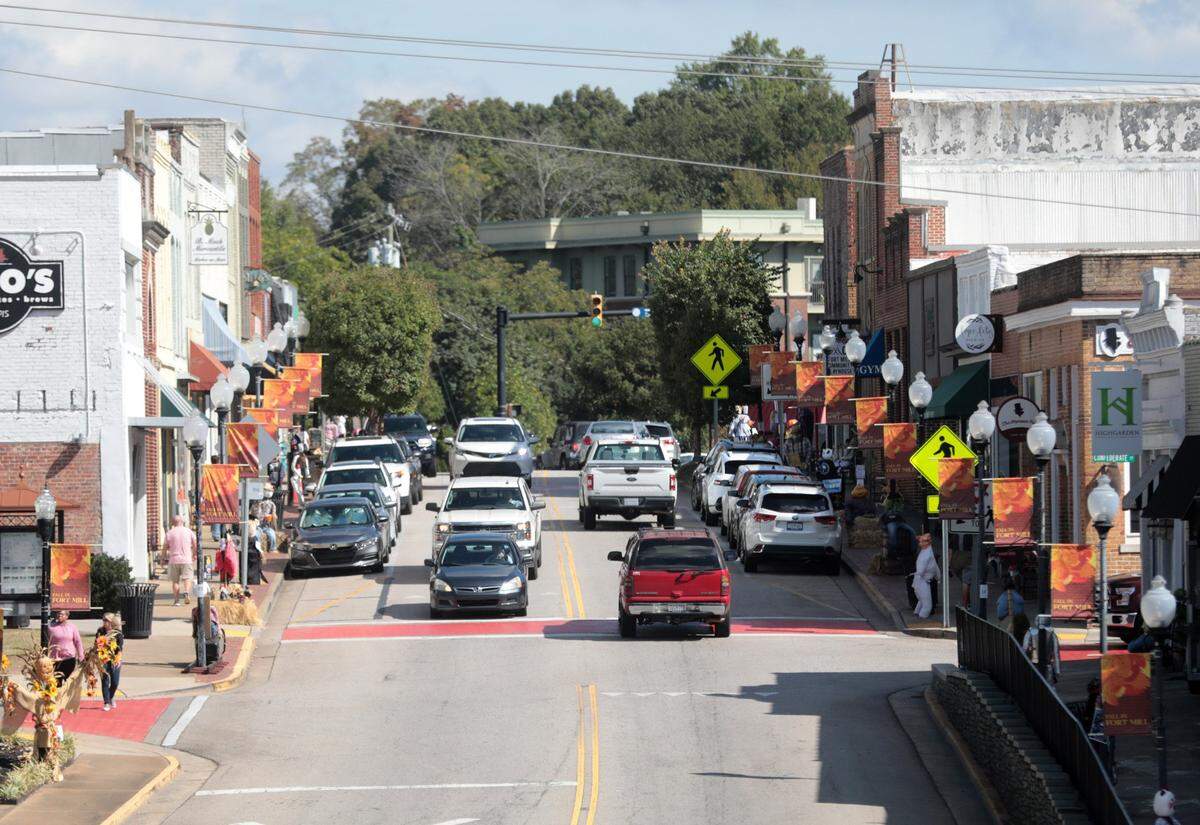
For example, Fort Mill Town Council in March established a temporary moratorium on accepting some development applications. That’s in effect until September. And last year the town prohibited accepting or processing new projects that included residential construction.
If development slows, so will growth.
“People are going to flock to where development and infrastructure is available and well planned,” McShane said. “You’re starting to get into areas that are not used to growth, that may have even been used to losing population in the past.
“That can lead to some cultural clashes,” he said. “I think that’s going to be a defining factor of local policy and politics conversations going forward.”
More Charlotte region growth stats
- Charlotte added more people (20,731) from 2024 to last year than the nine communities above it in growth rate did during the same span. York, Fort Mill, Monroe, Statesville, Lancaster, Pineville, Cornelius, Huntersville and Mint Hill combined to add 10,221 residents.
- Aside from Charlotte, communities that added the most people from 2024 to last year are Monroe (2,490), Fort Mill (2,466), Concord (1,865), Huntersville (1,498), Gastonia (1,195) and Statesville (1,039).
- Charlotte added 90,076 people from 2020 to last year. Concord is the only other city in the region with more than 90,000 total people as of 2025. Its population is 114,598.
- Charlotte is only No. 20 in the region for growth rate from 2020 to last year among places with 5,000 or more people. Yet the 19 communities ahead of it added 73,677 people compared to 90,076 in Charlotte. In fact, of 35 communities in the region with 5,000 or more people, all of them not named Charlotte combined to add 102,268 residents.

This story was originally published May 14, 2026 at 5:00 AM.