Cars keep smashing Plaza Midwood planters. Neighbors want Charlotte to pay
Charlotte drivers might notice the large planters that separate bike lanes from the street along a mile stretch of The Plaza.
Or, as is too often the case, they might not.
Cars have destroyed one-third of the roughly 70 planters the city installed back in 2020 and marred the survivors with chips, scratches and dents.
When the project was conceived, the Plaza Midwood Neighborhood Association agreed to pay for long-term maintenance if the city bought the planters and covered the first year of expenses. But six years later, neighborhood leaders now say the costs of upkeep and replacements are more than anybody anticipated.
Plaza Midwood wants Charlotte to reconsider the terms of their agreement.
“If you think about your landscaping for your own house and how much it is to keep that up, and then put it 10 times on a mile-long street that has two sides of it and a median in the middle, and they’re like, ‘Hey, neighborhood association, you all can foot that bill.’ That’s a hefty bill for us to foot,” said Tanya Wilson, the immediate past president of the neighborhood association.
City officials did not make themselves available for an interview for this story. In a brief written statement provided by a spokesperson, officials did not say whether they would consider the neighborhood association’s request and referred The Charlotte Observer back to the original agreement.
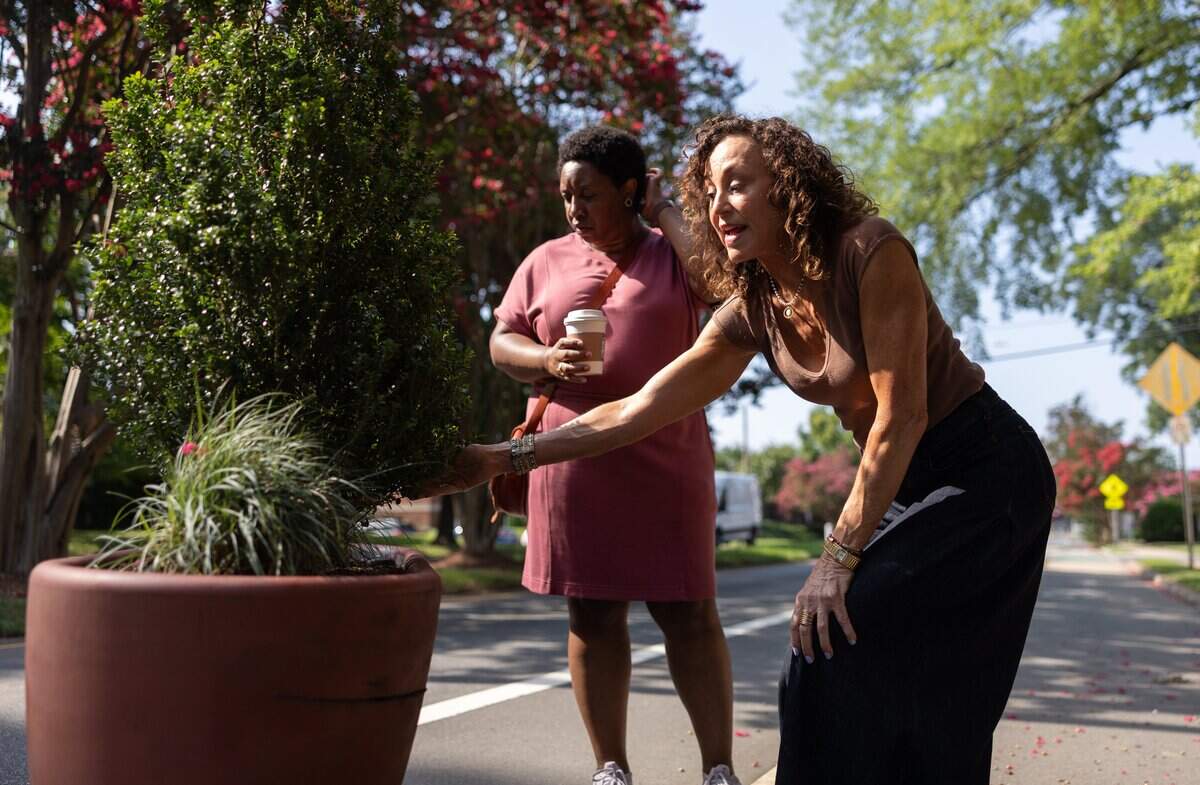
Midwood Mile is ‘the driveway to the neighborhood’
The Plaza marked the first — and, to date, the only — time Charlotte used planters as a bike lane barrier. They served two purposes from the start: safety and aesthetics.
Residents championed the concept as an alternative to the usual plastic white bollards that stick up from the ground. They didn’t want poles lining the road in front of their historic million-dollar homes.
“The Midwood Mile is kind of the driveway to the neighborhood … It’s nice to make a statement like that with the nice planters protecting the bike lane,” said Larry Nabatoff, who lives on The Plaza. “I’ve had many comments from people that come to visit the neighborhood about how much they like them. I personally wouldn’t want to be without them.”
Charlotte made room for protected bike lanes in 2019 by reducing traffic on The Plaza from two lanes in each direction down to one. The road diet was part of the city’s Vision Zero initiative, which seeks to eliminate traffic deaths and serious injuries by 2030.
Charlotte is not on track to meet that goal. Traffic deaths increased in 2025 and are again trending slightly up so far in 2026, according to the city’s Vision Zero dashboard. At least two people have died this year on other parts of The Plaza.
“A lot of this is about aesthetics, but it also is about safety. We want to have bike lanes that people feel like they want to ride down, and that they’re safe doing it,” Wilson said.
As distracted and impaired drivers take out planters, they leave uneven gaps in the protective barrier that have prompted “a lot of complaints,” according to Valerie Preston, who co-chairs the planter committee with Wilson.
Neighborhood leaders argue this safety component is why the city shouldn’t be completely hands-off.
“This is a protected bike lane. They established it as a protected bike lane. They should have some part in the maintenance of it, and that’s sort of my fight,” Preston said.
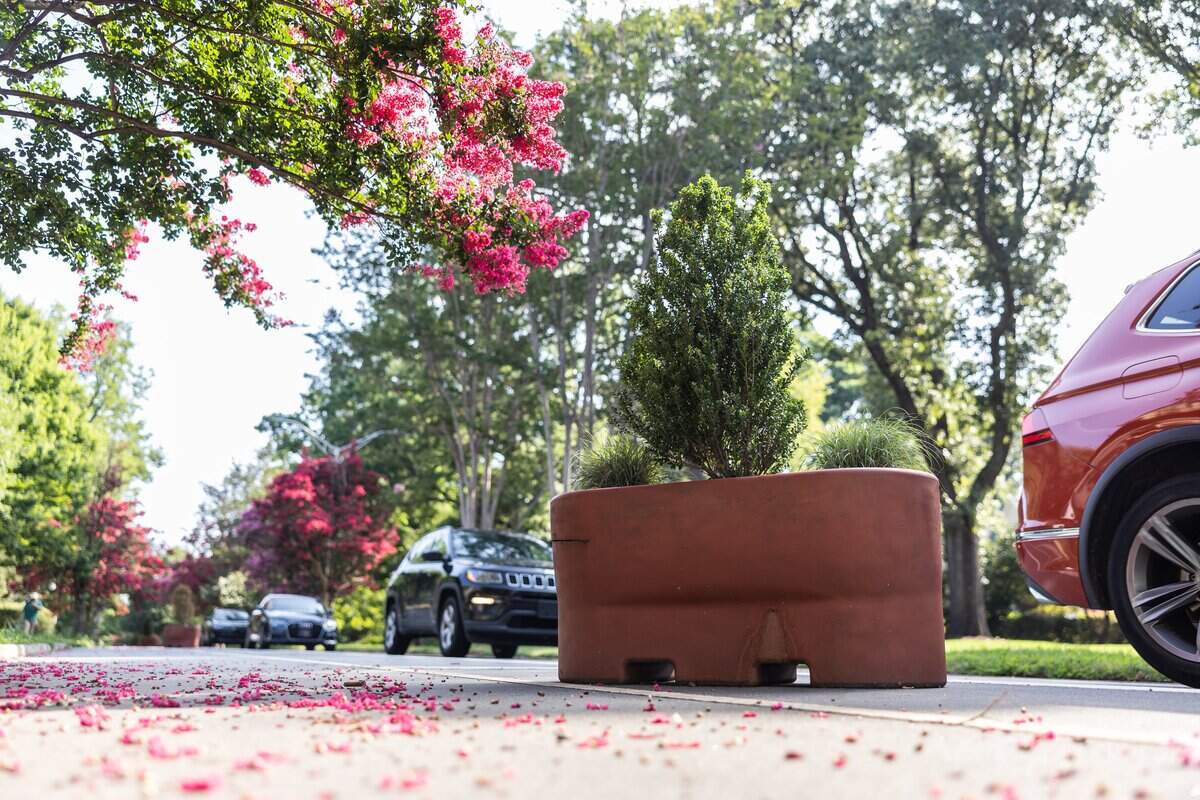
Plaza Midwood wants ‘partnership’ on planters
Maintenance has been a bit of trial and error, Preston said.
Neighbors replaced reflectors with solar-powered lights to improve visibility and, hopefully, reduce collisions. They also repainted the so-called “trash can gray” planters a more appealing terracotta color.
A couple of residents initially shouldered the bulk of maintenance duties themselves, such as storing, moving and refilling the self-watering tanks. That wasn’t sustainable.
Plaza Midwood hired a landscaping company to take over for a few years, but Wilson and Preston said the company didn’t meet expectations. Some plants languished. Others obstructed vision.
“You can’t put a pine tree in a bucket and then expect it to go well,” Wilson said. The neighborhood association parted ways with the landscaper earlier this year.
Now the neighborhood association is back to figuring out how it will manage the plants itself.
The neighborhood refreshed 18 planters this spring, tearing out dead and overgrown plants and replacing them with more appropriate foliage based on the recommendations from resident horticulturists. Preston keeps potting mix in her garage and plans to refresh the rest of the planters once temperatures cool down in the fall.
The neighborhood association budgets between $13,000 and $14,000 annually toward watering. That does not cover additional fees for potting mix, refreshed plants, new filters or planter replacements.
And Plaza Midwood would have to spend roughly $10,000 just to replace the broken planters at more than $400 a pop, Wilson said.
The neighborhood association hasn’t had much luck arranging a meeting with city officials. The only response they’ve received has been a reiteration of the original terms, Preston said.
“It should be a partnership with the neighborhoods. Not a, throw across the fence and good luck on that for the next gazillion years,” Wilson said.
Nabatoff offered a softer perspective.
“It is an amenity and a good resource for protection. We’re lucky and grateful to have them. We’re grateful to have them versus any alternative,” Nabatoff said. “They go beyond protecting a bike lane and create a sense of place and beauty here.”