
Nonprofit has a new vision for Gastonia mill village
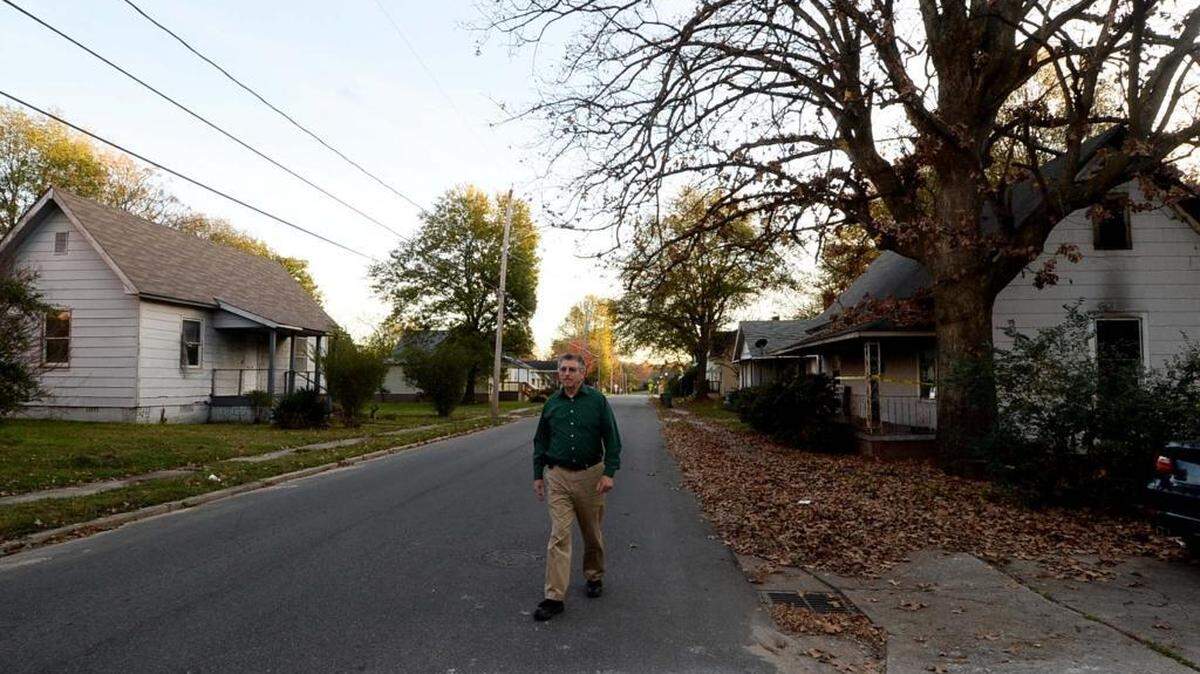
In the shadow of the six-story Loray Mill, where Bubbles Styers has lived for nearly 60 years, she feels a new vitality stirring.
In the spring, tenants began moving into the recently renovated mill building’s loft-apartments, and some wave at Styers as they come and go. She has high hopes for Preservation North Carolina’s plan to rejuvenate the 30-block Loray neighborhood made up of about 500 small mill houses built between 1900 and the 1930s.
The Raleigh-based nonprofit has purchased nine properties, which will be modernized and sold.
Styers, 59, is among the 25 percent of Loray village residents who own their homes; 75 percent of the properties are rentals, and many aren’t well-maintained.
Preservation North Carolina hopes to reverse those figures by demonstrating how attractive the remodeled houses with small yards can be to millennials and empty nesters. The nonprofit’s other projects with restored mill houses have been successful in such places as Edenton and near Burlington.
I’d love to see this as a stable, integrated neighborhood with a lot of ownership and lots of regard for small homes. We’re hoping to turn some peoples’ heads to the value of small homes.
Preservation North Carolina President Myrick Howard
Styers, who has lived all her life in the same six-room house on Dalton Street, remembers the Loray neighborhood when mill employees owned most the homes.
“It was fabulous,” she said. “Everybody looked out for each other. They’d do anything in the world for you.”
She’s optimistic about Preservation North Carolina’s effort to change the dynamics of a neighborhood that fell into decline.
“I’m glad they’re doing it,” Styers said. “I’m sure the neighborhood will come back someday.”
Historic property
The 600,000-square-foot Loray – once known as the “Million Dollar Mill” – is a Gastonia landmark that opened in 1902. At its peak in the late 1920s, the mill employed 3,500 workers, many who lived in the village. The Loray name became permanently stamped on American labor history as the site of the bloody 1929 strike that claimed the lives of Gastonia Police Chief Orville Aderholt and union activist and balladeer Ella May Wiggins.
Firestone Textile and Fibers bought the building in 1935 and stayed until construction of a new tire cord manufacturing plant in 1993 in Kings Mountain. Preservation North Carolina got the vacant mill building in 1998 as a donation from Firestone and tried to find a developer for what was considered one of North Carolina’s most important historic properties.
The first phase of a more than $40 million residential/commercial restoration project began in April 2013. N.C. Gov. Pat McCrory spoke at the grand opening ceremony in March.
Currently, 150 of the 190 loft apartments have been occupied and the remaining are being leased, said developer Billy Hughes. A 14,000-square-foot fitness club recently opened in the building, and he’s in negotiations with a coffee shop, taproom and restaurants, and to lease office space.
Meanwhile, Preservation North Carolina will start work soon in a neighborhood that was once larger than the city of Gastonia.
Two basic house types – A and B – date from 1901 and a third, type C, was added when the mill expanded around 1919-1920. As the original village took shape, the mill loomed like a giant watchtower. In April 1901, The Charlotte Observer reported that houses in the Loray village were going up daily and that “streets and drives are being laid and the place is fast becoming a town in itself.”
Mill owners considered incorporation, but in 1912, the mill and village became part of Gastonia.
Before World War II, the company started selling the houses. But as retired millworkers moved away or died, the properties fell to heirs and change set in. By the late 1970s, the former neighborhood of homeowners was in a decline.
Increasing home ownership
Preservation North Carolina President Myrick Howard said “we’re trying to focus on a neighborhood that’s troubled, if not blighted.”
The nonprofit’s goal in the Loray village is to buy, renovate and sell 20 mill homes in the next five years. Protective covenants attached to the deeds require the properties to be sold to homeowners and to meet preservation standards.
“We’re trying to help turn the market and re-establish home ownership in the neighborhood,” he said. “I’d love to see this as a stable, integrated neighborhood with a lot of ownership and lots of regard for small homes. We’re hoping to turn some peoples’ heads to the value of small homes.”
In March, 17 students in Professor Jo Ramsay Leimenstoll’s interior architecture II class at UNC Greensboro, came to Gastonia where they photographed and measured houses in the Loray neighborhood for a class assignment.
Using that information, they came up with design recommendations for Loray’s three mill house types, reflecting new market demands of baby boomers and millennials.
He said some of the students’ ideas will be incorporated in the Loray house designs.
While the restoration effort will take years, Howard said, “we’re betting it will work.”
Project manager for the Loray revitalization is Jack Kiser, who worked on the Loray Mill project for 20 years as Gastonia planning director. He sees great potential in the old mill houses, which are part of the Loray Mill Historic District listed in the National Register of Historic Places.
“The houses are well-built,” Kiser said. “There’s some really stout construction.”
Over time, some houses have been remodeled with additions such as artificial siding, asbestos shingles, aluminum and vinyl. These will be removed. Original features such as heart pine floors, clapboard siding, 10-foot ceilings and old-style windows will be restored. The energy-efficient houses will be rewired and replumbed and come with modern appliances, counters and cabinets.
Instead of scattering home renovations all over the neighborhood, the revitalization effort will focus on two areas at first. Kiser said the houses will likely sell in the low $100,000s. He hopes the project will raise property values and help revitalize west Gastonia.
“It’s something that doesn’t happen overnight,” he said one afternoon while inspecting what will be the project’s model house.
Built in 1902, the structure is showing its age with a sagging roof and a look of abandonment. But Kiser can visualize a refurbished house looking like it did when the big mill just up the street was new.
It’s a house that will appeal to people “who want something authentic and historic,” Kiser said.
Bubbles Styers called the prospects of a neighborhood revival “wonderful.” When the mill closed, she said things starting going downhill with an increase in crime.
The neighborhood’s appearance suffered as renters neglected their yards “and drug in all sorts of mess like junk cars,” she said.
The Loray Mill still dominated the neighborhood, but its many lights no longer glowed at night, casting a deeper gloom along the streets.
But Styers, who plans to stay in the neighborhood, feels the momentum is turning in the right direction.
“It’s nice to see lights back on in the mill,” she said. “Now it’s alive again.”
Joe DePriest: jdepriest@carolina.rr.com
This story was originally published January 2, 2016 at 8:00 AM with the headline "Nonprofit has a new vision for Gastonia mill village."