Charlotte officers face firing. Police chief says arrested man was left alone before dying.
Charlotte-Mecklenburg Police Chief Johnny Jennings says four police officers and a supervisor are facing termination following an internal affairs investigation into the death of Harold Jermaine Easter, who was left alone in a police interview room while in severe medical distress.
Easter died on January 26, three days after his arrest and detainment in a police station. A review is pending on whether the officers will be criminally charged.
New internal police review documents, released Friday by CMPD, show the officers involved saw Easter put drugs in his mouth. The records show the officers saw residue on Easter’s tongue and discussed how much of the substance he’d swallowed as he was arrested during a drug investigation just outside uptown Charlotte. Inside a police substation, Easter had been strip-searched, shackled to the floor and left unattended when he suffered a seizure and cardiac issues, police and medical examiner records show.
Jennings on Friday said the four officers and sergeant had “intimate knowledge” that Easter had swallowed cocaine during the traffic stop that led to his arrest. He said Easter was left unattended in an interview room for more than 20 minutes.
“At that time he was clearly in need of medical attention,” Jennings said.
Video of Easter in the interview room will be released on Oct. 1, the chief said. Easter’s friends and family have previously told the Observer that the 41-year-old Easter suffered a heart attack and did not get medical help quickly enough while in police custody.
CMPD leaders, shortly after Easter’s death, changed department policy to require continuous observation of people being detained. At the time of Easter’s death, officers were required to visually check on people in custody every 15 minutes.
Another CMPD policy requires officers to call for medical help immediately if a person they’re arresting ingests drugs. Based on department records, officers did not call for help despite knowing Easter had swallowed some cocaine.
“Had these officers cared more about Mr. Easter, then we wouldn’t be here,” said Alex Heroy, an attorney for Easter’s family.
Jennings said Friday: “It’s difficult to watch and to know that had our officers followed our policy, that Mr. Easter may be alive today and had offered more concern for the sanctity of Mr. Easter’s life, we may not be looking at such a tragic outcome.”
According to CMPD, the Metro Division police officers involved are Brentley Vinson, Michael Benfield, Michael Joseph and Shon Sheffield and the sergeant was Nicolas Vincent. They were placed on administrative leave in January, and the case has been under review.
Jennings’ announcement to move toward firing the CMPD officers comes as a criminal investigation by the district attorney’s office is pending, he said. Easter’s death was also investigated by the State Bureau of Investigation.
A police chief’s decision to discipline or fire an officer in Charlotte goes to the city’s Civil Service Board for review. Under the board’s charter, officers have the right to appeal disciplinary decisions, including suspensions, demotions and terminations.
“I don’t have the authority to actually terminate or fire an officer,” Jennings said Friday.
“Recommending officers for termination is not an easy thing,” he added. “We’re talking about human life here ... police officers are human beings who will make mistakes.”
Vinson, one of the officers, was one of five CMPD officers who was placed on leave in 2016 after the fatal shooting of Keith Lamont Scott. Vinson killed Scott, who had been confronted and surrounded by police in the parking lot of an apartment complex. Vinson was later cleared of criminal wrongdoing. Scott had a gun at the time he was killed and was ordered to drop the weapon, but his family — including his wife, who witnessed his death — has said Scott was not threatening the officers or acting aggressively.
It is not clear whether Vinson was part of the team of officers who arrested Easter or whether he was at the substation when Easter had life-threatening medical issues.
Easter was arrested by CMPD on Jan. 23 on drug and traffic charges, police said in January. His family has said that doctors told them Easter suffered a heart attack while inside a police substation in west Charlotte. He died in a hospital.
A toxicology report from the N.C. Office of the Chief Medical Examiner confirms cocaine was found in Easter’s blood while he was alive and after he died.
Police said in January that Easter fell unconscious while in the process of being interviewed and booked in a CMPD sub-station. CMPD officials said that they rendered medical aid to him before he was taken to a hospital by Medic.
CMPD video to be released
While the pending termination of the officers doesn’t bring Easter back, the family is “pleased there is accountability,” said Alex Heroy, an attorney who is representing the Easter family in a wrongful death lawsuit against the city of Charlotte.
The video of Easter in the interview room shows him suffering fatal injuries “in a violent fashion,” Heroy said.
Kerr Putney, who retired as police chief earlier this year, said in January that officers did not “use force” against Easter.
Heroy said video footage includes body-worn camera footage from offcers who arrested Easter and video footage of the interview room. For much of the footage, Easter is talking, he said. At one point he talks about guardian angels and wanting to put on fireworks for his children, the attorney said.
Under North Carolina law, police videos can only be released to the public under a judge’s order.
Heroy said Easter’s family did not argue against making the footage public.
“That video is going to be out there forever, but ultimately they decided to do it because of the public justice aspect,” he said.
Easter was a father, son and brother and his death is still “very fresh” to the family, he said.
“There is still more work to be done but this is certainly a step in the right direction,” said Heroy.
After his death, Easter’s family called for transparency and an external investigation.
Robert Dawkins, state organizer for SAFE Coalition NC, a police watchdog group, said the case shows that CMPD has a “pattern and practice” of brutality.
Dawkins said Charlotte must start firing top commanders instead of casting blame on officers with lower ranks.
“There is no faith left in CMPD,” said Dawkins, who has worked with the department in the past on reforms. “It is a total systemic failure.”
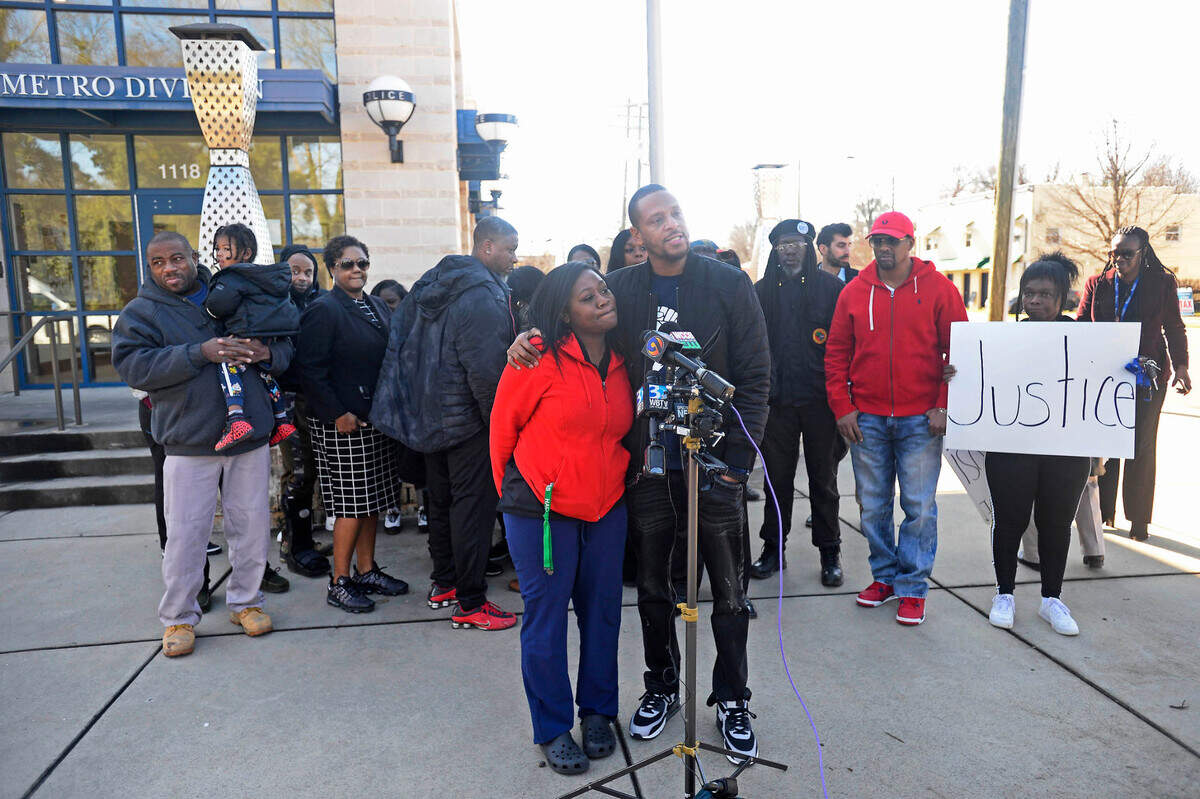
Harold Easter’s arrest in Charlotte
Following the announcement Friday that CMPD will seek Civil Service Board approval to fire the officers, the department released documents compiled in its review of Easter’s death.
According to the police’s sequence of events, an officer conducted a traffic stop near the intersection of Whisnant Street and Burton Street. While leaving the vehicle, the officer saw Easter eating cocaine, then told him to stop and put his hands up, the documents show.
After detaining Easter, the officer told a second officer, who was collecting evidence around the car, that Easter “was crushing up his crack but he didn’t eat it all,” according to CMPD’s transcript of the conversation.
When two other officers arrived, the officers commented to Easter and to each other that Easter “has crack all over his tongue.”
One said to Easter: “Lips going numb, ain’t they brother?”
CMPD’s records show Easter asked officers repeatedly for water and said he needed to use a restroom.
At the Metro Division police substation, an unidentified officer took Easter a cup of water. Another told Easter that officers would come back in five minutes.
According to Heroy said Easter was alone in the room for around 35 minutes before the officer brought him a cup of water. Then he was alone again for around 20 more minutes when he appears to have a seizure, which goes on for several minutes, he said.
CMPD records released this week do not include an exact timeline.
Prior to Easter becoming unconscious, according to police records, he stood up, then began to shake and claw at a table in the room.
The department’s transcript states Easter said: “You think I’m going to die but I’m not. Y’all gonna die but I’m not.”
Then, the document says, Easter collapsed face down on the table, bent over at the waist before falling off the table and having a seizure. An officer opened the door, the transcript shows, and “yells out to ‘Get Medic, Get Medic.’”
Heroy said video will show that CMPD officers did not immediately help Easter when he was having a seizure.
“Then he’s not moving for a handful of minutes ... then CMPD comes in,” he said.
According to CMPD, the officers then moved Easter to the hallway, where officers administered CPR and Narcan, a treatment drug used during opioid overdoses.
When medics arrived, the officer who made the initial traffic stop told them: “We stopped him for suspected drugs and he tried eating it when we walked up to the car but we stopped him from eating it. We didn’t think anything was wrong.”
Observer staff writers Ames Alexander and Fred Clasen-Kelly contributed.
This story was originally published September 18, 2020 at 11:36 AM.