Trump order blocks Charlotte judge’s bias class for federal prosecutors
As debates over race continue to roil American cities leading up to November’s presidential election, the Trump administration has blocked a long-scheduled training class on “implicit bias” that was to be taught to federal prosecutors by a Charlotte judge.
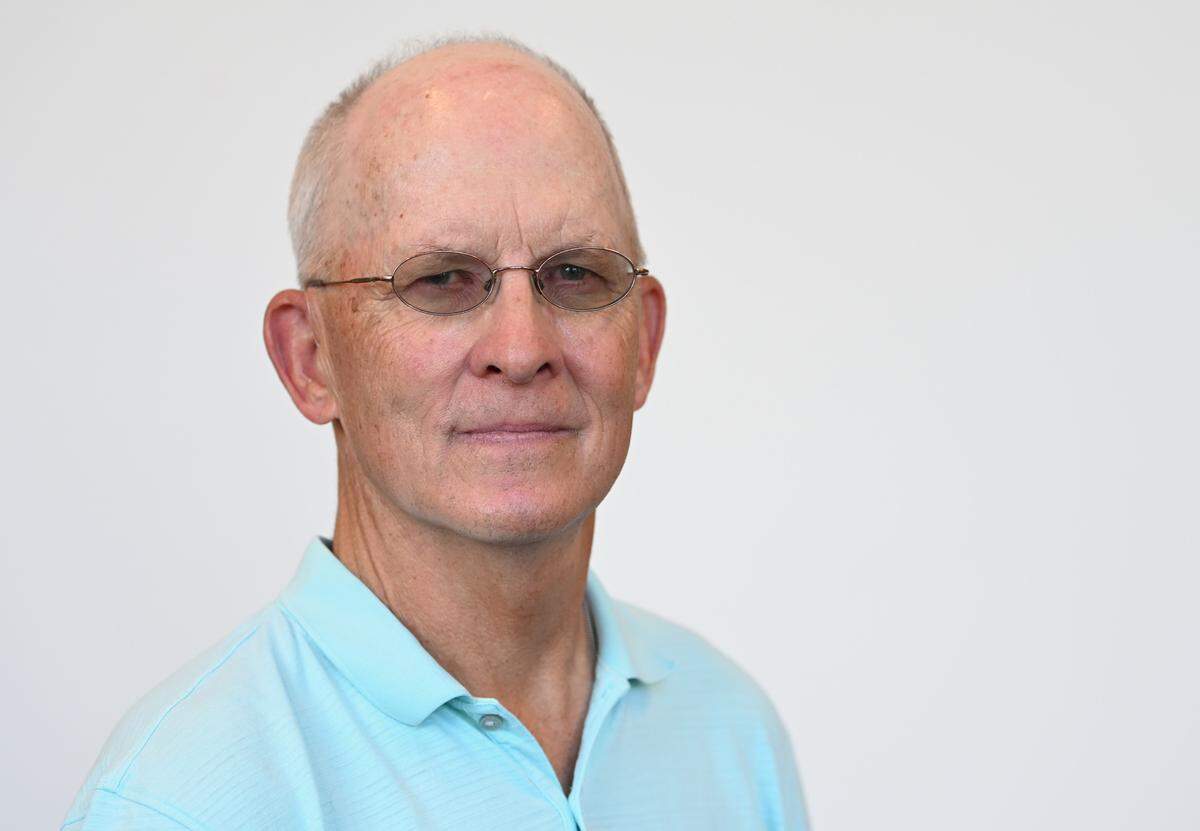
The Sept. 29 virtual program was designed for the country’s 93 U.S. Attorneys and their staffs, according to Mecklenburg Superior Court Judge Lou Trosch, a longtime trainer on the impact of implicit bias — attitudes that unconsciously influence actions and decisions — in the criminal justice system. It had been scheduled for two months, Trosch said.
On Wednesday, under a new executive order issued by the White House, the class was “postponed.”
This week’s directive by President Donald Trump, who visited Charlotte on Thursday afternoon, targets racial-sensitivity training for government workers that uses what one administration leader described as “divisive, anti-American propaganda” to portray the United States as an “inherently racist or evil country.”
Trosch has taught bias training to government agencies, private companies and civic, religious and school groups for more than a decade.
As a judge, he normally avoids comment on political events. But he lashed out Thursday at the White House decision to cancel his training class for prosecutors, saying the administration was blocking timely and important training for its top prosecutors and dictating what federal employees could or could not hear.
“I have had people in my classes vehemently disagree with the premise of implicit bias. I’ve had people walk out. But I have never been told that you’re not being allowed to say things that we disagree with. And that’s chilling to me,” Trosch told the Observer during a phone interview.
“I don’t have a problem with disagreement. America is a place where we exchange ideas. That’s part of free speech. That’s part of being an American citizen. But to not let the conversation happen? That’s not American. That’s a different step that I have never experienced before.
“Part of me is outraged, and part of me is scared.”
Trosch’s comments came only hours before Trump was scheduled to land in Charlotte, the latest stop in a re-election campaign driven in part by the president’s comments about such cultural issues as racism, police tactics, public safety and the Civil War.
As thousands of Americans have taken to the streets for mostly peaceful protests about police use of violence against Black people, the president has decried many of the demonstrators as violent anarchists given free rein in Democratic-run cities.
As part of his effort to woo conservatives, Trump also has pledged that schoolchildren will receive a more “patriotic education.” Instead of one that dwells on slavery and other ills, the new curriculum will “celebrate the truth about our nation’s great history,” the president says.
Two weeks ago, as the administration’s attacks on racial-sensitivity training escalated, Trosch said he was assured by his Justice Department contact that his class was a go as long as he promised not to use such words as “white privilege” and “critical race theory.”
“Basically they were telling me, don’t say this stuff and we think we can get your presentation done,” he said.
On Tuesday, the White House put out a 12-page memo, signed by Trump, titled: Executive Order on Combating Race and Sex Stereotyping.
It criticizes what the president describes as those “pushing a different vision of America ... grounded in hierarchies based on collective social and political identities rather than in the inherent and equal dignity of every person as an individual.
“This ideology,” the order says, “is rooted in the pernicious and false belief that America is an irredeemably racist and sexist country; that some people, simply on account of their race or sex, are oppressors; and that racial and sexual identities are more important than our common status as human beings and Americans.
“Training like that,” the president’s directive added, “perpetuates racial stereotypes and division and can use subtle coercive pressure to ensure conformity of viewpoint. Such ideas may be fashionable in the academy, but they have no place in programs and activities supported by Federal taxpayer dollars.”
The next day, Trosch said he received an email from Julie Lu, acting assistant director of Equal Employment Opportunity/Diversity Management for the U.S. Justice Department, saying that under Trump’s order, Trosch’s bias-training class for federal prosecutors now needed “additional approval.”
“This means we will need to reschedule your presentation until after we receive the additional approvals. I apologize for any inconvenience,” Lu wrote.
How and whether the program will be rescheduled is unclear. Lu did not respond to an Observer email Thursday seeking comment.
A Justice Department spokesman told The Observer that the training program was “merely postponed in order to ensure that it complies with guidance issued by the White House.”
‘Frightening to me’
Charlotte has been a hub of implicit-bias training for more than a decade. It is home to the nationally acclaimed group Race Matters for Juvenile Justice, a public-private collaborative effort designed to alert groups and companies to the existence of racial and socioeconomic prejudices still impacting day-to-day lives.
The city, like others, has been hit by a series of mostly peaceful demonstrations protesting the police killings of George Floyd and Breonna Taylor, among others.
Trosch, a Charlotte native, was one of the original co-directors of the Race Matters group. He frequently tells a story about hearing a case in his courtroom involving two teenage friends from the same neighborhood, one black and one white, who robbed a Charlotte fast-food restaurant. The black youth came before Trosch handcuffed and shackled after spending the night in jail. His white friend stepped out of the courtroom gallery, accompanied by his parents and attorney.
Former Democratic U.S. Attorney Anne Tompkins recalls taking a two-day seminar from Trosch and a fellow Race Matters’ leader, Clerk of Court Elisa Chinn-Gary, that was “so mind-blowing, I couldn’t quit talking about it for weeks.”
Under President Barack Obama and Attorney General Eric Holder, according to Tompkins, implicit-bias training was “this hugely important priority that was rolled out with very little controversy.
“To block this training, especially now when it’s needed more than ever ... that’s the part that’s frightening to me.”
Current U.S. Attorney Andrew Murray, a Trump appointee, has been a visible supporter of bias training. First as Mecklenburg County district dttorney and now as Western North Carolina’s top federal prosecutor, Murray has brought in national experts to discuss the issues with his staffs and law enforcement officers.
Trosch was a longtime Republican judge before switching parties in 2017 in response to what he described as attacks by North Carolina Republicans designed to undermine an independent court system.
He said his bias training program doesn’t tell people what to think, but gives them more to think about. He doubts his program will be rescheduled.
“I know the country is torn apart,” he said. “But this response ... that’s what authoritarian dictators do. ‘We will write the history. We will tell you what the truth is. Your job is to believe what we tell you.’
“That’s where we’re headed, and it’s horrifying.”
Jim Morrill contributed to this story.
This story was originally published September 24, 2020 at 4:12 PM.