As silence surrounds a fatal police shooting, a family and small NC town seek answers
Chris Craven stood watching his children play in the front yard of his Mooresville home when a patrol car cruised by, continued down the dead-end street, then turned around and headed back the family’s way.
It was Sunday, Aug. 2, and Craven, according to his wife, Amy, decided to teach his kids a lesson about respecting police. So he asked his son to offer bottles of water to the officers during their return trip past the home, telling the boy that a cop’s job was “already hard enough” without working outside in the midsummer heat.
“Chris always supported good police,” Amy Craven said in a statement to the Observer this past week. “That’s just the way he was.”
That night, the Mooresville police came back to Craven’s home.
By the time they left, the 38-year-old father of three was dead. According to Craven’s autopsy and an accompanying medical examiner’s report, police had shot him at least 15 times with their .223-caliber rifles.
The incident has touched off a community debate in fast-growing Mooresville — a debate reflecting America’s ongoing examination of the use of deadly force by police, the ability of officers to handle a mental health crisis, even the objectivity of prosecutors in cases involving cops.
In a statement following Craven’s death, the Mooresville Police Department said its officers were responding to a domestic disturbance/assault call from someone inside the house when they found an armed Chris Craven sitting on his front porch.
According to police, the 911 caller said an armed man on the scene had threatened suicide. Amy Craven told the Observer that her husband was in the midst of an emotional crisis and had been taking medication for anxiety and depression.
What happened next remains in dispute.
Police said officers at the home had given Craven multiple orders to show his hands when he suddenly grabbed his weapon and pointed it at them. Amy Craven says her husband was shot as he was following police commands.
Craven died at the scene. He was wearing a holster. Police say they recovered a handgun near his body.
The case is being investigated by the State Bureau of Investigation, whose findings will help determine if any charges will be filed.
Under North Carolina and federal law, police are legally entitled to use deadly force if they reasonably perceive a threat of death or serious injury to themselves, other officers or the public at large.
Up to now, the police account has dominated the narrative surrounding Craven’s death. Bucking a nationwide trend toward greater transparency in cases of officer-involved shootings, no police video has been released to the public in the 10 months since the shooting. Under N.C. law, only a judge can order the video’s release.
Nor has the the department named the two officers involved. However, Craven’s family filed a petition in March with an Iredell County judge seeking the bodycam videos from two officers at the scene — Christopher Novelli and Alexander Arndt — along with their sergeant.
Asked why he had specifically sought the videos of the two officers, Craven family attorney Alex Heroy of Charlotte refused to say.
In an email Wednesday, Mooresville police Chief Ron Campurciani declined to comment to the Observer, citing the SBI investigation. The chief did not respond to an emailed question Thursday on whether Novelli and Arndt shot Craven.
Neither officer could be reached for comment.
Iredell DA steps aside
In recent days, the Craven case has taken a surprising turn.
Iredell County District Attorney Sarah Kirkman, who was to decide whether police violated any laws in connection with Craven’s death, unexpectedly has recused herself from the investigation.
Her decision comes about two weeks after her office posted a Facebook photograph of the prosecutor posing with Mooresville police during a community event.
In the photo, a smiling Kirkman is wearing a white “Back the Blue” T-shirt. Novelli and Arndt are among the rank and file standing alongside her.
The photograph outraged the dead man’s family, according to Heroy, who says he spoke to the prosecutor about whether the image could undermine her decision on the legality of the officers’ actions.
In an email to the Observer on Thursday, Kirkman said that to avoid “even the appearance of any conflict, I requested that another prosecutor handle the case.”
That prosecutor, according to Kirkman, is Andy Gregson, the district attorney in nearby Randolph County. Gregson, a former attorney for High Point police, could not be reached for comment.
Widow disputes police account
Amy Craven is among a small group of people outside of police and prosecutors who have seen video footage of her husband’s death.
“My husband did not pull a gun and he was complying with orders,” she said in a post on May 21 on the Mooresville Police Department’s Facebook page. “Chris was shot with his hands in the air.”
Heroy says the police body-cam footage, which a judge allowed the family to see, shows Craven raising his arms when police order him to do so. Craven also appeared to be lowering himself after officers shout at him to get on the ground, Heroy says.
Seconds later, according to Heroy, the officers opened fire with their high-powered rifles from about 20 feet away. Bullets slammed into the house where Amy Craven and the couple’s three children were huddled, Heroy says. At least one shot penetrated the walls, entered the home, and struck a fire extinguisher, which exploded.
Heroy said Craven’s family heard nothing for months on any details of his death. He says the lack of transparency surrounding police shootings in some N.C. jurisdictions is a statewide problem that demands attention.
“The fact that the family had no idea what happened to their loved one for nine months is unacceptable,” Heroy told the Observer. “... They had to hire a lawyer and go to court to find out.”
‘We will speak up’
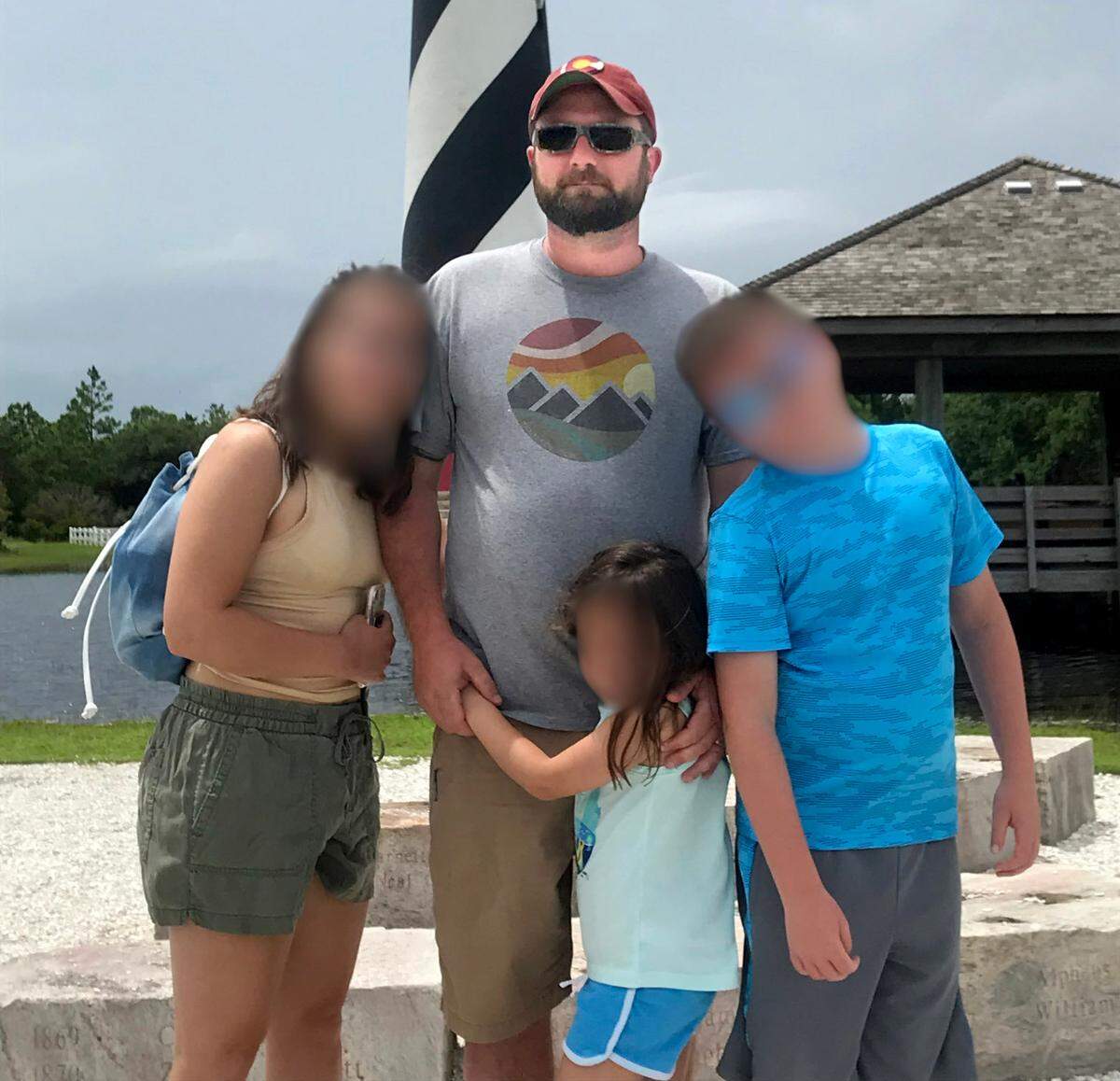
In some respects, Chris Craven doesn’t fit the typical profile of the target of a controversial police shooting. But he fits Mooresville’s.
As with more than 80 percent of the city’s population, Craven was white. As a parts department employee of Hendrick Motorsports, Craven worked in Mooresville’s highest-profile industry — NASCAR.
When NASCAR shut down during the pandemic, Craven became his kids’ stay-at-home teacher. According to his widow, Craven grew up two doors down from where he died.
By August, Craven, like many others, had been beaten down emotionally by the threat of COVID-19.
On the night he was shot, “Chris was struggling with depression and anxiety,” Amy Craven said. She attributed her husband’s emotional problems in part to the stress from the pandemic.
According to a Washington Post analysis of five years of data, the overwhelming number of people fatally shot by police are males age 20 to 40.
People with mental health problems — which make up about a fourth of all fatal police shooting — are 39 percent more likely to be killed in small to mid-sized towns, such as Mooresville, than in either rural or larger metropolitan areas.
Half the roughly 1,000 people fatally shot each year are white, the Post says. But the rate of white deaths in police shootings — 15 per million residents — is less than half that of Blacks (36 per million) and significantly lower than Latinos (27 per million).
In Mooresville, where residents go on Facebook to thank police for helping them with flat tires and school events, and where tributes to fallen police Officer Jordan Sheldon still appear two years after his death, tensions over the Craven shooting keep bubbling to the surface.
On May 20, a routine post on the Facebook page of the Mooresville police citing Alex Arndt’s third anniversary as a child passenger safety technician drew congratulations and thanks. But it also generated angry posts about Chris Craven’s death and other recent department controversies.
▪ An October lawsuit filed by Heroy accuses a former Mooresville officer of handcuffing, sitting on and taunting a 7-year-old autistic student for almost 40 minutes after he saw the boy spitting in a classroom.
▪ A legal complaint filed in April accuses another Mooresville officer of smashing the window of a car during a traffic stop, then dragging the driver — a Black woman from Charlotte — from the vehicle and throwing her down onto the shards of glass.
▪ The department also has been accused of ignoring the orders of two Iredell County judges in a bitter legal fight over almost $17,000 seized by officers during a warrantless search in November. The money is now at the center of separate court cases in the N.C. and federal courts.
“I Believe People Should Follow the Law, Police Should Not Drag People out of Their Cars at Simple Traffic Stops or Shoot Unarmed People Who are DEPRESSED,” one woman wrote in the thread under Arndt’s anniversary photo, using the hashtags of #SilentNoMore and #StopPoliceAbuse. In a separate post, she demanded that the officer be fired.
Another writer, like most critics on the thread, homed in on the Craven shooting and called for the release of the body-cam videos.
”If the police were justified in shooting Chris, release the video,” the man wrote. “It’s pretty simple and they have had plenty of time!! ... What are you waiting for?”
A third said the Craven case is eroding community trust.
“All of us on here Back the Blue,” he wrote. “... We haven’t posted, protested, caused any problems with MPD. But now since we do have facts and footage, we will speak up.”
This story was originally published June 6, 2021 at 6:30 AM.