
Where do NC police get their policies? In Andrew Brown shooting, from 1,376 miles away
When Pasquotank County deputies shot and killed Andrew Brown Jr., the policies they were instructed to follow came from an organization 1,376 miles away in Frisco, Texas.
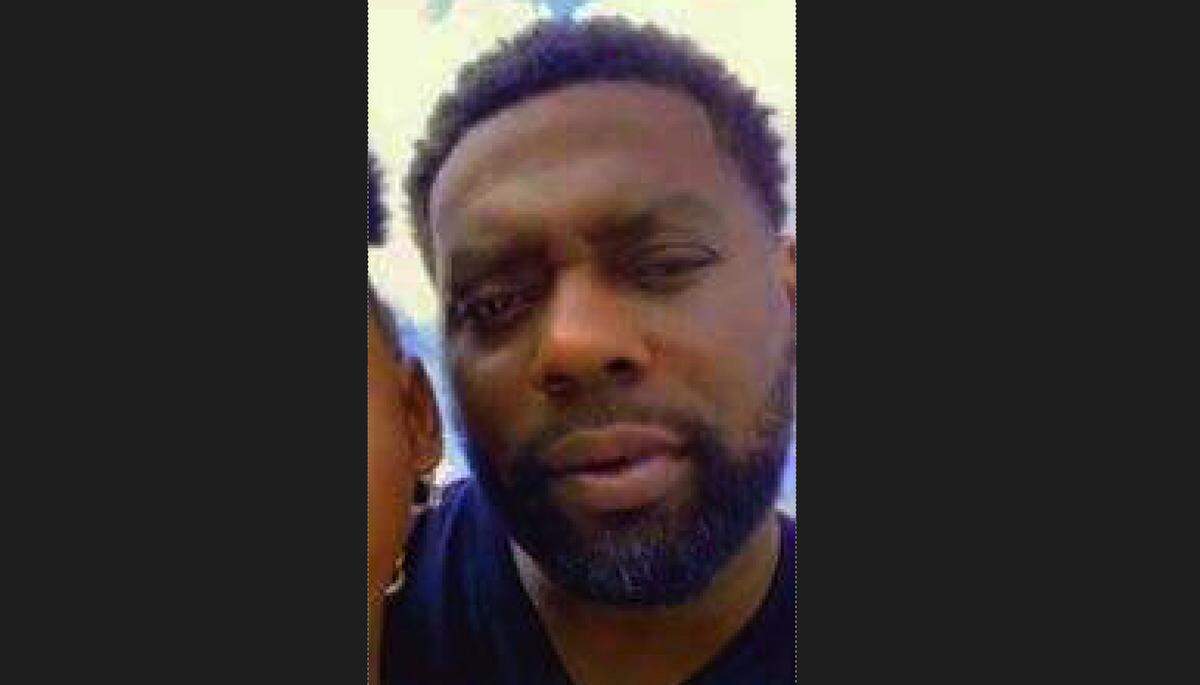
Brown, 42, died on April 21 after a bullet struck him in the back of the head while he was driving away from deputies who had tried to serve search and arrest warrants against him.
The Pasquotank County Sheriff’s Office is one of many law enforcement agencies in 35 states that use Lexipol to create their policies on a wide range of topics including use of force.
Two attorneys created Lexipol in 2003 to develop policy and procedures for use by law enforcement agencies across the country.
Lexipol’s website highlights its use-of-force policies including a policy regarding shooting at moving vehicles.
“Shooting at moving vehicles, whether in an attempt to disable the vehicle or neutralize the driver, is often ineffective and dangerous,” the policy states. “It typically does not stop the vehicle, fails to mitigate the threat to the officer, jeopardizes uninvolved people, and injures or kills occupants.”
But the policy doesn’t say to never shoot at moving vehicles.
The policy says to only fire a weapon at a moving vehicle if the officer believes there is “no other reasonable means available to avert the vehicle.”
Lexipol’s website acknowledges there is a movement to ban firing upon moving vehicles altogether, but adds that that notion goes against Supreme Court rulings and that sometimes shooting at a moving vehicle is the only way to stop death or serious injury.
The company does suggest “robust” training of officers engaged in use of force.
Who writes the policy?
Pasquotank County’s decision to use the policies of an outside agency made headline news around the country following Brown’s death.
Deciding whether to create policies in-house or have them created by an outside company depends largely on the staff itself, said Eddie Caldwell, executive vice president and general counsel for the N.C. Sheriffs’ Association.
“I mean, certainly your use-of-force policy is either going to have to be written by or reviewed by a lawyer,” Caldwell said. “In some cases the county attorney might be very well suited for that. In other cases, they might be very well suited for zoning laws and aren’t particularly well suited for use of force.”
Caldwell said about 10 to 15 sheriff’s offices in North Carolina have their own legal advisers. He said the rest contract with two or three law firms that specialize in law enforcement advice and assistance.
Caldwell said he knows sheriff’s offices often turn to Smith Rodgers in Greensboro and the Law Office of David Wijewickrama in Waynesville.
He had also heard that some sheriffs used Lexipol to create policies.
Lexipol is also a major sponsor of the sheriff’s association’s annual conference.
Caldwell said writing policy is tedious work that requires someone to “hang on every comma and word.”
“Smaller agencies may not have personnel that either have the experience with that kind of thing or just the time,” Caldwell said. “It’s very time consuming.”
Pasquotank Sheriff Tommy Wooten said having Lexipol’s “subject matter experts” and attorneys develop state-specific policies frees up time for his staff to focus on serving the community.
“Small offices like ours cannot afford to continually monitor nationwide standards and best practices while also monitoring any changes in state and federal laws and regulations,” Wooten said in an email to The News & Observer.
“By using Lexipol, this ensures we have an up to date policy manual so we are operating and providing the best service to our community while also saving tax dollars.”
Wooten said his predecessor as sheriff, Randy Cartwright, bought Lexipol’s services.
Lexipol’s reach in NC
The News & Observer contacted Lexipol to learn how many law enforcement agencies have purchased the policy from the company.
“We don’t provide state breakdowns of our customers,” said Shannon Pieper, senior director of marketing content with Lexipol.
Pieper did say Lexipol serves more than 8,000 public safety agencies and municipalities across the country that use any of its services.
About 4,500 customers subscribe to the police management system, but that number also includes fire departments, correctional facilities and local government agencies.
Lexipol includes summaries of the use-of-force policies it provides to law enforcement agencies on its website.
“For law enforcement policy to be effective, it must be applicable, practicable and functional,” the website states. “With more than 2,075 years of combined public safety experience, Lexipol’s policy developers and attorneys carefully craft policy to include state and federal legislation and case law, but also to reflect the dynamic nature of the policing profession.”
The policies include, among other things, duty to intervene, deescalation practices, providing medical aid and use of carotid restraint, which reduces blood flow to the brain causing a person to become unconscious.
Lexipol also provides policies for officers on how and when to give a verbal warning before using force.
The summary said that officers are generally expected to give a verbal warning prior to using deadly force when it is safe and possible.
But that brings up questions on what an officer should do if someone is driving away from officers, as Brown was doing.
In Brown’s case, video shows he reversed the vehicle to pull away from deputies standing in front of his car. He then pulled forward, as a deputy put his hand on the hood of the car, but deputies didn’t begin firing until they were behind Brown, who was driving away.
Past case law says officers should give verbal warnings of deadly force to a “fleeing felon” when possible, but that case law doesn’t require the warning, Lexipol’s policy states.
In Brown’s case, deputies can be heard yelling at Brown to “Stop!” and “Stop the ... car,” but there’s no audible warning that they’re about to shoot.
Caldwell said police use-of-force policies are all based on the 1989 Supreme Court case Graham v. Connor and that means policies should be fairly uniform from agency to agency.
Lexipol does note on its website that its policymakers pay attention to changes in federal and state laws to ensure that it is providing law enforcement agencies with policies based on the laws governing their states.
Uniform policies nationally?
Wooten said that Lexipol provides “constitutionally sound polices” that comply with federal and state laws.
He said Lexipol provides law enforcement agencies of all sizes with policy that reflects the thinking of agencies across the country.
“The worst policy is one created in a vacuum,” Wooten said. “For decades, many departments created their own policies in isolation, often with inadequate resources and a limited perspective. This is particularly common given that about half of all police departments across America have less than 10 uniformed officers.“
Kerwin Pittman, a social justice activist who serves on Gov. Roy Cooper’s Task Force for Racial Equity in Criminal Justice, said he would prefer agencies not create policies in-house.
“The main baseline for use-of-force polices should all be the same,” Pittman said. “It is just a set of policies that need to be put in place on the federal level and making sure these smaller agencies on the state level adopt these policies.”
Pittman said he’s not OK with individual states adopting their own laws.
“Then you see a mismatch in use-of-force policies state-to-state, so it should be one,” Pittman said.
He added that not having a uniform federal policy is allowing states to create loopholes or weak use-of-force policies
Pittman said that creating a baseline policy for agencies across the state is something that the task force is considering.
The Triangle
Many Triangle law enforcement agencies are using policies created in-house in deciding when to use force.
Many of the policies are similar, if not identical, to Lexipol’s. Wake County uses a more proscriptive policy than the company’s.
The Wake County Sheriff’s Office policy says officers may not shoot at a moving vehicle.
Eric Curry, spokesman for the Wake County Sheriff’s Office, said he has never heard of a law enforcement agency purchasing policies from another company. He said the sheriff’s office creates its policies in-house.
The Raleigh Police Department’s policies provide the name of the person who prepared its policy, who signed off on the policy, when the policy was created and the date of any policy it supersedes.
One Raleigh Police Department policy bans shooting at moving vehicles but adds some caveats.
“This restriction shall not apply when the use or imminent use of deadly force other than the vehicle itself is being used against the officer or another person by the driver or occupant of a vehicle,” Raleigh’s policy states.
The policy states that officers may not intentionally put their body in the path of an oncoming vehicle and to take appropriate steps to get out of harm’s way if a vehicle is coming toward them.
Raleigh’s policy tells officers that firing a weapon at a moving vehicle jeopardizes innocent people. It says someone could be harmed if the driver loses control of their vehicle.
It further states that shooting at a vehicle could harm innocent passengers in the vehicle, or people nearby.
“Due to the risks and considering that firearms are not generally effective in bringing a moving vehicle to a rapid halt, officers shall not fire at a moving vehicle,” the policy states.
The Durham Police Department writes its own policies. The agency doesn’t outright ban shooting at vehicles but suggests against it.
“Firing at moving vehicles is prohibited except in those situations where the immediate probability of serious injury or death exists for the officer(s) and/or an innocent third party,” Durham’s policy states. “Officers must reasonably believe that the only means of protecting themselves or a third party in this situation is the use of deadly force.”
The Orange and Johnston county sheriff’s offices use policies created by outside companies.
Orange County uses Lexipol, the same policymaker as Pasquotank County.
Johnston County uses Brennan Consulting and Training Services. Johnston County did not provide an electronic copy of its policy, stating instead that it could be viewed in-person at the sheriff’s office.
Larger cities
Caldwell said it’s “speculative but probably accurate” that larger agencies tend to create policies in-house, while smaller agencies turn to outside groups.
He added that some smaller agencies will adopt the policies of larger agencies for use.
The News & Observer reached out to larger metropolitan areas in North Carolina to find out how the sheriff’s offices in other communities write policies. Only the Guilford County Sheriff’s Office failed to respond.
The Forsyth County Sheriff’s Office writes its policies but does not have any regarding shooting at vehicles, said Christina Howell, the sheriff’s spokeswoman.
The Buncombe County Sheriff’s Office has a four-page policy on the creation of its policies itself. The policies are created specifically for Buncombe County deputies and can only be created by the sheriff or his “designees.”
The Buncombe County Sheriff’s Office does have a policy on shooting at moving vehicles, which tells deputies to move out of the path of moving vehicles and not to intentionally put themselves in its path.
The policy allows deputies to shoot at a moving vehicle only if the vehicle is being used as a weapon and could cause serious injury or death, deadly force besides the vehicle is being used by the suspect or a deputy is out of other options to stop death or serious injuries from happening.
Deputies are told not to attempt to disable the vehicle by shooting at it.
The Mecklenburg County Sheriff’s Office also drafts its own policy, according to Janet Parker, spokeswoman for the sheriff’s office.
Deputies in Mecklenburg are also permitted to fire at a moving vehicle but in restrictive circumstances.
The policy allows for this only if deputies believe that firing a weapon is the only means to protect themselves or another person from imminent serious injury or death.
The policy also requires deputies to consider the safety of bystanders when deciding whether to fire at or back away from a moving vehicle.
This story was originally published July 14, 2021 at 5:45 AM with the headline "Where do NC police get their policies? In Andrew Brown shooting, from 1,376 miles away."
