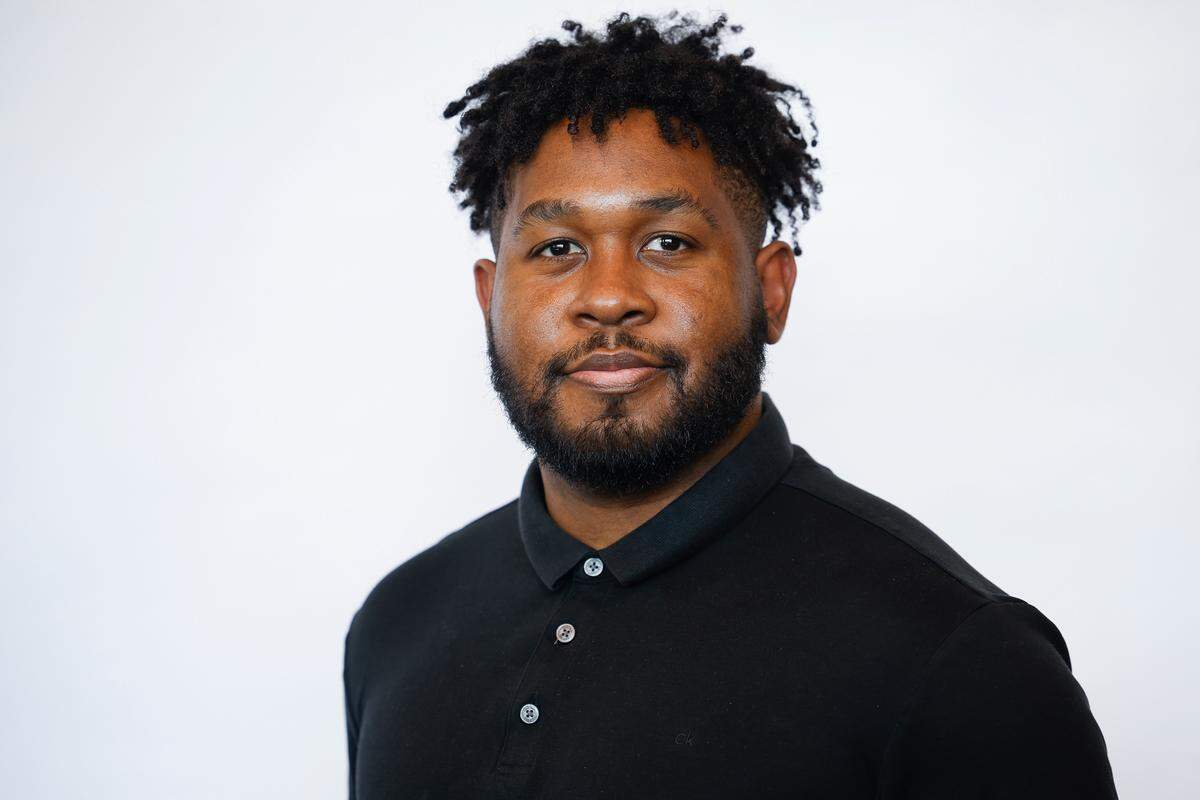
Former Charlotte drug dealer hopes to help calm a city that he once brought pain
.jpg "Belton L. Platt served 21 years in prison and lost three sons to gun violence, but now he’s the new site supervisor for the city and county’s Alternatives to Violence Program.")
From an early age, Belton Platt says, he had a desire to help his people. But the way he went about improving his community also hurt it.
A 21-year federal prison sentence later, Platt, now 57, is shedding the “Money Rock” nickname he earned during his drug-dealing heyday to focus on helping prevent others from going down the same destructive path.
“I’ve always had a desire to help people, even when I was out there” dealing drugs, Platt said. “I bought kids shoes and helped single mothers, but that good don’t outweigh the bad.”
Last Tuesday, Platt got a chance at redemption when city and Mecklenburg County officials named him the site supervisor for the new Alternatives to Violence program.
ATV is an interrupter program led by community members from violence-stricken neighborhoods that trains them to intercede before violence happens and to help prevent recurrences.
Platt’s credibility within the community and suitability for the job makes his hiring a “perfect fit,” he said.
“This is a match made in heaven,” Platt said. “I’m going to try and make a difference.”
Pam Kelley, a former Observer reporter and the author of “Money Rock: A Family’s Story of Cocaine, Race, and Ambition in the New South,” said the ATV job was appropriate for the subject of her book.
“He’s been kind of preparing for it for a number of years now,” she said. “With what he’s been doing since he got out of prison, and even when he was a drug dealer, he had this desire to help people. As crazy as that sounds, he really did.”
Following in mother’s footsteps
Platt credits his mother, activist Carrie Graves, for influencing his desire to help Black people.
Graves made a young Platt join protest, read Black history books, watch Black history films and help Black candidates with their political campaigns.
Watching neighborhood drug dealers rake in cash without helping their community, Platt says, made him want to “make all the money” so he could give back. He tried beating them at their own game, and became one of the biggest drug dealers in Charlotte in the 1980s.
“That’s how I help out people,” he said. “That was my mindset, not realizing that I was literally being a part of this conspiracy to destroy our people by selling them that poison and bringing it into the Charlotte area and pumping those drugs into the neighborhood.”
Platt was surrounded by violence during his adolescence, and even in his home. At age 5, he said, he watched his father try to stab his mother to death.
As an adult, Platt lost three sons to gun violence.
“I could have given up, but I had to keep moving and I had to keep living,” he said. “I could have been mad at (his father), I could have been angry but I wouldn’t be here with you today.”
While incarcerated, Platt said he realized that he couldn’t blame the white man, his abusive father or anybody else. He only could blame himself, he said.
“You made choices, you decided to do what you decided to do and there are consequences,” Platt said.
‘A new era’
Before Platt got out of prison in 2010, he said he stood up on a picnic table, looked up to heaven and said, “Father I messed up my life, but what’s left of my life, if you can use it, I give it to you to use for your glory, honor and praise.”
“At that moment in my life, I didn’t hear thunder roar or see lightning strike, so I knew God heard me,” he said. “That was the beginning of a new era of Belton Lamont Platt’s life.”
Upon Platt’s release from prison, he moved to Conway, S.C., to become a pastor. He preached in Conway for eight years, before he said the Lord spoke to him again.
Platt and his wife packed up and moved to Charlotte on June 27, 2018.
“I learned that that was my place of preparation,” he said of Conway. “God was preparing me to come back to Charlotte.”
Sunday hoops
Platt said he initially didn’t know why God wanted him to return to Charlotte, but one day in 2019, he said the Lord spoke to him again and told him to begin a youth program called Sunday Hoops.
Every Sunday, from 1 p.m. to 5 p.m., Platt brings youth from all over Charlotte to a gym at New Shiloh Baptist Church. The youth — ranging from ages 12 to 25 — participate in basketball, other team activities and empowerment sessions.
“We use basketball to help them cross those barriers that they would not normally cross if they were just out there in the streets,” Platt said. “You’re going to play on the same team whether you are from the north side, west side, east side, south side, Blood, Crip, Gangster Disciple, Hidden Valley King, Black or Asian. We bring unity.”
Typically the age range for homicide suspects in Charlotte has been the 18- to 35-year-old demographic. But by this year, CMPD was seeing a shift toward the 15-to-24 age range, police Lt. Bryan Crum told the Observer in June.
“These kids are out here killing, and they’re out here being killed, because they lack knowledge,” Platt said. “I want to educate them.”
Kids need to know their constitutional rights, the laws and the consequences of their actions, Platt said. He said he’ll teach the youth lessons by getting lawyers and other guests to speak, but by also using his own personal experiences.
“That was me,” Platt said of Charlotte’s troubled youth.
Having lost three sons, Platt said he felt like Sunday Hoops and the ATV job were an opportunity for him to be what his sons didn’t have while they were alive.
“I believe we can make a big change in the lives of people,” he said. “I’m excited!”