Charlotte police officer convicted in fatal collision with pedestrian, resigns from force
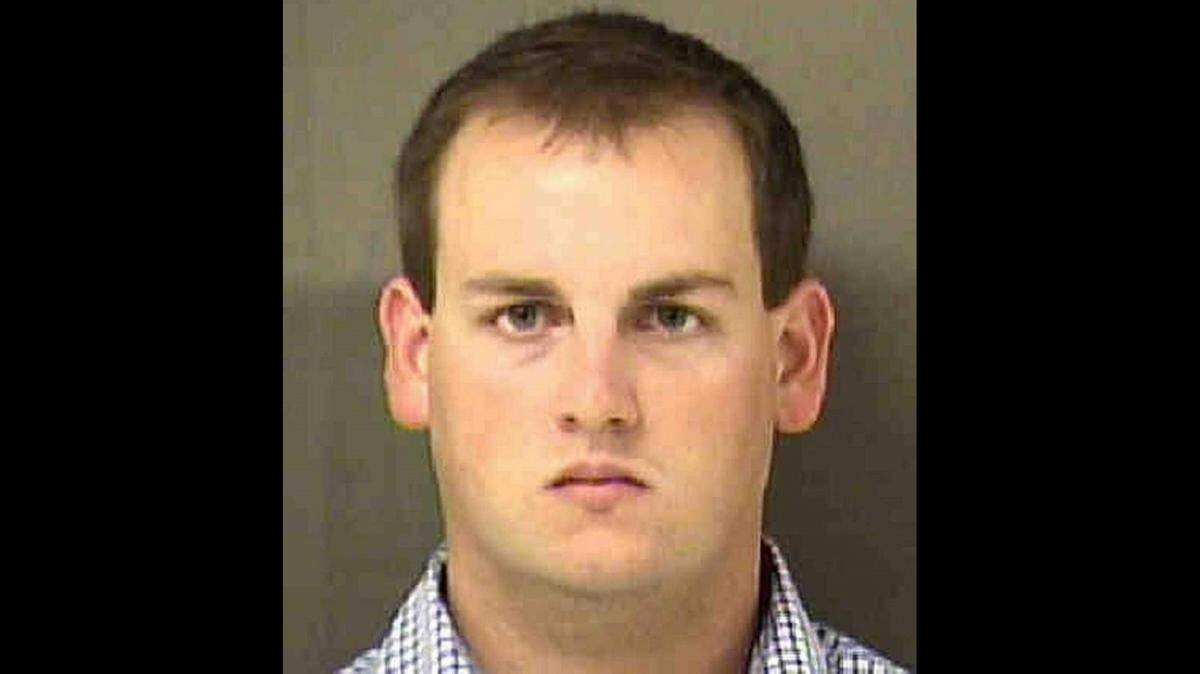
A Mecklenburg County jury on Wednesday convicted a police officer of misdemeanor death by vehicle in connection with a fatal 2017 wreck in which he struck a Charlotte pedestrian at more than 100 mph.
In doing so, the six women and six men set aside an involuntary manslaughter charge against Charlotte-Mecklenburg Police Officer Phillip Barker that could have put him in prison.
Instead, Superior Court Judge Robert Ervin handed down a 60-day suspended sentence and community service while also suspending Barker’s driver’s license for a year.
After the trial ended, Barker resigned from CMPD. He had been on unpaid administrative leave since the collision. Along with the manslaughter charge, Barker was also tried on two counts of misdemeanor death by vehicle.
Barker was responding to a “priority one” accident call on the morning of July 8, 2017, when his car collided with James Michael Short, 28, on Morehead Street, near Euclid Avenue. According to his toxicology report, Short was heavily intoxicated at the time.
In reaching its verdict, the jury unanimously agreed with prosecutors that Barker had not shown “due regard” for the safety of others when he drove more than 100 mph in a 35 mph zone. That finding disqualified him from the law enforcement exemption from speed laws. The jury also ruled that Barker’s driving speed had caused Short’s death.
Barker’s defense team, Charlotte lawyers Michael Greene and George Laughrun, declined comment Wednesday.
Video from Barker’s body camera, which Mecklenburg County Assistant District Attorney Glenn Cole played five times during his closing argument Tuesday, showed the windshield of the officer’s Chevrolet Caprice patrol car exploding upon impact with Short’s body.
The trial was the first of a CMPD officer for an on-duty death since 2015. In the end, the jury convicted Barker of the original charge he faced after the incident. In December 2017, however, prosecutors took the case before a grand jury, which handed down the involuntary manslaughter indictment.
Throughout, Barker stoically watched from the defense table backed by rows of family and friends, including his father, a retired CMPD officer.
Short’s family also was on hand for some of the testimony. When police video of the collision was shown for the first time, Short’s mother began crying and left the courtroom.
After the verdict, CMPD Chief Johnny Jennings announced Barker’s resignation on Twitter. He also added this:
“Although this case comes to a close after a decision was made today in the courtroom, this is a tragedy that both the Barker and Short families will carry with them the rest of their lives. My thoughts and prayers are with them.”
Prosecutors had argued that Barker was reckless and indifferent to the safety of others when he led two other patrol cars on a 3 a.m., 1.3-mile sprint down Morehead in response to a reported wreck at Kings Drive.
Barker’s former driving instructor, who testified that Barker had violated his training in how he drove on the night of the collision, said the officer would have saved 90 seconds by driving 100 mph to the reported wreck site at Morehead and Kings.
“It would have saved him a minute and a half. Was it worth Michael’s life?” Cole asked the jury Tuesday.
“The answer is no.”
Barker, according to Cole, never slowed as he sped through intersections with traffic signals, as he was required to do under CMPD training.
“If he had exercised due regard for the safety of others, none of us would be here. But that didn’t happen. As a result, Michael Short is dead. His future is gone.”
“One hundred miles per hour was reckless and unreasonable on Morehead, no matter what the time, no matter what the day,” Cole said. “It’s a major street in a major metropolitan area.” Barker, he said, could not assume “there wouldn’t be any hazards in the road way.”
The defense attorneys, who said before the trial that they had scheduled up to 20 witnesses, rested their case Monday morning without calling one.
In his closing argument, defense lawyer Greene mocked the prosecution’s case, saying it took less time than jury selection and had not proven beyond a reasonable doubt that Barker had committed a crime.
As Barker and a large contingent of family and friends watched, Greene contended that Barker had a responsibility to respond to the high-priority accident call as quickly as he could. He was driving a well-lit street he knew well, at a time when it would typically have been free of traffic and pedestrians.
Barker was driving in the left lane of Morehead, leading two other police cars toward the accident scene. All three had their emergency lights and sirens running.
Greene, counter to the prosecution, said Barker never saw Short, who was wearing dark clothing and was standing in the roadway near the Kings-Euclid crosswalk.
Short, who had been drinking heavily at a South End bar earlier that night, had a blood-alcohol level of more than three times the legal limit at the time of his death. He had also ingested a large dose of Xanax, a combination that could affect his thinking, perception and balance.
Greene reminded the jury that Short’s brother had testified that the dead man had long taken medication to treat schizophrenia and bipolar disorder, and that witnesses said Short was slurring his speech and had trouble walking when he was escorted out of a bar the morning he died.
This story was originally published December 14, 2022 at 12:49 PM.