‘I don’t want people walking through my backyard’: Court settles neighbors’ greenway fight
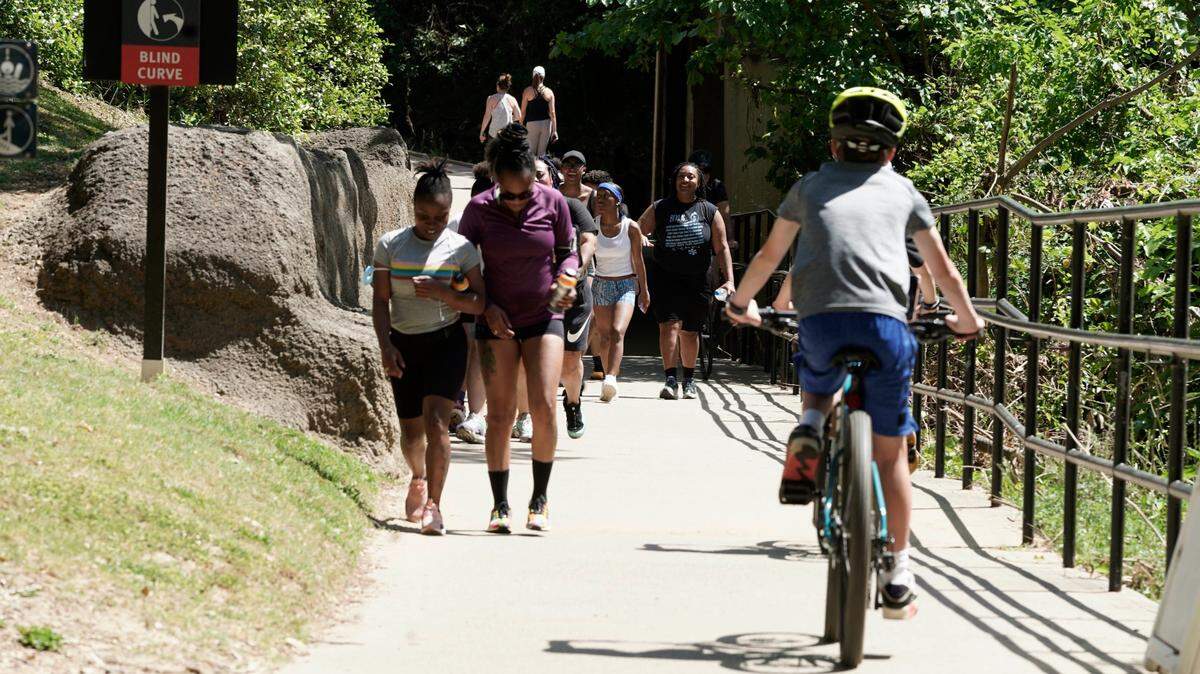
Greenways are designed to bring people together.
Not in Park Crossing.
For five years, homeowners in this south Charlotte residential community off Park Road have been fighting each other in court over whether their neighborhood should have links to the nearby — and wildly popular — Little Sugar Creek Greenway.
This week, the last legal shot in the longstanding civil war of backyard arguments and accusations, police calls, and years of litigation appears to have been fired.
In a unanimous ruling released Tuesday, a three-judge panel of the N.C. Court of Appeals ruled in favor of the majority of Park Crossing residents who are pro-greenway access.
In doing so, the panel upheld a 2021 ruling by Mecklenburg County Senior Resident Superior Court Judge Carla Archie that found the easements connecting Park Crossing to the greenway are legitimate.
The new ruling sets aside the arguments of Rod and Lynne Worthington, who live along one of the easements and were the last remaining Park Crossing residents fighting the greenway links.
The Worthingtons told The Charlotte Observer on Wednesday that they have been unfairly cast as villains by many of their neighbors.
“Everybody wants the greenway. I get it. I’m all for it. I’m an environmentalist,” Rod Worthington said in a phone interview. ”But I don’t want people walking or biking through my back yard. I don’t want a concrete path on my property.”
Because the appeals court ruling was unanimous, the Worthingtons do not have an automatic right of appeal. They can only petition the state Supreme Court to review the case, which Rod Worthington says he and his wife will not be doing.
Charlotte lawyer Eric Rosenwood, who represented the Worthingtons’ neighbors before the appeals court, told the Observer in an interview that the ruling gives Park Crossing residents what almost all of them have wanted all along — easy access to one of the most popular outdoor amenities in all of Charlotte.
Park Crossing, developed in the 1980s along Park Road near South Mecklenburg High School, has more than 600 homes. But only a few of those houses — including the Worthingtons’ — fall along the easements that have been used as neighborhood paths to the greenway.
The easements were a planned part of the development from the beginning, key elements of Park Crossing’s “pedestrian walkway systems” that connected the homes to what is described in court documents as a swampy “floodway fringe area” along Little Sugar Creek.
At first the access points caused little controversy because the undeveloped creek was a poor pedestrian draw and few Park Crossing residents used the easements.
That began to change in 2001 when Park Crossing’s developer sold the so-called fringe area to Mecklenburg County. Soon after, the City of Charlotte began building the greenway, a walking, biking and running path that starts north of uptown and ends at the S.C. line.
Park Crossing backs up to a 2.4-mile-stretch of the urban pathway between Huntingtowne Farms and I-485 that opened in 2019. Residential traffic on the neighborhood’s easements quickly grew, according to court documents. So did efforts by some of the homeowners who lived at the access points to stop it.
Fences or rope and string barriers went up, documents show. Arguments broke out. Neighbors called police and reported that other neighbors were trespassing. There were complaints about noise and the fear that interlopers from outside Park Crossing would soon be invading the neighborhood to use the greenway links.
The tensions became a matter of public debate in 2019 when a small group of Park Crossing residents sued to have the courts declare that the easements were legal and to keep the opposing side from blocking them.
Meanwhile, the neighbors — as neighbors often do — kept talking. By the time the sides came back to court in August 2021, according to Rosenwood, the pro-greenway faction had reached agreements with all the original opponents except the Worthingtons, who live next to a 10-foot-wide easement that crosses 5 feet onto their property.
Rod Worthington says he and Lynne have never stopped anyone from using the easement on their property line and only got involved in the court fight because they were sued by their neighbors first. He says he filed the appeal out of principle.
“We live at the end of a cul-de-sac. We like our privacy,” he said. “I told myself, ‘You know, if I don’t fight this I’ll always regret it for the rest of my life.’ But the court system is not about justice.”
In the court of appeals hearing, the couple’s attorney argued in part that the easements had become invalid once Mecklenburg County bought the adjoining swampland and that the easement next to their home had become “a public way” without their consent.
All the arguments failed — first in Mecklenburg and then before North Carolina’s second highest court.
According to Rosenwood, an out-of-court settlement reached between almost all of the Park Crossing neighbors calls for two links to the greenway. One is already paved and being used. Construction of an access point next to the Worthingtons comes next.
According to the advocacy group Sustain Charlotte, greenways connect communities, reduce traffic, drive economic investment as well as provide space for wildlife and outdoor activities. The group is pushing local government to have a 200-mile system in place by 2035.
Not all Charlotte neighborhoods want them. According to the Charlotte Ledger, the county revised its plans for an extension of the McAlpine Creek Greenway in 2020 after a neighborhood near Carmel Country Club in south Charlotte raised concerns about parking and traffic.
That said, most people consider having a greenway near their home to be a huge amenity, says Rosenwood, himself a cyclist and runner.
Worthington says he realizes that many of his neighbors consider him the bad guy. But he says he’s not going to allow the dispute to force him and Lynne out of Park Crossing, which he says has happened to other homeowners who opposed the links. He claims other residents dropped their opposition after the lawsuits were filed or were paid by their neighbors to do so.
Not him.
“Look, we’ve lived here for more than 20 years,” he said. “I don’t want a bunch of people running me out of my home. Would you?”
Gavin Off contributed.
This story was originally published February 9, 2023 at 6:00 AM.