Release vital DNA evidence in Kim Thomas case now, attorney asks judge in new filing
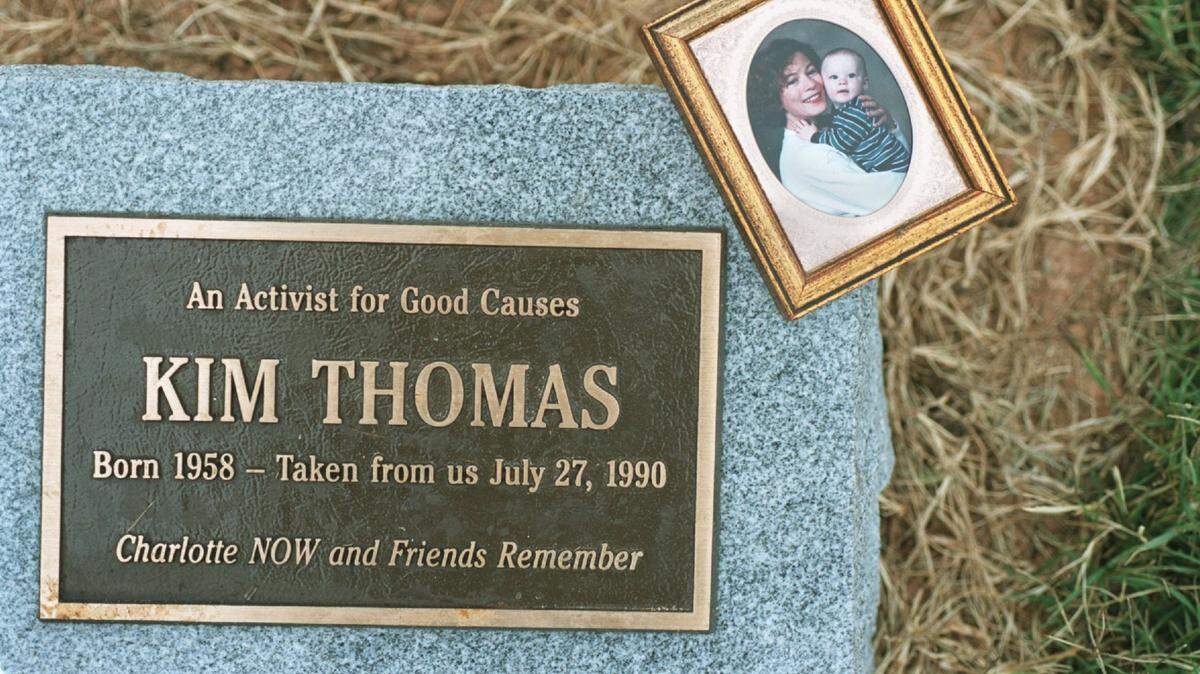
This story was updated on Tuesday, April 18, 2023, with a statement from the Charlotte-Mecklenburg Police Department.
The unsolved Kim Thomas murder case, a criminal mystery that has hung over the city of Charlotte for more than three decades, appears headed back to court for the second time in six weeks.
The issue: Whether DNA evidence that could identify Thomas’ killer should be made public.
In February, Superior Court Judge George Bell ordered the Charlotte-Mecklenburg Police Department to release all DNA testing from the investigation for the first time.
But in deference to what a police attorney described in court as an active “cold case” investigation surrounding the 33-year-old killing, Bell limited the release to attorneys for Thomas’ family and her former husband Dr. Ed Friedland, who was charged for a time with his wife’s brutal slaying in the couple’s Cotswold home. The charges were later dropped.
Bell banned the lawyers and family members from disclosing the test results until they become public on Dec. 31.
Now the judge has been asked to reconsider.
In a motion filed this month in the Mecklenburg County courts, David Rudolf, Friedland’s attorney, again is arguing that the public deserves to know now who killed Thomas, a 33-year-old Charlotte mother, doctor’s wife and activist who was found handcuffed and slashed to death on July 27, 1990.
While not describing the DNA testing he and Friedland received, Rudolf attached the sealed results to his motion for Bell to read.
Meanwhile, he strongly hinted that the findings — which, he says, had never been shared with the families or their attorneys before — prove Friedland’s innocence and points toward the real killer.
In his motion, Rudolf accused CMPD of failing to publicly exonerate Friedland despite having the evidence to do so since at least 2010.
He attributed the police silence to “the desire to cover up” what he described as CMPD’s mishandling of the early investigation and its failure to follow or disclose evidence that would have cleared Friedland’s name decades ago.
Moreover, Rudolf announced his intention to file a lawsuit on Friedland’s behalf against CMPD, claiming intentional infliction of emotional distress.
Reached by phone Thursday, Rudolf declined comment to The Charlotte Observer, saying, “The motion speaks for itself.”
CMPD attorney Jessica Battle did not respond to an Observer email seeking comment Thursday.
In a Tuesday statement, the police department said the Thomas case remains open and that it would not release any DNA evidence unless ordered to do so by the judge.
“No suspects have been eliminated or exonerated in this case,” the statement said. “CMPD does not release the current investigative status of labs, even on cold cases, because it could jeopardize a case or impact a future defendant’s right to a fair trial. We will comply with any subsequent orders of the court.”
The long-running investigation resurfaced in December after Rudolf says he was told by a CMPD homicide detective that police had matched DNA found at the murder scene with Marion “Pool” Gales, a 60-year-old career criminal long linked to the stabbing.
Gales is now serving a prison sentence for burglary and the killing of another woman. He is scheduled to be released in March 2025, according to state records.
In a December motion, Rudolf asked the courts to order CMPD to release DNA evidence, setting the stage for Bell’s order in February.
“The people of Charlotte and Mecklenburg County deserve to know who actually killed Kim Thomas, and why Marion Gales was permitted by the CMPD to avoid responsibility for the crime, which allowed him to commit additional crimes,” the attorney wrote in his earlier filing.
During the opening stages of the CMPD investigation, Gales was a main suspect. He had a history of attacks on women, had done odd jobs for Thomas in the weeks leading up to her death, and, according to his family, had been burglarizing homes in the area to steal jewelry that he sold to buy cocaine.
Four years after Thomas’ death, however, police persuaded prosecutors to indict Friedland on capital murder, putting him in line for a possible death sentence.
The criminal case against the physician was dropped in March 1995 when the judge and the Mecklenburg County District Attorney’s Office learned that CMPD had collected a significant amount of evidence linking Gales to the crime that detectives had never shared with prosecutors.
No arrests have since been made.
Dating back at least 15 years, CMPD has made a series of public announcements updating the investigation, and that police were using improved DNA technology to test forensic evidence in the case.
In his motion, Rudolf says police received new test results in 2008, 2009, 2010 as well as 2020, 2021 and twice in 2022.
As a result, he says in his filing, the police contention that the public release of those test results would undermine any ongoing police investigation doesn’t make sense.
“ ... (T)he perpetrator of this murder has known for more than a decade that his DNA was found at the crime scene,” he wrote.
Meanwhile, Rudolf says he and Friedland saw the evidence for the first time on March 30.
This story was originally published April 14, 2023 at 9:44 AM.