
Miles Bridges’ arrest warrant was months-old — why wasn’t it served in Charlotte?
When Charlotte Hornets forward Miles Bridges turned himself in at the Lincoln County jail, he had not been served with an arrest warrant for nine months.
You don’t have to be a hoop star to slip through the cracks, though.
Deputies often don’t serve warrants on suspects until a chance encounter, a major at the Mecklenburg County Sheriff’s Office told The Charlotte Observer.
There are about 1,000 unserved warrants in the sheriff’s office’s repository, spokesperson Bradley Smith said in an Oct. 19 email. Deputies might serve 10 to 20 on a typical day, he said.
Miles Bridges arrest warrants
Last year Bridges pleaded no contest to a felony domestic violence charge, agreeing to a three-year probation period with no jail time, The Charlotte Observer reported.
He got a second chance. In July the Hornets announced that he had signed a qualifying offer to play for them in the 2023-24 season.
“I sincerely apologize for the pain, embarrassment and disappointment that last year’s incident caused so many people,” he said in a statement. “Time away from the game allowed me to reflect, immerse myself in therapy and prioritize becoming a better person — someone my family and peers can be proud of.”
Now, he faces new allegations.
The long unserved Jan. 2 arrest warrant says that he violated a domestic violence protective order by repeatedly contacting his ex-girlfriend. And a criminal summons filed this month says that he threw pool table balls at her car’s windshield, smashing it while children were inside.
Mecklenburg County deputies tried to serve the January warrant and the criminal summons — but not until October, Smith, the spokesperson for the sheriff’s office, said.
“Once we found out about the warrant, we made a couple of attempts to serve that warrant, or violation of the DV order, but he wasn’t there,” Mecklenburg County Sheriff’s Office Maj. Bryan Adams said. “I think he got word that we were coming to his home, and we told him that he needed to turn himself in. But he chose to do it in Lincoln County.”
How police find people
The sheer number of warrants creates a math problem.
“You have to understand this: Mecklenburg County citizens come down every day, all day and put warrants on different people,” Adams said, speaking generally on the process of serving and tracking charges.
Warrants go into a repository system once they’re filed. But when and if they get served can be up to chance.
“When I first started with the Mecklenburg County Sheriff’s Office, we had a fugitive unit,” Adams said. “So, that’s all we did all day, every day. We would get the most recent warrants, and we would work old warrants. That was our focus.”
But today deputies might not be privy that someone has an active warrant out or an order for arrest. They won’t know until they run into a suspect at a traffic stop, for example.
“You have to think: Now we have thousands and thousands of warrants in our repository system,” Adams said. “With the sheriff’s office — also, police departments — we don’t know a lot of these warrants exist, and they can just be out there and we run up on them.”
A suspect has to be put on their radar, Adams said. In Bridges’ case, the news surrounding him caught the sheriff’s office’s attention.
“With his situation… he is a public figure working for the Hornets,” Adams said. “It hit the news, of course.”
Warrants not served
Most arrest warrants are for minor incidents, and law enforcement agencies prioritize what to serve, John Jay College of Criminal Justice Professor Dennis Kenney said.
But a domestic violence protective order violation — like the one from January that Bridges faces — is among the most serious misdemeanors someone can face, a Class A1.
A “defendant’s willful violation of such an order is not simply dangerous in the moment of violation, but also indicates a lack of respect for legal authority or a refusal to comply with the order,” an expert on domestic and sexual violence, University of North Carolina School of Law Professor Beth Posner, said in an email to The Observer.
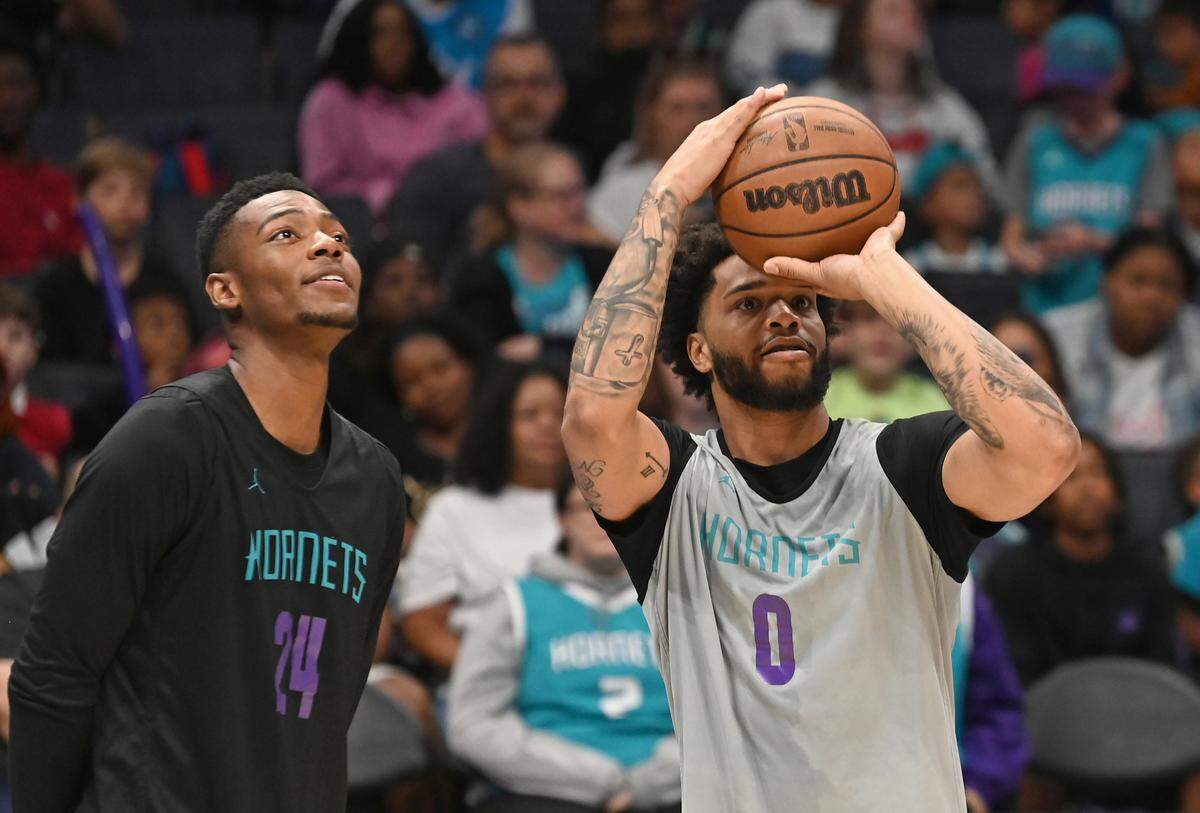
.JPG "CLT_HORNETS_CELTICS_13 (2).JPG")
“Failure to hold perpetrators accountable can encourage more violations and more violent violations,” she added.
Why might such a warrant not be delivered quickly, then? It varies, she said.
An under-resourced or small law enforcement office, a victim’s disinterest in pursuing the case, out-of-custody status, a lack of prioritizing misdemeanor warrants or a failure to prioritize domestic violence protective orders can all be factors, she said.
The sheriff’s office has a domestic violence unit that serves papers regularly, Adams said.
For this story, The Observer requested data on how many warrants tied to domestic violence charges are unserved in the county. The sheriff’s office does not have that data, Smith said.
This story was originally published October 23, 2023 at 1:31 PM.