After police shootings of people in mental health crisis, what should change?
At the end of May, Dennis Bodden walked out of a Pineville Food Lion without paying for about $80 worth of groceries. Five or six minutes later, Bodden, who was struggling with a mental illness, was fatally shot by a police officer.
During the encounter, Bodden seemed so aloof that the officer, Sgt. Adam Roberts, asked him, “This is the police, you do realize that, right?”
The Mecklenburg district attorney found the officer was in reasonable fear that Bodden would grab Roberts’ gun and said no charges were warranted. Roberts has returned to duty.
Experts told The Charlotte Observer that the outcome is common in other cases like Bodden’s.
In Virginia in 2018, an unarmed man, suffering from a mental health crisis, ran down the highway naked after crashing his car. Police responded and the man charged at an officer, threatening to kill him. And the officer shot and killed the man.
In Florida in March, a Miami police officer who had special training in crisis intervention shot and injured a man who was in distress outside a home after two officers fired Tasers.
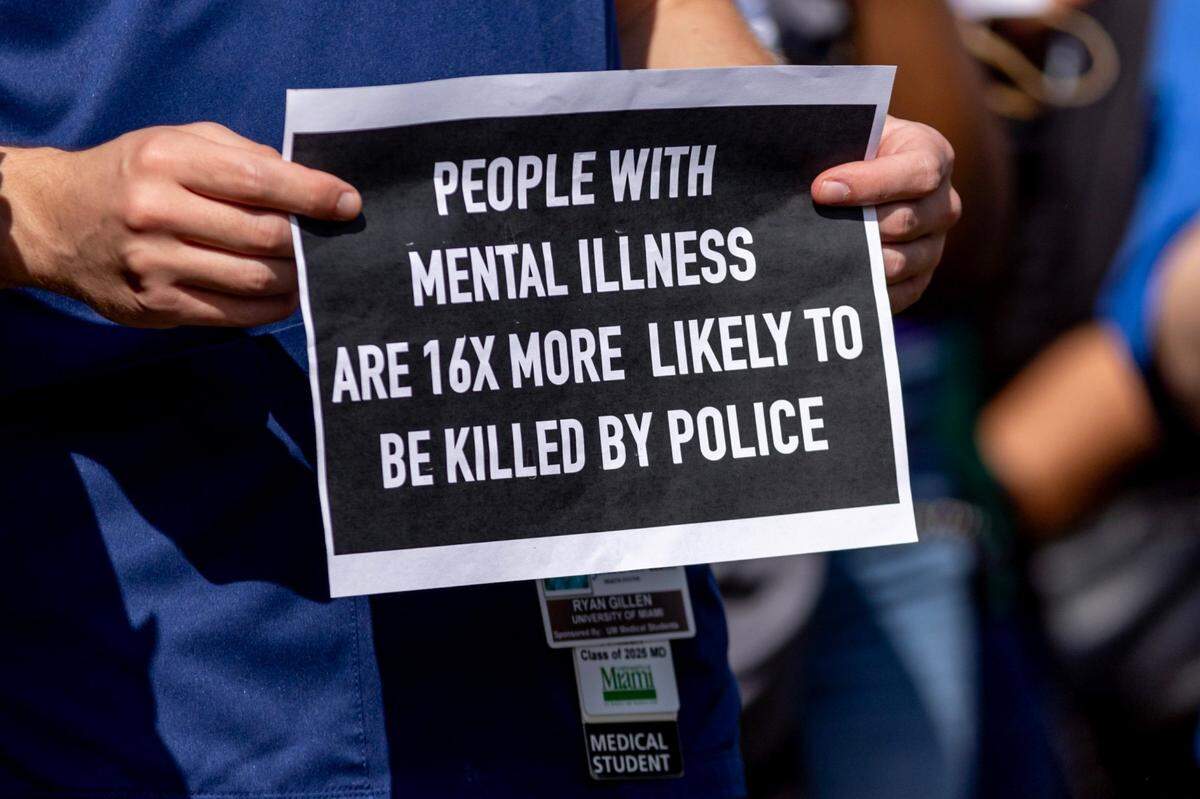
Each time, it’s a similar scenario. A person is struggling with mental health, an officer shoots and authorities usually find that the officer legitimately perceived a threat.
These types of cases are deemed what some in policing refer to as “lawful but awful.”
Is there a better way to respond to those in a mental health crisis or experiencing a manic episode? Can anything else be done?
Some mental health training already exists for officers. These programs teach them how to approach a person who may not respond in the typical way because of a mental illness. Some states, like Virginia, have laws that require police agencies to have specialized teams for crisis intervention.
North Carolina does not have a law that requires law enforcement agencies to have a certain number of officers trained in this area. But multiple police departments across the state have developed their own team or a mental health policy that gives guidelines for how officers should go about crisis intervention.
Perception of a threat
Could there have been a different outcome in Bodden’s case — one where Roberts and Officer Randall Downs, who was also involved in the call, tackled Bodden, instead of Roberts shooting him?
This is a common question that Laurence Miller, a clinical and forensic psychologist, has to answer. Miller has testified in several criminal court cases in Florida as an expert witness. His role is to explain the psychology and perception surrounding an officer’s decision to shoot someone.
He demonstrates this idea to his students at Florida Atlantic University to show how much time an officer may have to make a decision. He asks one student to lie on the ground. Then Miller stands with his back to the student about 20 feet away and times the student to see how long it takes them to go from their position to tapping Miller on the shoulder.
On average, it takes them about 3.1 seconds, he said.
These cases boil down to whether or not an officer felt threatened in the moment, Miller said. But in order to understand, it’s important to look at the sequence of events leading up to it, he said.
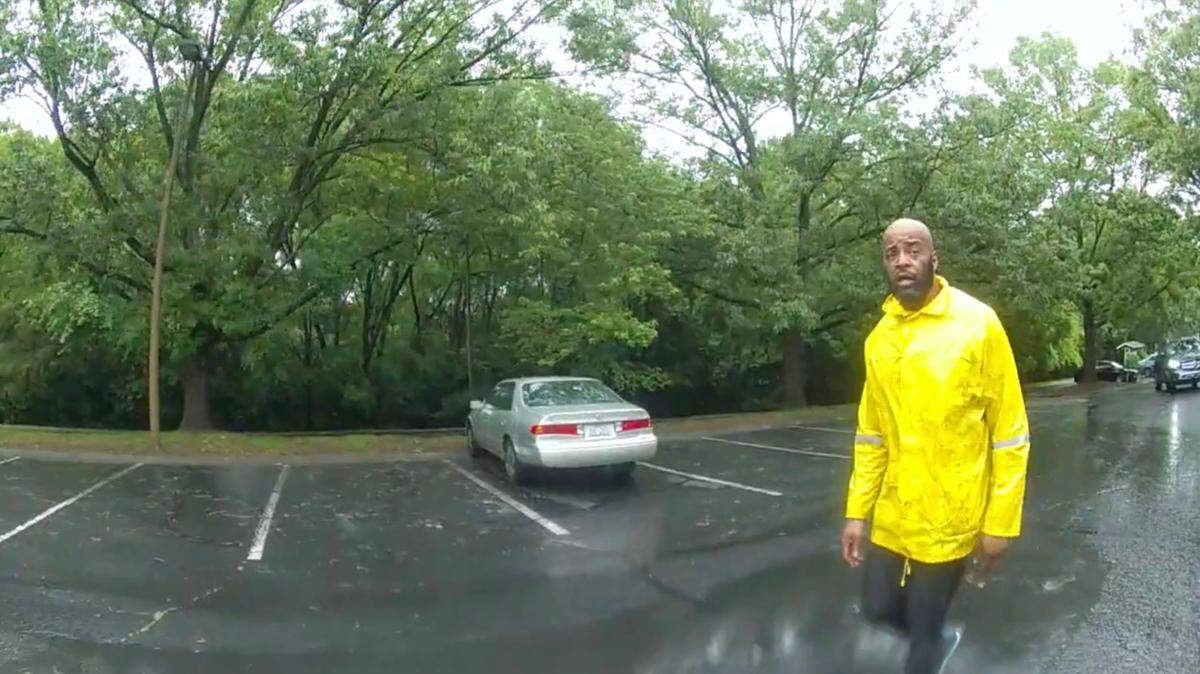
Body camera footage obtained by the Observer on Aug. 2 showed the events of what happened leading up to Roberts shooting an unarmed Bodden. Roberts first approached Bodden in the parking lot of the Food Lion. The two continued to walk after Roberts told Bodden to stop, leading to Roberts’ deploying his Taser.
A few minutes later, another officer showed up and also tried to use a Taser. Bodden lunged towards Roberts, who fired his gun immediately after.
Bodden’s case is similar to others he’s studied, Miller said.
“Any one of these individual factors, by itself, might not have led to a split-second life and death decision to use deadly force,” Miller said. “But it is quite plausible that in this officer’s brain, the perception of being threatened led to that split-second decision.”
Bodden’s mother, Cleopatra Bodden, told reporters following the shooting that her son was diagnosed with bipolar disorder and schizophrenia, and she called on the Pineville Police Department to change the way it responds to people with mental illnesses.
The department stated in a press release that it was not aware of any mental health concerns with Bodden.
But Bodden showed signs he was “clearly mentally ill,” Miller said.
“It’s hard for me to believe that nobody knew this guy had a mental illness, since he was a known factor in the community,” Miller said.
The standard police training model
Both Roberts and Down had specialized mental health training from a local Crisis Intervention Team program and through internal training that teaches de-escalation techniques, according to a June 3 Pineville Police Department press release.
The programs are built to give officers additional training in learning how to not only handle encounters with people who are having a mental health crisis but to spot if someone is showing signs of having a mental illness.
North Carolina police officers are required to have 24 hours of training in “Individuals with Mental Illness and Developmental Disabilities” out of the 640 hours required for Basic Law Enforcement Training.
Officers must take the BLET curriculum and pass an exam before working in law enforcement in North Carolina. But if officers are interested in specializing in a specific area, such as mental health, they have to complete further training. That’s where the Crisis Intervention Team program comes in.
CIT brings together law enforcement, mental health professionals and local advocacy organizations in order to educate officers, said Madonna Greer, a board member for nonprofit CIT International, based in Salt Lake City, Utah.
The 40-hour training is designed to educate police officers on different mental health conditions and to put them in the shoes of someone who is experiencing a mental health crisis, Greer said. Officers also go through different crisis intervention scenarios.
“(CIT) is really verbally de-escalating, taking care of someone safely when they’re in crisis, that the person in crisis is safe, that the officer is safe, and then that we divert that person from the justice system into the mental health system, where they need to get the care that they need,” Greer said.
CIT programs vary in each state but tend to have the same baseline of training. The nonprofit works with the National Alliance on Mental Illness as well as other organizations to deliver the training to different communities.
The Mecklenburg County Health Department oversees the program for local officers, including Pineville and CMPD. There’s a survey before and after each training class to see if there’s anything the program can improve on, said Pineville Police Community Outreach Sgt. Josh Harb.
Myles Bell, a spokesperson for Mecklenburg County, declined the Observer’s request to talk about Bodden’s case.
North Carolina does not have any legislation that requires police departments to have a certain number of CIT-trained officers. Despite this, Greer said that most law enforcement agencies in the state have pushed to have officers trained in mental health crisis response.
“It is a personal decision of the department,” Greer said. “Most every law enforcement department will tell you they’re dealing with mental health calls on a very regular basis … so they are seeking out regular training.”
‘We need good policies’
Some departments have created mental health policies in addition to extra training for officers. These policies detail how an officer is supposed to respond in crisis situations, signs they should look for and other first responders the person should request.
Pineville Police Department does not have a policy that gives guidelines for how officers should handle citizens who are experiencing a mental health crisis. Chief Michael Hudgins told the Observer that police have been working on updating policies for more than two years, and plan to create a new policy titled, “Crisis Intervention Incidents.”
The new changes are expected to go into effect in the next two or three months, Hudgins said.
Other departments across North Carolina, such as CMPD and the Matthews Police Department, have created such policies in the last three years.
Mebane Police Chief Mitch McKenny has worked at several departments in North Carolina. He began as an officer in Newland and then worked in Apex and Chapel Hill.
During his time in Apex, the department frequently evaluated their policies, he said. Crisis intervention has always been a focus in departments across the state, he said. But the push to have a more official policy could come from needing clearer guidelines for the operations of CIT trained officers, McKenny said.
“We need good policies to help us make better decisions in those spaces,” McKenny said.
Pineville police and other departments also have a Safe Outcomes program created to help make officers aware of any resident’s mental health problems prior to an emergency. If someone fills out a form, officers will then be aware of the person’s condition as they are interacting with them.
Is CIT the only option?
Some police departments have created other forms of crisis intervention, with some focused on bringing in medical experts to help law enforcement. The model, known as mobile crisis, is referred to by some in the mental health field as more of a collaborative response, Greer said.
A person in crisis can call the 24/7 national lifeline number 988. Crisis counselors will answer and try to de-escalate the situation. But sometimes, an in-person response is still needed, Greer said.
“Someone, primarily, other than law enforcement, will go to that person in crisis, and they will come in plain clothes,” Greer said. “They will not come with cars with lights on the top, and they will just meet that person in the community, and again, try to resolve that issue where they’re at and not have to have them go anywhere.”
The goal is to meet people’s needs without involving the justice system, she said.
But there are concerns in the mental health industry about sending non-law enforcement first responders into a potentially dangerous situation. Most mental health professionals are not trained in life and death crisis intervention, Miller said.
Miller believes that they should be working with law enforcement to help advise them and increase mental health training. However, for him, the problem lies more with what happens way before police are called.
People need more basic access to mental health services, he said. It’s important to think of treatment not as an extra expense but as a necessary safety measure, Miller said.
“The key is to provide the mental health services that people need to prevent them from acting out,” Miller said. “And in those cases where somebody is a risk, then there may be some way of mandating treatment.”
This story was originally published August 19, 2024 at 5:00 AM.