
From death row to deliverance: An NC man’s story of wrongful conviction and resilience
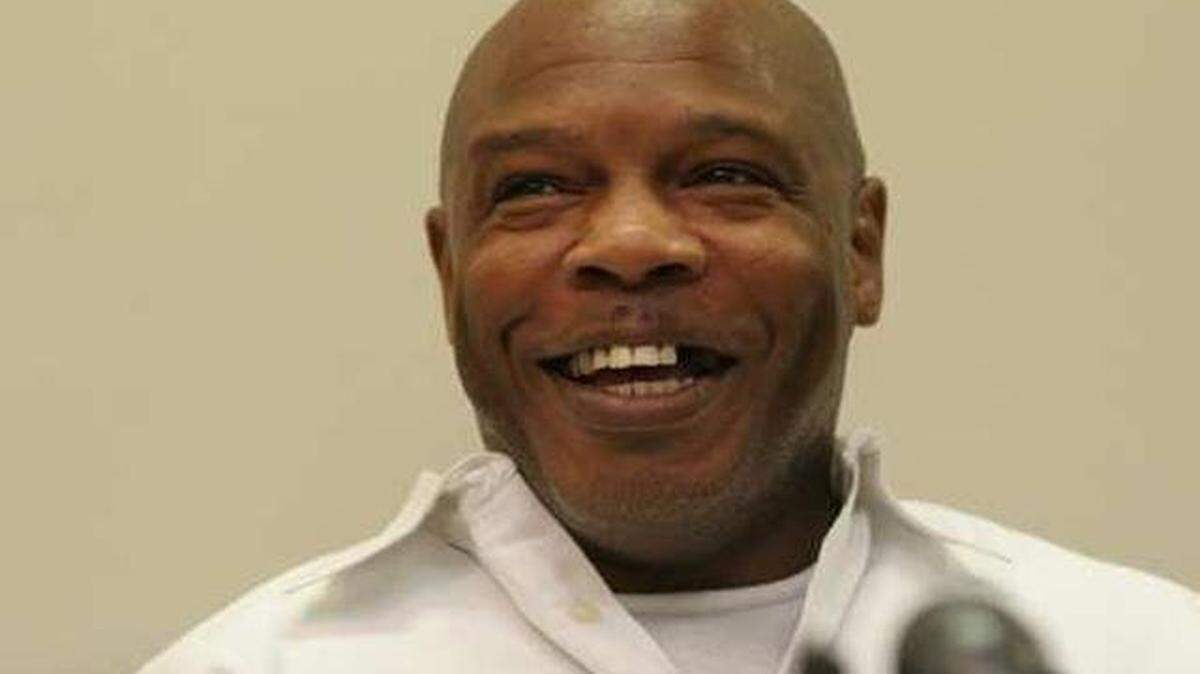
Tess Bierly, a junior at Duke University, interviewed Glen Edward Chapman as part of a journalism class, leading to this story. Bierly is majoring in sociology of crime, law, and justice with a minor in psychology. She focuses her work on exposing miscarriages of justice in the legal system.
As a boy, Glen Edward Chapman hated the sound of the ambulance. Each time one blared by his home in Hickory, N.C., he started crying and ran to find his mom.
He saw many throughout his childhood and developed an association between ambulances and death. This was his underlying fear.
He feared death, the dead, Chapman recalled in an interview.
But his childhood was mostly happy. He was a self-proclaimed mama’s boy and a proud brother to six siblings. He lived with his family about 60 miles from Charlotte in the 1970s and 80s.
Chapman was a kid who mostly stayed out of trouble until his teenage years, he said. His favorite pastime was going out to the lake with his family on the weekends and spending the afternoon munching on snacks and fishing. His father was a chef, and he treasured being his dad’s “sous chef.”
When he was 7, his great-grandmother died and his mother took him and his siblings to the funeral. That night, Chapman woke up from his sleep in despair: “She’s coming to get me, she’s coming to get me,” he kept repeating.
He has avoided funerals ever since. He does not like passing by graveyards.
Back then, Chapman did not know that he would confront his fear of death years later, spending more than 13 years on North Carolina’s death row after being falsely accused of murdering two women.
In the United States, there are over 2,000 individuals serving sentences on death row, and 140 of them reside in North Carolina, which is the 5th highest number of death row prisoners in the country. Sixty percent of these inmates are people of color, and almost half of them were sentenced by majority white juries.
Defendants are twice as likely to receive a death sentence if a victim is white, according to the North Carolina Coalition for Alternatives to the Death Penalty. Each of these statistics can be seen in Chapman’s case.
Many of the individuals on death row committed the crimes they were accused of, but others did not. Chapman is one of 12 men on death row to be wrongfully convicted and exonerated in North Carolina in the past 50 years.
Typical causes of wrongful convictions include eyewitness misidentification, faulty forensics, police and prosecutorial misconduct, and false confessions. North Carolina attorney Jamie Lau, a professor at Duke University School of Law, adds a new component: “inadequate investigations.”
When police have a suspect, they can get tunnel vision. Prosecutors and police “put their blinders on and make the case fit that person,” Lau said.
‘Don’t trust ‘em’: Chapman arrested
Chapman said his first encounter with law enforcement was at age 18. He dropped out of school several years prior in the ninth grade, opting for smoking weed over homework and exams.
A self-proclaimed “mischievous little knucklehead” as a teen, Chapman said he was hanging behind his old school one day smoking cigarettes and drinking a beer with friends when a police officer singled him out. He headed home with the officer before giving him a fake name and going inside.
Chapman’s interactions with law enforcement increased. He committed several misdemeanor crimes like breaking and entering and stealing checks, but these charges mostly got dismissed, he said. When he got locked up, it was brief.
Then in 1992, 723 murders took place in North Carolina.
Two of these victims were Tenene Yvette Conley and Betty Jean Ramseur, whose unclothed bodies were found a week apart underneath abandoned houses in Hickory.
Chapman did not know he was a suspect until police officers showed up at his grandmother’s house one morning. He recalled in an interview that he had been lounging with his girlfriend Gwen in his aunt’s old bedroom when a knock startled him.
“Edward?” an officer said.
Chapman nodded. The officer informed him that someone had called saying Chapman’s apartment had been broken into. Chapman said no-break in had occurred.
The officer then said, “I got a warrant uptown for you regarding the death of Betty Jean Ramseur.”
“What?” Chapman, then 24, recalled asking. “Man, I ain’t got nothin’ to do with that.”
The officer handcuffed and guided him through the home in his underclothes. At his grandmother’s insistence, the officer waited just long enough for two of Chapman’s cousins to help him dress.
Stepping outside in a state of confusion and fear, two alarming sights greeted him: flashing lights and red beams. The news media surrounded his grandmother’s house, photographing each shuffling step he took with guns pointed at him, Chapman recalled.
As he approached the police station, Chapman understood that the situation was serious but he felt dumbfounded. He asked to call Gwen, and when he told her that officers were urging him to take a polygraph, she told him “don’t trust ‘em.”
“I don’t,” he said.
Polygraphs in the criminal justice system have a history of unreliability and are often inadmissible in court. As psychologist Leonard Saxe noted for Vox Magazine a decade ago, this is partially because there is no universal indicator of deception. People have different heart rate levels and blood pressures for example, and polygraphs often rely on these measurements to detect lies. Chapman worried that even shivering in a cold room might indicate to officers that he was lying.
Chapman said he felt the policeman on guard cared less about the truth and more about popularity. As Chapman recalled it in an interview, the officer called home about appearing on the news: “Baby, turn on the TV, fat boy’s on the TV!” the officer said, referring to himself.
Chapman takes the stand, but jurors don’t believe him
The murder trial for the slayings of Ramseur and Conley began on Oct. 31, 1994.
Chapman recalls the jury selection process — the dozen strangers who held his fate in their hands. The public and even some of his own family may have been convinced of his guilt already, he felt at the time, but the jurors were the only people Chapman needed to prove himself to.
He scanned faces “to see if I could read them,” he remembers. He searched desperately for “any sense of hope where they would give me the benefit of the doubt. They had stone faces. And I was like, oh man, I’m in trouble.”
Around this time in the United States, Black Americans were incarcerated at a rate almost 700 times higher than their white counterparts. Chapman understood that race played a role in his trial, with only one Black juror on the case.
Chapman said that a juror made racist remarks but was not removed from the jury.
The jury and the district attorney did not believe his story. Chapman’s last hope was his legal team, who he said put up a meager defense. He recalls his lawyers conferring with him after a hearing or the day’s trial with alcohol wafting off their breaths.
His main lawyer, Thomas Portwood, later admitted to drinking significant amounts of rum throughout a different murder trial and having been sent to rehab after his removal from another case.
Chapman’s lawyers also ignored witnesses who Chapman said could have testified on his behalf, leaving him vulnerable to the false testimony of two people who insisted that he was guilty: his own cousins.
Nicole and Brian Cline testified that Chapman had confessed to them about killing Ramseur, a major factor in persuading the jury. Chapman equates hearing their testimony to the feeling of being held down and pounded. He says “disbelief” is too mild a word.
The duo later recanted their statements, claiming to have been coerced and threatened by police. In an affidavit, Nicole Cline said, “If anyone asked me at trial, I would have testified that police pressured me into testifying and that I did not believe Edward killed anyone.”
During the trial, Chapman was distressed knowing that no one believed him. He later begged his father to acknowledge his innocence, to which his dad responded “Well, let God handle it.”
In advance of cross-examination, Chapman scribbled questions for his lawyer to ask, but he never would, Chapman recalled. He felt terrified, attempting to glue himself to his seat and avoid his instincts to get up and scream the truth. Even when he took the stand to defend himself and pleaded to the jury, he felt like his words fell on deaf ears.
On the surface, the prosecution presented a clean case. Key arguments included that Chapman’s sperm was found in Conley’s body during an autopsy, Chapman’s own family had testified against him and claimed he confessed to them, and the defendant had smoked crack cocaine with the victims in the past — proof that he knew both Conley and Ramseur.
An additional barrier existed for the defense. Theresa Newman, former president of the North Carolina Center on Actual Innocence, explained that once investigators commit to the chase of a suspect — whether physical or intellectual—they are at risk of fixating on that person’s guilt.
This holds true for jurors as well, she said. Not only do they feel pressured to make a decision, said Newman, but they believe that by the time a defendant is sitting before them, an extensive investigation has already occurred. They feel the presumption of guilt instead of the presumption of innocence.
The State of North Carolina vs. Glen Edward Chapman lasted two weeks before the jury foreperson announced the verdict with a steady voice. Guilty. Chapman began having what he describes as an out-of-body experience.
“I’m standing on the opposite side of the defense table, looking at myself screaming, asking for help. There was no help to be seen.”
Within a week, the man who grew up terrified of death received a death sentence.
Living on NC’s death row
Chapman did not adjust to his new life well. His first heartbreak came from crying to his son’s mother, Gwen — the only person who supported him during the trial — telling her that she should not put her life on hold to wait for him.
He felt numb after that. Every morning at 5:30, fluorescent lights woke up the men of Central Prison, including Chapman. For the first several years, he said, he did little but cry. At 7:30, he’d leave his cell briefly for breakfast, then go lie down again. Sometimes, he’d watch TV or read the newspaper, and he found solace in writing poems. There was not much to do.
But he did make friends — his fellow death row inmates. To this day, he said he considers them to be family.
Between 1984 and 2015, 43 men at Central Prison — North Carolina’s home for male death row inmates — were executed. Death row, in Chapman’s eyes, was the “final stop”— the “final destination” these men would arrive at.
He recalls the atmosphere as dehumanizing. Sometimes, the prison would host tours, with wardens leading college students around the facility. One day, while he stood in the canteen line with other men on death row, Chapman said, the assistant warden pointed the men out like zoo animals.
“Well, these are the worst criminals in the world!” Chapman remembers hearing. He instinctively bowed his head in shame.
Chapman saw one young woman originally standing at the front slink back behind other students in fear. He could not bear to look at them. One student piped up with a question: “Are they here for rehabilitation?”
Chapman remembers the warden saying “No, they’re here to die.”
The prison staff treated the men on death row as subhuman, Chapman said, and many of them internalized it. “I’m worth nothing,” Chapman felt at the time.
He struggled with his faith, too. As a boy, he attended church every Sunday while living with his father, and he tried taking biblical courses in prison.
But he felt his faith falter at the seemingly contradictory idea that fellow religious individuals supported executing people. Chapman said he does not believe that he survived Central Prison by himself, and instead that a higher power was with him.
“I didn’t come through this earthquake, this thunderstorm, hailstorm by myself,” Chapman said. “Something or someone helped me through it.”
It is this faith that Chapman clung to each time he said goodbye to one of his friends. He would stand on his bunk and gaze upwards around the time he knew an execution was taking place.
He would look up at the sky and say softly, “I’ll see you again.”
His friends wouldn’t leave death row. Chapman, equipped with the knowledge of his innocence, had a fighting chance.
He collected newspapers and magazines and scoured the text for any mention of expert witnesses or professors who might have the expertise to assist him with his case.
He spent his time scribbling handwritten messages. He mailed hundreds of letters, making three copies of each. If he did not receive a response, he sent it right back off. He wrote across the country and beyond, all the way to Paris, France.
Chapman also began to work with a post-conviction mitigation specialist, Dr. Pamela Laughon, who he described as a curly-haired woman with a country drawl and a welcoming demeanor.
After her first visit, he saw her as his “angel” and wrote her a seven-page letter to express his gratitude that she showed up. Chapman felt invigorated with support for the first time in years.
A weight lifted
April 2, 2008, started like every other day for Chapman, with blinding lights signaling Central Prison’s wake-up call at 5:30 and a morning filled with writing.
“Hey Chappy Chap!” he heard from downstairs. “You on TV!”
Chapman jumped up and scrambled to Channel Five with anchor David Crabtree. He heard his name.
“Oh Lord, what I done done now?” He learned he got a new trial.
“Oooh, okay,” Chapman said, with a slight smile.
He laid back down and continued writing before he was summoned out of his cell. After changing into proper clothes, Chapman learned that the prosecutor decided he was not going to try the case again.
An appeal submitted on Chapman’s behalf alleged significant misconduct throughout the trial. Prosecutors had withheld witnesses who claimed to have seen Conley alive hours after Chapman had been with her, while his defense team failed to present a witness who could have provided Chapman an alibi. When asked, jurors said this evidence would have likely overturned their guilty vote, The Charlotte Observer previously reported.
In light of this appeal, a Superior Court judge granted Chapman a new trial, and with meager evidence, the district attorney dismissed the charges altogether.
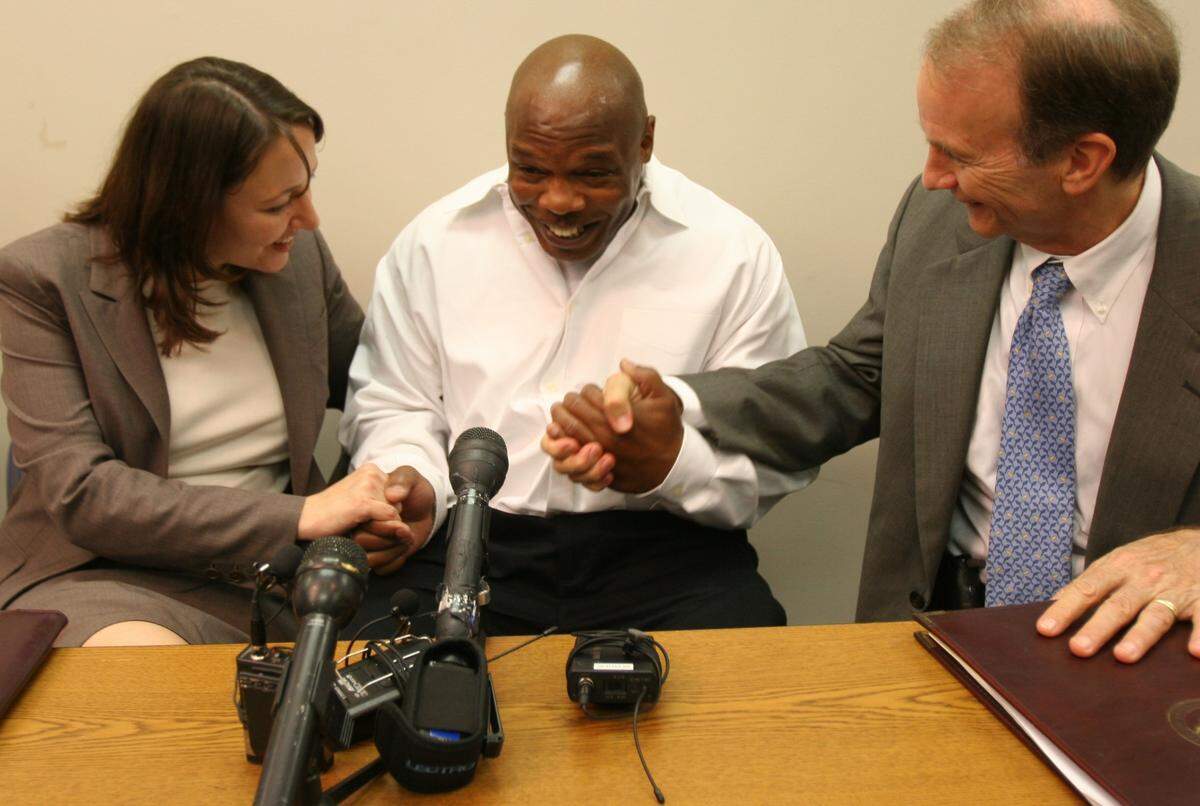
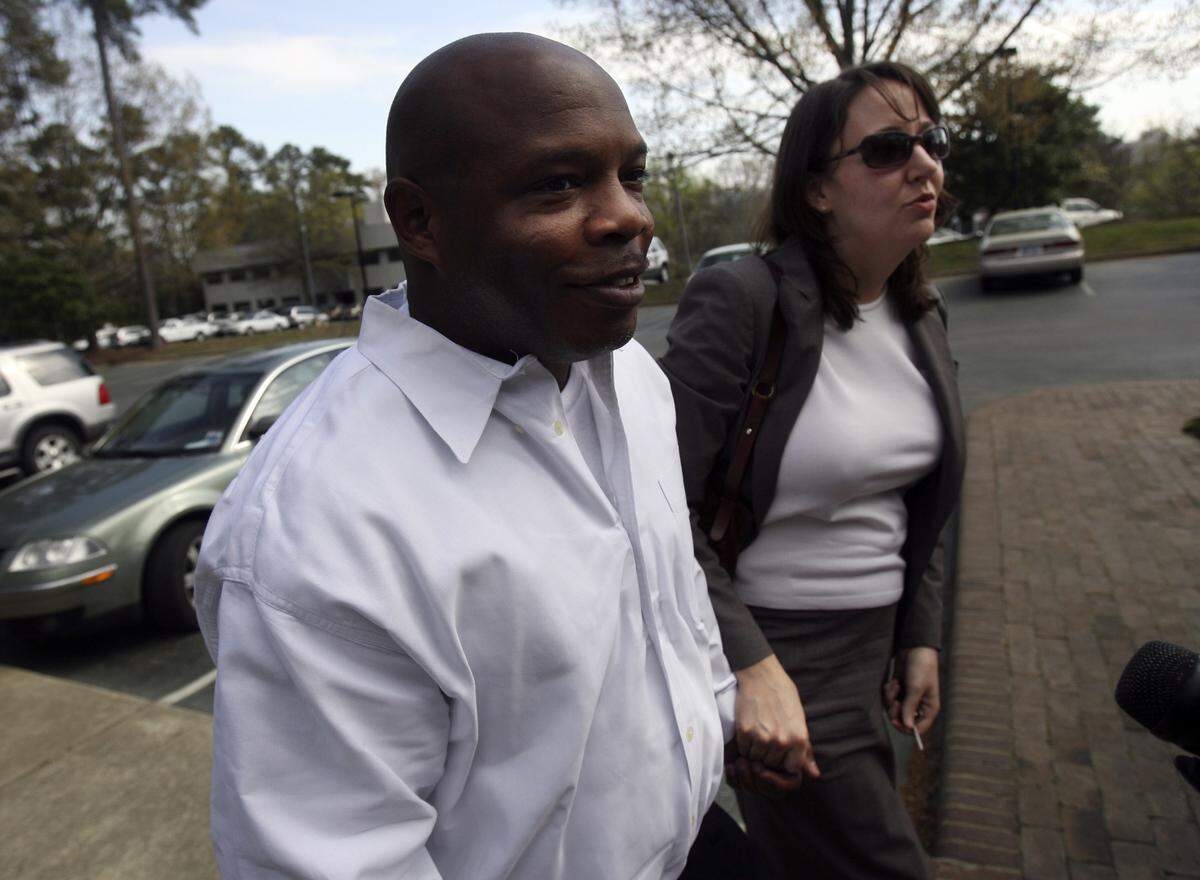
Chapman walked out of prison a free man after 15 years inside Central Prison.
He recalled feeling a colossal weight lift off him as he walked through the gate and hugged Laughon. As he drove away, his heart panged for his death row family he was leaving behind.
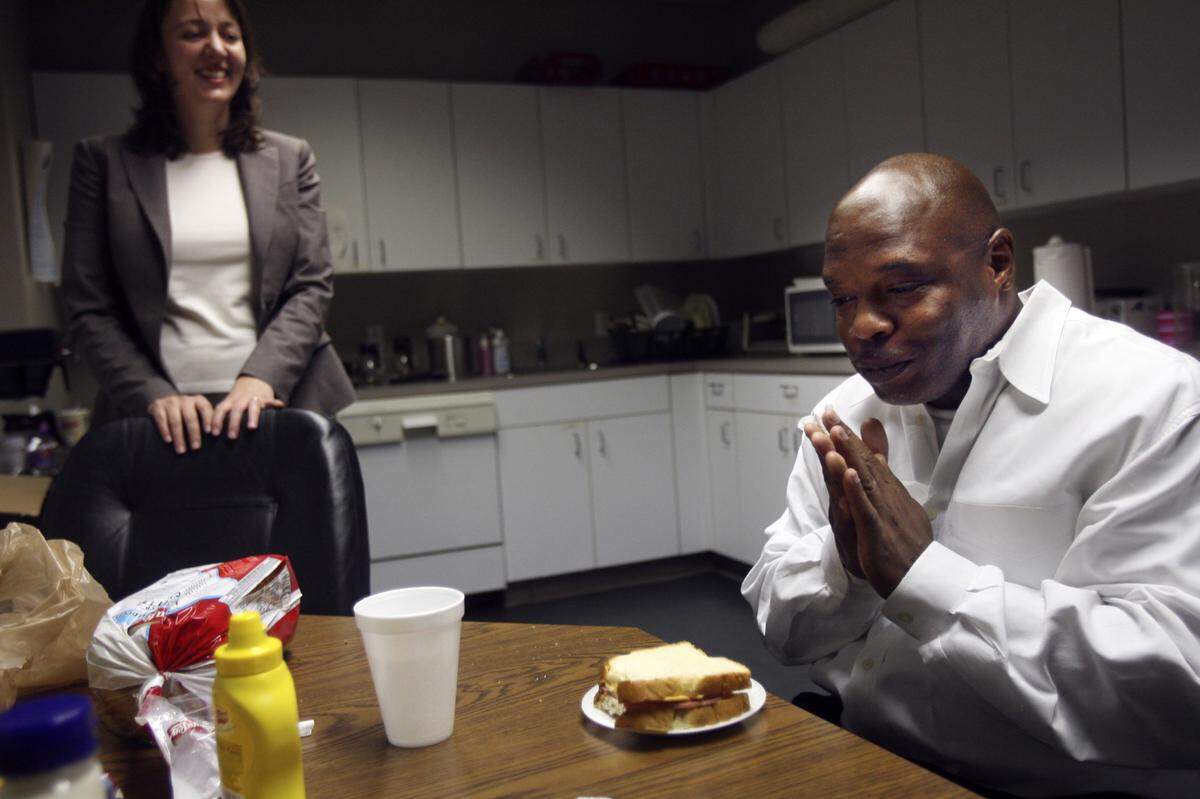
The first day out was a blur. He reunited with his dad, chatted with reporters, and ate the one comfort meal he had been craving: a baloney and cheese sandwich with just the right amount of mayonnaise, just like how his mom used to make it.
What was lost
Chapman filed a pardon request in 2011 and it remains pending. Gov. Roy Cooper’s office said this summer that the request remains active.
Chapman lost almost everything and everyone in prison. He learned of his mom’s death when his dad visited one day to share the news. His mom was his best friend, he said.
“That’s my boo right there, that’s always going to be your first love,” he said about her. His grandmother (his baking partner and the woman who had witnessed his arrest) had also died while he was at Central. So had the love of his life, Gwen.
When asked about her, Chapman will say that “she is my heart even to this day, even though she’s no longer with us. She is my heart.”
He insists that she kept him alive.
In his dreams, Chapman is reunited with all his loved ones who he never got to say goodbye to.
“I’m always around my mom, Gwen, and my Grandma,” he says. “I’m always talking to them in my dreams. I’m always remembering something funny that we had done.”
Adjusting to life outside Central Prison proved to be arduous.
His first afternoon re-entering society, Chapman took a moment on the steps of his dad’s home to sit with Laughon. As a tree branch scraped a roof, Chapman was startled. He assumed that someone was hiding in the bushes, watching them. Amused, Laughon told him gently that Chapman was hearing the sound of crickets. He shook his head no.
Chapman had not been exposed to the everyday sounds of nature that people take for granted.
“The thing about death row,” he says, “is you behind a wall. You don’t hear crickets and stuff out there. Birds don’t fly over death row, they fly around.”
Unfamiliar sounds scared him for a long while.
Shortly after being released, Laughon helped Chapman find his first home, and for six months, he did not sleep in the bedroom. He slept on a couch.
Each night, he heard a thump from an apple tree near his back porch, and it sounded like ominous stomping. In a panic, he would grab a tennis racket or a mop and peer out the door. When he didn’t see anyone, he relocated to his couch and sat in silence, clutching his defense object and waiting for more sounds.
Even during the day, Chapman often did not relax.
As part of the daily routine at Central, inmates would stand by their room door for count every hour on the hour. He repeated this motion in his new home and waited for 10 minutes each time.
Fighting for those who cannot
Chapman said he suffered from depression and post-traumatic stress disorder. He attempted suicide several times. He turned back to drugs. Feeling ashamed, Chapman returned to Florida, where he lived from around age 7 to 13, and entered several rehab programs in the Tampa area. He dreamed of his lost loved ones. He vowed to stay clean this time.
Chapman describes this phase of his life as having “turned his back on those people that fought for my freedom. I gave it up for drugs. I traded my friends for drugs.” He says he got tired of getting high to hide the pain.
He says he can forgive everyone in the criminal justice system who wronged him because his friends forgave him.
“Forgiving isn’t hard. It’s the easy part,” he says.
After decades of feeling helpless, “you’re actually in control of something. Something worthwhile.”
Having missed so much of his family’s lives, he does not communicate much with them now.
He said he stopped writing his friends on death row a while ago too. He is still recovering from everything he experienced and will likely spend the rest of his life recovering.
But he has a message to share for every human who is currently in prison for a crime they did not commit. He urges them to hold on to hope, to fight, and to refuse to let poisonous doubt seep into their minds, even when it feels like everybody else has given up on them. Chapman knows what that is like.
“Don’t let nobody steal your thunder,” he said.
Wrongful convictions may be an unpreventable tragedy, Chapman acknowledges. But he believes that “voices move mountains and if you shout loud enough, they gon’ hear you through the valleys.”
Ed Chapman still does not like going past graveyards or attending funerals. He still feels uncomfortable with death, but he’s alive to tell his story and fight for all those who cannot.