How a racing Audi killed a 6-year-old Gaston boy and changed NC law
One clammy hand grips the wheel. The other cradles a phone, and Brandi Birrittier fights off the flashbacks.
There’s an Audi racing down Interstate 77, she says to the dispatcher on the line.
She rattles off her location and a license plate number and hangs up. She’s phoned in the same speeding reports for a Mustang on N.C. 45 and a Corvette on I-85.
It’s a new habit — one she picked up after her son died in an Audi vs. Dodge Challenger street racing wreck. That was nearly five years ago.
“It’s terrible in Charlotte. The street racing, the takeovers. People are complaining about it all the time, and I know we can’t just send people to prison for their whole life ... but something’s got to happen.”
When she dials the non-emergency police line in the car, she’s trying to save other families from the pain she knows all too well. A new North Carolina law is attempting the same.
“Liam’s Law” was proposed after The Charlotte Observer and News & Observer’s joint investigation that found deaths like that of Liam Lagunas were enabled by a criminal justice system that let extreme speeders off easy.
Gov. Josh Stein signed into law a modified version of “Liam’s Law” in late July, saying it “cracks down on” reckless driving and hit-and-run offenses. That was just before police in Charlotte cracked down on street takeovers around the city.
A six-year life
In June 2021, 6-year-old Liam and his dad, Santiago Lagunas, headed home after a day at Carowinds. They got ice cream and talked about what Liam wanted to do when he grew up.
There were a lot of options.
I want to be a police officer! Or a firefighter! Or a doctor!, Liam would say.
“Liam, which one!” Lagunas responded.
“I don’t know Daddy,” Liam replied. “I just want to make some money and help people.”
Then, on U.S. 74, a racing Audi going 100 mph spiraled out of control and slammed into Lagunas’ Nissan Altima.
Liam died in brand new church shoes he had slipped on for the daddy-son day.
Lagunas survived, but not without major injuries. Back pain forced him into a new line of work. A Liam-sized hole in his family haunts him every day.
That weighty grief followed him and Birrittier through Liam’s funeral, court hearings and press conferences.
Both expect it will come back in a year — when Gracie Eaves, the pregnant 19-year-old who raced 47-year-old repeat racer Donnie Cobb that June night, gets out of prison.
Cobb is serving a 22- to 28-year sentence after pleading guilty to multiple charges, including second-degree murder and driving while under the influence of methamphetamine and sedatives.
Eaves, who did not have a record like Cobb’s, is serving a four- to six-year sentence and is expected to be released next year. She pleaded guilty to involuntary manslaughter and assault with a deadly weapon.
To prosecute the assault charge, Gaston District Attorney Travis Page said he had to “stretch the law” to classify her car as a deadly weapon.
As written, North Carolina law classifies street racing as a misdemeanor — even when it causes injury. “Liam’s Law” makes it a felony. It also heightens penalties in felony hit-and-run cases.
“Now there’s an actual felony that is more applicable,” Page said in an interview with the Observer. “We could use street racing resulting in serious injury, or street racing resulting in death. For someone like Gracie [Eaves], there is an exact crime that we can prosecute.”
Birrittier said she hopes the law “at least gives another family an opportunity for more justice, legally, than what we had.”
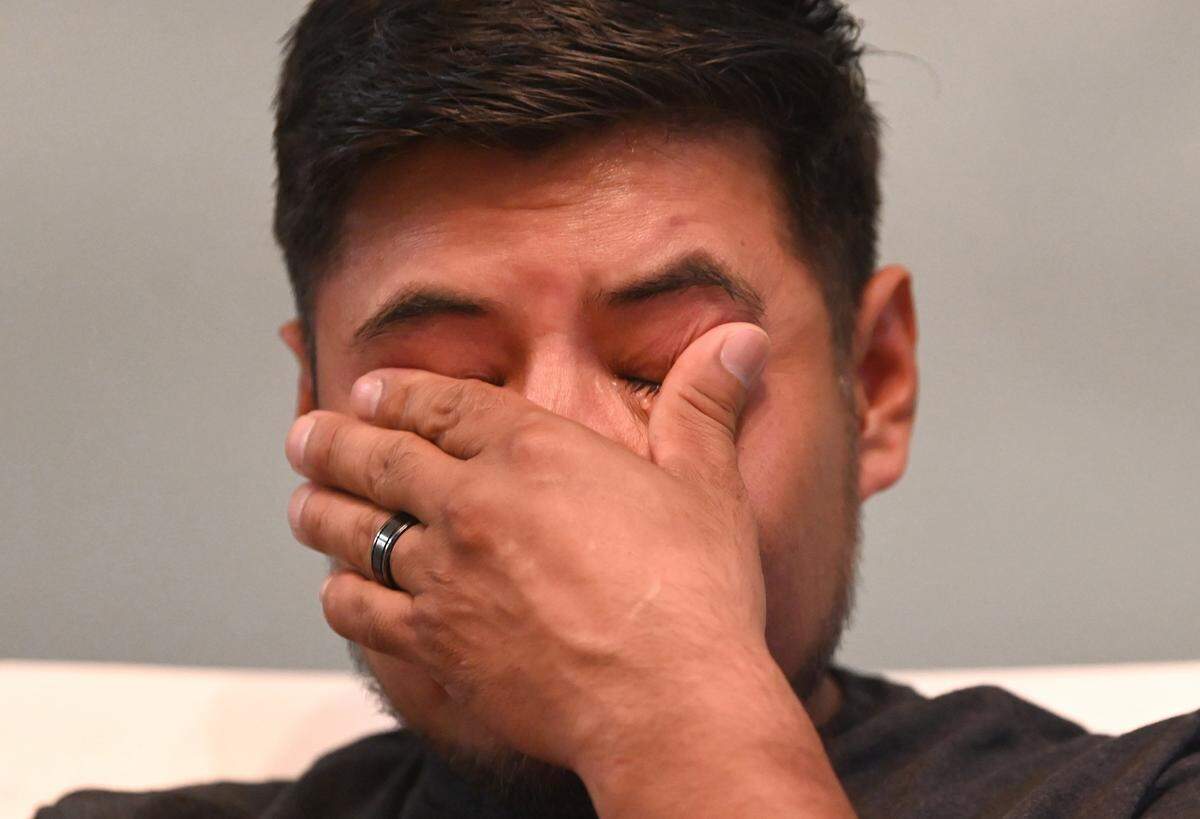
For Lagunas, who still gets nightly flashbacks from the time of the crash, Stein’s signing hits differently.
“The truth is,” Santiago said, “it doesn’t change anything for me.”
Grief, God and new law
In between cleaning houses (with her business, J&L Divine which is named after Liam), Birrittier comes to her mother’s yellow ranch house. It sits a driving range away from where Lagunas lives with his wife.
Birrittier and Lagunas lived together for eight years but were separated when Liam died.
After the wreck, Birrittier moved in with her mother. Now she lives in an apartment with her sister, but she still comes back to the home, and its bird-house wallpaper, often — this time for an interview.
Memorial photos poke into the ground outside. In the dining room, she faces a shelf-full of school photos, art projects and stuffed animals. They sit under large wooden letters that spell “LIAM.”
“It wasn’t an accident,” she says. “It was a wreck.”
Cobb and Eaves “made a choice to put people’s lives at risk,” she says.
“When you choose to go 100 miles an hour down a highway, you’re essentially saying, not only you don’t care about your life, but you don’t care about anybody else’s life.”
Birrittier is already bracing for Eaves’ expected release next year. She knows it’ll dredge up the same feelings that washed over her when Lagunas called her at 9:20 p.m. on June 26, 2021.
The line went silent as Lagunas lost consciousness. Firefighters told her to come, and quickly. Liam died soon after. At the time, she didn’t know what happened.
Now she knows everything.
“Hating them’s not my goal… I love everybody, and in my faith everybody is equal … but it’s just —,” she trails off.
It’s hard to make sense of it all — why two strangers stepped on the gas and made a decision that would take her son’s life and change her own forever.
She’s stopped trying to understand.
“God really has been my best tool,” she says. “He sent me an army of people.”
District attorney Page and prosecutor Stephanie Hamlin were some soldiers. So was Republican North Carolina Rep. John Torbett, who first introduced “Liam’s Law.” And the women in her grief church groups.
Strangers, too.
“They all had the same message,” she says.
Jesus loves you.
You’re not alone.
She talked and prayed and does so every day. Life isn’t easier, she says, but it’s clearer.
“I just felt like, well, if his life was taken, then I really need to live my life to the best of my ability. You have to do that through hope and faith,” she says.
A dead dream
Liam loved God and church, too, and especially his new church shoes.
Three weeks before he died, he got a brand new church outfit. A picture of that ensemble — plus a proud, toothy first-grader smile — hangs outside of the dining room where Lagunas, his other sons, his step-daughter and his wife, Kristine Lagunas, eat.

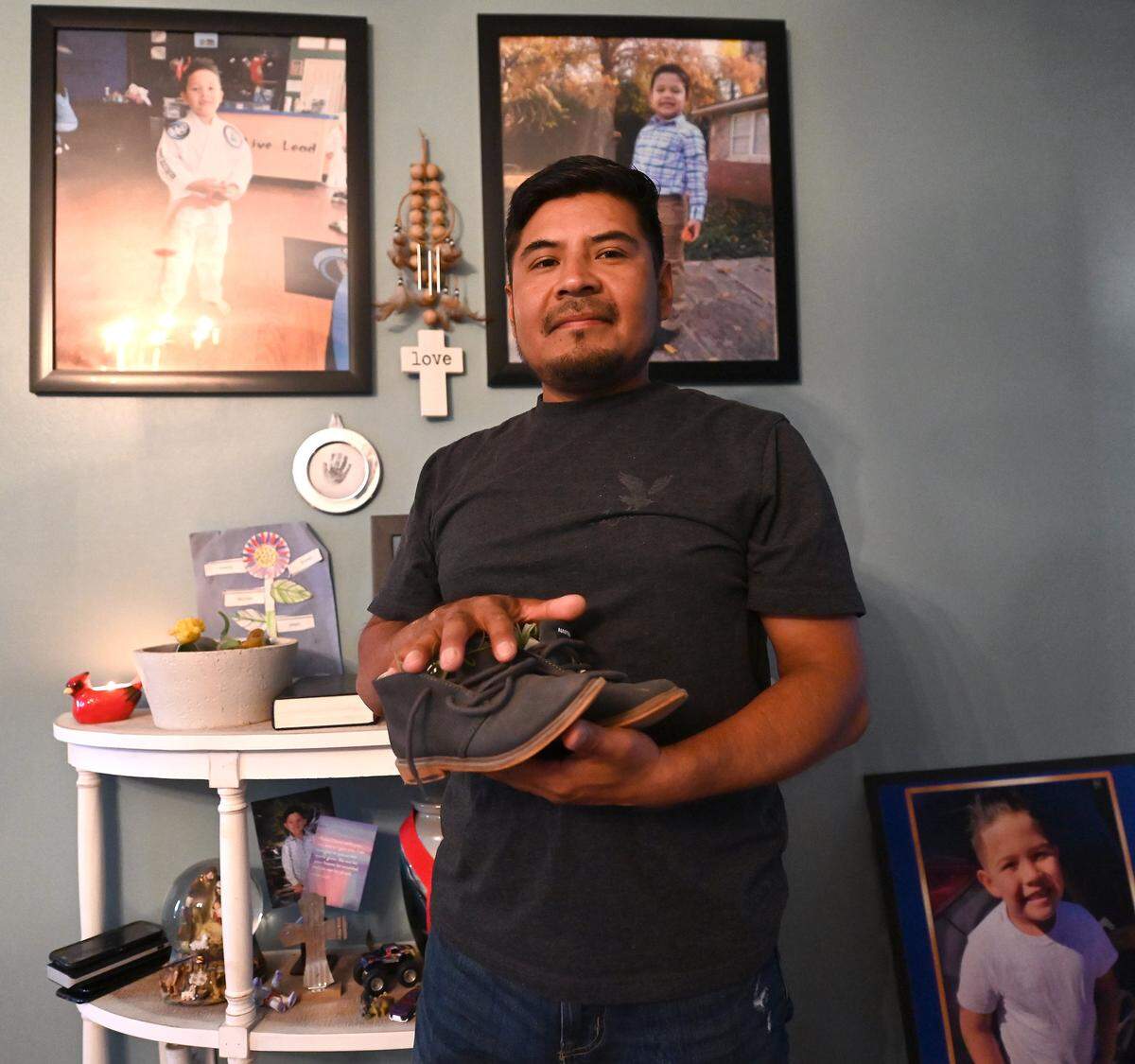
“He made me buy those shoes for him,” Santiago Lagunas recalls, looking at the framed photo. “I started taking him to church, and he started loving church. Every Sunday, even if we were all tired, he’d go ‘Come on, let’s go! It’s Sunday, let’s go to church!’”
Sometimes Liam would even try to skip breakfast to make sure they arrived at Flint Groves Baptist Church in time.
“The law, it doesn’t mean anything to me,” Santiago Lagunas said after half a minute of shaky breaths. “Because nothing is going to change in my life. Nothing is going to bring Liam back. The dream as a father, which has been taken away from me, is seeing your kids grow up.”
Now, he and his family go to grief groups in that same chapel.
During one group church meeting, attendees were told to paint a word that makes them think of their deceased love. Kristine Lagunas wrote “hate” and “sad.”
Santiago Lagunas was shocked.
“That’s not what I think when I think of Liam,” he said.
But Kristine Lagunas hates what happened, and she’s sad she won’t ever get to meet Liam. She met Santiago Lagunas after the wreck — when he cut her lawn and did a few jobs around her house. Her grief is unique — it’s for a family member she’s never held but knows so well.
But Liam is with her when their family hands out enchiladas and care packages to the homeless — something Liam always asked to do with his McDonald’s Happy Meals. And for Santiago Lagunas, every day work at his company, Liam’s Landscaping, is “like he’s coming with me.”
Liam is in lawn clippings, in church halls and Happy Meal toys. In police officers. Or firefighters. Or doctors. In the state law, too.
“He always dreamed,” Santiago Lagunas sighs, “that he could make a change one day.”

This story was originally published September 2, 2025 at 5:00 AM.