CMPD ignored pleas, shot mentally ill man, then waited for drone, videos show
Content warning: Videos in this story contain violence and graphic language.
His mother cried out. His brothers begged police not to shoot. But officers’ bullets flew, and Sanrico Sanchez McGill bled into stillness as police prepared to send a drone into a home and toward his body.
For 30 minutes, no one from Charlotte-Mecklenburg Police Department came to help.
“Why I don’t hear no ambulance?” a man asked a uniformed officer. “Y’all shot my damn brother!”
A neighbor sitting atop a stoop joined in.
“He’s down! He’s down! The man is down!” he said, pleading with police to go help “Rico” — the 34-year-old “slow” man diagnosed with bipolar schizophrenia that gradually worsened into psychosis.
“Y’all wasting time.”
McGill died after four CMPD officers shot at him 25 times — missing 23 times — on Dec. 16, 2023. He was wielding a gun, and police say he pointed it at his brother after they told him to drop it.
The shooting didn’t make major news headlines the week before Christmas of 2023. Now, more than 440 body-worn camera videos obtained in court by The Charlotte Observer reveal an important falsehood in the police narrative and unravel the story of a mental health crisis that ended with death and a drone.
In a news release published the day of the shooting, CMPD said its officers “immediately began rendering aid” as McGill suffered from gunshot wounds.
An investigation by the Observer found that is not true. Video shows police spent 30 minutes after the 6:24 a.m. shooting launching a drone and repeatedly asking McGill to exit his home and surrender — despite neighbors in the Black, north Charlotte community saying he was down or unresponsive. When they reached McGill at 6:58 a.m., he was facedown and still.
The first officer to touch McGill moved his bloody hands, placed a few fingers on his wrist and shook his head “no” when another officer asked if he had a pulse.
A police bullet through McGill’s lung killed him, an autopsy later showed.
Police Chief Johnny Jennings and his department officials several times declined to be interviewed for this series.
Jennings only this year announced he was interested in introducing “first-responder” drones to Charlotte’s police force. But videos obtained by the Observer give the public a look into how police already use drone technology — something that is omitted from 700 pages of policies published on the department’s website.
The videos also show the first officers on scene rarely responded to McGill’s family’s repeated pleas to “put your guns down” and treat the situation like a mental health crisis.
Part One: Same psychosis, new gun
A shirtless McGill flung open his windows and blasted rap music videos from his television speakers. It was below freezing — 28 degrees — and Christmas was less than 10 days away.
The 34-year-old was having one of his episodes, his mother told the Observer in a recent interview.
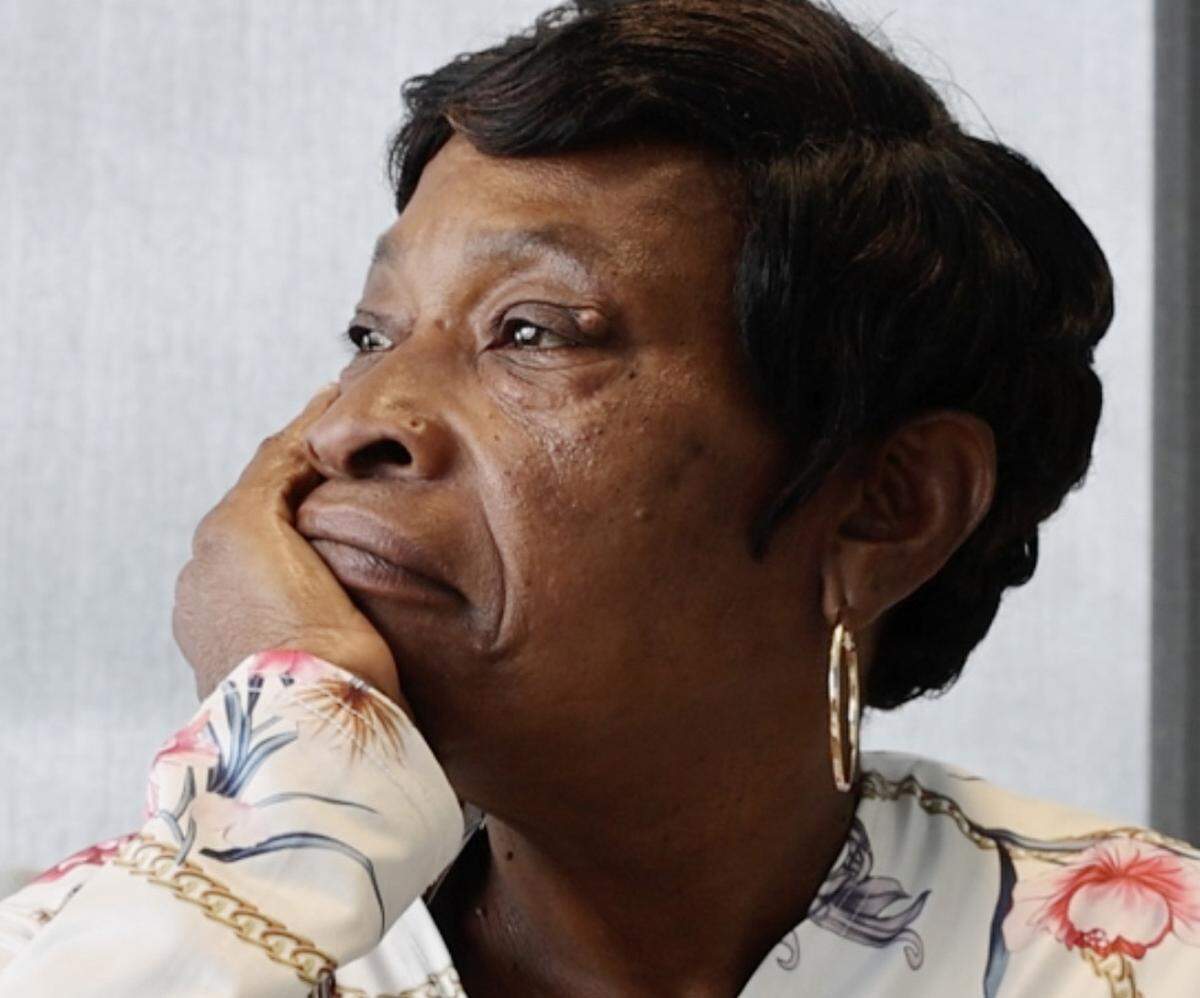
Only a wall separated Demetrics McGill and the rest of her family from her second-oldest son. He lived on the other side of the Lincoln Heights duplex.
The signs were easy to catch.
Doors slammed. Music blared. McGill’s eyes turned red from exhaustion. He stopped sleeping. Stopped eating.
“He just wasn’t himself,” his mom said. “We ain’t got to hear him talk. We can just look in his eyes or his facial expression and tell it was time for us to do something.”
McGill got that look about once or twice a year for more than 10 years. On a “bad year,” maybe three times.
From 2018 to 2023, police had come to visit the home 10 times, CMPD Lt. Crystal Fletcher said in an April video published after a judge ordered the department give videos of the shooting exclusively to the Observer.
Those police visits typically looked the same, Demetrics McGill said. She’d file involuntary commitment paperwork for her son, wait hours, and police would take him to a hospital.
Sometimes officers told McGill he could choose the music, and he’d glide into their squad car. Sometimes he was more stubborn.
The last time police served paperwork on the 240-pound man, officers had to heave and hoist him onto their shoulders.
As they neared the cars, he smiled and joked: You’re carrying me like a celebrity.
When he got back from the hospital a few days later, he crimped his forehead and questioned his family.
Who messed up my apartment? Who ripped my blinds? Why are my things all over the place?
He did, they told him.
“Man, I was really tripping,” his family remembers him saying. “I gotta get some help.”
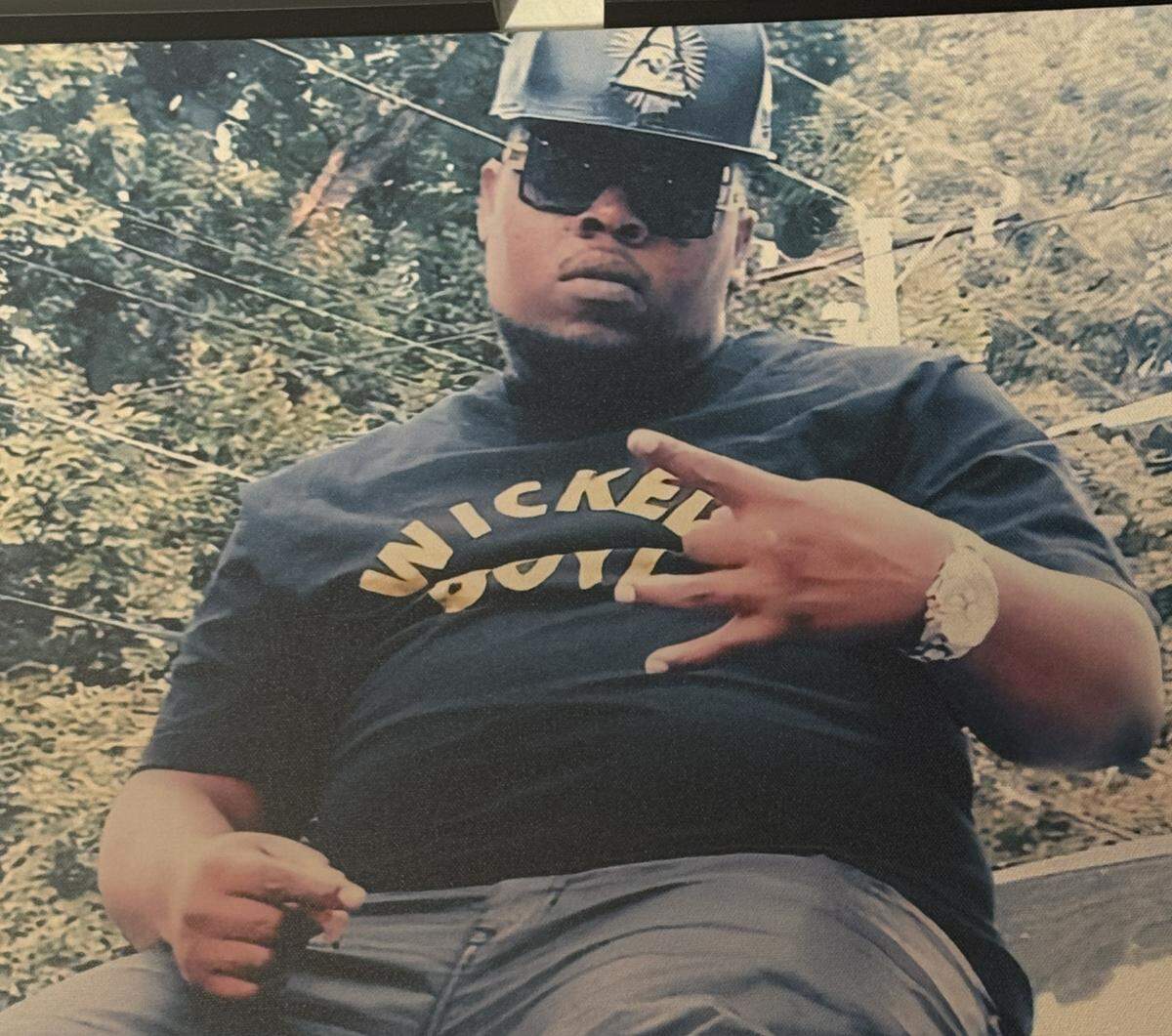
They hoped that would be the turning point. When he started to spiral again on Dec. 15, 2023, Demetrics McGill expected a familiar parade of police and, at worst, another unconventional exit.
But this time, her son had a gun, and officers weren’t there to serve the involuntary commitment paperwork.
This time, officials would carry his dead body out.
.png "image (3).png")
Signs of crisis
Demetrics McGill told the Observer she drove to the Mecklenburg magistrate’s office and filed the right paperwork on Dec. 15, 2023, the first day McGill showed symptoms of psychosis. That was a Friday. They told her it would take at least 24 hours for them to serve him.
That’s too long, she thought. This is an emergency.
So she anxiously waited for police to come and take her son to a hospital.
One day passed. She and her two other sons tried their best to keep him at bay. McGill showed his younger brother, DeMontrez Mobley, his Pokémon collection and argued with his older brother, Cordario McGill, about who was the better rapper.
That telling look in his eye lingered, but underneath McGill was still there — and he still loved T.I.
Then, early Saturday, McGill came to his mom’s side of the duplex and pulled her into his arms.
“Mama, I love you,” he said.
She told him the same, and they hugged. Then he walked out the door.
“Rico, come on back in,” she said. He didn’t listen.
He disappeared into the December-morning darkness, toward a Marathon gas station down the road.
Then she heard gunshots.
From here on, CMPD’s and the family’s stories fork at several points.
The 911 call
McGill shot two to three bullets into the air in response to shots he heard in the nearby park, his brother, Cordario McGill, told state agents and the Observer.
But Demetrics McGill said she never knew her son to have a gun, so she didn’t think he would have fired the shots.
She told the Observer she dialed 911 for help and told the dispatcher she “didn’t know who was doing the shooting,” but she knew her son “was out there somewhere,” unwell. She told the Observer she was trying to expedite the involuntary commitment process and get him to a mental health facility as soon as possible.
But the police who responded to 1515 Catherine Simmons Ave. didn’t have that paperwork; they were responding to a “shots fired” call, Lt. Fletcher said in the April video.
CMPD did not respond when the Observer asked why officers did not have the paperwork.
The scene
Police arrived with their guns drawn. One of them told investigators he heard two gunshots when he got out of his car and saw a gun in McGill’s hand when he peered through the duplex’s window.
McGill’s family disputes both those statements, and police body-worn camera footage doesn’t confirm either. It did not capture the sounds of any gunshots when police first arrived, nor did it show what that officer saw in the window.
Video does capture dialogue — or lack thereof — between police and the family.
“Charlotte police! Show me your hands!” the first officer yelled from the driveway.
“Don’t shoot! Don’t shoot my baby!” Demetrics McGill immediately responded from inside her unit as the officer retreated across the street.
Her youngest son, DeMontrez Mobley, followed.
“Hey bruh, he’s slow. He’s slow! He’s slow! He’s mental health!” he yelled.
Neither officer responded. One radioed that McGill had a “10-94” in his hand — police speak for “he has a gun.”
Mobley and his mom continued to make pleas to officers:
“Put your guns down!”
“He’s mental health!”
Within two minutes, the family 12 times told police that McGill was “mental health” and at least three times said “He’s slow.” Six times, they asked officers to put their guns down.
Police did not respond to any of those pleas.
They set up across the street, readied their rifles on top of the hood of their cars and took aim. At least a dozen officers joined. There were at least half a dozen guns pointed at the duplex when Mobley finally got the first officer to listen.
“Y’all are doing too much, he’s mental,” he said.
“Look. I understand that,” the officer replied. “He has a gun in his hand. We got to play this safely, OK? We don’t want to hurt him and we don’t want anybody to get hurt.”
“Ain’t nobody gonna get hurt,” Mobley insisted, if officers would just put their guns down.
About 40 seconds later, officers fired the 25 shots at McGill.
The shooting
When they first arrived at 6:20 a.m., officers six times asked McGill to come out of the house with your “hands up.” He was outside in the front yard for about 30 seconds — without a gun, video shows and official statements confirm. Officers remained across the street and boomed commands.
Then, McGill went back inside for about five seconds. Officers continued to ask him to “step to the street and come talk to us.”
McGill emerged. He raised his hands and, with them, a gun.
His brother, Cordario McGill, was “directly in front” of him, according to Mecklenburg District Attorney Spencer Merriweather’s conclusions on the shooting.
Some officers said it looked like McGill was pointing the gun at his brother. Other officers said he looked like he was pointing at them. Officers with body-worn cameras were too far away to clearly capture what McGill did.
“Drop your gun,” an officer began to say. Then, at 6:24 a.m., a storm of two dozen shots barreled toward McGill.
Benjamin DeVries fired his rifle twice. Sean Werchek and Tymel Carson each fired 11 shots. James Fisher fired once.
After reviewing the same footage obtained by the Observer, Merriweather in July 2024 released a letter to the State Bureau of Investigation saying the shooting was legally justified. Officers fired when they feared McGill could endanger their lives or the lives of others, he wrote. He included a zoomed in screenshot of the video where McGill appears to be pointing the gun toward his brother, who is behind a tree.
A retired CMPD sergeant formerly in charge of investigating officer-involved shootings echoed that in an interview with the Observer, and applauded how officers handled the situation after reviewing the key videos.
But the family thinks officers could have saved McGill’s life even after the shooting. Two years later, Cordario McGill’s question to police still rings in his mind:
“Why I don’t hear no ambulance? Y’all shot my damn brother.”
Part Two coming Thursday: Thirty minutes of waiting.
This story was originally published November 12, 2025 at 5:00 AM.