‘Another Black man gone’: unanswered questions in wake of north Charlotte shooting
Content warning: Videos in this story contain violence and graphic language.
The ambulance stayed quiet, and Lincoln Heights woke up inside a crime scene.
Paramedics declared Sanrico McGill dead at 7:04 a.m. on Dec. 16, 2023 — 40 minutes after Charlotte-Mecklenburg Police Department officers shot him.
A neighbor’s empty driveway lined with police tape quickly filled with a family toppling over in grief.
Demetrics McGill flipped through the last hour in her head, and she thought about all the things she and her family had tried to do to steer police away from shooting her son and then toward helping him survive.
Nothing worked.
Then, as the worst day of the 57-year-old mother’s life unfolded, police talked about how they “didn’t get breakfast yet,” were “still cold” and couldn’t believe “they’re building like freaking million dollar homes” off Beatties Ford Road.
Just another Black man gone, McGill’s mother thought, and police are out here laughing, drinking coffee.
“Shit don’t change,” she told The Charlotte Observer in a recent interview.
Two years ago, her living sons, Cordario McGill and DeMontrez Mobley, said aloud what she was thinking.
“Y’all out here laughing? I’m glad y’all still have your happiness. I’m glad you’re still having fun. Ha. Ha. Ha. Joke’s on us, right?” Mobley said to officers watching his mourning family.
Cordario McGill was still struck, stunned and teary eyed as he asked: “Why y’all couldn’t tase him? If he was white, y’all would have tased him.”
Police didn’t respond. Officers remained near the family until Brandon Blackman, the special agent in charge of the State Bureau of Investigation region that includes Charlotte, arrived and told them that they needed to move and that they “agitated the family very, very badly.”
District Attorney Spencer Merriweather also arrived. He told the Observer he recognized people coming up and asking what had happened to “Rico” or “Freak” — McGill’s two nicknames.
“While it can be transient along Beatties Ford Road, it’s also a close-knit community,” Merriweather told the Observer in a recent interview.
“Even though it’s tragic,” the officers who fired were “certainly within” the parameters of North Carolina’s law on police use of force, he said. Officers said they fired shots because they feared for their lives and the life of Cordario McGill as he stood in front of his gun-wielding brother.
But, “I’m a human being,” Merriweather said, and some things “make you back up and say: ‘Wait a minute. I think there’s somebody that needs to be asking serious, significant questions here.’”
Experts broke down those questions for the Observer.
Agitated mental state
Today, McGill’s brothers and mother don’t raise their voices when they talk about what happened on Dec. 16, 2023. They defocus their eyes and recount the five minutes between when officers arrived and when they fired shots.
Everything after that gets swept into a blur of grief, confusion and sadness.
“He just needed more time,” Cordario McGill told the Observer. “Everything was so rushed, and everything just spiraled out of control.”
What made it spiral? The police guns, the spotlight, the booming speaker, Cordario McGill said.
“It triggered… it made him more aggressive, agitated. He was out of it,” he said, and police “weren’t making it any better.”
McGill struggled with diagnosed bipolar schizophrenia and psychosis for 10 years. Medication helped, his brother said, but if he went off it, things could go wrong.
When signs of a psychosis showed on Dec. 15, 2023, McGill’s mother tried to get him help. The involuntary commitment paperwork she filed is not public, but the family told the Observer and state agents a judge that day issued an order for police to take McGill away for an evaluation.
But “officers never received the IVC paperwork,” CMPD Lt. Crystal Fletcher said in a video posted to X after a court earlier this year ordered that police give the Observer the videos used in this series.
It is unclear why they did not receive it. CMPD did not answer when asked.
Mark Botts, an expert in involuntary commitment law and an associate professor at University of North Carolina-Chapel Hill, said “it doesn’t take long” for a magistrate to sign the two-page form and send it to law enforcement. If the process played out as quickly as it normally does, he wondered: “Why wasn’t that served… before … he was shot and killed?”
That question remains unanswered, too.
So, on the day of the shooting, McGill spiraled into the worst mental health crisis his family had ever seen. And somehow he had a gun.
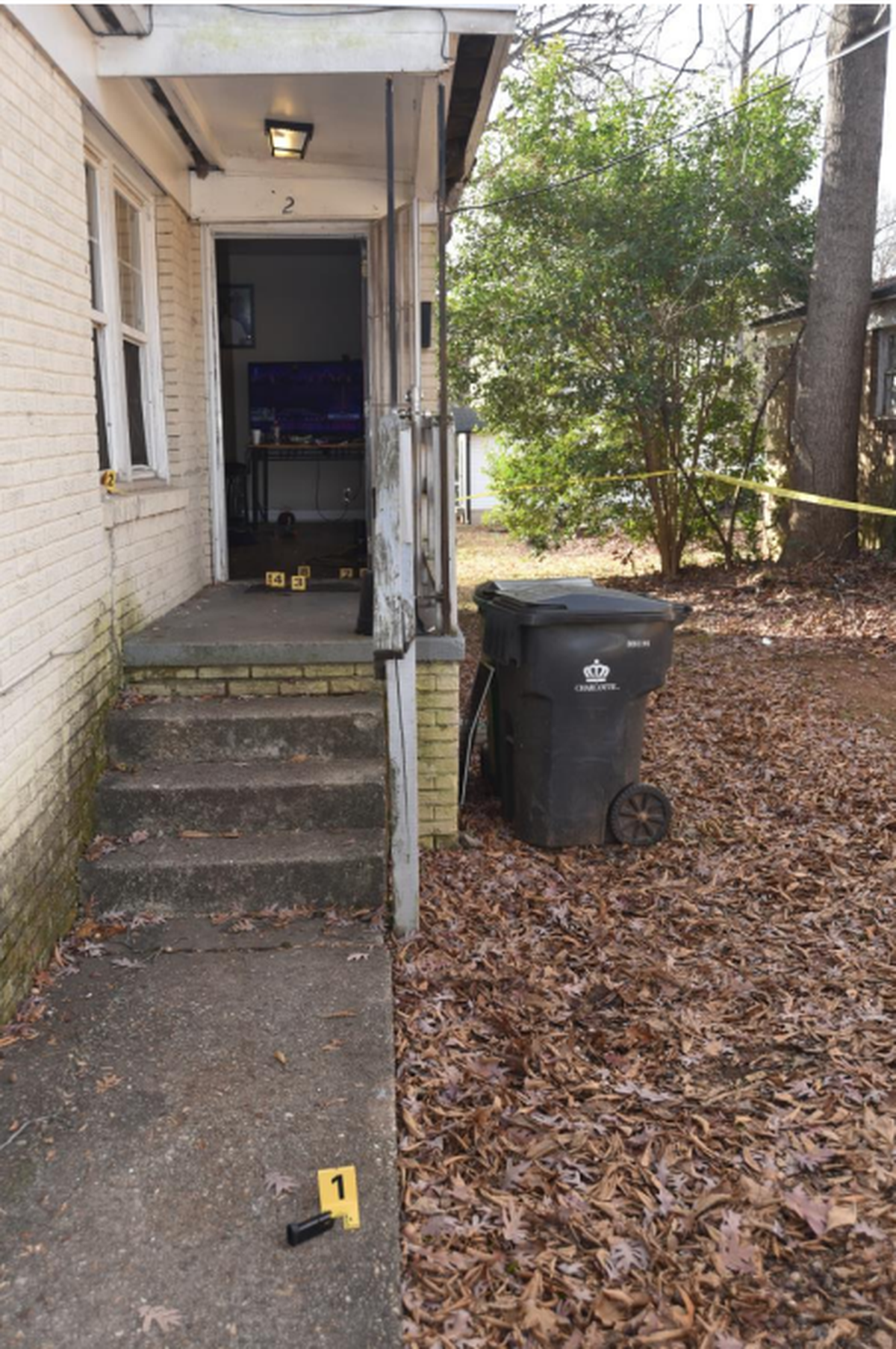
The family does not know how or when McGill got a gun, but Cordario McGill said it was “so raggedy” that when his brother fired two or three times into the air, “the whole magazine fell out.”
When police arrived and when McGill raised it, the gun wasn’t loaded. But officers couldn’t have known that when they shot, Merriweather said.
Shooting review
Since taking office in 2018, Merriweather has never prosecuted officers involved in police shootings, and he did not know of any time the office had.
North Carolina law is broad. It states police are justified in shooting someone if they did so while in fear of their lives or the lives of others, and the state’s 42 district attorneys must work within that law. McGill could have been aiming the gun at police or his brother, Merriweather said. He also could have been following officers ordering him to put his hands up. Or he could have been trying to block the beaming police spotlight flooding his vision.
“It doesn’t matter,” he said, and for police, it was “an entirely plausible thing to think that someone who is raising the barrel of a gun at you intends you harm and … respond with force.”
Merriweather said how police acted before the shooting doesn’t affect his legal analysis of the shooting itself. That would get into tactics, and Merriweather and his prosecutors “don’t tender ourselves as experts in the field of police tactics.” Police Chief Johnny Jennings and department leaders declined to be interviewed for this story.
Katherine Scheimreif, a CMPD sergeant who retired in 2018 after nearly 30 years at the department has just as many years of experience reviewing police shootings. She said police did an “excellent job.”
They used deescalation tactics like retreating across the street and using the loudspeaker to talk to McGill. That created space between McGill and officers, she said.
The family’s requests for officers to put their guns down and treat the situation like a mental health call went “against every grain of training,” she said.
“It’s not about protecting just [McGill],” she said. “It’s about protecting mom and the brothers and the people next door.”
Video shows a neighbor told them they hit her bedroom window after they fired 25 shots at McGill.
Drone use
After officers fired those shots, they waited for a drone to come and clear the house before nearing McGill. The 34-year-old died in that 40-minute span between police shooting and reaching him.
Jeffrey Welty, a professor of public law and government who has studied police drone use for a decade, said state law gives vague outlines on how law enforcement can use drones.
Police in North Carolina have used drones for 10 years, he said, and there are some “unobjectionable” ways they help law enforcement. They have found missing people, monitored large gatherings and documented crime scenes.
But drone surveillance is another story, and the law gives officers permission to use it when they determine “swift action is needed to prevent imminent danger to life or serious damage to property.”
CMPD has not publicly published its drone policies, but the Observer has requested them.
In Winston-Salem, police have three drone-docking sites with 2.5 mile-radiuses that can launch drones in 30 seconds and put them on scene in 90 seconds, Michael Knight, captain of the Criminal Intelligence Bureau at the Winston-Salem Police Department, said on WFAE Thursday morning.
Bleach and grief
In a lawsuit filed in April by Greensboro attorney Nichad Davis, McGill’s family said Charlotte officers were reckless and “failed to de-escalate the situation” when they had the chance to.
Officers could have met McGill calmly when he “made himself available” and was outside “displaying his hands” without a gun, according to the lawsuit.
Instead, officers created a “standoff” by drawing their weapons and exacerbated McGill’s mental state. Police didn’t communicate effectively and gave him conflicting commands, the lawsuit says.
“Rico had a family,” Cordario McGill told the Observer. “So I imagine the ones that really don’t have a family and a system are just thrown away.”
People need help, he said. McGill needed help — not guns.
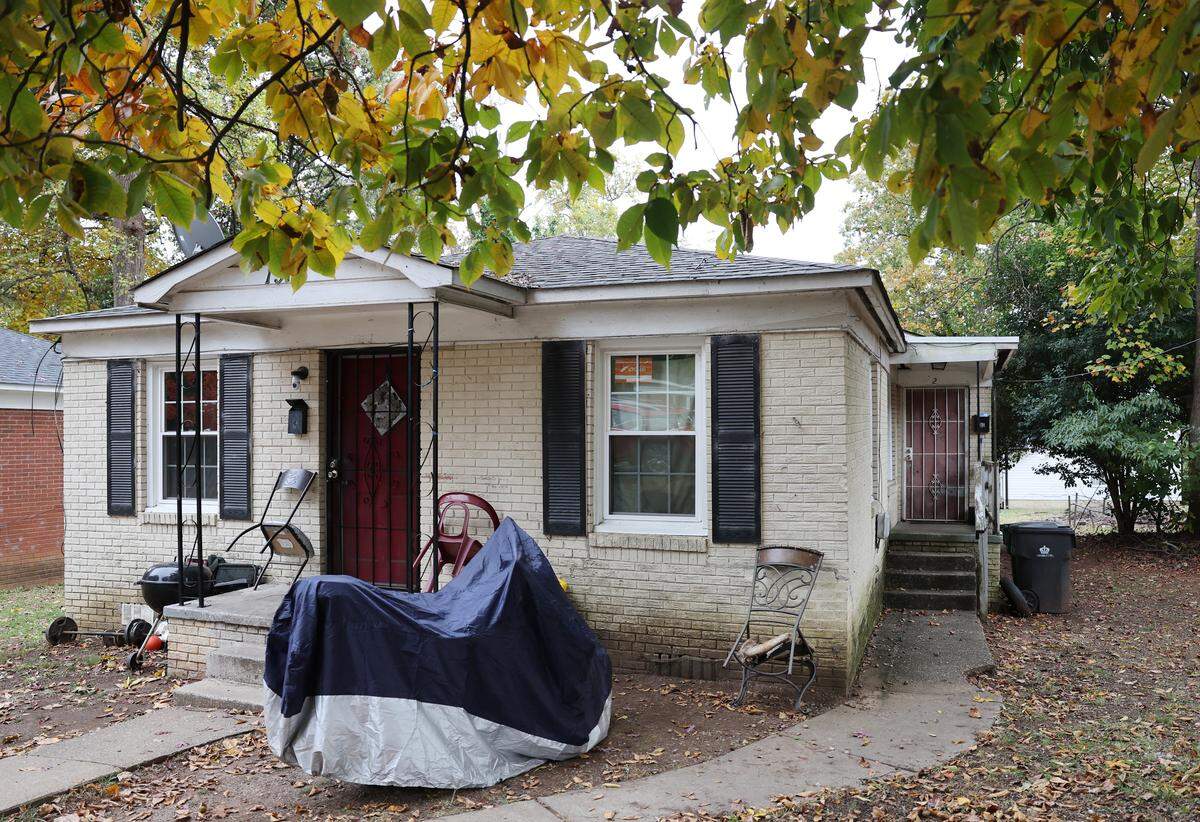
Cordario McGill now lives in the apartment where his brother died alone. He cleaned up his younger brother’s blood with bleach and rags. He painted the walls and put up pictures of McGill and held on to his favorite shoes — Space Jam Air Jordans.
“I’m just trying to live for the both of us,” he said.
He’s trying to get answers, too.
This story was originally published November 14, 2025 at 5:00 AM.