Charlotte news station fighting federal judge over light rail stabbing videos
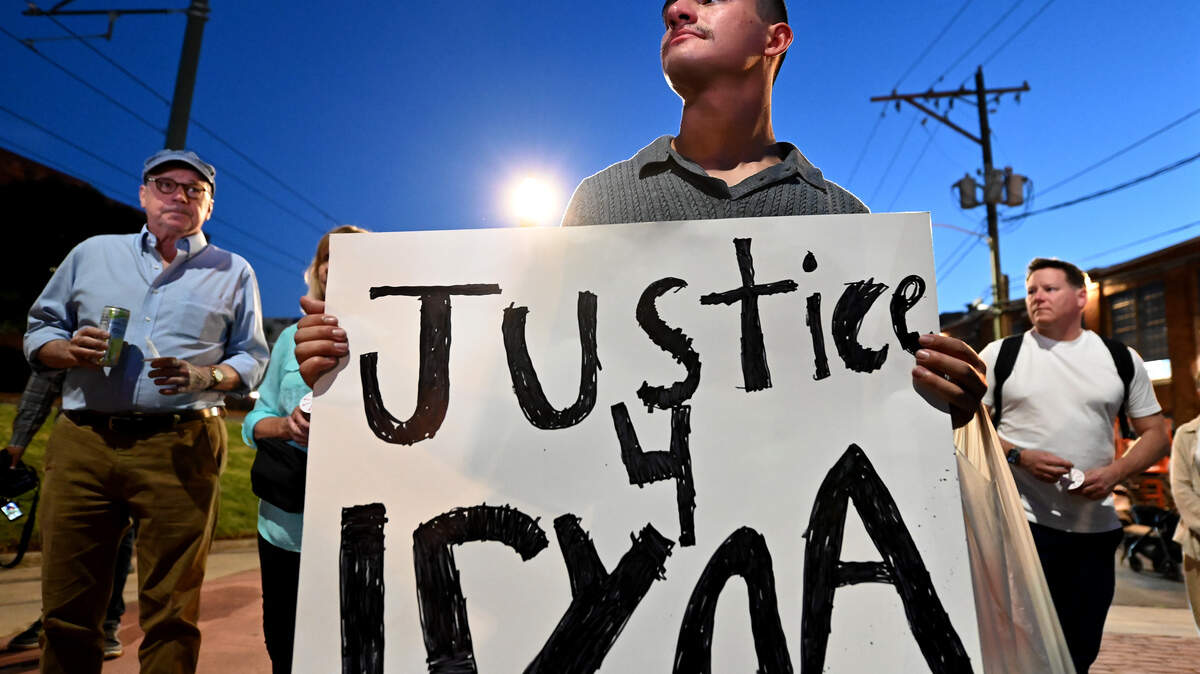
Charlotte news station WSOC-TV is accusing a federal judge of wrongfully intervening in state court by pausing a Mecklenburg judge’s order that would have released police video relating to the fatal train stabbing of Ukrainian refugee Iryna Zarutska.
Zarutska died on Charlotte’s LYNX Blue Line light trail as it traveled through South End on Aug. 22. She sat in front of DeCarlos Brown Jr., who stabbed her before getting off the train, surveillance video showed. Brown, who has a criminal and mental health history, now faces both a state murder charge and a federal criminal charge of causing a death aboard mass transportation.
About a month after the widely-publicized stabbing, WSOC filed a petition for CMPD body-worn camera footage “related to the 8/22/2025 incident that occurred on the CATS blue line regarding the death of Iryna Zarutska by Decarlos Brown.” This could have included video from officers who first reached Zarutska, arrested Brown and those who interviewed witnesses.
In North Carolina, state judges must decide if and how police videos are released. On Monday, Mecklenburg County Superior Judge Matthew Osman held a hearing on WSOC’s October petition.
The judge ordered that the station could confidentially view the Charlotte-Mecklenburg Police Department videos in order to prepare to “renew its petition ... with a narrower scope for specific recordings,” WSOC attorney Nicholas Acevedo wrote in court filings.
State and federal courts disagree
In the Monday hearing over police videos, Brown’s state and federal criminal defense attorneys opposed the video release, according to court documents. After Osman ordered the limited release, Brown’s federal defense attorneys filed a motion in the U.S. District Court for the Western District of North Carolina asking a federal judge to issue an emergency protective order barring CMPD from sharing the videos.
Attorneys Joshua Kendrick and Megan Hoffman argued that “releasing the evidence to the media at this stage of the proceedings will prejudice Mr. Brown’s constitutional rights to due process and a fair trial.”
U.S. Magistrate Judge David Keesler agreed. He granted a preliminary protective order within hours, citing “the harms [Brown’s lawyers] forecast.” Keesler said the order could be edited after input from WSOC and U.S. Attorney Russ Ferguson’s office.
Ferguson agreed with Brown’s lawyers, an assistant U.S. attorney wrote in a motion, and co-signed their motion for a protective order.
Acevedo, WSOC’s attorney, did not. On Tuesday, he accused Keesler of taking a “strike at the sovereignty of the North Carolina court system.” If Brown’s lawyers disagreed with the Mecklenburg Superior Court order, he said, they should have gone through the state court appellate system — not involved a federal judge.
In a Thursday response, Brown’s lawyers said Acevedo “mischaracterized” their motion. They say they are not asking to interfere with state court. They are simply asking the judge to adhere to federal rules and protect evidence relating to Brown’s federal case — in which he faces the death penalty.
This story was originally published January 9, 2026 at 4:01 PM.