
Man accused in Good Samaritan death passed test to carry concealed gun
A Catawba County man accused of fatally shooting a Good Samaritan who tried to help him following an icy wreck this month had passed background checks needed to own and carry a concealed gun, Sheriff Coy Reid said.
Marvin Lee, 27, had no criminal or mental health issues in his background to prevent him from obtaining a concealed weapons permit four years ago, Reid told the Observer. Such a permit allows someone to purchase handguns for five years.
“We did everything that we could on our end as far as what’s required and even beyond,” said Reid. “We followed all the procedures as far as issuing a permit.”
Lee is jailed without bond and charged with murder in the killing of Jefferson Heavner, a 26-year-old single father. Reid said Lee may have been impaired when his car slid off the road on Jan. 22 during a heavy winter storm. Heavner and two other men in Heavner’s passing truck stopped to help.
Authorities said Lee reacted violently when someone tried to take his keys. Lee stood over Heavner and shot him numerous times with a handgun, Reid said. Lee is also charged with attempted murder and accused of shooting at others at the scene.
From 2000-2012, North Carolina sheriffs approved more than 344,000 concealed carry permit applications, state data show. They denied about 4,400 applications, or about 1.2 percent. Another 1,350 permits were later suspended or revoked, an Observer analysis found.
Reid said nothing about Lee’s recent behavior suggested the sheriff’s office should have revoked his gun permit. Despite following the law in issuing the permit, Reid said, “people make mistakes.” If Lee had applied for a gun purchase permit a day before Friday’s killing, Reid said, his office would have granted him one.
Lee doesn’t remember much about the incident, said his defense attorney, Victoria Jayne, who met with Lee for the first time on Monday. She told the Associated Press he “just seems very confused about everything that happened. He doesn’t recall a lot.”
After the shooting, Lee was arrested by SWAT team officers who found him unconscious in the car. Authorities say Lee woke up during the arrest and resisted officers.
Jayne, his attorney, said she did not know if authorities tested him for alcohol or drugs. He had bruises on his face, but she’s not sure if those came from the impact of the crash or a fight.
Lee’s handgun
Felony criminal convictions and involuntary committal to a mental facility are two major factors that would make Lee ineligible to buy a gun or carry a concealed firearm in North Carolina. His most serious offenses were traffic infractions, according to court records.
Authorities are still investigating how Lee obtained the handgun. He was not the original owner, Reid said. Someone else purchased it from a firearms dealer, Reid said, but it is not immediately clear how Lee acquired it.
Reid said investigators haven’t discovered anything illegal about how Lee obtained his handgun.
Reid does not believe the gun was stolen. Detectives and the federal Bureau of Alcohol Tobacco Firearms and Explosives haven’t located the original owner, who has moved out of Catawba County.
In 2012, Lee submitted an application to carry a concealed weapon. The permit was issued on May 18, 2012, and expires on May 16, 2017.
N.C. background checks
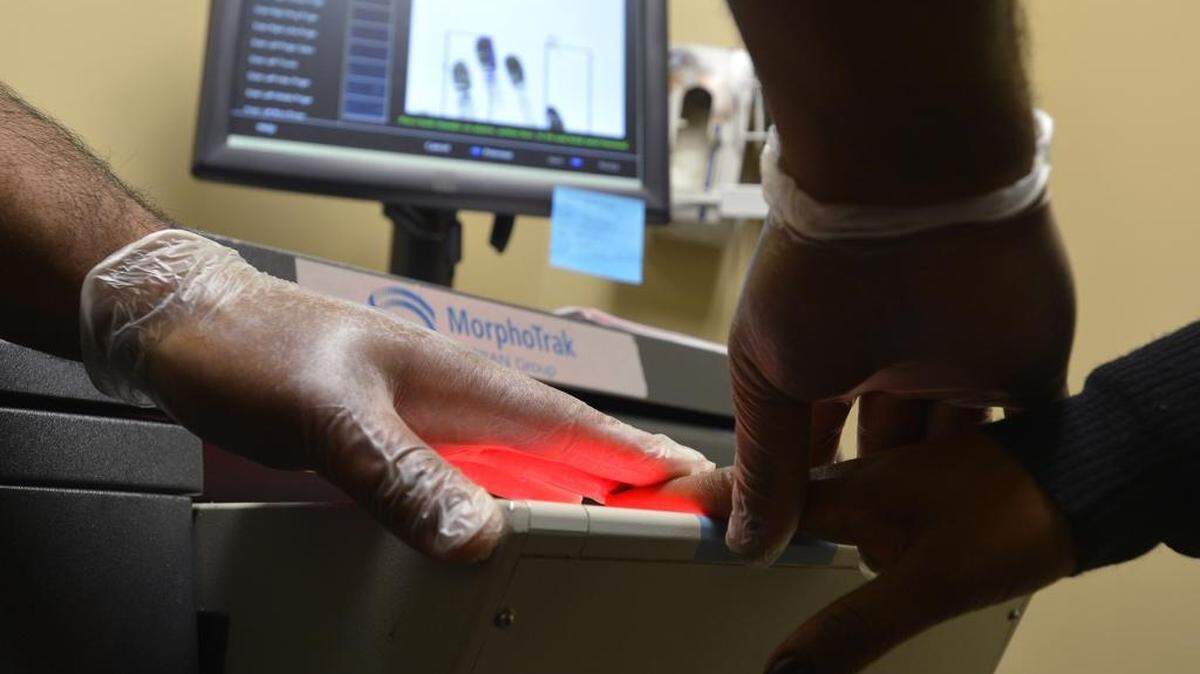
North Carolina’s process for vetting people who want to carry a concealed gun or purchase a pistol is more rigorous than in other states, Reid said. Some only require a gun safety course and a search of the National Instant Criminal Background Check System.
North Carolina and federal gun laws prevent someone from buying a pistol or carry concealed gun if the person:
▪ Is addicted to alcohol, illegal drugs or any other controlled substance.
▪ Has been dishonorably discharged from the military.
▪ Has been determined by the court or a government agency to be lacking mental capacity or mentally ill.
▪ Has been convicted of driving while impaired within three years before applying.
▪ Has committed certain crimes within the past three years, including simple assault, impersonation of a law enforcement officer, assault on emergency personnel.
▪ Has ever been convicted of serious assault, stalking, restraining order violations or misdemeanor domestic violence crimes or assaulting a law enforcement officer.
▪ Is pending trial, appeal or sentencing for a crime that would disqualify him.
Most permits approved
Most of those who seek concealed weapons permits in North Carolina are approved. Experts say people who know they’d be denied – because of a criminal conviction, for example – don’t apply in the first place.
More than 6,800 Catawba County residents – including Lee – gained concealed carry permit approval from 2000-12. Twenty-eight applications were denied and 32 permits were later suspended or revoked.
Mecklenburg County approved more than 22,000 applications for concealed carry permits from 2000-12. Only Wake County residents were issued more permit application approvals, data show.
But Mecklenburg also had one of the state’s highest application denial rates, rejecting 2.8 percent of concealed carry permit applications. Only Halifax, Martin, Hertford and Alamance counties ranked higher, data show.
More than 100 concealed carry permits in Mecklenburg were later suspended or revoked.
A higher bar
Obtaining a permit for a concealed weapon requires passing stricter requirements than for a pistol purchase permit, says Marilyn Porter, an attorney with the Mecklenburg Sheriff’s Office.
A concealed handgun permit allows someone to purchase multiple handguns, while one purchase permit is required for each handgun transaction.
Another difference: If a person wants to apply to carry a concealed gun, the sheriff’s office has to determine that the person doesn’t suffer from a physical or mental infirmity that prevents safe handling of a handgun. It’s a subjective measure that allows sheriff’s office employees to do a more thorough search of someone’s mental history, Porter said.
In Mecklenburg, that means contacting area mental health facilities to see if an applicant has been treated there. North Carolina laws require permit seekers to provide information about their mental health, and compels providers to release documents that would otherwise be private, Porter said.
Mecklenburg Sheriff Irwin Carmichael said he and other North Carolina sheriffs plan to lobby state legislators for more time to conduct pistol permit checks. A change in the permit policy shortened the time sheriffs have to do the checks from 30 days to 14 days to determine if someone is mentally and legally prohibited from buying a handgun. Carmichael says that’s not enough time to get needed information from mental health facilities.
“We’re always going to err on the side of caution. Until we have everything back, we’re not going to issue (permits),” Carmichael said. “All sheriffs, we’re going to err on the safe side, we’re going to do these checks. We’re going to make sure the guns are in the right hands of the right people.” Database editor Gavin Off contributed to this story.
Cleve R. Wootson Jr.: 704-358-5046, @CleveWootson
This story was originally published January 30, 2016 at 5:04 PM with the headline "Man accused in Good Samaritan death passed test to carry concealed gun."