
Facing criticism over lead in water, CMS defends months-long delay in posting results
Superintendent Clayton Wilcox on Wednesday defended his district’s decision not to immediately notify parents when a consultant found high levels of lead in school drinking water, even as he promised to post results when Charlotte-Mecklenburg Schools tests more than 100 additional schools.
His remarks at a back-to-school news conference came after a former CMS environmental health manager emailed public officials and the news media Wednesday morning accusing CMS of “deception by omission.”
Last fall CMS tested drinking fountains, sinks and other water points in 58 schools for lead and found levels exceeding the state’s action level at 27 of them. The district notified families when the testing was being done but did not tell them about the results, even though some fixtures logged levels of the dangerous element that were up to 28 times the acceptable level.
The consultant who did the testing sent CMS school-by-school reports dated March 9, but CMS made them public only in August, after the Observer and other news media inquired. Officials said that was because there were no serious health concerns that would merit letters to parents.
“We did not find any levels of chemical trace in our water that we thought would be harmful to kids, and if we had we would have spoken out loudly and proudly of that discovery,” Wilcox said Wednesday.
The Observer began trying to track down testing details in late July, after an Olde Providence Elementary parent asked whether CMS had ever released results from the fall testing. CMS initially provided its own summary, then posted each school’s report online after the Observer asked for more details.
Two independent experts who looked at the CMS results at the Observer’s request agreed it’s unlikely that children or staff took in enough water from fixtures that leached lead to endanger their health. Some of the fixtures with the highest readings were in seldom-used locations, according to CMS, and most logged high levels only after sitting unused for several hours, dropping back to safe ranges after water ran through.
Deception by omission
Brian Kasher, who managed environmental health for CMS for seven years before resigning in June 2012, emailed school board members, city and county officials and community activists to say that the latest revelation “provides evidence of CMS intentionally and as a matter of public policy hiding information that could be important to the health and well being of members of our community. This management tactic is called ‘deception through omission’ and should have no place in the public policy of our public school system.”
Kasher said in his email that he resigned after being ordered by “senior level CMS staff” to lie to parents and principals about conditions that could affect students’ and employees’ health. (CMS confirmed Kasher’s employment and resignation but did not disclose anything else about his work history, which is confidential under state law.)
“Through withholding the truth,” Kasher wrote, “CMS removes the ‘sense of urgency’ that should (exist) on matter of conditions potentially adverse to the health of our community’s children and the staff we entrust to care for them. It also prevents parents from taking precautions they may believe are necessary to protect their children.”
“CMS does have a duty to (manage) public expectations,” Kasher continued, “but to simply deny the public knowledge of known adverse conditions in public facilities serving children suggests an level of incompetence and immaturity in public service. It also creates negligence liabilities.”
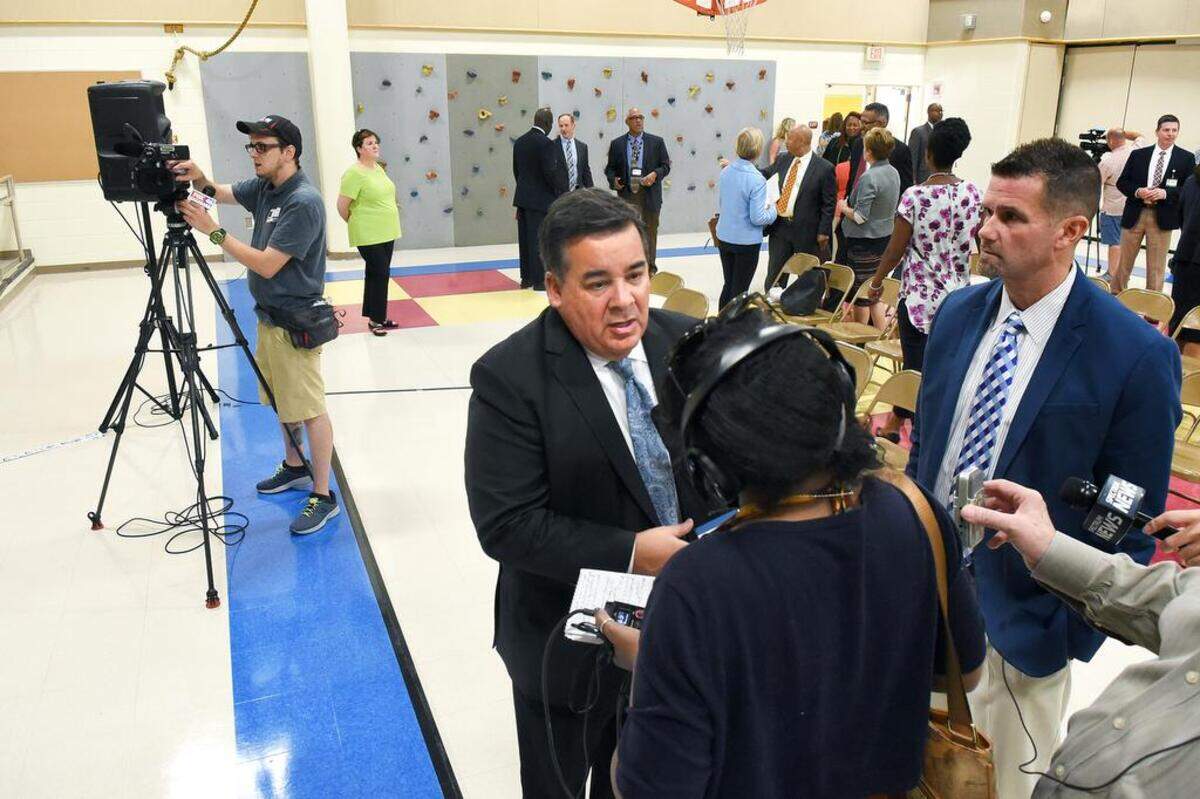
Wilcox said after the news conference that he wasn’t familiar with Kasher’s email, which did not include the superintendent among almost 40 addressees. But it quickly garnered some sympathetic responses.
“My husband used to do work for the Coalition to Prevent Childhood Lead Poisoning, and any time lead is found in water it is a big problem,” former Charlotte Mayor Jennifer Roberts told the Observer after reading Kasher’s message. “If my kids were still in CMS I would have them bring bottled water after reading this, or water from our home.”
Mecklenburg County Commissioner Jim Puckett said he liked Kasher’s suggestion that CMS avoid what he called a conflict of interest by removing environmental health and safety testing from the auxiliary services department, which also bears responsibility for fixing any issues flagged.
“I also would like to see the responsibility for environmental and health moved and I would prefer it be outsourced,” Puckett said.
Testing the rest
Lead is toxic for everyone, but especially damaging to young children, who can suffer learning and behavioral problems, lower IQ and physical health problems at lower exposure levels than in adults. Pregnant women who ingest lead can expose their fetuses.
The federal Environmental Protection Agency encourages but does not require public schools to test water for lead, a fact that Wilcox emphasized Wednesday. He noted that CMS removed, repaired or replaced all fixtures with high levels, “and we replaced them before people came to us and said, ‘Oh, that doesn’t taste quite right’ or ‘That isn’t quite right.’ ... It’s an example of a school system that’s interested in doing the right thing for the right reasons.“
More than 100 schools — including all middle and high schools and about 40 elementary schools in relatively new buildings — have yet to be tested. Wilcox said Wednesday he hopes to finish testing all elementary schools during the 2018-19 school year and get to the middle and high schools in summer or fall of 2019.
Dan Collins, the CMS environmental health and safety manager who oversees the lead-monitoring project, said fixtures installed before 1989 are considered the most likely to leach lead into drinking water. CMS said 32 of the untested schools were built before that date.
The district told the Observer it spent about $230,000 for its consultant to draw more than 1,600 samples from the 58 schools, which were chosen because they are in pre-1989 buildings and serve young children. The samples came from drinking fountains, cooking appliances and sinks in areas where water was likely to be ingested, including kitchens and faculty lounges. It cost only $16,750 to fix the problems identified. The district installed filters, replaced water fountains and took some fixtures out of service.
Testing middle and high schools will be more complex and costly. Not only are they bigger, which means more water sources, but many encompass several buildings that were constructed, remodeled and expanded over the course of several decades.
Chief Communications Officer Tracy Russ said future results will be posted as they come in.
Wilcox defended the decision not to release the first batch until reporters asked, saying “there was nothing that was newsworthy” and he didn’t want to post “information that isn’t fully vetted or is alarmist.”
Schools with high levels
Albemarle Road Elementary: Only high reading was not at a consumption point; warning sign posted.
Ashley Park PreK-8: Filters installed, faucet replaced.
Bain Elementary (old campus): One water cooler replaced; one fixture removed; warning sign posted at a fixture that is not a consumption point.
Berryhill Elementary: One fixture removed.
Bruns Academy: High reading was not at a consumption point; warning sign posted.
Cotswold Elementary: Filters installed, faucet replaced.
Devonshire Elementary: New plumbing and fixtures installed.
Dilworth Elementary: Filters installed, faucet replaced, one fixture permanently removed.
First Ward Elementary: Filters installed, faucet replaced.
Hickory Grove: Two fixtures removed.
Hidden Valley Elementary: Three fixtures removed.
Irwin Academic Center: Filters installed, faucet replaced.
Mallard Creek Elementary: One fixture removed.
McKee Road Elementary: Water cooler replaced, filters installed, faucet replaced.
Montclaire Elementary: Filters installed, faucet replaced.
Oaklawn Language Academy: Filters installed, faucet replaced.
Olde Providence Elementary: Filters installed, faucet replaced, one fixture permanently removed.
Paw Creek Elementary: Filters installed, plumbing connections replaced on kitchen steamer.
Reedy Creek Elementary: Filters installed, faucet replaced.
Sedgefield Elementary: High reading was not at a consumption point; warning sign posted.
Starmount Elementary: High reading was not at a consumption point; warning sign posted.
Steele Creek Elementary: Three fixtures permanently removed.
Trillium Springs Montessori: High reading was not at a consumption point; warning sign posted.
University Park Creative Arts: Five fixtures removed.
Vaughan Academy of Technology: Six fixtures removed.; one had a filter added and a faucet replaced.
Westerly Hills Academy: One fixture removed; one was not a consumption point and warning sign was posted.
Winterfield Elementary: High reading was not at a consumption point; warning sign posted.
Schools with no problems
Allenbrook Elementary, Beverly Woods Elementary, Billingsville Elementary, Briarwood Elementary, Chantilly Montessori, Clear Creek Elementary, Collinswood Language Academy, Cornelius Elementary, Eastover Elementary, Elizabeth Traditional Elementary, Gunn Elementary, Huntersville Elementary, Huntingtowne Farms Elementary, Lansdowne Elementary, Marie G. Davis Academy, Matthews Elementary, McAlpine Elementary, Myers Park Traditional Elementary, Oakdale Elementary, Oakhurst STEAM Academy, Park Road Montessori, Piney Grove Elementary, Rama Road Elementary, Reid Park Academy (Amay James building), Selwyn Elementary, Shamrock Gardens Elementary, Sharon Elementary, Thomasboro Academy, Tuckaseegee Elementary, Turning Point Academy (old Pawtuckett school), Windsor Park Elementary.
Schools that are not on either list have not yet been tested.
Ann Doss Helms: 704-358-5033, @anndosshelms
This story was originally published August 15, 2018 at 5:04 PM.