
With 3,400 students, this CMS high school could be the largest in NC history
Charlotte’s Myers Park High has just over 3,400 students this year, larger than any North Carolina public school in the past decade and possibly the largest in state history.
Myers Park, Ardrey Kell and South Mecklenburg high schools have been the state’s three biggest for several years. All three grew this year, according to a new school-by-school tally Charlotte-Mecklenburg Schools posted.
Wake County Public Schools, the state’s largest district, is generally the only one with high schools almost as large as those in CMS. While official numbers haven’t been reported, Wake doesn’t have any as large as Myers Park, said Wake Communications Chief Tim Simmons.
This year brought significant enrollment changes to dozens of the 176 schools in CMS, as changes in boundaries, grade levels and magnet programs approved in 2017 took effect. The changes capped a student assignment review designed to relieve crowding, provide better academic options and counteract racial and economic isolation.
The official CMS tally also contradicts what officials reported earlier this month: Instead of growing by 360, the district is actually down by seven students. With a total of 147,352 this year, that’s essentially no change.
Asked about the difference, Assistant Superintendent Akeshia Craven-Howell said only that the preliminary tally of 147,719, provided when the Observer asked about 2018 enrollment, proved to be incorrect on review.
Giant schools grow
Myers Park High, which had 3,156 students at the start of the last school year, had several boundary changes and was expected to be close to 3,300 this year, said Principal Mark Bosco. Instead, it had 3,385 when CMS took its official snapshot on the 20th day of school at the end of September. Bosco said as of Tuesday the total was 3,417.
If any school had to squeeze in 3,400 students, Myers Park is one of the best suited for it, Bosco said. Half a dozen classroom buildings — including two three-story buildings added recently — and about 20 mobile classrooms have plenty of room on a wooded 61-acre campus.
Yes, morning traffic can be crazy, and the first of five lunch shifts starts at 10:30 a.m. But Bosco says the biggest challenge was having to look for six additional teachers after school started and CMS realized the projection was too low. Because the state pays for teachers based on enrollment — and makes adjustments when enrollment outstrips projections — the large total doesn’t mean individual classes will be bigger, he said.
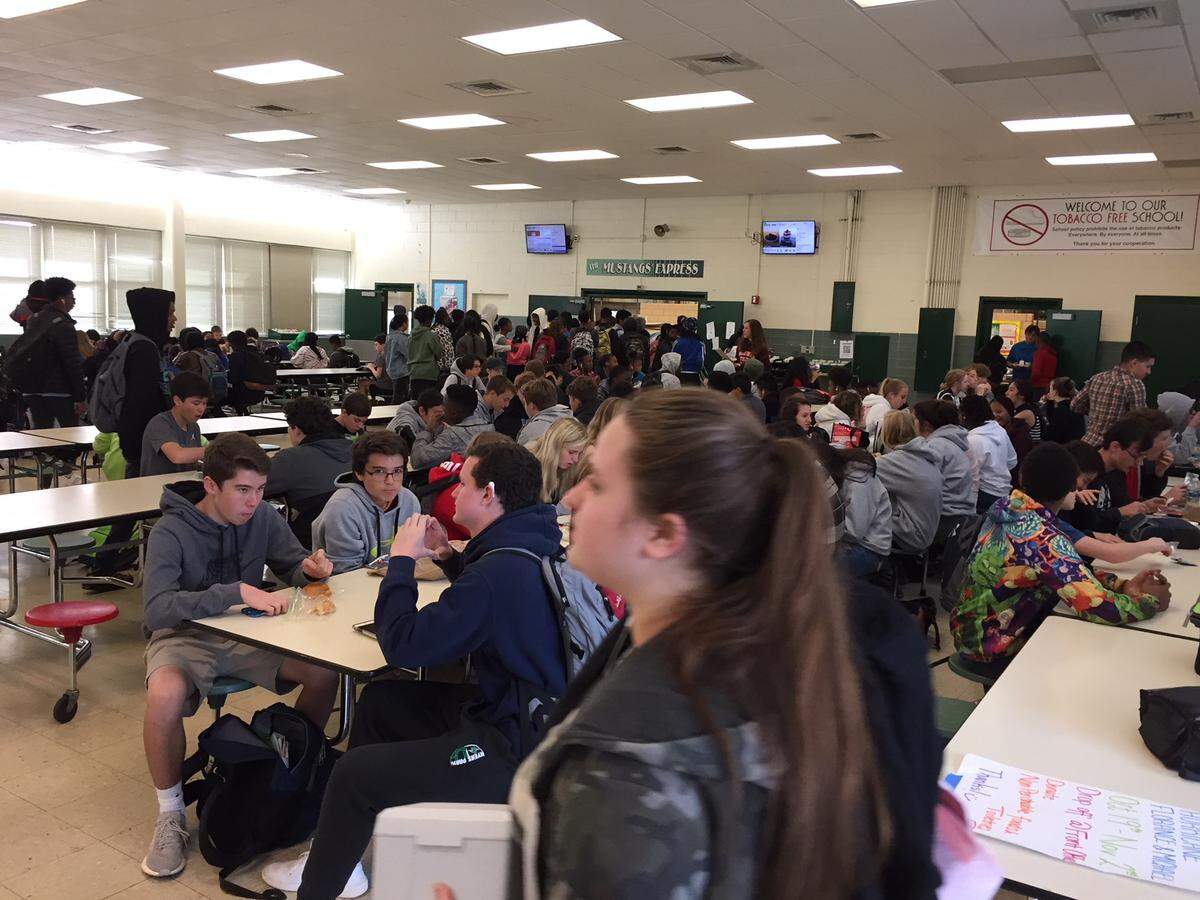
“I knew that we were going to be large last year,” he said. Bosco speculated that the surge came from new development, including in neighborhoods in the Myers Park zone that are gentrifying, and from a large number of ninth-graders who arrived from private schools.
Last year Ardrey Kell, in Charlotte’s southern tip, was the biggest school in North Carolina. This year it picked up part of the South Meck zone, growing from 3,178 to 3,315 students. Even with a smaller zone, South Meck grew slightly, from 3,106 to 3,125.
It’s hard to be certain whether North Carolina has ever had a school the size of Myers Park, but an Observer search of state reports dating back to 2007-08 turned up nothing bigger. Simmons, the Wake communications chief, has been involved with education in North Carolina since 1987, first as a (Raleigh) News & Observer education reporter and then working for Wake Education Partnership before moving to the school district.
“I don’t recall one ever being close to that in the past,” he said in an email.
Community House Middle School, near Ardrey Kell High, is the district’s largest middle school with just over 1,900 students. It grew by 73 students despite part of the zone being switched to Quail Hollow Middle.
J.V. Washam Elementary in Cornelius is the biggest elementary with 1,119 students. It grew slightly despite losing part of its zone to Cornelius Elementary.
Paired schools shrink
One of the biggest changes taking effect this year was the pairing of three sets of schools, a change that was described as relieving crowding while promoting racial and economic diversity.
For instance, Dilworth Elementary, a majority white, low-poverty school with 672 students, was merged with Sedgefield Elementary, a majority black, high-poverty school with 340. The two attendance zones were combined, though a part of each zone was carved off, with some Dilworth students going to First Ward Creative Arts Academy and some Sedgefield students reassigned to Marie G. Davis.
This year the combined enrollment dropped by more than 300 students, from 1,072 in the two separate schools to 678 in the new two-campus Dilworth Elementary. The Latta campus, which was overcrowded with 672 students, now has 367 in grades 3-5, while the Sedgefield campus has 311 in K-2.
Over the summer some parents who live in the former Dilworth zone said families were leaving for private, charter and magnet schools because they didn’t like being reassigned and/or had concerns about a change in middle-school assignments that’s looming next year.
Tuesday afternoon, Craven-Howell had not responded to the Observer’s query about whether the steep drop was anticipated and where it came from. CMS has not released any demographic data about enrollment.
The pairing of Billingsville and Cotswold elementary schools also led to a smaller combined enrollment, from 1,107 last year to 954 this year.
However, the new Governor’s Village STEM Academy, a K-8 neighborhood/magnet school formed by merging Nathaniel Alexander Elementary and Morehead STEM Academy, has 1,869 students in the two adjacent schools, up 41 from the combined enrollment last year.
New schools start small
CMS opened three new schools this year.
Wilson STEM Academy in west Charlotte, a neighborhood school with a computer coding magnet program, had just under 500 students when CMS took the count.
Charlotte East Language Academy, a K-8 Spanish-English magnet school with a small neighborhood zone in east Charlotte, opened with 365.
Villa Heights Elementary, a neighborhood school north of uptown Charlotte, has only 100 students, the district’s smallest non-alternative school.
All are expected to grow. CMS phases in new schools so students aren’t forced to switch during their final year of elementary or middle school.
This story was originally published October 23, 2018 at 3:25 PM.