
Darius Swann, who sparked landmark Supreme Court busing case, dies at 95
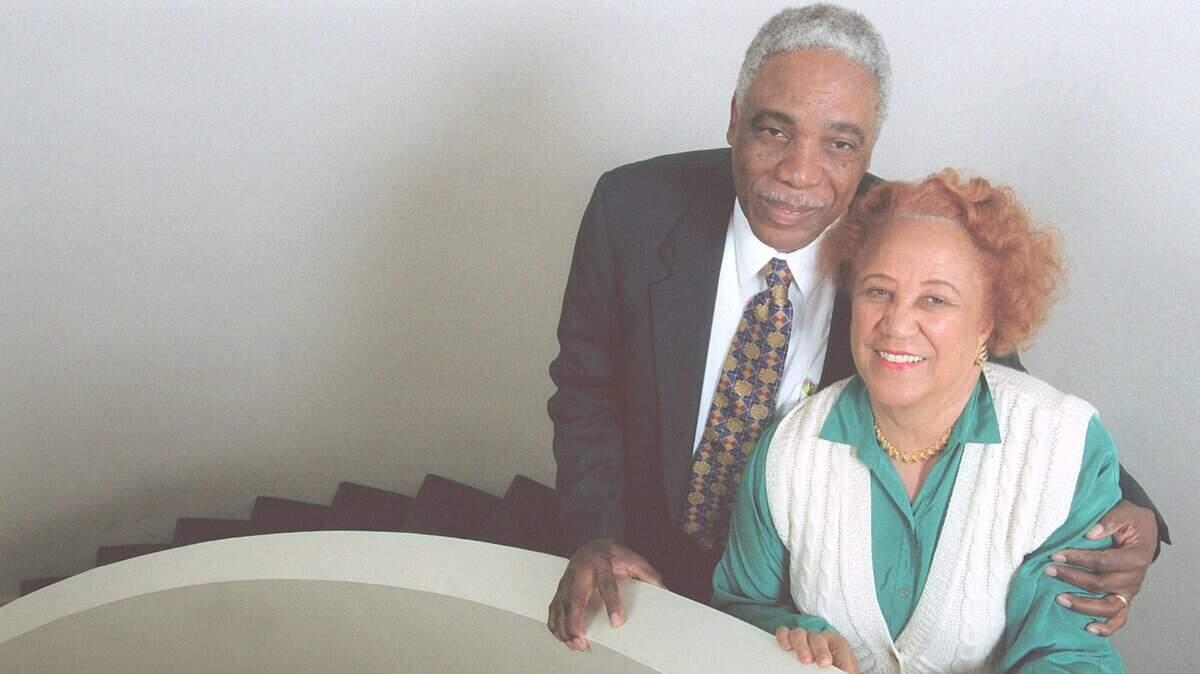
Darius Leander Swann, whose lawsuit against Charlotte’s school system became a landmark Supreme Court case that made busing a tool of desegregation, died March 8 at the age of 95. His wife, Vera, told the Washington Post the cause was pneumonia.
Swann was born in rural Amelia County, Va., the youngest of 10 children in a poor farm family, and first came to Charlotte to attend Johnson C. Smith University. After college he became a Presbyterian missionary, initially in China. He and Vera, also a former Johnson C. Smith student, returned to Charlotte in 1964 after nearly a decade in India and joined the civil rights crusade.
“Our son, James, was going into the first grade. We wanted him to be in an integrated school,” Darius Swann told The Observer in a 1989 interview from Atlanta, where the couple then lived.
After growing up largely in India, he wrote to the school board, his young son had an “unaffected openness to people of all races and backgrounds, and we feel it is our duty as parents to insure that this healthy development continue.”
Despite the fact that the Swanns’ neighborhood school was integrated, the board assigned James to an all-black school instead of the integrated Seversville Elementary. Charlotte’s school system was operating under a desegregation plan at the time, but still assigned most black students to all-black schools.
The Swanns, represented by legendary civil rights lawyer Julius Chambers, sued Charlotte-Mecklenburg Schools in 1965.
The CMS board responded with a freedom-of-choice desegregation plan in which James and his younger sister were sent to Eastover Elementary, in a white neighborhood.
The Swanns left Charlotte in 1967, moving to Hawaii, where Darius Swann earned a doctorate in Asian studies. But other plaintiffs, with the help of Chambers, reopened Swann vs. Charlotte-Mecklenburg Board of Education.
In 1969 U.S. District Judge James McMillan ruled that Charlotte-Mecklenburg was effectively running “dual systems” for black and white students. He ordered busing as a remedy, and the Supreme Court upheld him in 1971.
In the weeks that followed the ruling, white parents hurled rocks at buses, black and white students fought and small riots closed some Charlotte schools. Because of the nationwide effect of the high court ruling, rioting moved to Boston and other northern cities. But peace eventually returned to Charlotte, which in 1974 forged a desegregation agreement that was regarded as fair and effective.
In 1992, CMS began a new desegregation plan based on magnet schools instead of busing. A Charlotte parent, William Capacchione, sued the school system five years later, and the case was combined with the reopened Swann lawsuit.
In 1999, U.S. District Judge Robert Potter lifted the Swann court order, ending race-based assignment policies by CMS. The Supreme Court refused to hear the case on appeal, upholding Potter’s ruling.
Darius Swann earned a master’s degree from Union Theological Seminary in New York and a Ph.D. in Asian theater at the University of Hawaii in 1971, the Presbyterian Church (U.S.A.) reported in 2017. He taught at George Mason University from 1971 to 1984 and at the Interdenominational Theological Center in Georgia from 1984 to 1993.
In retirement, the couple lived in northern Virginia.
Twenty-five years after McMillan’s ruling, in a 1996 Observer interview, Swann, then living in Atlanta, had a guarded view of what the lawsuit had achieved.
“Integration to me has always been people coming together, each bringing their own gifts, which both share and appreciate, a diversity that should enrich us all,” he said. “Simply to put people together does not work.
“I haven’t turned my back on the ideal. There are more pressing things we must do now. Somewhere down the road, I feel our paths will meet, blacks and white. But I do not see it happening in the near future.”
Swann died in Centreville, Va., the Washington Post reported. He is survived by his wife, daughter Edith Swann, son James Swann of Atlanta, two grandchildren and a great-grandaughter, the Post said.