As UNC campuses prepare to bring students back, some faculty fear that it will backfire
Next month, hundreds of thousands of students from across the nation will flood to North Carolina colleges and universities, move into their dorm rooms and prepare to take classes on campus in the midst of a worsening coronavirus pandemic.
Many schools, including UNC-Chapel Hill and N.C. State, are preparing to offer a majority of courses in-person in classrooms that have been modified for social distancing rules, with students and faculty wearing face masks.
But some faculty say there’s pressure to teach in-person, and they don’t see how the new measures will keep the virus from spreading.
“From all appearances it seems political and financial as opposed to ethical,” UNC professor Michael Palm said. “I think it’s dangerous and immoral to be proceeding in the way they are by putting students and campus employees needlessly at risk.”
North Carolina saw six straight days of a record number of COVID-19 hospitalizations last week and has more than 1,000 people currently hospitalized, according to the state. The number of new coronavirus cases are also trending up, hitting an all-time high on Saturday, with more than 2,400 new cases reported that day.
More than 87,500 people have tested positive for coronavirus in North Carolina, and this month the biggest growth in cases has been among young people.
Expectation of in-person classes
Reopening campuses and offering in-person classes this fall has been a priority for the UNC System. It’s the question that’s been on the minds of students and parents who are paying tuition for an authentic campus experience, as well as faculty members who are delivering the courses.
Several professors at Appalachian State University in Boone said that last spring, the entire faculty was told they could teach online in the fall if they wanted. But that changed this summer, they say, with stricter guidelines coming down such as new requirements to submit private medical records for consideration to teach online.
In interviews, faculty said they weren’t sure what changed. But many suspect the influence of the UNC System’s Board of Governors, whose members are appointed by the Republican-led state legislature.
“There are some political views that see the pandemic as being exaggerated ... and I think those are driving this as well,” said Michael Behrent, an App State history professor who also chairs the university’s Faculty Senate.
Anger among faculty has grown to the point that earlier this month the Faculty Senate asked every department to survey professors on how confident they feel about the 2020 planning done so far by App State Chancellor Sheri Everts. That same day, the university’s Board of Trustees passed a resolution expressing confidence in Everts’ leadership.
Faculty at UNC-Chapel Hill have discussed how they were told by administrators about mandates that 60% or three out of five courses be in-person. But campus leaders say there’s no specific quota to meet. They say their goal is to get as many students in the classroom as possible, safely, because that’s the best learning environment.
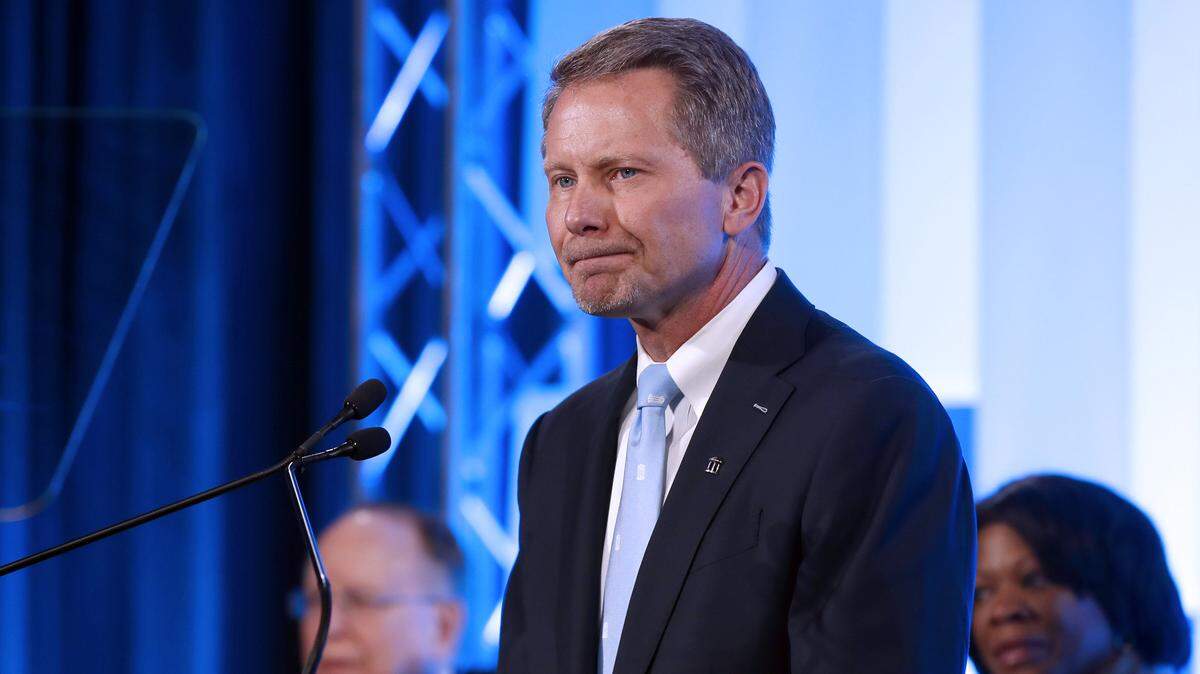
“From the beginning we’ve said that we would try to offer the majority of our courses in person because that’s what we continue to hear from our students and what we have heard from many of our faculty,” UNC-CH Chancellor Kevin Guskiewicz said. “They want to be back teaching on campus, if we could do that safely.”
Right now, about 57% of UNC courses will be offered in-person, with nearly all of those offering a remote option for those who can’t or don’t want to return to campus. Carolina created a website outlining plans for the return to Chapel Hill, including what students and faculty should expect for course delivery.
“There has never been a directive from this office to suggest that someone must teach in person,” Guskiewicz said.
That includes graduate workers, teaching assistants, fixed term and tenure track faculty.
Guskiewicz said some faculty are also stepping up and volunteering to teach in-person so that their colleagues, who might be more vulnerable, don’t have to.
UNC System spokesman Josh Ellis said each institution is determining the mix of online, hybrid and face-to-face classes based upon classroom space, the availability of faculty to teach in each method, student demand and other factors. Many large, introductory classes will be online or hybrid to keep within physical distancing guidelines.
Stella Anderson, a management professor at App State, said those “hybrid” classes can meet up to 90% online before being labeled online-only.
She and many other professors want to teach remotely, she said, but also she doesn’t want students and parents feeling like they’re victims of “a bait-and-switch campaign.” And with this debate still raging on campuses, students might not even know what type of classes they’ll have until it’s too late to change.
“It may be the end of July until a student can look at their schedule and see the mode of delivery — how many classes are going to be online or in person,” Anderson said. “To me that’s like a shell game.”
Catherine Warren, an English professor at N.C. State, said she thinks there’s wishful thinking going on on everybody’s part.
“What I worry about is that we may end up starting the semester with some people teaching in the classroom face-to-face and infections will spike and the university will have to close down mid-term and then everybody is going to have to scramble,” Warren said. “I don’t think that’s a really smart way to do it.”
Hundreds of professors oppose in-person classes
Warren started an online petition from university professors across the state that urges the UNC System to move all classes online this fall. Faculty at UNC-CH, NCSU, East Carolina University, UNC Charlotte, N.C. Central University, App State, Western Carolina University, UNC Wilmington, UNC Asheville and Fayetteville State signed the petition, which had more than 900 signatures as of Friday afternoon.
Andrew Korichich, an App State professor who studies universities and higher education, said that especially for the universities that aren’t in big urban areas, a sudden influx of college kids living in close quarters and going to parties where they likely won’t be wearing masks could be bad news not just on campus but for the larger community.
“And it’s not like we have Charlotte’s hospitals,” he said of Boone. “We have one, and it’s the trauma center for the entire High Country region.”
Nearly 500 graduate students at UNC-Chapel Hill signed a separate petition requesting that campus doesn’t reopen and offers fully remote instruction.
Nearly 45% of faculty said they are not comfortable teaching on campus this fall given the safety precautions described by UNC and 26% weren’t sure, according to a UNC-Chapel Hill Faculty Executive Committee survey of more than 1,200 instructors in June.
Palm, an associate professor and director of graduate studies in the communication department, plans to teach entirely remotely this fall. He is also the president of the American Association of University Professors chapter at UNC-CH.
“I would vastly prefer to be on campus this fall,” Palm said. “I think the lion’s share of my students and faculty would.”
But, university settings are particularly problematic considering the clustering of students coming from across the state and country into small, enclosed spaces with poor ventilation, he said.
Katie Mack, assistant professor of physics at N.C. State, said she feels confident that if instructors don’t want to teach in-person they won’t have to, but there is pressure.
“It’s pretty clear from a public health standpoint that the safest thing is to do online teaching,” Mack said. “And over the last few weeks there’s been more and more messaging that there’s a preference among the administration to push toward more in-person teaching.”
“I think that the university is trying its best to find some balance between the various pressures from whoever is pushing for reopening and the pressure to keep everyone safe,” Mack said. “I think there’s a competition there.”
In June, N.C. State Chancellor Woodson sent a memo to faculty saying that the amount of faculty willing to teach on campus was “insufficient” to meet NC State’s goals and asked that more professors volunteer to return to campus to teach in-person classes.
Woodson said there is no set number or ratio they are looking for, but they want to ensure that they provide a meaningful on-campus experience for students. N.C. State also has a website with details about plans to reopen campus for students, parents and employees.
“The entire system is focused on bringing our students, faculty and staff back to campus safely, with the ultimate goal to provide a high quality educational experience to our students,” Woodson said. “We’ve been guided in our decisions by health professionals, with input from our faculty and staff.”
The federal government also added pressure last week with a new U.S. Immigration and Customs Enforcement policy that will force international students to leave the country if schools move fully online. Some schools, including Harvard University, have already moved to remote instruction for the fall and are suing ICE over this new rule.
Mack said using international students as leverage to pressure schools to reopen with in-person teaching and force them to make choices that might be unsafe is appalling.
“Universities are now going to be stuck between the prospect of a massive public health disaster and losing so much funding that the university can’t exist anymore,” Mack said. “That’s a terrible situation to put universities in, especially in North Carolina where the cases are climbing.”
Are classrooms going to be safe?
Universities have spent millions of dollars preparing for their students to safely return. They’re moving desks and re-arranging classrooms to keep students and faculty six feet apart, installing Plexiglas shields for protection, stretching out schedules to accommodate smaller class sizes, limiting foot traffic and possibly offering some classes outdoors. Face masks will be required for all students and faculty in academic buildings, classrooms and around campus.
Despite these efforts, Mack said it isn’t safe to teach in person in a college classroom right now.
“It’s a pandemic,” Mack said. “And the kinds of protections that are feasible and the kinds of protections that are being discussed by N.C. State and many other universities really can’t be relied upon to prevent an outbreak and can’t be relied upon to ensure the safety of all the students and staff.”
Mack referenced research about “super-spreading events,” where you have one person in a room who is infected and at the end of a few hours a bunch of people in the same room are infected. She said the classrooms are not perfectly ventilated, the windows usually don’t open and the air is being circulated from one side of the room to the other.
“There’s going to be a big spike in infections starting at the university and spreading through the state,” Mack said.
Faculty are also concerned students are going to be infected, pass it to friends and neighbors through social activities, like athletics and at fraternities and sororities, and then bring it into the classroom.
Paul Isom, an N.C. State journalism professor, said the thing that makes him continue to reassess how he feels about being on campus this fall are the stories about how college students act outside the classroom.
“People who are college age do tend to engage in higher-risk behaviors, and I think that is worrisome for those who know we’re going to come in contact with those people,” Isom said.
He is also the parent of an N.C. State student and has seen other parents’ eagerness for their students to return in a Facebook group.
“The idea that their students would be taking all online classes or live in a dorm, but not actually have to go to an in-person seems to be upsetting to a fair number of parents. I get that,” Isom said. “But as somebody who also has the perspective of the professor who will be in the class with those students, I just feel like that being careful and cautious and not risking anybody’s health would be the No. 1 way to go. “
There won’t be mass testing of all students and faculty at UNC System schools, like there will be at Duke University, but leaders have said there are enough supplies for testing. And if a student goes to the campus health clinic and tests positive the schools will do contact tracing to identify other individuals, like their roommates, who might also have COVID-19.
Guskiewicz also said UNC could shut everything down and teach everything remotely, but it would hear from students, professors and other employees about their mental health concerns and the toll that isolation has taken on people.
Financial impact of going online
Guskiewicz said UNC is always thinking about the financial health of the university and knows that many students might choose to defer their enrollment or take a gap year if UNC were to move classes online. But, that is not the top priority, he said.
At a June meeting with UNC faculty, Provost Bob Blouin talked about the financial ramifications of losing students if UNC were to move online this fall, which was based on surveys and insight from the office undergraduate admissions.
“The majority of our students, particularly our incoming freshman, are very keen on coming to an environment that is offering a residential experience,” Blouin said at the meeting. “The consequence of not having a residential experience, they have indicated that there is likely to be a significant amount of melt.”
The state appropriation and tuition revenue streams finance the teaching mission of the university, according to Jonathan Pruitt, vice chancellor for finance and operations at UNC. That money is driven by an enrollment funding formula that the UNC System uses and is ultimately funded by the General Assembly, Pruitt said. And there is a financial consequence for enrollment decline for any institution.
He said “ballpark” figures for UNC-Chapel Hill show that a 10% drop in enrollment would have a $40-50 million financial impact to the institutions and a 20% drop would equate to about a $80-$90 million loss.
According to Blouin, the economics are not driving UNC to bring students back, but if the university can’t deliver the kind of experience that students want there will be financial losses with tuition and issues with the state budget.
“We can certainly do a lot in protecting the health of our faculty by asking them to teach remotely,” Blouin said at the meeting. “But we did experience a rather significant financial loss in that [spring] semester. We’re learning multiple dimensions of what that financial loss would be as a consequence.”
What will it take to switch to fully online?
Guskiewicz said UNC-CH is finalizing options for moving to a different mode of instruction or shutting down campus if it has to. He didn’t share what the threshold would be to initiate such a change. He said officials are learning from each phase of reopening campus, including bringing groups of athletes back, and using that to help guide fall plans.
Last week, 37 athletes and staff in the UNC athletics department tested positive for the coronavirus and the football team paused voluntary workouts for at least a week.
“How many football players have to get sick before they pivot to an online semester?” Palm said.
Palm said shutting down in the fall once the semester begins is “somewhere between likely and inevitable” based on the way that cases are rising in the state, the situation with the football team and the anecdotes about cases spreading at fraternity and sorority events across the country.
N.C. State reported five positive tests among student-athletes, coaches and staff.
Woodson said they’ll be looking at the number of cases, community spread that’s campus-based and the capacity of health systems in considering whether to move fully online again. But there are so many unknowns, it’s hard to predict a threshold number or circumstance that would cause it.
And ultimately, that decision would be made by the system, not individual campuses, he said.
“There is considerable uncertainty, as there is with the overall status of the pandemic,” Woodson said. “All of our decisions are made with the best knowledge at the time and the full realization that things could change depending on the status of the pandemic.”
“We’ve shown that we can pivot when necessary and, if necessary we will pivot again to support the health and safety of our community,” Woodson said.
This story was originally published July 13, 2020 at 4:59 PM with the headline "As UNC campuses prepare to bring students back, some faculty fear that it will backfire."