
UNC officials say ‘road map’ for COVID worked — but the virus’s magnitude was a surprise
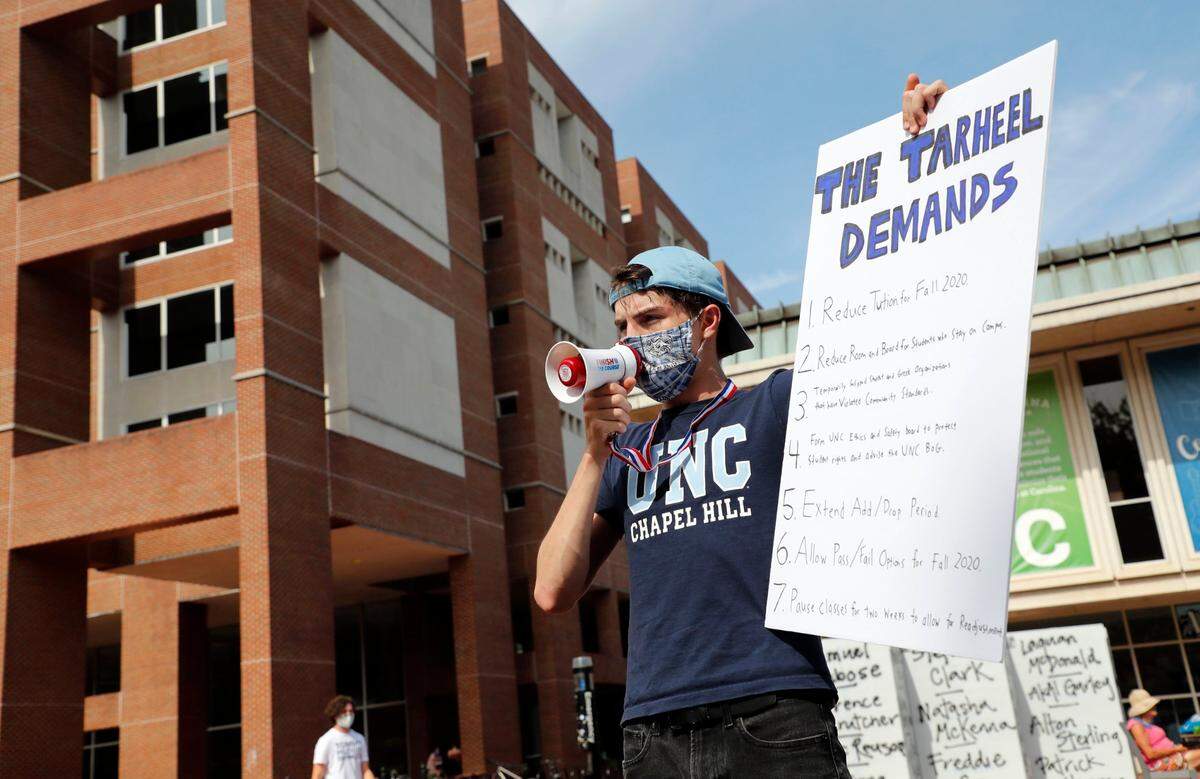
UNC officials were surprised by how fast — and hard — COVID-19 hit the Chapel Hill campus this week, prompting a return to all-remote learning for undergraduates.
But Chancellor Kevin Guskiewicz said Tuesday that the university’s “road map” worked the way it was supposed to — and made it possible to act quickly to mitigate the spread of illness.
“That road map was built on data,” Guskiewicz said Tuesday in an interview with The News & Observer, and planners knew that if the data indicated the virus was making inroads into the university community, it would be necessary to reverse course on reopening the campus.
What surprised him and the public health experts he consults with, Guskiewicz said, “had to do with the magnitude and velocity with which the spread was occurring. That drove the decision,” he said.
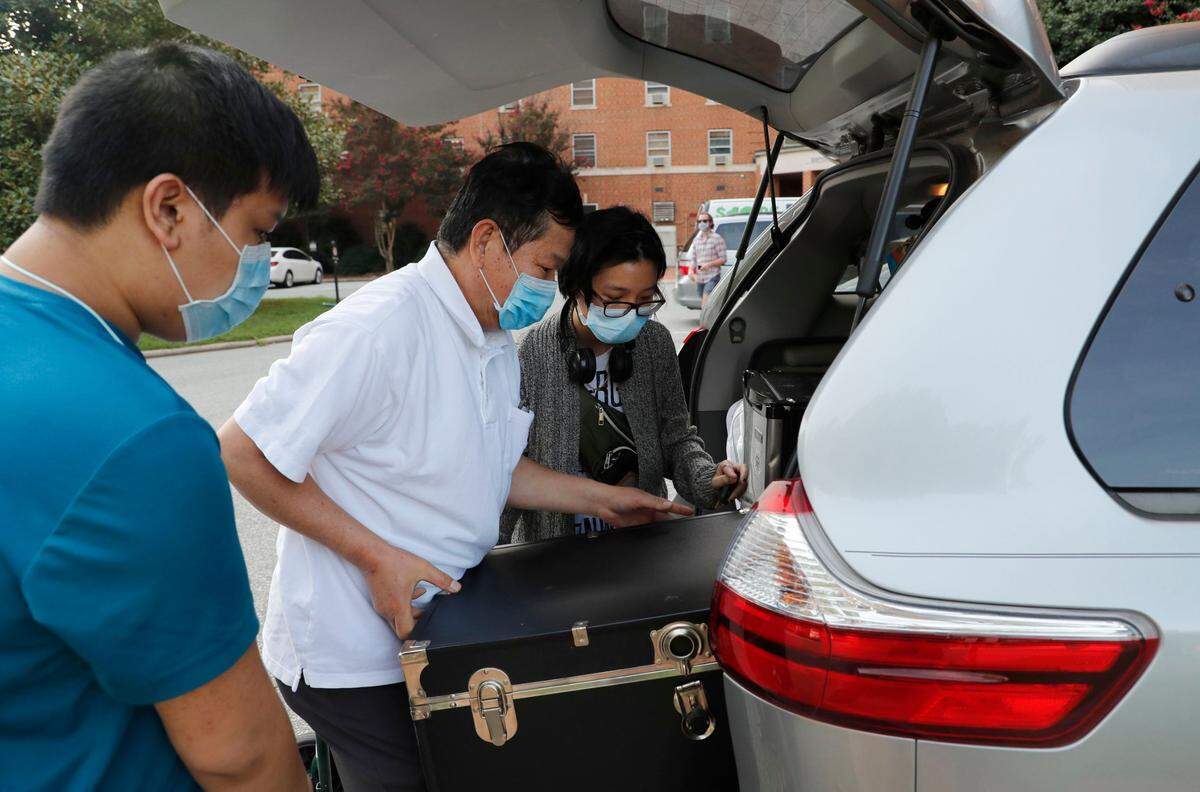
Guskiewicz announced the return to remote learning for undergraduates on Monday, following the identification of at least four clusters of COVID-19 cases on campus a week after the start of classes. The university immediately began asking most students living on campus to return to their permanent addresses. Officials said they would make exceptions for those students for whom leaving campus would create a financial hardship or an educational barrier, and for student athletes.
UNC wants to have no more than one student per dorm room with a total of no more than 2,000 students living on campus, and officials said they may close down dorms where students would have to share a bathroom.
At a meeting Monday of the Faculty Executive Committee, UNC Provost Robert “Bob” Blouin said that contact tracing had shown no cases of transmission of illness between students or their instructors within instructional spaces. The problem, he said, was with students going to gatherings off campus, being exposed to illness and returning to their dorms, where they spread it further.
The Town of Chapel Hill said Monday that UNC needed to take responsibility for the behavior of students living and interacting off campus. But Blouin said during Monday’s meeting that “the community itself is going to have to accept some shared responsibility in that regard, enforcing their own ordinances.”
Blouin, on Tuesday’s call with The N&O and Guskiewicz, said UNC officials would meet with leaders from Chapel Hill and Carrboro on Wednesday to ask that they step up enforcement of rules prohibiting large gatherings off campus. If students are cited, Blouin said, the university also can take disciplinary action against them.
Meanwhile on Tuesday, N.C. State reported its first COVID-19 cluster in a campus-wide alert. A cluster of cases was found in an off-campus house on the 2700 block of Clark Avenue in Raleigh, where a party had been held earlier this month, the school reported.
N.C. State was notified of the cluster by the Wake County Human Services Department. On N.C. State’s COVID-19 dashboard, the school reported 41 students and one university employee as having tested positive in the last week. That number includes testing from N.C. State’s Student Health Services, results from local health departments and self-reporting.
Also on Tuesday, a class action lawsuit filed by 17 faculty members at UNC system schools against the system and the Board of Governors alleges that the system cannot provide a safe working environment for faculty and staff, reported ABC11, a News & Observer reporting partner.
How it all happened
North Carolina saw its first confirmed case of COVID-19 on March 3. The next day — two days before spring break — UNC announced the restriction of travel to areas within the U.S. that were under a state of emergency.
Gov. Roy Cooper declared a state of emergency for North Carolina on March 10.
The next day, UNC Chapel Hill announced classes would be held remotely when students returned from spring break. But a week later, the university said all students would have to leave campus housing unless granted an exception.
Expectations were that viral spread in North Carolina would abate through the summer. In late April, interim UNC System President Bill Roper announced that all universities in the system would reopen in August.
Roper said he and his team, in consultation with university, local, state and federal health officials, would work with chancellors at each campus to determine how they would resume operations for the fall semester. In late May, UNC’s Guskiewicz announced a plan for the Chapel Hill campus to reopen for fall.
UNC Board of Governors member Leo Daughtry told The News & Observer on Tuesday that he agreed with Roper’s decision to reopen the UNC system to students, faculty and staff to the degree possible for the fall semester.
“He was basing his decision on what he believed was the best course of action, and I certainly didn’t disagree with him,” Daughtry said.
The board did not take a vote on the decision, Daughtry said, leaving to Roper, his team and the chancellors to determine the details for reopening each campus.
Roper served as interim president of the system from January 2019 until a new president, Peter Hans, took over on Aug. 1 of this year. Before his tenure as interim president, Roper was dean of the UNC School of Medicine and CEO of UNC Health Care.
On Aug. 8, citing a lack of improvement in the parameters used to measure COVID-19’s control, Gov. Roy Cooper extended Phase 2 of the state’s reopening plan.
The News & Observer requested a response from Gov. Roy Cooper’s office and DHHS about the UNC situation and their involvement in UNC’s decision-making process.
”All colleges and universities should be requiring students and staff to wear cloth masks that cover the mouth and nose, and limiting social gatherings to 10 people indoors and 25 outdoors,” N.C. DHHS spokesperson Catie Armstrong said in a statement emailed to The News & Observer.
“Because COVID-19 is highly contagious, communal living such as dorms makes it challenging to control virus outbreaks. Reducing the number of students living in communal dorms can help prevent spread of the virus,” she said. “We will continue engaging with the higher education community as they learn from the experiences at UNC Chapel Hill and work to protect their campuses and surrounding communities,” Armstrong said.
Staff writers Drew Jackson and Dawn Vaughan contributed to this report.
This story was originally published August 18, 2020 at 7:05 PM with the headline "UNC officials say ‘road map’ for COVID worked — but the virus’s magnitude was a surprise."