
Secrecy and misleading communications marred UNC’s Silent Sam deals, settlement shows
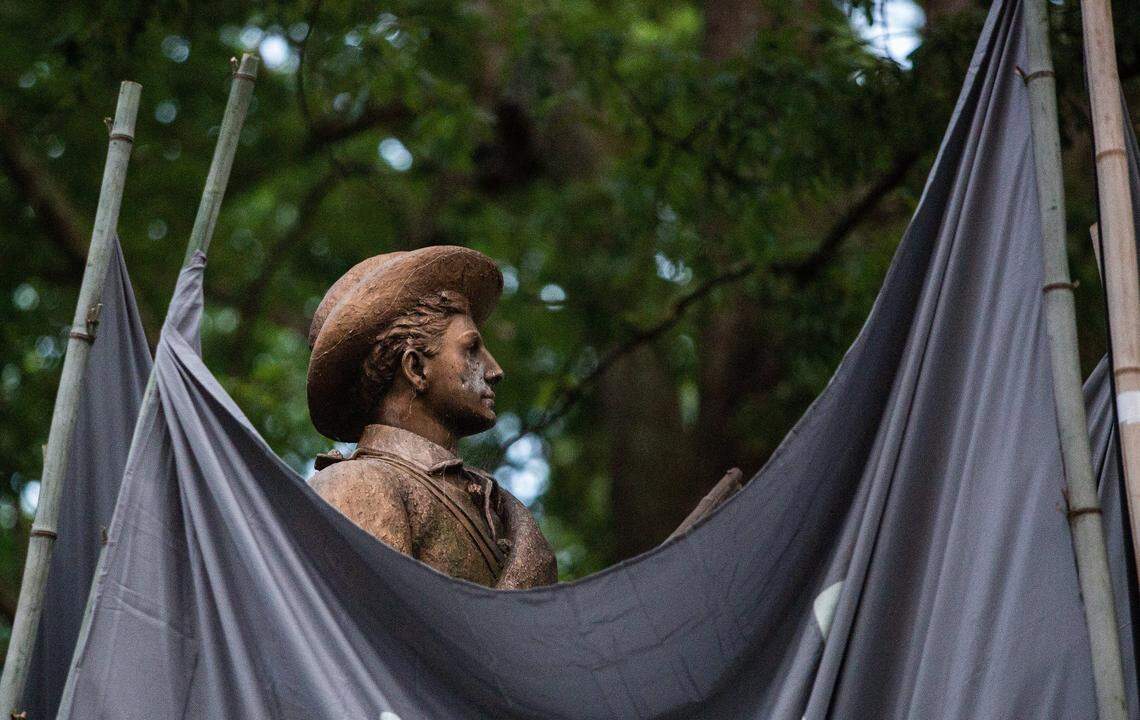
For nearly a year, the UNC System told the public that five members of its Board of Governors were working to determine what should happen to the Silent Sam Confederate monument, which had been toppled by protesters on the UNC-Chapel Hill campus in 2018.
But those board members never met with each other and the controversial deals that initially gave the statue and more than $2.5 million to the N.C. Sons of Confederate Veterans were orchestrated by a handful of lawyers behind closed doors.
That truth came out this week, after a settlement in a lawsuit filed against the system by UNC-CH’s student-run newspaper, The Daily Tar Heel.
The public was “deliberately misled” about the role of the five board members and their role in the deals, The Daily Tar Heel reported in its coverage of the lawsuit settlement.
In the lawsuit, the DTH Media Corp. argued that the $2.5 million settlement and an additional $74,999 payment between the UNC System and the SCV were “conceived, negotiated, approved and executed in total secrecy.” The suit also alleged that the five board members — Jim Holmes, Bob Rucho, Wendy Murphy, Darrell Allison and Anna Nelson — violated North Carolina Open Meetings Law. That allegation was based on an op-ed column in The News & Observer, reportedly written by the five, that suggested they had negotiated the deals.
Though the lawsuit settlement determined that no UNC System officials broke any laws, it revealed the secrecy behind the Silent Sam deals, which prompted protests by outraged UNC students, employees and the Chapel Hill community.
“When decisions are made behind closed doors and amongst very small groups of people, bad ideas can take hold,” DTH General Manager Erica Perel told The News & Observer. “We believe really deeply in the idea that good government is open and good decisions get made when stakeholders get the opportunity to weigh in.”
Asked about the outcome of the lawsuit, UNC System officials issued a statement outlining steps taken regarding the SCV’s presence on campus. They said the steps were in compliance with Open Meetings Law.
“All along, the efforts sought to resolve the disposition of the monument, with the goal of ensuring the safety of students, faculty, staff, and visitors on campus,” the statement said.
Jane Stancill, UNC System vice president for communications, declined to answer specific questions about the secrecy of the Silent Sam deals, the lack of transparency in the process or accusations that the system deliberately misled the public. She is a former higher-education reporter for The News & Observer.
‘The op-ed was a lie’
The op-ed published in The News & Observer in December 2019 explained the Silent Sam decision. It listed Holmes, Rucho, Murphy, Allison and Nelson as authors and implied that the five members orchestrated the deals. It came out weeks after the $2.5 million settlement was announced.
In a deposition that was part of the DTH’s settlement agreement, now-former UNC System Vice President for Communications Earl Whipple said he wrote the op-ed. He said he wanted to translate the settlements into layman’s terms, correct some errors that were being reported and provide clarity on behalf of the system. But the names of the board members were on the op-ed, not Whipple’s or the system’s.
“It was my professional recommendation that individual names gives a public face to this,” Whipple testified. “And since these five were, you know, tasked with working on this issue, my recommendation was we draft something that all five of them could sign onto.”
Throughout the op-ed, it uses the word “we” and includes phrases such as “we reached an agreement.” But the UNC System now says board members didn’t negotiate the deals. In some cases, Whipple testified, when he wrote “we” it referred to the five members, but in other cases, it referred to the UNC System as a whole.
Whipple said he had no knowledge of the group of five having any meetings regarding Silent Sam or negotiating the $74,999 agreement. He also said those five members did not present the $2.5 million deal to the board.
“He concocted this narrative for public relations purposes, and in the process, he basically was responsible for a needless lawsuit,” said Hugh Stevens, who represented the DTH in this lawsuit.
By listing those board members as authors, any reasonable person would interpret that they were behind the decision, according to Stevens.
“The op-ed was a lie,” Stevens said. “Had they told the truth in the first place, there wouldn’t have been any reason to sue those five members.”
Holmes told The News & Observer this week that the board and the system work interchangeably and the op-ed was meant to be clarifying and put the facts out there. Holmes said he didn’t negotiate directly with anyone on the settlement, but was consulted throughout the process and reported back to individuals as needed.
Rucho, who’s no longer on the board, said he did not have anything to say this week. Murphy, Allison and Nelson could not be reached for comment.
How the two Silent Sam deals were made
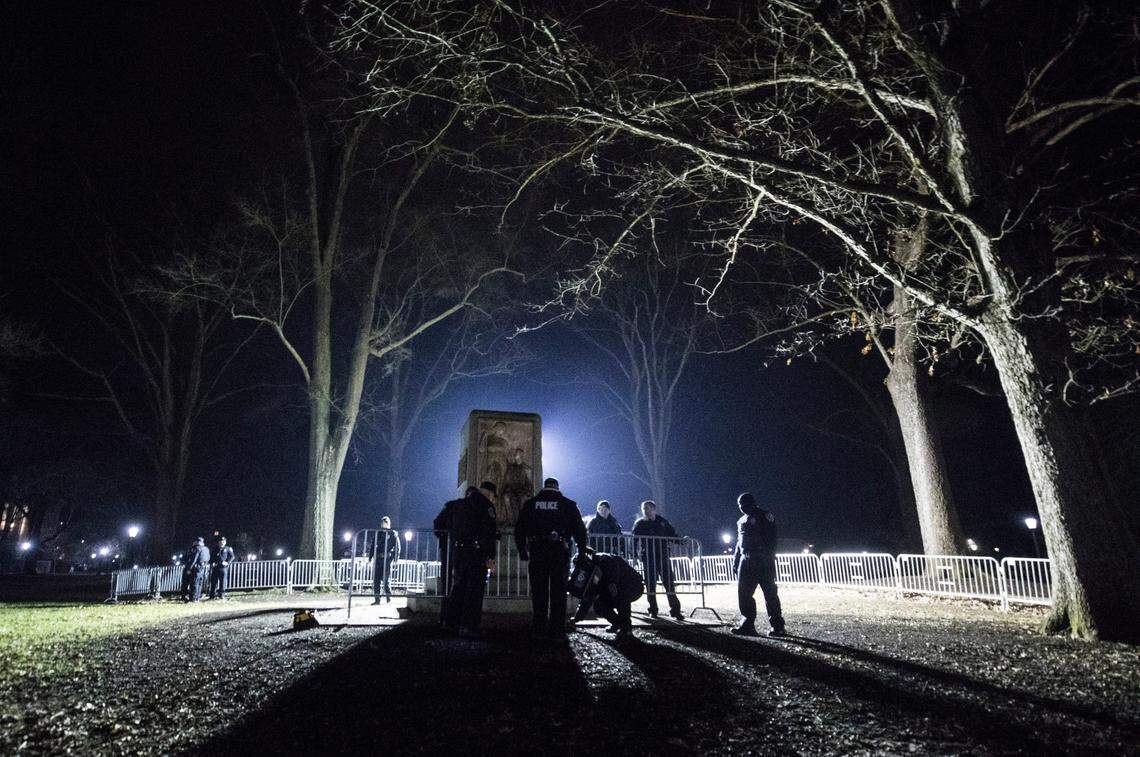
The UNC System released a summary on Monday revealing how the two Silent Sam deals came about as part of the DTH settlement agreement. It said the deals were initiated by the threat of a lawsuit from the SCV, which wanted the statue restored to campus.
To prevent that from happening, the university system first paid the SCV $74,999 in exchange for them not to hold events on campus.
The deal for the $74,999 was brokered on Nov. 21, 2019 in a private meeting between UNC System lawyers Ripley Rand and Tom Shanahan, SCV lawyer Boyd Sturges and Clayton Somers, UNC-Chapel Hill’s vice chancellor for public affairs and former chief of staff to N.C. House Speaker Tim Moore. It was signed later that day by former interim UNC System President Bill Roper and SCV leader Kevin Stone.
“But just because you can legally make a deal doesn’t mean it’s a good deal or something that is wise,” Stevens said.
The SCV used that money to get the rights to the statue from the United Daughters of the Confederacy (UDC), the UNC System said. After the rights issue was resolved, the university then agreed to give the statue to the SCV and pay for its preservation through a trust.
Although no lawsuit actually had been filed by the SCV, on Nov. 27 2019, the UNC Board of Governors Committee on University Governance was presented with a settlement agreement that included the details about the $2.5 million trust and handing over the Silent Sam statue to the SCV. The deal had already been signed by Roper, Board Chair Randy Ramsey and the SCV.
That agreement also solidified that the SCV would not display Confederate flags or signs on any UNC campus for five years.
The committee approved the settlement. After that, the lawsuit was actually filed.
‘Public business should be done in the open’
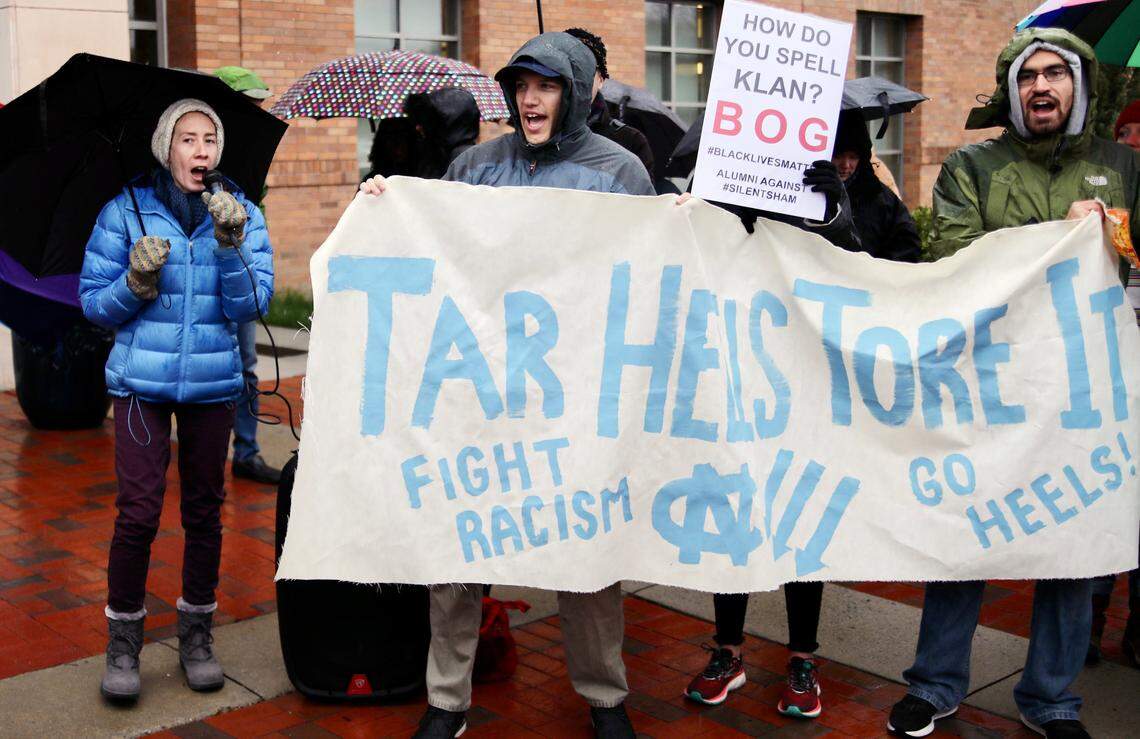
Some students, faculty, activists and politicians were angry about the deals. There were arguments about the historical research that showed UDC’s original claim to the monument and questions about the SCV’s finances and political activity.
“If there had been a public discussion about this potential solution, those concerns and objections would’ve been brought to light earlier,” Perel said.
By February 2020, a judge overturned the $2.5 million deal, saying that the SCV had no rights to the statue and no legal standing to bring the lawsuit against the UNC System in the first place.
“Public business should be done in the open,” Stevens said. “Both of these settlements exemplify why that would be good policy.”
The UNC System once again has the Confederate monument and must decide what to do with it. UNC-Chapel Hill and system leaders say it’s not going back up on campus.
But it’s unclear how they’ll go about making any decisions and whether the public will be part of the discussion this time.
This story was originally published February 3, 2021 at 6:31 PM with the headline "Secrecy and misleading communications marred UNC’s Silent Sam deals, settlement shows."
