From high school to pro: Inside Charlotte-Mecklenburg Schools’ workforce program
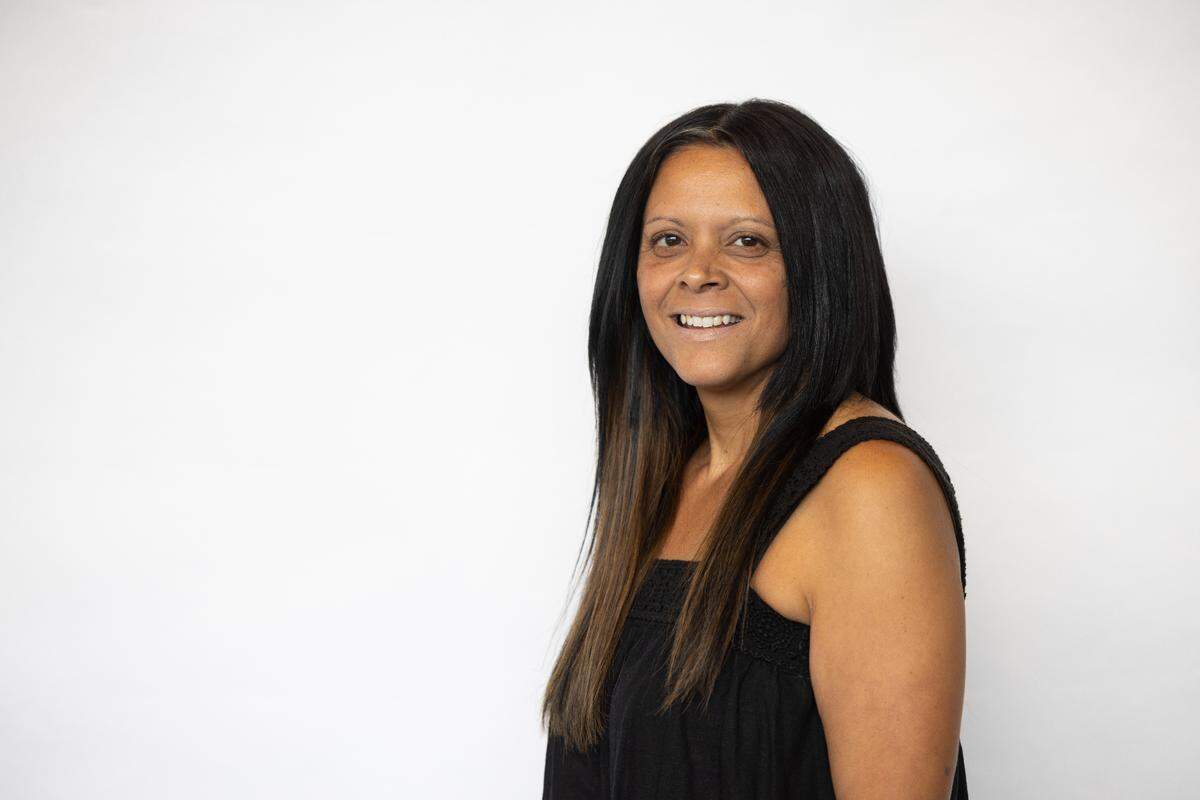
For Gyniece Hill, construction work is in her blood.
Her grandfather worked as a carpenter and the trade carried over into his hobby, which sparked Hill, an 18-year-old who just graduated from Phillip O’Berry Academy of Technology in Charlotte.
Midway through high school, Hill took advantage of Charlotte-Mecklenburg Schools’ workforce readiness program. The strategy has her working full-time a mere two months after high school and is helping anchor a trade expected to experience 7% growth in the next nine years.
“The best part of it is the knowledge and hands-on training I get for free,” said Hill, who works for Messer Construction. She’s currently on site for a project in South Park. “I get on-the-job training and mentors who care about me and my growth.”
According to the U.S. Bureau of Labor Statistics, 167,800 openings for construction laborers and helpers are projected each year, on average, over the next decade. The openings, according to the bureau, are an upshot of the need to replace workers who transfer to different occupations or exit the labor force.
Chris Malinowski, an operations vice president for Messer who helps oversee construction operations in the Charlotte region, said programs like that in CMS are a gold mine for companies who are struggling to find qualified candidates to fill positions. The construction industry, Malinowki said, is still feeling the impacts of the recession from 2007 and 2010 when workers left the industry and never came back.
Aging and retiring workers, immigration limits, demands for better pay and more flexible working conditions also led to widespread labor shortages in 2021. According to the U.S. Bureau of Labor Statistics, the number and rate of job openings were at 10.4 million and 6.6,% respectively. Job openings increased in health care and social assistance; state and local government; and wholesale trade.
“Our industry is also staffed by a workforce that has many of its most skilled workers approaching retirement, so this labor shortage is not something that is going to get better,” he said.
“I believe that the companies who will grow and thrive are those that partner with their local school districts to help create a pathway for employment for students graduating school that are maybe not looking to go to college.”
High school job training
The district’s push for work-based learning was established decades ago and its main source of funding is through a federal grant. But Susan Gann-Carroll, the director of Career & Technical Education in CMS, said the program’s purpose and intent has changed over the years.
Now, career pathways, internships and partnerships with companies are the focus.
“We serve just over 54,000 students in CMS,” Gann-Carroll said. “We are in every middle school and every high school except some of the middle colleges. Our programs are designed for multiple entry points, whether direct to work, two- or four-year degree.”
CMS has multiple partners in both private industry and the community that include Bank of America, Lowe’s, Atrium, Novant, Siemens, Charlotte Works and the Charlotte Business Alliance. Career pathways run the gamut from business management and financial planning to automotive, manufacturing, law enforcement and protection and cosmetology.
“I chose construction because I’m not a lazy person … I’m always going to be moving,” said Justice Taylor, who is in his second year working at Messer after graduating from West Mecklenburg High School. “I couldn’t see anything but advantages. The program taught me things I would have never imagined.”
Messer employs six CMS graduates.
Both Taylor and Hill were introduced to Messer through Rebuilding Opportunities in Construction, or ROC, another district partner and Charlotte initiative that helps train high school students in construction trades.
“The best thing about this program is that it allows us to invest in the future of these graduates,” Malinowski said. “Let’s face it, we live in a competitive world and the students from The ROC are getting a head start on their peers. Now not only are they getting an education, but also hands-on training. When students graduate, they have the confidence and readiness to jump straight into the workforce.”
Opportunities to advance
Hill’s work-based learning hasn’t stopped with graduation. She’s enrolled in Messer’s Apprenticeship Program, as is Taylor.
As interns, they were exposed and trained on operation of power tools/hand tools, blueprint reading, concrete forming and finishing, basic carpentry work, general laborer work, installation of doors, frames, and hardware, selective demolition, among others.
Messer first connected with CMS students through the Mayors Youth Employment Program in 2017. Former student Manuela Sanchez interned with Messer for several years before she went on to pursue a biology degree earning a full scholarship at Wingate University.
“I enjoyed my time there and gained knowledge on a wide variety of matters that helped me become a well-rounded person,” Sanchez said.
Added Malinowski: “Our focus is not just providing a job, but we also focus on developing a pathway to a career.”
Hill is happy she’ll be following in her grandfather’s footsteps.
“I will be a journeyman carpenter when I complete the program in 2024,” she said of the apprenticeship program.
“(The program) helped prepare me for the opportunity to have a career, earn a job wage and benefits. The apprenticeship program will continue to teach me more and provide me career advancement.”
This story was originally published November 23, 2021 at 6:00 AM.