Charlotte bank executive fought an ‘invisible monster’ — all while starting new chapter
At times in the last three years, LaShana Wiggs fell down and stayed down.
Ripe with frustration and anger, she needed a minute to sit on the floor and mourn.
The unexplained tingling and numbness in her feet began in October 2019. The 46-year-old vice president and senior department manager at Wells Fargo didn’t have a cause, and she didn’t know vision problems beginning 10 months prior could be connected.
She would trip and fall during a walk or run, while shopping or moving around her house. There was talk of putting up railing around the house so she could get around. She balked at the idea. Her husband insisted she see a doctor.
More than a year later, after seeing a second neurologist and recounting a history of symptoms that began with vision loss in her right eye, she received the diagnosis: multiple sclerosis.
“It was more of a relief than anything else at that moment,” Wiggs said.
“I wasn’t tripping because I was clumsy or careless, the tingling and numbness were real. Before getting the diagnosis, it felt like I was fighting an invisible monster, and the diagnosis shined a spotlight on the beast that I’m about to fight.”
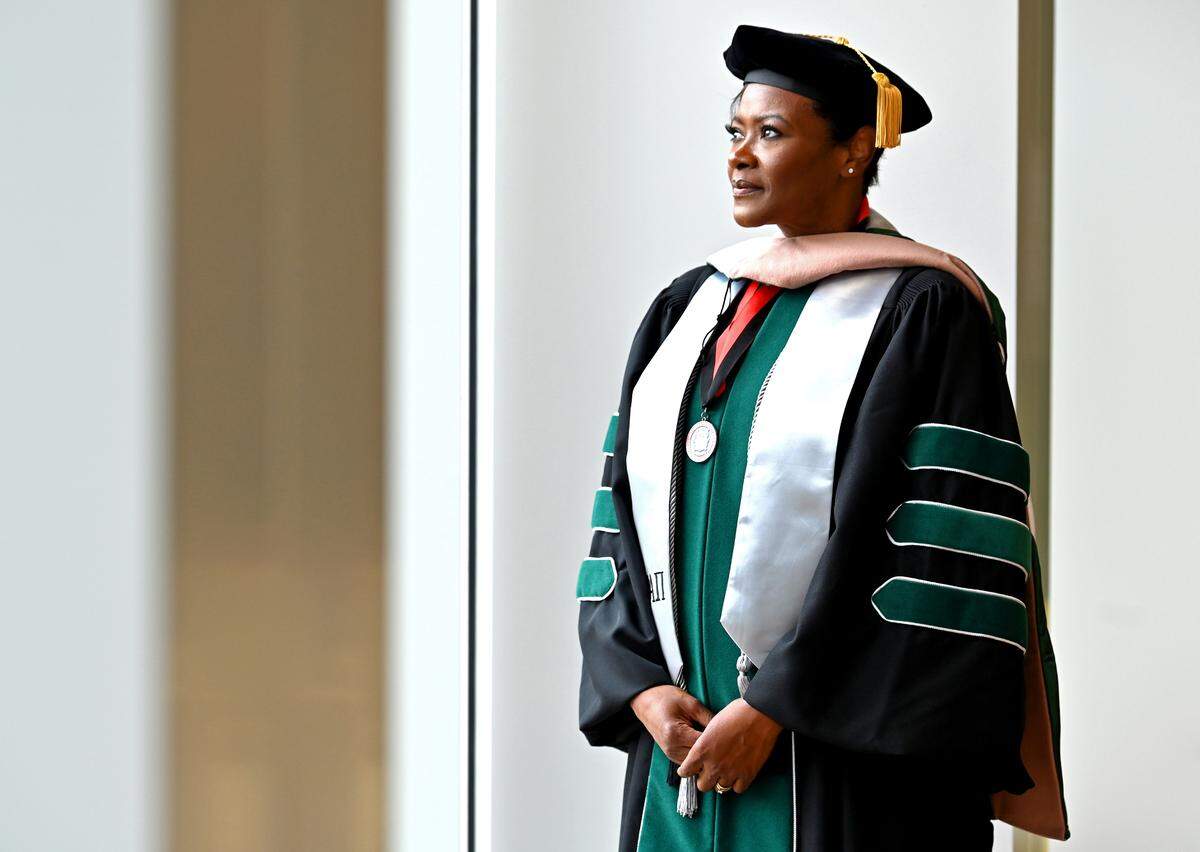
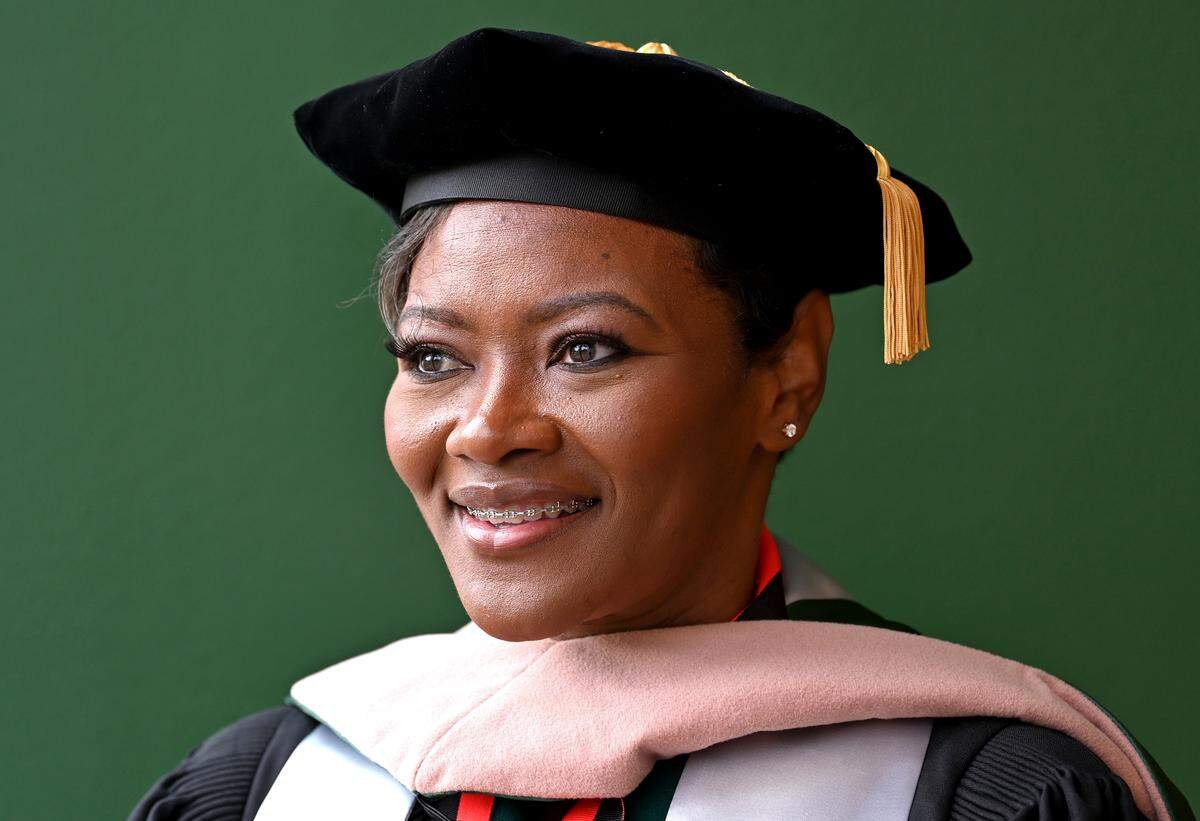
On Friday, Wiggs delivered the commencement speech at the University of North Carolina Charlotte’s Graduate School ceremony.
Diagnosed with MS while working on her doctorate in business administration, her turn to walk across the graduation stage carried special symbolism.
Nearly one million Americans have been diagnosed with MS, a chronic disease that causes the immune system to eat away at the protective covering of nerves, resulting in nerve damage that disrupts communication between the brain and the body.
It presents itself in different ways, including through vision loss and mobility issues.
Wiggs’ diagnosis was a nasty twist on a rewarding — but grueling — path: she was a full-time executive at a big company, a wife and mom of three, and working to complete the highest academic degree.
“There have been times when I’ve been completely wiped out — physically, mentally and emotionally, sometimes to the point of tears,” she said. “I have tried to fight the fatigue and push through, but it takes more energy for me to fight the fatigue than to understand there will be days when you need to rest.
“So, in those moments I rest.
“Initially, I felt guilty for stopping and taking a break. I didn’t want to let anyone down or miss a commitment. Now I think I’m more realistic about what I commit to.”
Breaking a stigma
When Wiggs first lost her vision in December 2018, the cause was mysterious.
She was completing a weight-training circuit program with a personal trainer and figured she lifted too much weight, straining something that caused her vision to fade in her right eye.
After several days, her vision remained impaired. She thought it had something to do with the Lasik surgery she had earlier in the year. But she finally called a doctor.
“This is when I started getting questions about family medical history,” Wiggs said. “My response was, not to my knowledge, because frankly growing up, you didn’t talk about medical history. Historically in the Black community there is a stigma associated with medical diagnoses, and you just don’t necessarily talk about those things.”
Wiggs hopes being open about her diagnosis will help break that stigma.
She received a diagnosis of optic neuritis in January 2019 and didn’t realize it was directly connected to her MS diagnosis, which came in July 2020 after the mobility problems.
She hammered the doctor with questions: Will I get the feeling back in my feet? Will this go away? Will I be able to walk normally again? The doctor told her he couldn’t promise she would get feeling back. They’d start treatment and see what happens.
“That’s when I think the weight of the diagnosis really hit me,” she said. “The doctor cannot tell me if I’ll get better or if this will get worse. The best we can do is try. That’s what became scary for me.”
The doctor suggested a device to help with stability after husband Alexander asked what the family can do about her tripping and falling,
“I’m thinking, ‘a cane!’” Wiggs said. “No, sir, out of the question. I could not wrap my head around needing assistance to walk.”
One of the first things she did after the diagnosis was call her mother and father and share the information. She figured if it was something that could be linked to heredity, her family needed to know. Since then, she learned one of her nieces developed optic neuritis.
‘My refuge’
Wiggs has lived in Charlotte for 24 years and is originally from Lumberton. Her mother raised her and her sister with the help of her grandfather, the single-most influential person in her life.
“I didn’t realize growing up how much he would impact my life,” she said. “My grandfather was my refuge.”
Her grandfather was a farmer. As a kid, Wiggs spent Saturday mornings sitting with him beside the railroad tracks in south Lumberton selling produce. At the end of the day, her grandfather drove around the neighborhood and dropped off vegetables to senior citizens.
“In the summer, I’d spend time helping him pick cucumbers to sell to the pickling plant and would enlist the help of friends who wanted to earn some spending money in the summer,” Wiggs said. “I could not have imagined how those experiences shaped me as a person.”
Finding a solution
Wiggs’ determination has inspired her family.
“(LaShana) has overcome so much to reach the pinnacle she has achieved,” husband Alexander said. The couple celebrated their 23rd wedding anniversary in February. “Being able to juggle a full-time job with the demands of a family and dealing with MS is hard enough, but when you factor in pursuing an advanced degree while still maintaining those familial connections, it is truly awe-inspiring.”
Wiggs manages her MS through twice-a-year infusion therapy. Each session means being tethered to an IV for four to six hours. She turns the experience into a retreat, where she packs an “infusion day bag” that consists of fuzzy socks, snacks, books and a blanket. During school, she packed a second bag with homework.
“This was the perfect time for me to get focused study time, and why not take advantage of it,” she said.
She also took advantage of UNC Charlotte’s hybrid learning throughout the pandemic.
“I’m not sure which was harder, being physically present for an eight-hour class or being mentally present and engaging over video for eight-hours,” she said. “The good thing was that I didn’t need to leave home to participate so my mobility challenges weren’t a concern when we were meeting virtually.”
The last year of the doctorate program is independent research to complete a dissertation. She either conducted research from bed or the couch.
Wiggs finished all of her class work in May 2021. After that, she met virtually with the dissertation chair weekly to complete her research project. She defended her dissertation proposal virtually in October 2021.
“I was able to meet my committee in person and defend in person in March,” she said. “That was a wonderful conclusion to a hybrid learning experience from the last three years.”
Wiggs continues to battle with fatigue, brain fog and, at times, tingling and numbness in her limbs.
“The kids and I embraced her journey,” Alexander said. “With each obstacle that occurred, we joined together to find a solution. Whether it was being a sounding board for her latest research project or to devise a schedule to make sure she had someone with her when she needed to go to an appointment for her MS, we tackled it all as a family.”
The walk across the stage
Before MS, Wiggs didn’t realize how much she took for granted. She’s grateful for the small things. Her message to graduates centered around adversity, setbacks and appreciation.
“Just embarking on the doctoral journey stretched me outside of my comfort zone and the fact that I received an unexpected diagnosis could have been an easy option to abandon course because of fear,” she said. “The MS diagnosis and my journey in (to earn a doctorate) revealed attributes about myself that I didn’t realize I had. My hope is that my story inspires someone to see their setback as an opportunity to find strength to face their challenge.”
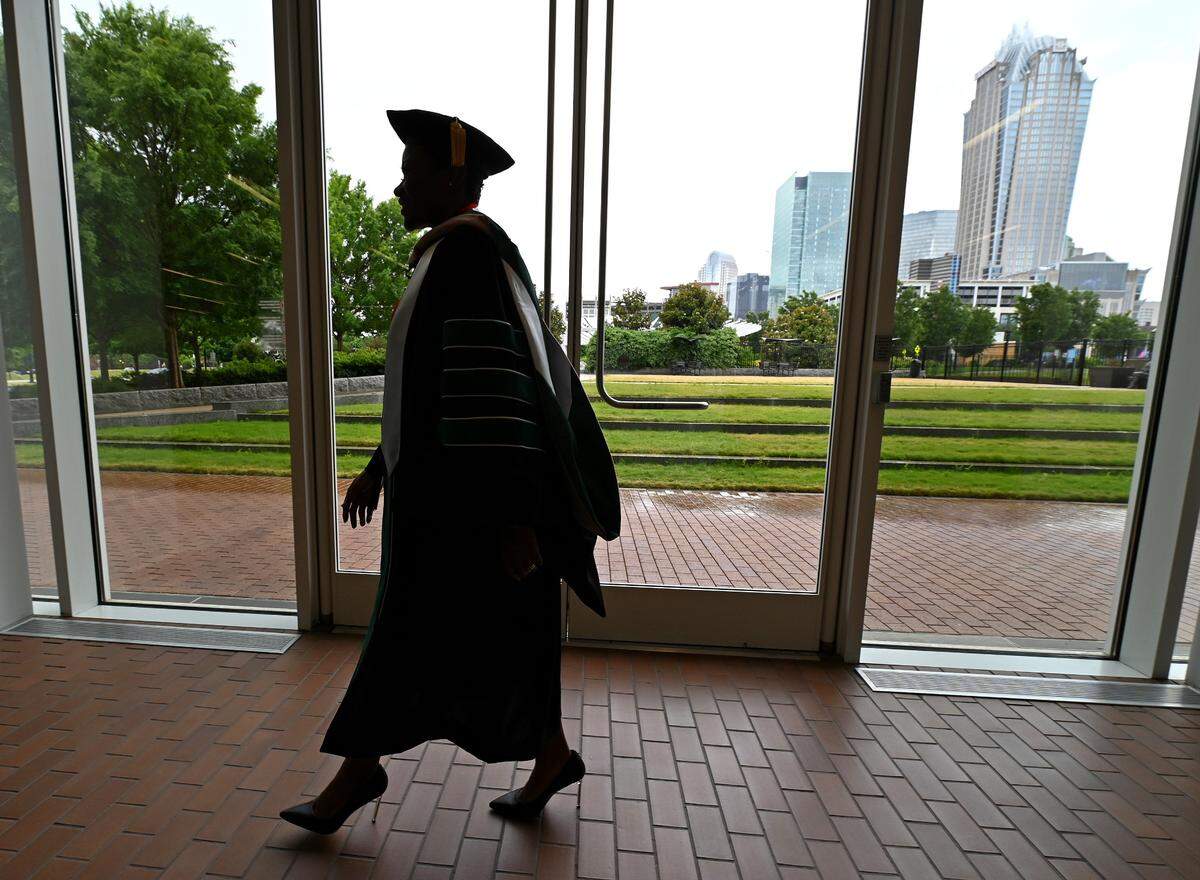
Some days, Wiggs cried and fought for her body to put one foot in front of the other. When she walked across the stage Friday, she carried her grandfather’s pocket watch, which he kept in his overalls, as a token of strength.
“Although he had a very limited education and only learned to write his name later in life, he inspired a young, quiet, and shy little girl to one day become a doctor,” she said.
She, in turn, is lifting up others.
“Perspective matters,” Wiggs said. “I think about people who are dealing with diagnoses far worse than mine or who are in constant pain. I am so exponentially blessed that although I may have mobility challenges, my situation could be far worse.
“MS may be life altering but it doesn’t have to be life shattering. I will not stop living because I have MS.”
This story was originally published May 14, 2022 at 6:00 AM.