Yes, NC grade school students can be spanked in class. What state law says about discipline
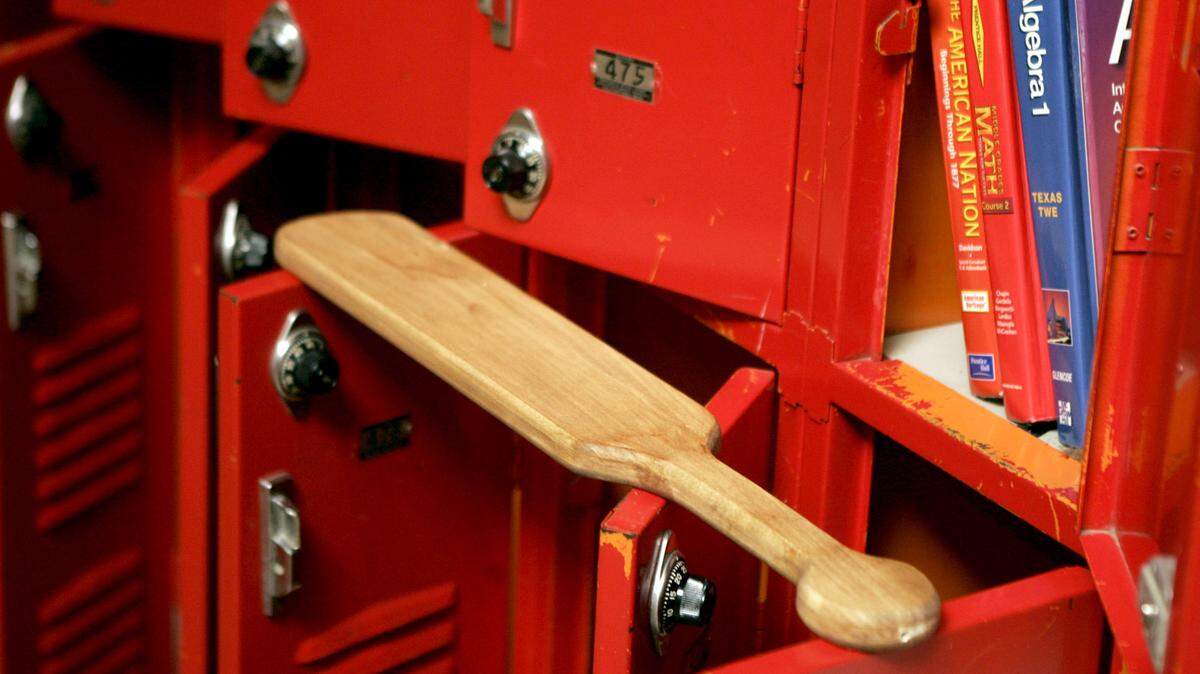
Until the late 1980s, it was common for students to be spanked when they misbehaved in school.
This controversial method of discipline is known as corporal punishment.
Corporal punishment is when a supervising adult inflicts pain upon a child with a hand, cane, paddle, or yardstick in response to unacceptable behavior, according to the American Academy of Child & Adolescent Psychiatry.
Cassville Public Schools, a small district in the southwest corner of Missouri, announced it was bringing back the disciplinary method, McClatchy News reported. Under the district’s policy, a misbehaving student can now be swatted on the buttocks with a paddle with their parent’s permission, according to the district’s student handbook for 2022-2023.
Most school systems around the country have phased out corporal punishment and replaced it with strict suspension policies, but it is still legal in 19 states, including North Carolina, according to the AACAP.
Here are the laws on corporal punishment in North Carolina, how often it’s used in the state, and what experts say about how effective it is.
What are the NC laws on corporal punishment?
According to state law, school districts in North Carolina can determine whether or not to allow corporal punishment. Corporal punishment is prohibited in Charlotte-Mecklenburg Schools, according to the district’s Code of Student Conduct.
Corporal punishment cannot be administered in a classroom with other students present, and teachers can only give the punishment in front of another teacher or administrator after explaining their reasoning for the discipline, per state law.
Once students receive corporal punishment, state law requires schools to notify their parents or guardians with a written explanation of why their child was punished.
Parents can opt out of corporal punishment for their children if they submit a signed form at the beginning of the school year. If parents do not complete the form, then their child can receive corporal punishment at school, state law says.
How often is corporal punishment used in NC schools?
During the 2020-21 school year, no school districts in North Carolina reported using corporal punishment, according to a report from the N.C. Department of Public Instruction. It was the third consecutive year where zero uses of corporal punishment were reported.
There were 60 uses of corporal punishments by two school districts -- Robeson County and Graham County -- during the 2017-18 school year, according to another report from NCDPI.
NCDPI data show that 24 of the 60 instances of corporal punishment involved elementary school students, another seven involved middle school students, and 29 for high school students.
Corporal punishment was applied eight times to students with disabilities, including four with autism, two with a speech or language impairment, and one with a specific learning disability or intellectual disability, according to the report.
The most common reasons corporal punishment was used were aggressive behavior and skipping school, according to the report. Other reasons included disruptive behavior, inappropriate language and excessive tardiness.
Is corporal punishment effective in schools?
Corporal punishment does not improve a child’s in-school behavior or academic performance, according to Human Rights Watch, an organization that investigates and reports on abuse around the world.
Studies have shown that schools in states where corporal punishment is frequently used performed worse academically than states that prohibit the form of discipline, according to Human Rights Watch.
Harsh disciplinary practices can also lead to issues with depression, fear, and anger among students, the organization says.
The use of corporal punishment can also impact students who aren’t subjected to hitting or paddling, since it creates a threatening environment that can affect their ability to perform well academically, said Human Rights Watch.