
An NC school board cleared the room of teens to read a book’s sex scene aloud
Editor’s note: The Cabarrus County school board discussed book policies during its Sept. 19 meeting. Find an update here.
The chair of the Cabarrus County Board of Education ordered its teenage student interns to leave a public meeting this week before a board member read an oral-sex scene aloud from an award-winning teen novel.
“This is the kind of crap that’s in our schools, and you think this is OK?” board vice-chair Laura Blackwell said during Monday night’s work session, referring to a passage in John Green’s 2005 “Looking for Alaska.”
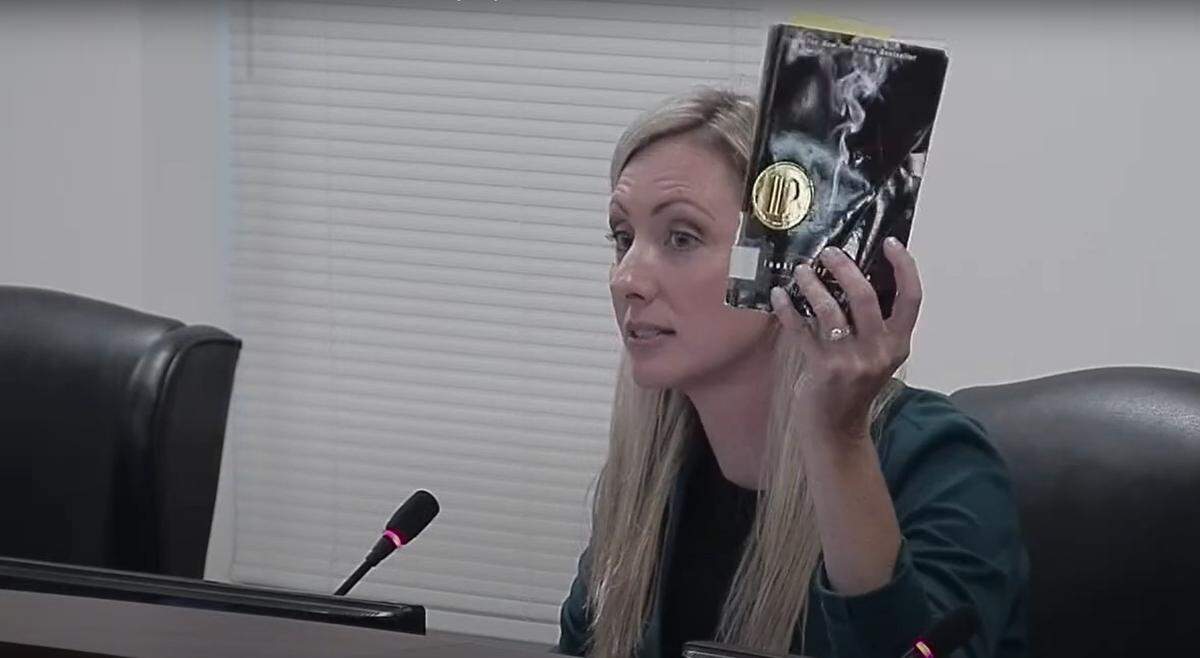
The board was discussing a letter from 132 parents concerned that the school board intended to ban the book and others from school libraries.
Blackwell said two copies of “Looking for Alaska” remain missing from school libraries and are likely “under some kid’s mattress.”
The session was broadcast live on the district’s YouTube channel, meaning anyone could watch the video on their phone — including the teen interns. The Charlotte Observer reviewed a recording on the school district website.
“Whether the entire book is a good story is not the issue,” Blackwell said in an email to the Observer on Friday. “You can have a wonderful book and have material that is not suitable for children.”
“My question is, were those scenes even necessary in order to get out your message as an author?” she said.
“Do we need to expose our children to adult subject matter that they have no perspective on because they don’t have the same life experiences as an adult?” she asked. “My job is protect our children and that is what I will continue to do.”
Letter from parents
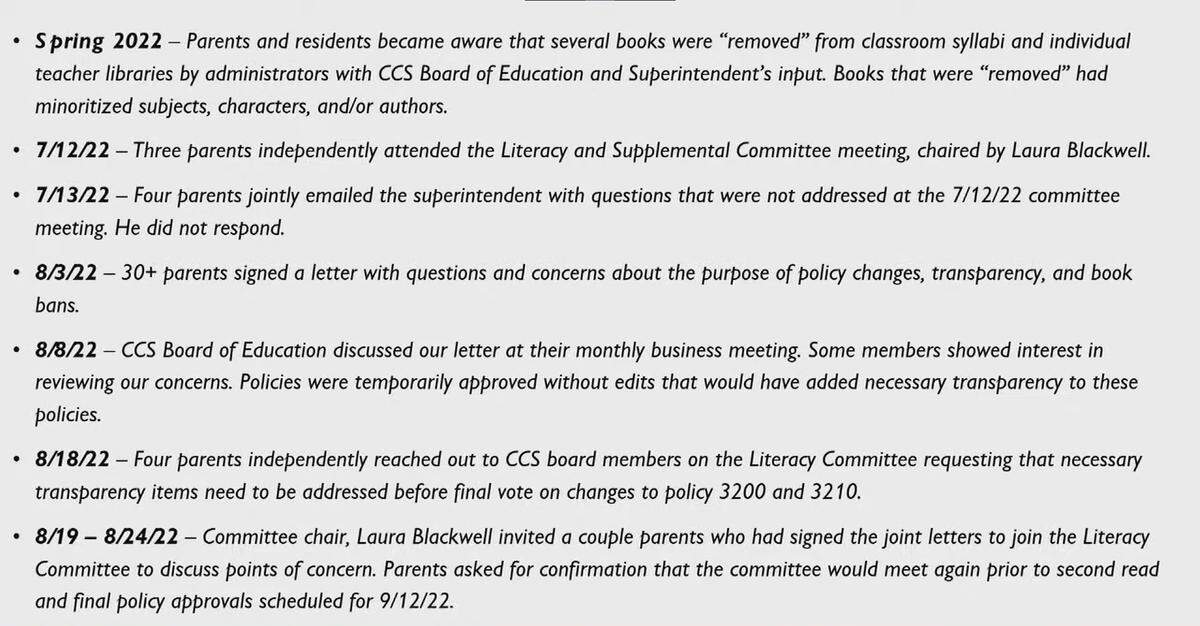
Blackwell was reacting at the meeting to an email sent to the board Sept. 9 from parents worried that the board is about to enact policies that would make it easier to ban books and learning materials someone deems offensive.
The letter said school administrators removed several books with “minoritized subjects, characters, and/or authors” from “classroom syllabi and individual teacher libraries” last spring. The books were removed with input from school board members and Superintendent John Kopicki, according to the letter. The letter doesn’t name the books.
“To be clear, we are not in favor of book bans, removals, or relocations under any circumstance because we trust the rigorous process by which books (and other supplementary learning materials) are initially brought into our schools by experts in the field of education,” the parents’ letter said.
The school board displayed the letter on a large screen at Monday’s meeting.
“We demand that full transparency be built into the policies prior to their adoption,” the letter said.
Board chair: Book ‘will be the example’
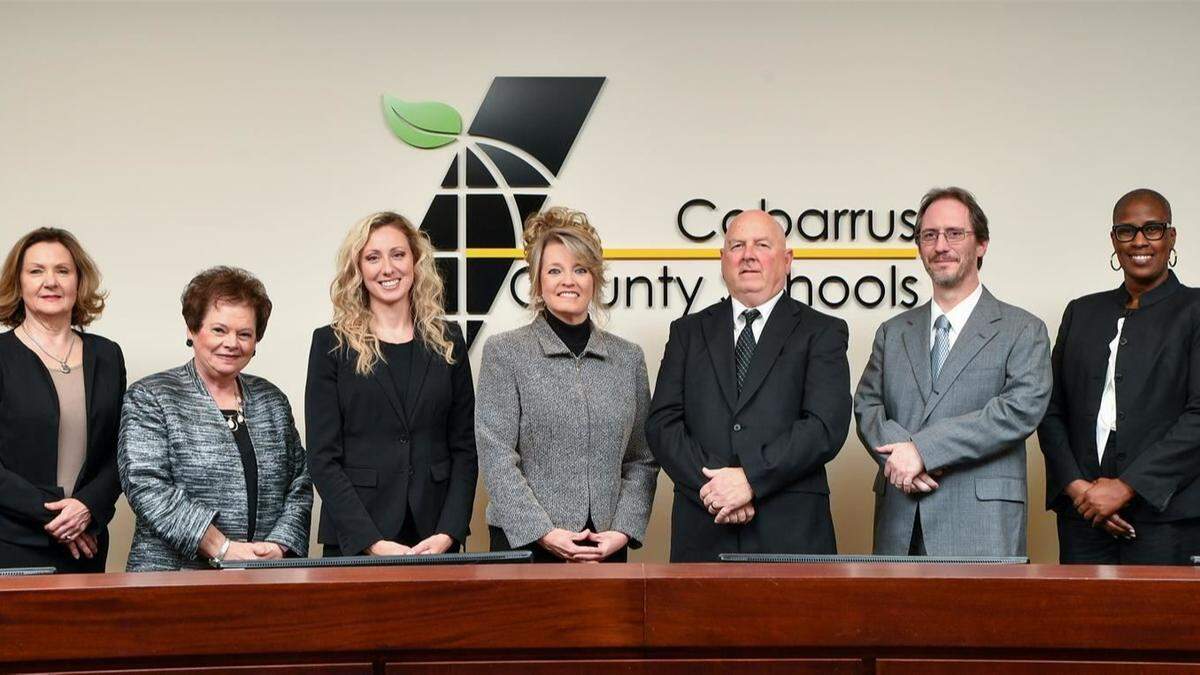
School board Chair Holly Grimsley denied at Monday’s meeting that book banning was behind a months-long effort by a board committee to standardize policies on how books are selected and how school officials should respond to complaints about the materials.
No books have been banned, she said, and “policy” is the sole purpose of the literature and supplemental materials committee, Grimsley said. Blackwell chairs the committee.
“The process was either not being followed or was followed inconsistently at different campuses,” Grimsley said.
Yet Grimsley acknowledged during the session that school administrators removed some books in the spring until the board approves final policy revisions, likely in November, she said.
Grimsley didn’t name the books, but she insisted that the board has been fully transparent about its intentions.
“There could not be more transparency involving this process than anything else that we’ve done,” she said.
Still, Grimsley said she took issue with one of the demands in the parents’ letter, that no books ever be banned.
“It’s broad, and it’s broad in a way that we need people to be really clear why some things have been pulled for review,” Grimsley said before referring to “Looking for Alaska” without naming the book.
“This particular book is going to be one that will be the example and start the process for this literature committee to take a look at,” Grimsley said.
Leave the room, teens
The scene at issue involves what Green, the author, has called “a very awkward and ultimately failed attempt at oral sex, which is described in very cold and clinical language.”
Grimsley initially invited students under age 17 to leave the room if they preferred not to listen to the passage, but she ordered them to leave after board member Keshia Sandidge raised concerns about parental consent.
Four or five interns were in the room, including a couple of students who may be 18, Grimsley told the Observer on Thursday.
None of the students objected to the board before leaving, according to the recording.
Only Rob Walter on the seven-member school board questioned the need to read the passage aloud, saying he saw no reason.
People need “to understand the severity of” what’s in the book, Grimsley replied.
“It’s very graphic, it’s very detailed,” Grimsley warned the audience, “but it’s very important that you understand that it’s not over-exaggeration (by reading the passage aloud). This is what was in some of our libraries, and it is the reason it needs to be reviewed.”
Blackwell read the passage after Grimsley asked each member if they were OK with that.

Author reacts to book bans
In a Twitter thread on Friday reacting to the Cabarrus imbroglio and other attempts to ban his book this year, Green expressed anger and dismay.
“Looking for Alaska has been in print for 17 years, and it has been challenged countless times, but I’ve never seen anything like the concerted effort in 2022 to remove it and so many other books from libraries and schools around the country,” he wrote.
The book isn’t about sex, “which is why there’s so little sex in it,” he wrote.
“It is about grief, and failing those we claim to love ... and it’s about radical hope and forgiveness,” Green wrote.
The book won the Michael L. Printz Award from the American Library Association in 2006.
Yet, in 2015, “Looking for Alaska” reached No. 1 on the American Library Association’s list of most challenged books, The Guardian newspaper reported at the time.
More complaints than “the Holy Bible,” which finished sixth that year, Green said on YouTube in 2015. “To be fair, the Bible does contain its fair share of explicit passages,” he said.
‘Text is meaningless without context’
Green has repeatedly said the book should be taken in full, that “text is meaningless without context.”
“The book is arguing (somewhat old-fashionedly) against emotionally disconnected sexual experiences, not for them,” Green told his 4.6 million Twitter followers. “Like, if you find the book arousing, I ... really think you are reading it wrong.“
Teens are intelligent enough to understand his book, he argued. “Stop condescending to them,” he said. “They don’t read “Animal Farm” and think it’s about how evil pigs are. They are plenty sophisticated.”
“It’s painful to see LfA banned more and more,” he said. “But it is more infuriating to see how hard this is making teaching and librarianship.”
Just this week came reports of a school board candidate campaigning on a ban “Looking for Alaska” platform in Orange County, Fla., where Green grew up and attended school.
With his wry sense of humor, Green responded with a faux-plea on TikTok: “Please don’t ban my books in my hometown. It’s really upsetting for my mom. She has to deal with all these people talking to her on Facebook now.”
Board chair: ‘He is a great author’
Read the book first, former longtime Cabarrus County school board member Cyndy Fertenbaugh told the Observer she’d tell the board.
“The board should not be banning anything they have not read in its entirety for the context of the entire book,” she said.
“But most important, they need to follow the policy” and not be indiscriminately removing books from school libraries, she said.
“I’ve read the book all the way through,” board Chair Grimsley told the Observer. “I knew I needed to.”
“Unfortunately, (Green’s) recognizing in his own words that two pages divert attention from the intent behind the book.”
“He is a great author,” Grimsley said. “He could have left (the sexually explicit act) unsaid. He really is a great author. He’s actually visited Cabarrus County.”
Grimsley said the message that school board members are conveying to the public “is that these books and supplemental materials are being paid for with taxpayer dollars. That’s where the school board gets caught up in this.”
Regarding youth under the age of 17, whether it’s their parents or the restrictions on R-rated movies, “there’s somebody above them monitoring what they’re exposed to,” she said. “We have a lot of places providing those stop checks,” and that includes their schools, she said.
This story was originally published September 16, 2022 at 6:00 AM.