NC charter school accused of misspending money and conflict of interest violations
A North Carolina charter school is being accused of misspending thousands of taxpayer dollars, including funds spent on behalf of a high-ranking federal education official who is a leader at the school.
Staff from the state Department of Public Instruction this week presented reports alleging conflict of interest violations involving the spending of state and federal dollars at Children’s Village Academy in Kinston. Many of the questions revolved around money exchanged between the school and its board vice chair Peggy Carr, who is also commissioner of the National Center for Education Statistics.
Specific concerns include Carr getting $155,000 in interest payments on a $188,000 loan she gave the school 15 years ago. Other allegations include the school improperly using taxpayer dollars to reimburse Carr for furniture and utility bills for a home she owns and rents to the school in the summer.
As part of the review, DPI is requiring Children’s Village to repay at least $22,000 in “unallowable costs.” The investigation come as Children’s Village is up for state renewal of its charter in 2024.
“This is a huge part of the decision that needs to be made as far as renewal goes,” John Eldridge, vice chair of the N.C. Charter Schools Review Board, said after receiving DPI’s reports. “There’s a lot of questions that still need to be answered, so I’m very curious to see how things move forward with any further investigation.”
Shirley McFadden, monitoring and compliance manager for DPI’s school business section, told the Review Board she’s having discussions now with legal counsel on how to proceed. DPI began the investigation after allegations were sent to the agency and to the Office of the State Auditor.
“My opinion is further investigation needs to be done,” McFadden said.
School defends loan interest costs
In 2021, President Joe Biden appointed Carr as commissioner of the National Center for Education Statistics, which is part of the U.S. Department of Education. The center oversees the National Assessment of Educational Progress, commonly called NAEP, which is a series of national tests given to assess the state of education.
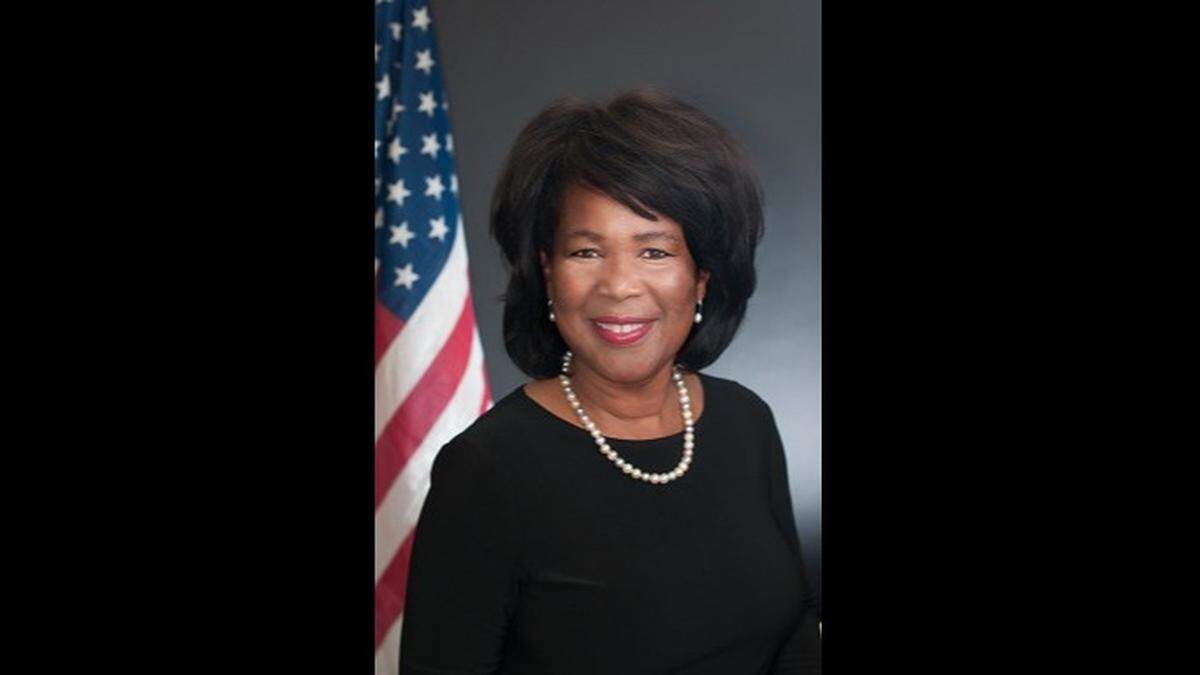
“My husband and I have complied with the financial disclosure rules at the U.S. Department of Education as we support this school,” Carr said in a statement sent late Thursday. “We also had the peace of mind that came from the state mandated annual independent audit reports, which found nothing objectionable.
“While we have not been consulted regularly by the DPI during their process, we are grateful for the opportunity to cooperate and improve their understanding and our own financial procedures. We have boundless faith in the teachers, students and parents at Children’s Village Academy who work every day towards a better tomorrow.”
The school did not respond to telephone messages from The N&O requesting comment.. But the school told DPI that it’s not paying excessive interest on the loan.
“It was the school that failed to start payments in a timely or adequate way, due to limited funds,” according to the school’s response to DPI. “This was allowed by the Board member, not to pad her own pockets but as a concession.
“Had the school paid the entire loan back within five years, the interest expense would have been more limited.”
But the school also “concedes it must implement stronger internal controls with an emphasis on proper documentation and record keeping.” The school says it “is willing to put in place all reasonable measures to do so.”
Carr gave $188,000 loan to school
Children’s Village Academy is about 80 miles southeast of Raleigh. It has had financial challenges for years.
“My family has worked for decades in Lenoir County to advance access to quality education for families of limited means,” Carr said. “My mother urged integration of public schools before the federal government forced it and she started the Children’s Village Academy to offer hope and opportunity to some of our most underserved neighbors.”
In 2008, Carr gave the school a $188,000 loan that is still being repaid. Carr said she gave the loan because Children’s Village faced the same barriers as communities of color in struggling to get access to fair credit.
“After being rejected by a couple of banks for a modest loan for operations, my family pulled together to stand the gap,” Carr said. “By passing the hat around, we leveraged our personal credit cards, a second mortgage, checking and retirement accounts to find a way to be useful. Credit card interest rates were high, mortgage interest was a bit lower, and we did it.”
DPI says there was inadequate documentation of the loan , resulting in misstatement of the school’s finances because it wasn’t listed as being a liability..
DPI questions legality of loan payments
McFadden said that Carr has been paid back, with interest, $314,000. But by the time the loan is fully repaid, McFadden said the school will have paid an estimated $155,505 in interest — $109,268 more than it was originally projected to repay.
“DPI is concerned with the legality and validity of the loan payments to date since there is no documentation or evidence that substantiates the CVA Board agreed to or understood the total amount to be paid including interest based on the annual decisions being made,” according to a DPI report.
Simple math reveals the true facts that elude the DPI reporting and the narrative, according to Carr.
“Simply put, the debt my family incurred to support the loan to the school had to be serviced regardless of the school’s repayment schedule,” Carr said. “So, while the school deferred their payments for years, the combined interest we paid and then collected was reasonable (e.g., between 6.50% and 6.75%).”
In addition to the loan, DPI has questions about the $894 a month it says Children’s Village is paying to reimburse Carr for small business loans for buildings the school uses.
DPI says the school’s board of directors did not properly vote on contracts that related to Carr involving a conflict of interest, ‘
‘Unallowable’ furniture costs
DPI has raised questions about $287,000 in federal money the school used for the 21st Century Community Learning Center summer program.
DPI identified $5,003 in “unallowable costs,” from the summer program, including $4,438 for furnishings that Carr purchased and requested reimbursement for at a house she partially owns in Kinston.
The school leases the home for two months a year for the summer program, DPI says. Items purchased included dining room tables, dining room chairs and decorative items such as a wall mirror, “colorful cows” and pillows.
Some of the items were purchased in Maryland, where Carr lives, and shipped to Kinston.
“Per contracts for the property where the furnishings are used, the property is only used for 2 months out of the year,” according to a DPI report. “The furnishings in question are also not a reasonable purchase as they are typically found in a household, they are not furnishings typically found in an academic setting.”
In addition, DPI says the school paid the entire utility bill for the house for two summer months even though part of the property was used by an independent contractor who is related to Carr. That person is the school’s operations manager. A U-Haul business is also in that building.
Even after the summer program ended, DPI says the school paid the utility bills for the home. Altogether, DPI found $3,238 in unallowable utility costs that must be repaid.
Carr’s statement did not directly address DPI”s concerns regarding the furniture and utility costs.
‘Red flag indicators’
McFadden singled out four invoices related to federal funding for the 21st Century Community Learning Center program that she said “are absolutely red flag indicators to us of fraud, waste or abuse.”
One invoice involves the 21st Century program director getting reimbursed for $5,000 worth of items. But McFadden said there’s no evidence that the invoice had been paid by the program director.
McFadden also cited a $9,400 invoice from the school’s operations manager, who is related to Carr, for summer program items such as T-shirts and backpacks.
McFadden said it’s a concern that the 21st Century program director and the operations manager were submitting for reimbursement for items unrelated to the services they provide.
In addition, DPI says two invoices were submitted for items that used the same language as the operations manager. McFadden said one of those invoices came from a person who has the same last name as the 21st Century program director and has an address that used to match the program director.
School says it is not aware of transactions
DPI outlined a list of other questioned costs, including:
▪ A custodian was paid $17,000 in federal summer program grant month for July through September.
▪ A different custodian/bus driver who is married to the K-5 principal was paid $15,000 in federal grant dollars in July and August. The K-5 principal is also Carr’s sister.
▪ DPI found $8,877 in unallowable costs related to personal expenditures such as a tire replacement for the finance officer’s car, holiday gifts to employees, $500 gift cards to four employees and costs related to a daycare center operating on the campus. McFadden said the daycare owner is related to Carr.
▪ The school spent summer grant funding for items purchased after the program ended.
DPI is recommending several changes to improve financial control, such as no longer allowing the finance officer to approve transactions by using a stamp with Carr’s signature.
Jessica Jones, the school’s executive principal, told the Review Board on Tuesday that they’re cooperating with DPI. She said a lot of the things DPI uncovered were not transactions that she or the board had been aware of or decided whether to approve.
“So as we get through this investigation and look into the findings, we are preparing a response,” she said.
This story was originally published December 13, 2023 at 11:53 AM with the headline "NC charter school accused of misspending money and conflict of interest violations."