Do UNC trustees need to ‘stay in our lane’? Memo shows their power is scaled back
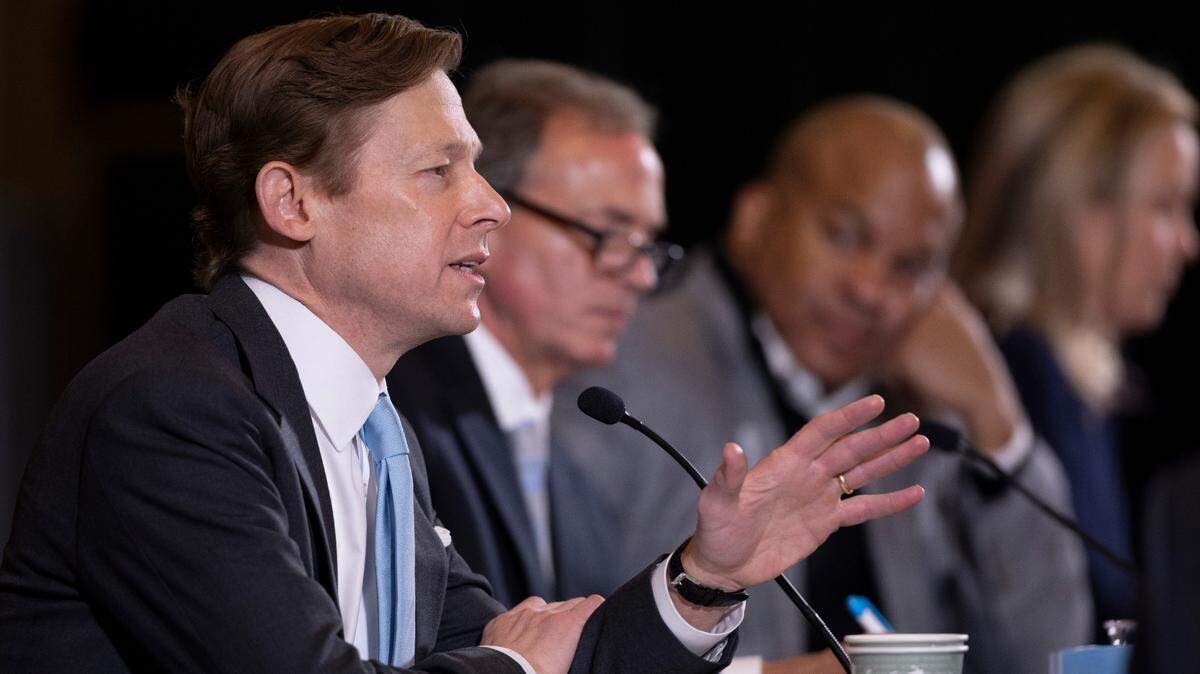
Top leaders in the UNC System wrote to members of UNC-Chapel Hill Board of Trustees appearing to remind them of their responsibilities and scale back their powers, according to a memo obtained by The News & Observer.
As one trustee views it, the memo essentially told board members at the university that they need “to stay in our lane” — though the board’s chair disagrees with that interpretation, telling The N&O he viewed it as purely administrative.
In the Jan. 12 memo — sent the same day Lee Roberts became interim chancellor of the university — UNC System President Peter Hans and Board of Governors Chair Randy Ramsey reassigned eight powers that had been previously delegated to the Board of Trustees. The change gave those powers — mostly related to personnel and salary — to Roberts instead of the trustees. Hans and Ramsey also reminded the board of the policies they should follow for public meetings, including setting agendas for those meetings.
Hans and Ramsey emphasized to Roberts and UNC Board of Trustees Chair John Preyer that trustees should serve “in an advisory capacity to the Board of Governors and the chancellor” and that trustees should not direct “matters of administration or executive action.”
The chancellor and Board of Trustees chair at Elizabeth City State University received a similar memo from Hans on the same day, re-delegating the same powers from that board to Chancellor Karrie Dixon. But that memo, obtained by The N&O through a public records request, includes only information about Hans’ delegation of those powers; it does not include a statement reminding the board of its advisory purpose, nor reminders about public meeting procedures.
Authority in the UNC System
There are two levels of governing boards in the UNC System:
▪ The 24-member Board of Governors, which is appointed by the state legislature, oversees and sets policy for the entire 16-public university system.
▪ Each university has its own campus-level Board of Trustees. Some campus-level decisions require approval at the system level.
Hans stated in both memos that he was re-delegating the personnel powers to align the universities’ delegations of authority “with the rest of the UNC System.”
Hans and Roberts, a former member of the Board of Governors whom Hans selected to be interim chancellor, declined to comment on the memos to The N&O.
But in Chapel Hill, the communication from the UNC System office came after a year in which trustees made headlines for controversial policy decisions and actions, including for its efforts to develop a School of Civic Life and Leadership and for adopting an admissions and hiring policy that prohibits the university from considering “race, sex, color or ethnicity” in those decisions.
The memo to UNC leaders states that the actions described in the document are being “taken simultaneously to empower the interim chancellor to lead UNC Chapel Hill and act decisively in the best interests of the University.”
“While these actions necessarily rebalance the roles and responsibilities of the Office of Chancellor and the role of the Board of Trustees, empowering the interim chancellor by treating UNC Chapel Hill similarly to every other campus within the University System is an important step to maintain the excellence of UNC Chapel Hill,” the memo states.
Memo mentioned during committee meeting
Ralph Meekins, an attorney who has served on the UNC Board of Trustees since 2019, brought the memo to light March 27 during a meeting of the board’s budget and finance committee.
While discussing the university’s annual budget process, trustee Jim Blaine — the former chief of staff to Republican Senate leader Phil Berger and a powerful political consultant — said he believed either the General Assembly or the Board of Governors would “follow Florida’s path” this year and potentially eliminate diversity, equity and inclusion (DEI) efforts at state universities. Blaine suggested university staff “develop a contingency plan for that expectation.”
Discussion on the potential, yet-to-be-seen changes to DEI continued for roughly 10 minutes. Meekins spoke on the topic twice, urging his fellow board members to not “jump the gun on those kinds of issues” and take actions without an actual policy directing them to do so.
Meekins said the board’s conversation was disrespectful to the Board of Governors and its authority.
“We’ve gotten a memo from them recently telling us to stay in our lane,” Meekins said. “And I think this is one area where we need to stay in our lane. Let’s wait and see what they say, and then we can adapt and we can meet whatever the ramifications are from any changes in our DEI.”
Meekins confirmed that the memo obtained by The N&O was the document he was referencing during the debate. He did not respond to requests for further comment.
Preyer, the board chair, told The N&O that he viewed the memo as “an administrative, housekeeping thing to bring UNC and the other school into the same position of all the system schools.”
Preyer added that he believes the UNC trustees have a good working relationship with the Board of Governors.
“I think our board is in good alignment with the Board of Governors,” Preyer said. “We’re all working in the best interest of North Carolina, and we’re also all unpaid volunteers.”
UNC board reminded of agenda policies
The memo includes two sections about the Board of Trustees’ authority.
In the first section, Hans and Ramsey describe the responsibilities university chancellors and their boards of trustees share, under state law and board policy, in setting agendas for board meetings.
On decisions that require Board of Governors or system-level approval, those bodies “will only consider action by the UNC Chapel Hill board of trustees” if they follow the guidance set forth in state law, system policy and trustee bylaws.
Citing state law, the memo states that chancellors or their staff should prepare the agendas with the board chair and committee chairs “as appropriate.” Items to be included on the agendas should be submitted in writing with supporting documents to the chancellor “sufficiently far in advance of the meeting to permit a determination to be made by the interim chancellor with respect to the propriety and practicability of including that item on the agenda for the meeting,” the memo states, citing the UNC-Chapel Hill board’s bylaws.
The memo notes that the materials should generally be available to the public at least one week in advance. If the board fails to follow those guidelines, the memo states, the UNC System office and the Board of Governors will not take up items from the trustees that require their approval.
The memo does not reference a specific time or meeting in which the agenda policies were not followed.
But when the board last January introduced a resolution asking university leaders to develop a School of Civic Life and Leadership, the resolution did not appear on the meeting agenda. Then-board chair David Boliek introduced the resolution toward the end of the meeting, saying he had “walked on” the resolution to the agenda.
The board’s bylaws also state that any member can present an item to the board during any meeting, and the board can take action on those items, even if the item is not on the agenda.
UNC, ECSU boards stripped of some personnel powers
In the second section of the memo, Hans states that he is removing the trustees’ “authority to execute certain personnel actions” and giving those duties to the interim chancellor.
In both memos, Hans tied the decisions to information all UNC System boards of trustees submitted in 2021, at the direction of the Board of Governors. The board directed trustee boards in the UNC System “to adopt a new board resolution amending and restating each campus’s delegations of authority between the respective board of trustees and campus officials.”
The Chapel Hill memo states that Hans is re-delegating the authorities to “better align UNC Chapel Hill’s delegations of authority regarding personnel actions with the rest of the UNC System.”
In the memo sent to officials in Elizabeth City, Hans removed the same powers from ECSU trustees and delegated them to the university’s chancellor. Like he did in the UNC memo, Hans said he was re-delegating the powers “to align Elizabeth City State University (ECSU) delegations of authority with the rest of the UNC System.”
“After review of the UNC constituent institutions Delegated Authority Resolutions, and applicable human resources management flexibility plans and policies, ECSU’s policy appears, along with another campus’s, to be an outlier in that it has not delegated each of these authorities to the chancellor,” the memo stated.
The memo to ECSU leaders included just the one section on personnel policies. Unlike the memo to UNC leaders, it did not include a section about meeting and agenda policies, nor language reminding the board of its “advisory” role.
Governance debates at NC universities
Debates over governance structures have been persistent across the UNC System in recent years, and the UNC-Chapel Hill board, in particular, has been criticized for skirting structures meant to ensure “shared governance” with the faculty and making decisions outside the board’s scope of authority.
When the Chapel Hill board passed a resolution last year directing university leaders to “accelerate” the development of a School of Civic Life and Leadership, the then-faculty chair said she was not informed of the action before it happened. That process was contrary to the traditional model of shared governance at the university, in which faculty are generally responsible for overseeing the curriculum and proposing new academic units.
After the U.S. Supreme Court overturned UNC’s race-conscious admissions policy last June, the trustees the following month passed a resolution prohibiting the university from considering race, sex, color or ethnicity in any admissions or hiring practices.
Meekins, the board member who brought Hans’ January memo to light, objected to that resolution in July, stating that it went “well beyond the Supreme Court ruling.”
The Board of Governors and some trustees are appointed by state legislators. With Republicans maintaining majorities in the state House and Senate since 2010, the boards have been criticized — notably by Democratic Gov. Roy Cooper — for being subject to partisan influence.
Cooper last year appointed a bipartisan commission to assess how leaders are appointed to public university governance boards in the state and offer reforms. Republican Senate leader Phil Berger has maintained that the state constitution gives authority over higher education to legislators, and called Cooper’s commission an attempt to “obtain partisan appointments to university boards.”
Hans, the UNC System president, said at the time that the commission was formed that “disagreements over policy and governance are a fact of life,” but that the university system would remain focused on its mission to serve the public.
This story was originally published April 8, 2024 at 6:00 AM with the headline "Do UNC trustees need to ‘stay in our lane’? Memo shows their power is scaled back."