Fewer NC students consider suicide. Is that connected to being more physically active?
Fewer North Carolina students are reporting mental health issues such as suicidal behavior, according to the latest biennial survey of student behavior.
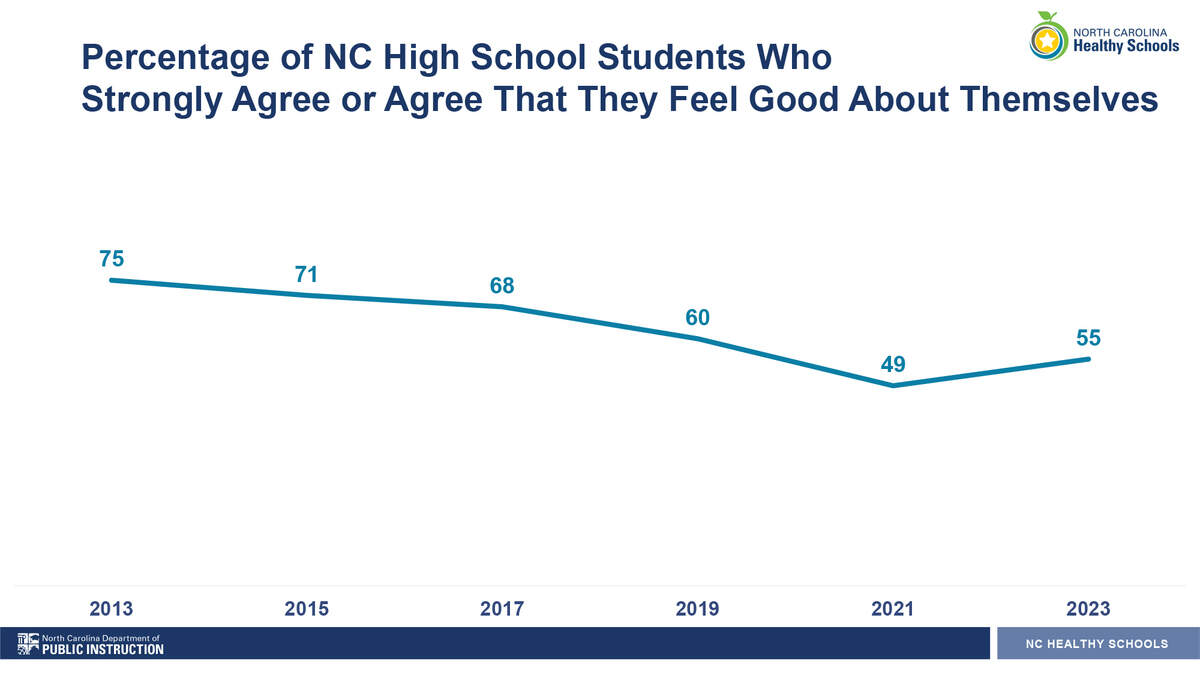
Results from the 2023 Youth Behavior Risk Survey, presented at Wednesday’s State Board of Education meeting, show more students reported feeling good about themselves. Fewer students reported feeling hopeless and fewer considered suicide than compared to 2021.
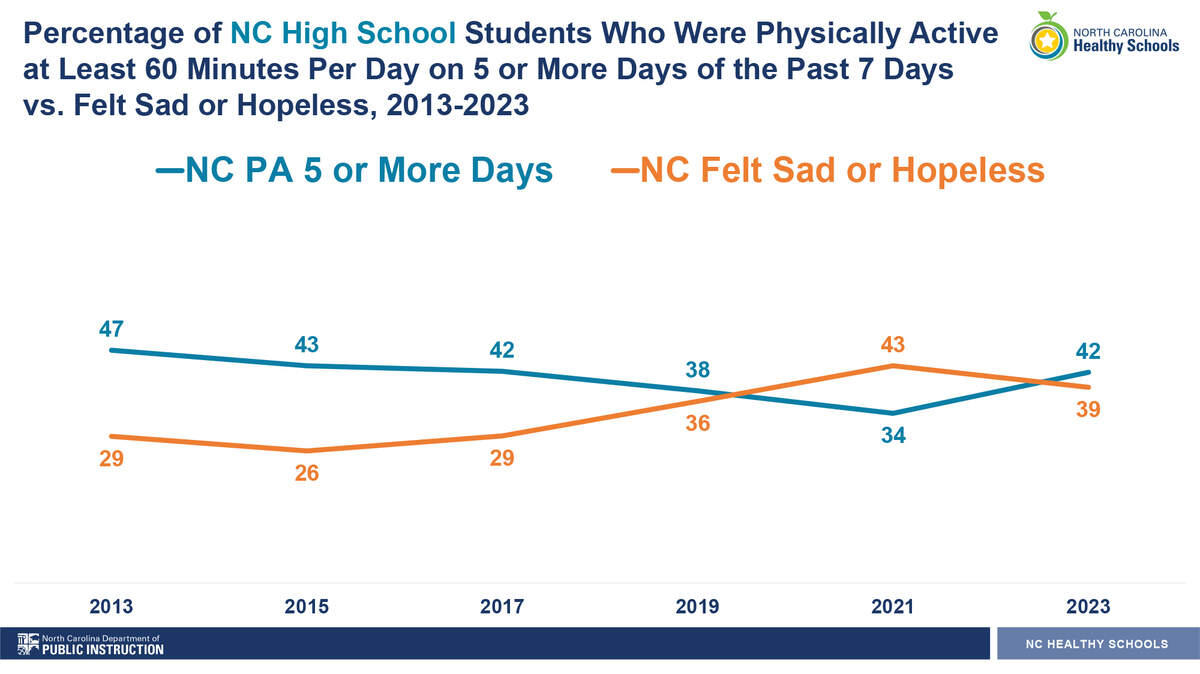
State leaders connected the improvement in mental health to how more students are reporting being physically active.
“Increasing physical activity improves mental health — and we’re on the right track,” Ellen Essick, section chief for NC Healthy Schools in the state Department of Public Instruction, told the State Board.
The results were welcome news after the 2021 survey results raised alarms about the state of mental health among North Carolina students.
“It is so encouraging to see that students are not only recovering from the effects of the pandemic, but in many cases doing better than they were in 2019 and before,” Deputy State Superintendent Michael Maher, who oversees standards, accountability and research, said in a news release.
More students feel good about themselves
Every two years during odd-numbered years, the Centers for Disease Control and Prevention partners with states to conduct the Youth Risk Behavior Survey. Participating states select random groups of high school and middle school students to answer the anonymous survey, which covers areas such as suicide, bullying, tobacco use and drug use.
The 2021 survey showed spikes in areas such as students considering suicide and feeling hopeless. The survey was given after students returned from receiving only limited amounts of in-person instruction because of COVID-19 pandemic concerns.
The 2021 survey highlighted what state health called a “behavioral health tsunami,” The News & Observer previously reported.
But in the 2023 survey:
▪ The percentage of high school students who reported feeling good about themselves rose from 49% in 2021 to 55% in 2023. But it was 75% in 2013.
▪ The percentage of high school students who reported feeling alone in their life dropped from 33% in 2021 to 30% in 2023.
▪ The percentage of high school students who reported feeling sad or hopeless dropped from 43% in 2021 to 39% in 2023.
▪ The percentage of middle school students who reported feeling sad or hopeless dropped from 35% in 2021 to 32% in 2023.
“Mental health is improving after it took a pretty big hit during the pandemic,” Essick said. “I hope we can continue moving in that direction.”
But Essick told the board there’s still plenty of room for improvement.
“If 30% of our students are feeling lonely that’s a problem,” Essick said. ““I want you to be excited about the changes but realistic we’ve still got a lot of work to do to keep our students mentally well.”
Suicidal behavior down
The survey results for suicidal behavior were also largely encouraging. But suicidal behavior was still higher among LGBTQ students than other groups.
▪ The percentage of high school students who seriously considered suicide in the past year dropped from 22% in 2021 to 18% in 2023. It was at 16% in 2017 and 19% in 2019.
▪ The percentage of gay, lesbian or bisexual high school students who seriously considered suicide in the past year dropped from 48% in 2021 to 37% in 2023.
▪ The percentage of heterosexual high school students who seriously considered suicide in the past year dropped from 15% in 2021 to 13% in 2023.
▪ The percentage of high school students who made a plan for a suicide attempt during the past 12 months dropped from 18% in 2021 to 16% in 2023. It was at 14% in 2017 and 15% 2019.
▪ The percentage of gay, lesbian or bisexual high school students who made a plan for a suicide attempt during the past 12 months dropped from 36% in 2021 to 29% in 2023.
▪ The percentage of heterosexual high school students who made a plan for a suicide attempt during the past 12 months rose from 12% in 2021 to 13% in 2023.
▪ The percentage of high school students who attempted suicide in the past 12 months remained at 10% in 2023. It’s been 10% since 2019 after rising from 8% in 2017.
Essick said it’s an area of concern that female students continue to show much higher signs of suicidal behavior than male students. For instance, 24% of female students seriously considered suicide over the past year compared to 12% of male students.
“It tells us a lot where we have to put our prevention efforts in the coming days,” Essick said.
Students more physically active
The improvement in mental health coincides with increases in physical activity among students.
Among high school students, 42% said they were physically active for at least 60 minutes on five or more days a week. That’s up from 34% in 2021.
Among middle school students, 52% said they were physically active for at least 60 minutes on five or more days a week. That’s up from 44% in 2021.
“I can’t say that’s cause and effect, but I can say there’s a relationship there,” Essick told the State Board. “We have a lot of data and a lot of research that supports — not just for adolescents but for adults as well — that if you’re physically active your mental state is better.”
The new survey results come as the State Board is scheduled to vote in July on an amendment to the Healthy Active Children policy. The update calls for 30 minutes of physical activity per day for elementary and middle school students and encourages high schools to offer students 60 minutes per week of physical activity.
“Based on the YRBS data and national research, we believe this addition to the Healthy Active Children Policy will make a positive impact,” Essick said in a news release. “Students can’t reach their full potential in the classroom if they are not mentally and physically well. Giving them more access to exercise during the school day should ultimately result in better academic outcomes.”
Social media use
For the first time, the survey asked students questions about social media use.
More than 80% of high schoolers reported using social media at least several times a day. About half of those students said they used it at least once an hour.
Social media usage was lower among middle school students, with 63 percent using it at least several times a day.
The state, along with several school districts, are part of federal class-action lawsuits accusing social medial companies of using marketing practices to addict young people to the apps.
This story was originally published June 5, 2024 at 2:07 PM with the headline "Fewer NC students consider suicide. Is that connected to being more physically active?."