CMS adds affordable housing. Teachers just want higher pay. More money isn’t that easy
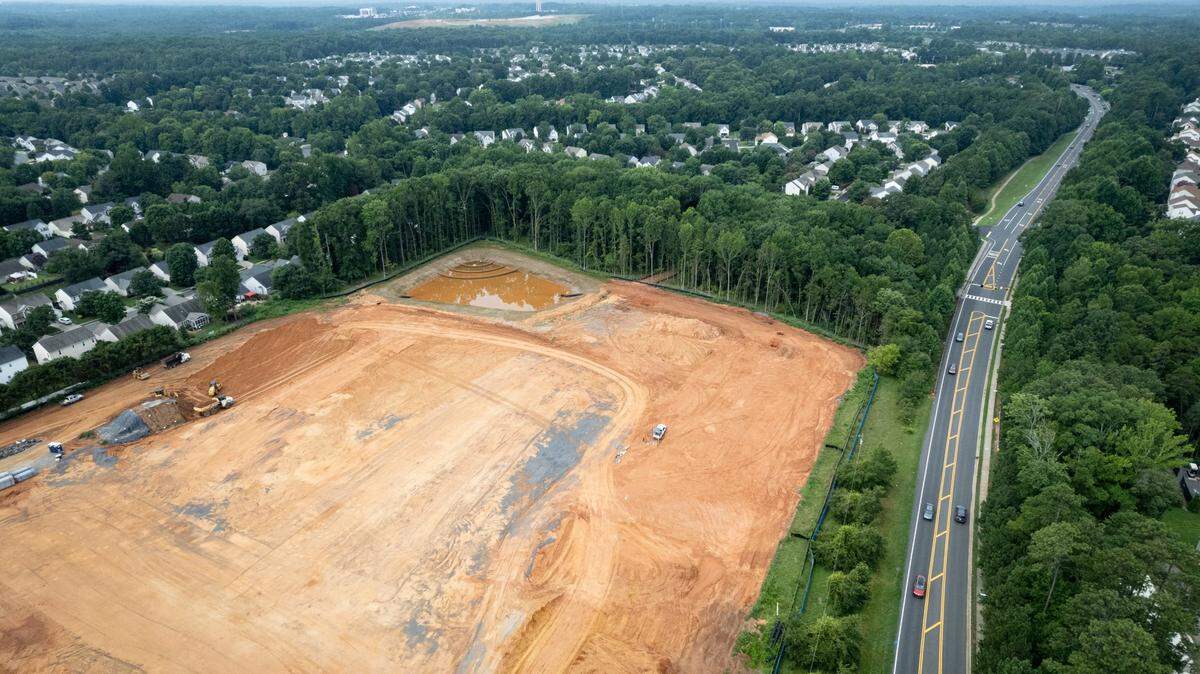
Charlotte-Mecklenburg Schools is planning a “teacher village” that will provide affordable housing for its employees and has asked the city for $1 million in startup money to begin the project.
But teachers say higher salaries are what they need most.
The first complex, comprising one-, two- and three-bedroom apartments, is expected to open in June 2027, with around 100 units. Priority will be given to educators in hard-to-fill roles, such as special education teachers. The district plans to build up to four villages on land it already owns and each will cost $30 million to $40 million.
“This will not cost CMS anything,” school board member Melissa Easley told The Charlotte Observer. Instead, the project will be funded through collaborations between the county, city and private investors. The district is also pursuing federal grant funding.
Reactions have been mixed, with many teachers frustrated at the need for affordable teacher housing in the first place. Meanwhile, district leaders say they’re searching for creative ways to attract and keep good teachers with the tools they have at their disposal.
What teachers have to say
“Educators are struggling to pay their bills, and this is a Band-Aid,” said Ayumi Nagano, a former CMS educator. “It’s a slap in the face because what really needs to happen is they need to pay teachers more.”
Nagano previously taught special education and high school math in CMS before leaving the district due to low pay.
“I loved teaching, but it was like ‘I can’t afford to do this anymore,’” she said. “It was a sacrifice.”
The sentiment has been echoed by current and former CMS educators on social media in the days since the proposal came to light.
“The idea of having a little pod for teachers with ‘affordable housing’ tagged onto it — it can almost be insulting because they’re saying that they know they’re not paying us a livable wage,” Angela Browder, a former CMS special education teacher, said.
Browder left the district last year after six years because she lived too far away from the school where she worked.
“I would like to see more advocacy from CMS and more programs for teachers,” Browder said.
Mechelle Vaughn is an elementary school teacher who’s been with the district 15 years. She appreciates the steps the district has already taken to help teachers with the cost of living, but a sustainable solution will require action in Raleigh.
“I’m grateful that the district is trying to find solutions because they can’t control teacher pay,” Vaughn said. “We do what we can with the county supplement, but the state holds the purse strings.”
The state-determined base pay for beginning teachers in North Carolina was $39,000 this school year. Next year, it will be $41,000. With the added county supplement, starting teachers in CMS are projected to make around $48,600 during the 2024-25 school year.
North Carolina ranks 42nd in the nation for starting teacher pay according to a new report from The National Education Association, up four spots since last year. Meanwhile, the state fell to 38th nationally for overall teacher pay last year and is projected to fall to 41st this year.
North Carolina continues to trail neighboring states like Georgia, South Carolina and Virginia when it comes to teacher pay.
While the housing proposal may help some teachers, Vaughn says higher salaries are what’s needed to fix the problem.
“It’s almost like putting a Band-Aid on a gunshot wound. It may stop some of the bleeding, but the person is still going to bleed out,” Vaughn said. “I hope that this starts a conversation and the public joins our fight because soon, there won’t be enough teachers in the classroom.”
What the district has to say
CMS officials have been weighing how to make things more affordable for its teachers for a while since the state hasn’t raised teacher salaries to match the cost of living.
For example, the estimated income for a renter to afford most one-bedrooms in Charlotte is $61,000 per year, according to a 2022 study from Smart Asset.
Over the past 10 months, the vision for teacher villages has come together in earnest, Easley said.
“The county can only do so much, so we’re trying to think of ways we can recruit and retain the best teachers,” she said.
The district decided to zero in on housing costs since many teachers expressed housing affordability was a problem for them, she added.
The plan is to expand beyond the first 100 units if all goes well. Teachers are not required to live in the new teacher villages, but Easley says it can give options to educators who need them.
CMS leaders have continually called on the North Carolina General Assembly to increase teacher salaries, officially asking for a raise of 5% in this year’s CMS legislative agenda. However, with a new bill pouring an additional $463 million into the state’s private school voucher program, Easley says the state is choosing not to prioritize public education.
“The amount of money that they just put into vouchers could give teachers a raise, and they’ve chosen not to do that,” Easley said. “The state controls teacher pay, so we have to come up with creative, out-of-the-box solutions to help our teachers.”
The district hasn’t officially released comprehensive plans for the project but is slated to do so mid-July.
This story was originally published June 11, 2024 at 6:00 AM.