In her second year, Johnson C. Smith president has future mapped: ‘new era of excellence’

Valerie Kinloch leaves 20 extra minutes to walk across the red brick, tree-lined campus at Johnson C. Smith University whenever she has a meeting.
She knows students will stop her to chat about their classes, their families and their weekend plans. And to take the occasional selfie, of course.
“I’m a selfie queen,” Kinloch said, smiling. “I’m proud of the fact that I love students, and I think they love me. I’m proud of the relationships I’ve been able to form.”
Kinloch took office as JCSU’s 15th president last August, and says she spent her first year focused on hearing from the university’s population of just over 1,100 students about their vision for the school. Heading into her second year as president of her alma mater and Charlotte’s only historically Black college, she’s focused on taking action.
“A common theme I heard was a need to think differently and outside of the box to understand who we are and what our identity is as well as to thrive,” Kinloch told The Charlotte Observer. “It feels like the university is embarking on something that’s new.”
At the heart of Kinloch’s vision is what she calls the school’s “new era of excellence,” which she says will involve rethinking the school’s academic offerings, recruitment and retention strategies and role within Charlotte’s rapidly changing West End. The $80 million the school received as part of the Mayor’s Racial Equity Initiative will play a big part in the transformation.
Kinloch was chosen unanimously by the school’s board of trustees, and Board Chairman Steven Boyd says he’s confident in her vision.
“We have zero regrets about the decision we made to bring Dr. Kinloch on as our 15th president,” he said. “She’s done all the things we realistically expected her to get done in this first year, so we’re very pleased with her performance and eagerly look forward to continuing to grow in areas that are critical to the university’s growth and to the city of Charlotte.”
Malcolm Graham is a Charlotte city councilman and active JCSU alumnus who’s looking for Kinloch to put students first.
“One of the things I’m looking at from her, as someone who graduated from the university, is the student experience — to make sure that the student experience from the classroom to the football field to the dining hall is second to none,” said Graham. “We want Johnson C. Smith to help Charlotte grow and prosper and to help propel us into the future.”

Who is Valerie Kinloch?
Kinloch is originally from Charleston, South Carolina, and graduated with a degree in English from JCSU in 1996. That’s easy to tell for anyone looking at the wall in her office lined ceiling to floor with books or the fact that she quotes writer and poet Audre Lorde in casual conversation.
“As an English major, you think deeply about how to transform the world, how to leave it better than you found it, and I realized I could do that also through education,” Kinloch said. “So I entered education as a profession.”
She received master’s and doctorate degrees from Wayne State University in Detroit, Michigan, before teaching education classes at Columbia University and the University of Houston. She later spent 10 years at The Ohio State University, first as a professor in the college of education and later as the associate dean for diversity, inclusion and community engagement.
Kinloch spent six years as dean of the education school at the University of Pittsburgh before returning to her alma mater.
She served on JCSU’s board of trustees for two years before throwing her hat in the ring for president and recusing herself from the selection process.
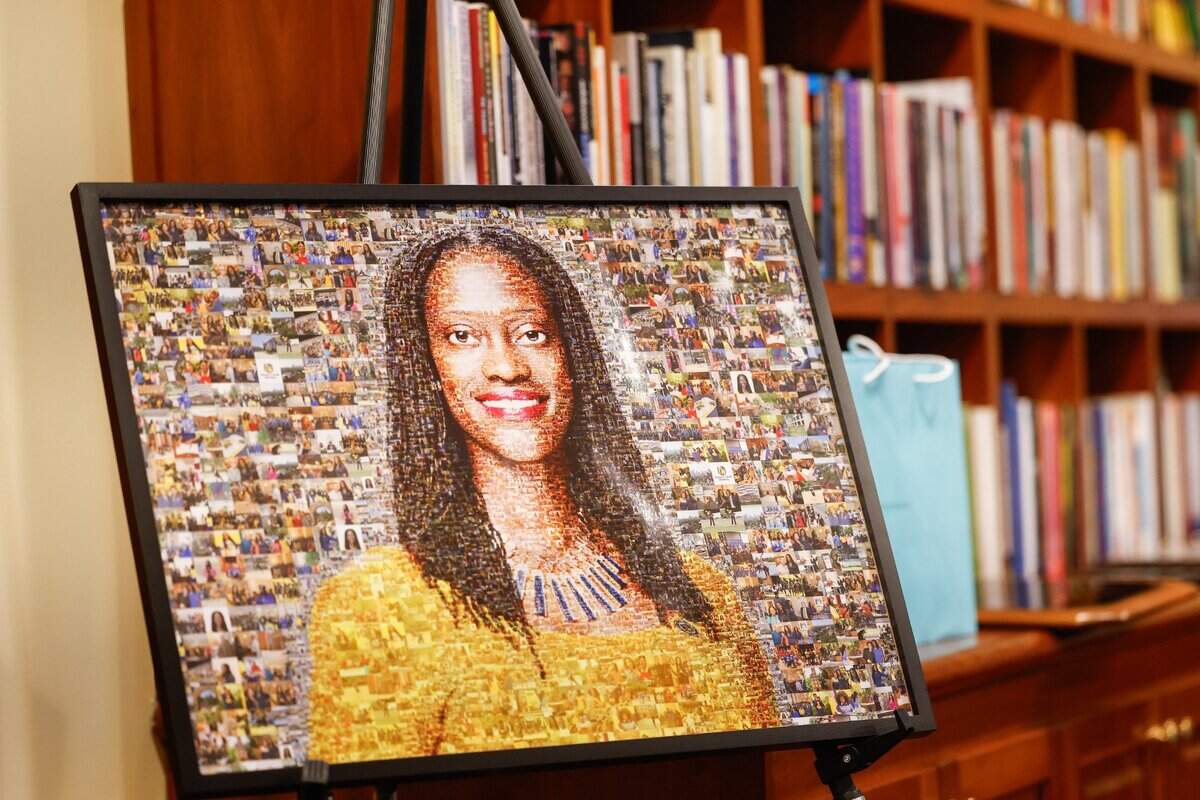
Academic programs
Johnson C. Smith this year tied for 172nd out of 211 listed liberal arts colleges in the United States, according to U.S. News and World Report’s 2024 rankings of the nation’s best schools. It tied for 29th when it came to the publication’s ranking of the best historically Black colleges and universities. Kinloch aims to elevate the school’s prestige.
“I want JCSU to be a top-performing university in the state of North Carolina and in the entire country. I want us to be on the lips of everyone when thinking of all the other universities they could go to, they say ‘Johnson C. Smith University in Charlotte, North Carolina,’” she said. “I want us to be the crown jewel of the Queen City.”
Kinloch’s predecessor, Clarence Armbrister, shared a similar vision and sought to elevate the school to a top 10 HBCU. Armbrister was president of the university from 2018 until his retirement in June 2023.
Armbrister’s four-year strategic plan remains in place and aligns with many of Kinloch’s goals. But she spent her first year as president focused on hearing from students and faculty about their long-term vision for the school, rather than making changes from the start.
Part of Kinloch’s plan is taking a look at the university’s 20 academic programs with an eye toward adding more – particularly in business administration, retail, pre-health and data analytics. She’ll also assess how the school can better attract and retain top-notch faculty.
“We have to make sure that the types of academic offerings that we have today are the ones that we need and that our students want,” Kinloch said.
The 157-year-old university previously had an education department, which it shut down in 2016 due to low enrollment. Kinloch says reviving the education program at JCSU could happen, but she makes no promises.
“Personally and professionally, I believe that without a focus on education within institutions of higher education, we do a disservice to the types of students who want to become educators in classrooms and communities but have to seek that type of experience elsewhere,” Kinloch said. “I just believe that it’s important.”
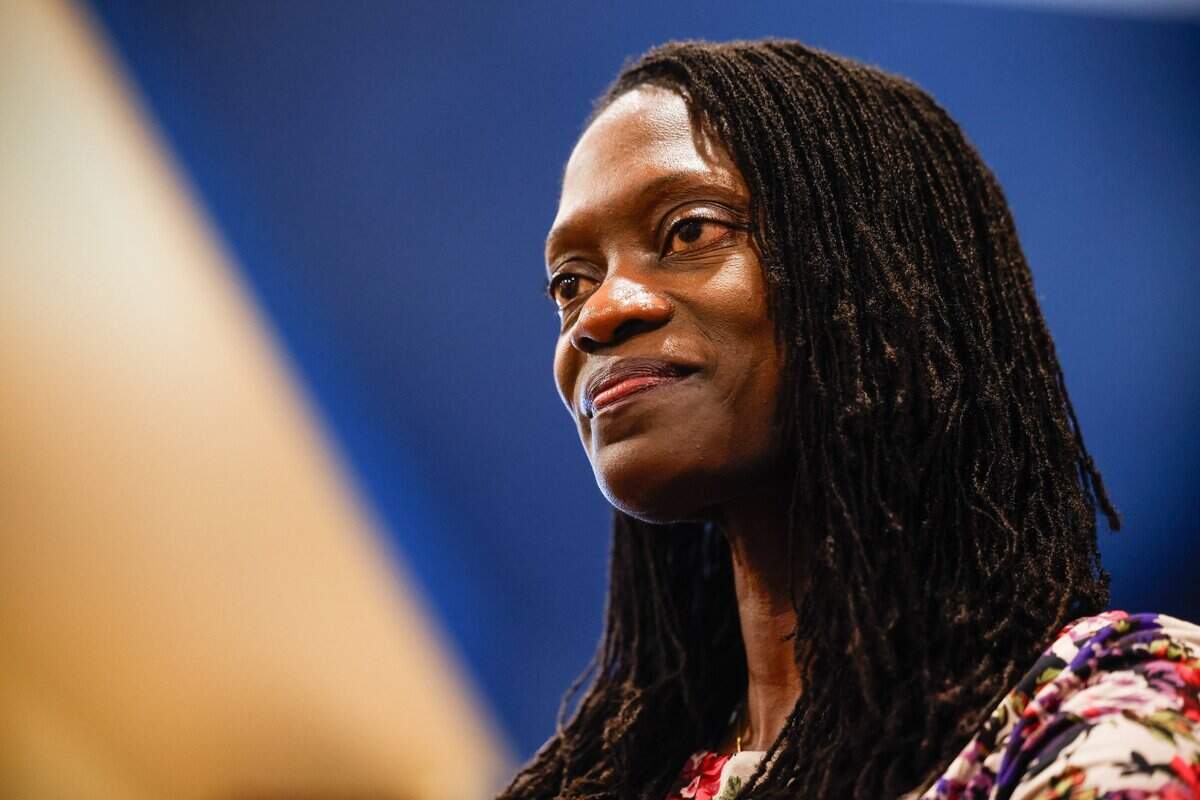
Mayor’s Racial Equity Initiative
Kinloch’s new vision for JCSU is being funded largely through $80 million from the Mayor’s Racial Equity Initiative, composed of public and private dollars.
The funding for Johnson C. Smith, intended to transform the school into a “top-tier, career-focused HBCU” is one prong of the $250 million initiative launched in November 2021. It was originally spurred on by the murder of George Floyd in May 2020 and the protests that swept cities across the nation, including Charlotte.
“People don’t always look at our history, but it’s very important, and it’s caused inequities in opportunity,” Charlotte Mayor Vi Lyles told The Observer. “We realized that policing is just one aspect of what we could do to better our city.”
In addition to JCSU, the initiative funds three other priority areas: bridging the “digital divide” by providing marginalized residents with access to technology, investing in Charlotte’s six ”corridors of opportunity” neighborhoods and getting businesses to advance leaders of color within their organizations.
The initiative initially caused friction at city hall when City Councilman Tariq Bokhari from District 6 alleged Lyles, alongside City Manager Marcus Jones, kept council members in the dark about the initiative in order to rush a vote for financing it with $80 million in public funds. Tensions intensified when an employee hired to oversee the initiative’s money, Kimberly Henderson, came under scrutiny after Ohio’s state auditor found millions of dollars in fraud and overpaid unemployment claims from her department. Bokhari critiqued Lyles’ claim she had no hand in hiring Henderson and that Henderson would not be handling public funds.
“Clearly this role is going to, at a minimum, pull all the strings behind the scenes,” he said at the time of the scandal in 2022, according to Queen City News. Bokhari did not respond to requests for comment for this article.
Henderson subsequently resigned.

The equity fund has reached $245.5 million toward its initial $250 million goal, including $157 million from private investments. While an $80 million allocation is planned for JCSU, those funds, which represent a mix of investments in specific initiatives, in-kind donations and cash, will be distributed over time.
The investment comes after the university encountered significant financial challenges beginning in 2013, resulting in its accrediting agency, The Southern Association of Colleges and Schools Commission, delaying the school’s re-accreditation in 2017 due to concerns about financial stability. The school was re-accredited the following year.
After the pandemic halted in-person classes in 2020, Lyles said it was all the more important to support JCSU.
“Coming out of COVID, we had to step up and make sure that JCSU was supported like our other major universities,” Lyles said. “I told leaders at JCSU, ‘I don’t want to be the mayor if Johnson C. Smith is going to be closed.’”
Lyles says another large donor recently sent her a letter seeking to invest in the Mayor’s Racial Equity Initiative, three years out from its launch. She didn’t provide additional details about the potential donor or the size of the gift, but she believes the initiative could continue well past the five years it was initially slated to last as more donors come forward.
She says the equity fund is one of several initiatives that have helped promote equity in Charlotte and that mayors of other cities like Philadelphia and Houston have taken notice, seeking to implement similar projects in their cities.
“It’s something that we’ve been able to accomplish quietly but very effectively,” said Lyles. “I’m very proud of this initiative.”
Charlotte ranked 50th out of the nation’s 50 largest cities in economic mobility in 2014 according to a study from Harvard University-affiliated Opportunity Insights. That means, out of the country’s largest cities, Charlotte was the hardest place to ascend into a higher economic bracket for those born into poverty.
In a follow-up study released last week, Charlotte ranked 38th out of 50, thanks partly to the city’s efforts to close opportunity gaps, including the equity initiative. It ranked third in the nation for improvement over the last decade.
For comparison, Atlanta ranked 49th out of 50 in 2014. This year, it ranked 50th.
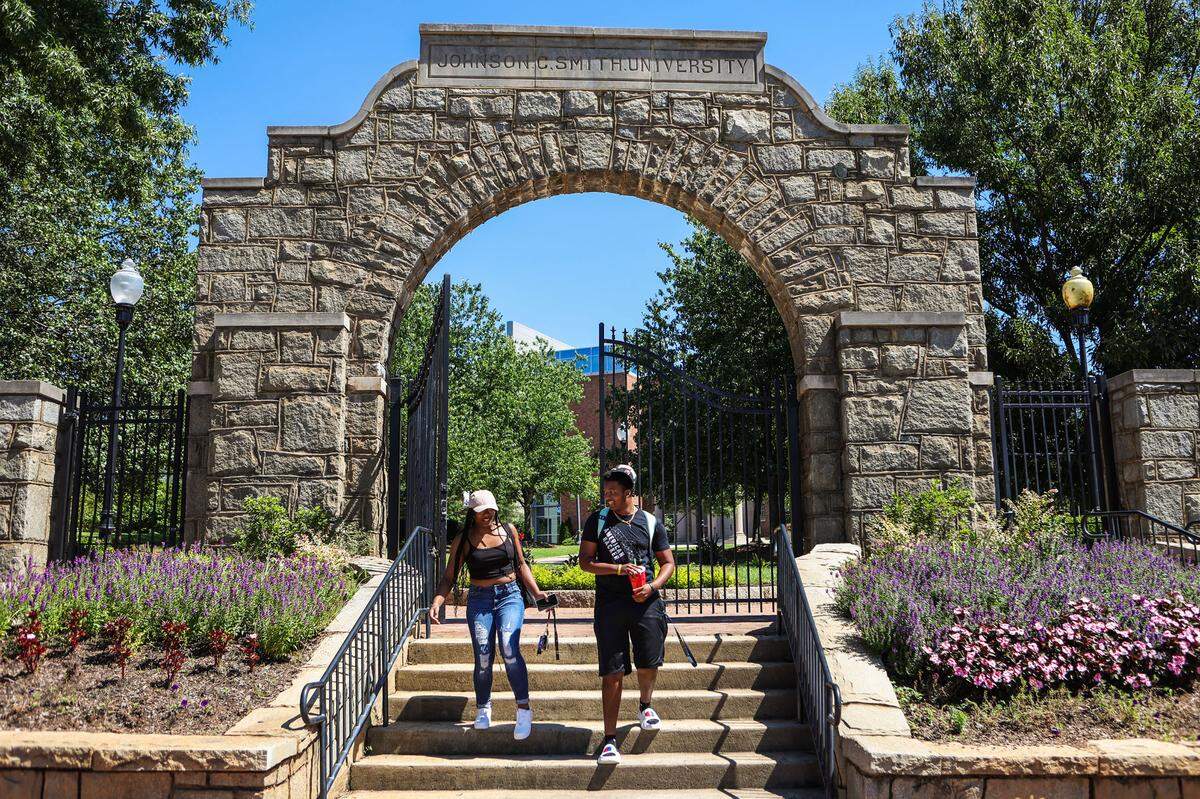
JCSU and the historic West End
JCSU sits in the West End, along Beatties Ford Road. That’s minutes from uptown Charlotte as well as some of the city’s most historic neighborhoods. And as record-breaking growth changes those West End neighborhoods, JCSU has an opportunity – and, Kinloch says, a responsibility – to advocate for long-time residents of the community it sits within.
“Development can happen around us, but if we’re an anchor institution, development has to happen in conjunction with the goals of the university and in conjunction with the desires of community residents,” she said. “It’s thinking about how this could benefit people that are living here as well as the people attending and working at Johnson C. Smith.”
It’s also a primary goal the board of trustees has for the school.
“We’d love to continue to be more engaged with the West End corridor projects and to be realized as a central part of the growth and development of the West End,” Boyd said. “Dr. Kinloch has done a lot of the groundwork to begin that process.”
Kinloch says the university hasn’t played as active a role in the West End as it should have in recent years.
“When decisions are being made, we have to be in those conversations. When development plans are happening, we have to be in those conversations,” Kinloch said. “I think we’ve been absent from most of those conversations for a long period of time.”
She said she plans to collaborate with community leaders and stakeholders in order to lead conversations between them and potential developers.
Graham shares Kinloch’s perspective.
“As the largest landowner on the Beatties Ford Road corridor, they have to flex their university muscle,” he told The Observer. “I think Johnson C. Smith needs to work with nonprofit groups and community organizations up and down the corridor to ensure that they’re a part of the change and not victims of change.”