NC middle schools struggling to recover academically after pandemic, new report shows
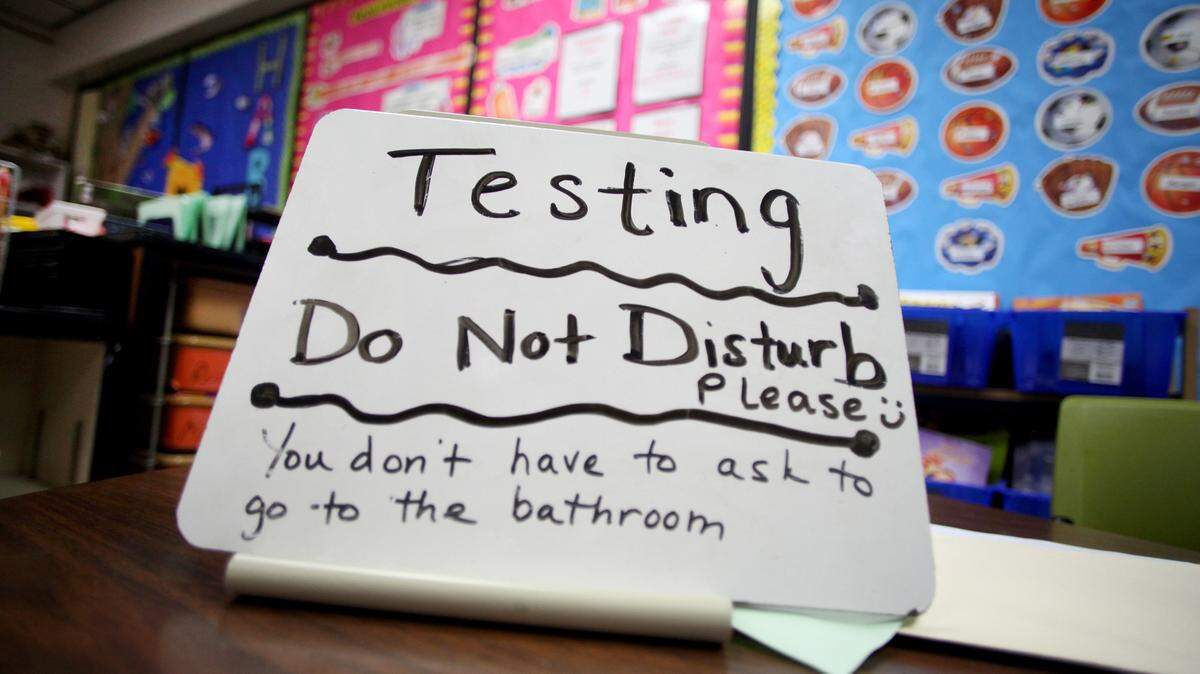
The post-pandemic academic gains being made in North Carolina’s elementary schools are largely not making their way into middle schools, according to a new state report presented Thursday.
The state Department of Public Instruction report shows post-pandemic gains in achievement trends in elementary schools in reading and math. But the results are mixed in middle schools, with the trends being negative in some grade levels.
“Something has been working since the pandemic in early grades,” said Jeni Corn, who worked on the report at DPI before becoming director of Impact Evaluation and Strategy for the UNC Collaboratory at UNC-Chapel Hill.
“The work that’s been done, whether it’s LETRS training, whether it’s the focus on foundational math skills, and that is not translating and tracking into middle schools.”
State Board of Education members and researchers said more work needs to be done to improve and support instruction in middle schools.
Measuring post-pandemic recovery in NC
Academic performance dropped sharply statewide and nationally after schools switched to online instruction during the end of the 2019-20 school year and most of the 2020-21 school year.
DPI worked with SAS Institute to quantify how far behind students have fallen and what it will take to declare that they’ve fully recovered from pandemic learning loss.
DPI compared achievement trends on state reading, math and science exams before the pandemic and since 2022.
‘Proud’ of achievement gains
The new report shows positive trends since the pandemic in reading in grades 3 and 5 and math in grades 3, 4, 5 and 6. The trend was also positive in high school for the English II and Math 1 exams.
“That is something to be very proud of as a state,” Corn told the state board. “I think we know our teachers and principals and all of our school instructional support personnel have worked so hard, and this is evidence that all of that hard work in our K-12 classrooms is really making a difference for our students.”
Much of the literacy improvement was credited Thursday to the state’s heavy financial investment in teaching elementary school teachers in the use of the “science of reading.”.
Under LETRS, which stands for “Language Essentials for Teachers of Reading and Spelling,” teachers are taught to stress phonics when teaching students how to read. All of the state’s 44,000 elementary school teachers completed the 160 hours of LETRS training by this fall.
Only 49% of third-grade students passed the state end-of-grade reading exam last year. But State Superintendent Catherine Truitt said the use of the LETRS training will cause performance to continue to rise.
“We are going to see the trends continue in the right direction,” Truitt said Thursday at her final state board meeting before her term ends. “I have no doubt about that. But it is going to take a couple of years for all students to realize the investments of time and money.”
Lingering impact of COVID-era instruction
One exception to the literacy gains was 4th-grade reading, where the achievement trend has been negative since the pandemic.
Educators attributed much of the struggles to how those 4th-grade students spent their earliest grades learning online or in classrooms with COVID restrictions.
“I remember those children learning to write on a Chromebook, learning phonics in a mask from a teacher on a mask, often through a Chromebook,” said Beckie Spears, principal of Wilkesboro Elementary School in Wilkes County and an advisor to the state board.
Spears said the impact of those COVID years hasn’t gone away for students.
Corn said the students missed learning some important foundational reading skills because of masking. She recommended continuing to track over time the performance of those students, who are in 5th grade this school year.
‘Alarming’ middle school academic trends
The largest source of concern was the performance of middle school students.
The report showed negative post-pandemic achievement trends in reading for grades 7 and 8. The report also showed concerning trends in math for grades 7 and 8.
“North Carolina has got some work to do to figure out how to better support middle school students and middle school teachers,” Corn said.
State board member J. Wendell Hall questioned whether it’s an attitude issue for why middle school students aren’t doing as well as elementary schoolers. He said the data also points to the need to have more mental health support concentrated in middle schools.
“At the middle grades level the children are not taking the learning process too heart as much as the earlier grades,” Hall said.
Ian House, a student at Green Hope High School in Cary and advisor to the state board, said it’s “alarming” that only 28% of students were proficient on the state eighth-grade math exam last school year.
“I think there’s a disconnect in the middle grades between how is this going to help me in the real world compared to elementary and high school,” House told the board. “I think for the students if they don’t feel what they’re learning they can apply in their lives, they’re not going to put in as much effort.”
This story was originally published December 5, 2024 at 1:18 PM with the headline "NC middle schools struggling to recover academically after pandemic, new report shows."