How Charlotte-area students are tackling food insecurity in their own backyard
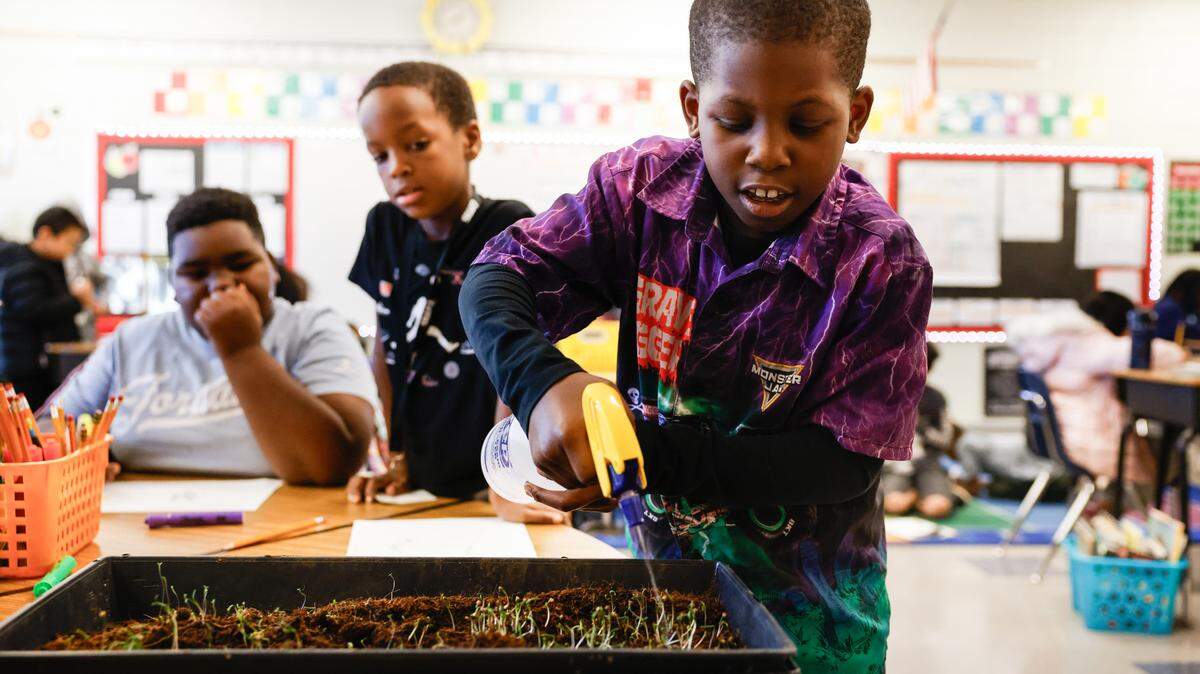
On a Thursday in early December, 30 second graders at Charles H. Parker Academic Center in west Charlotte were ecstatic about cabbage.
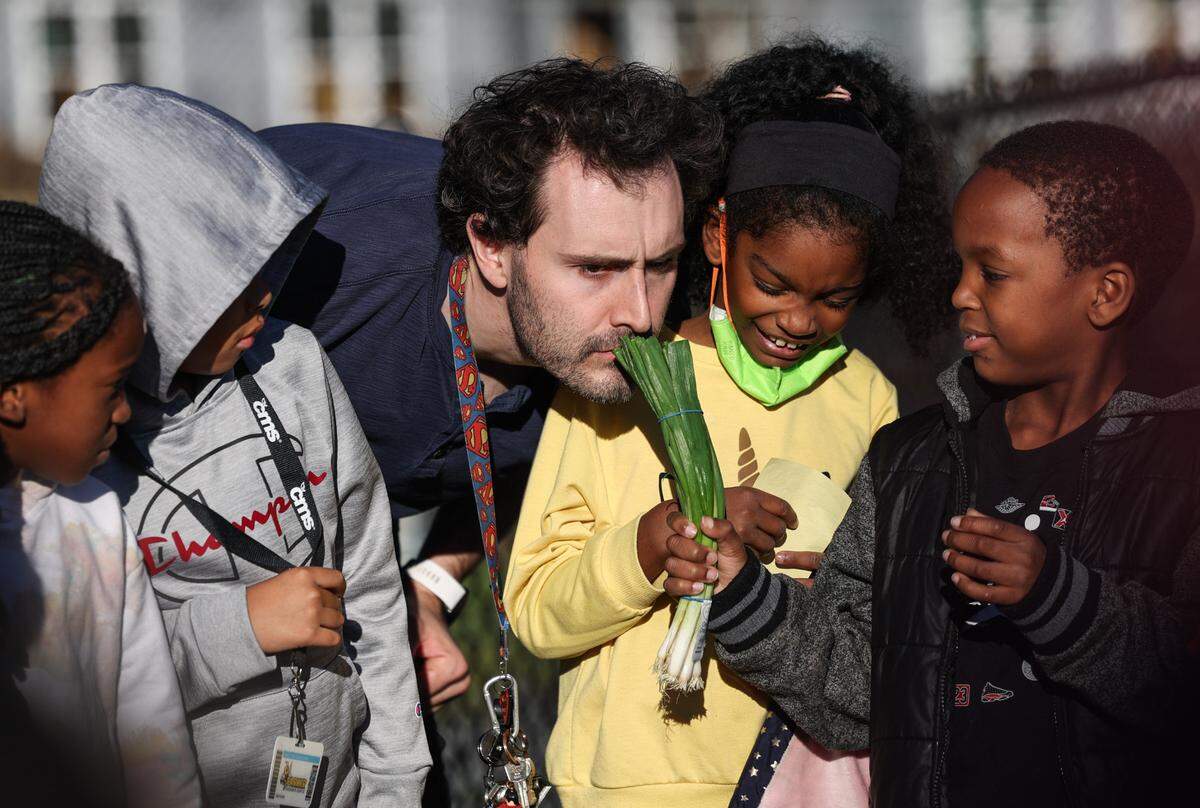
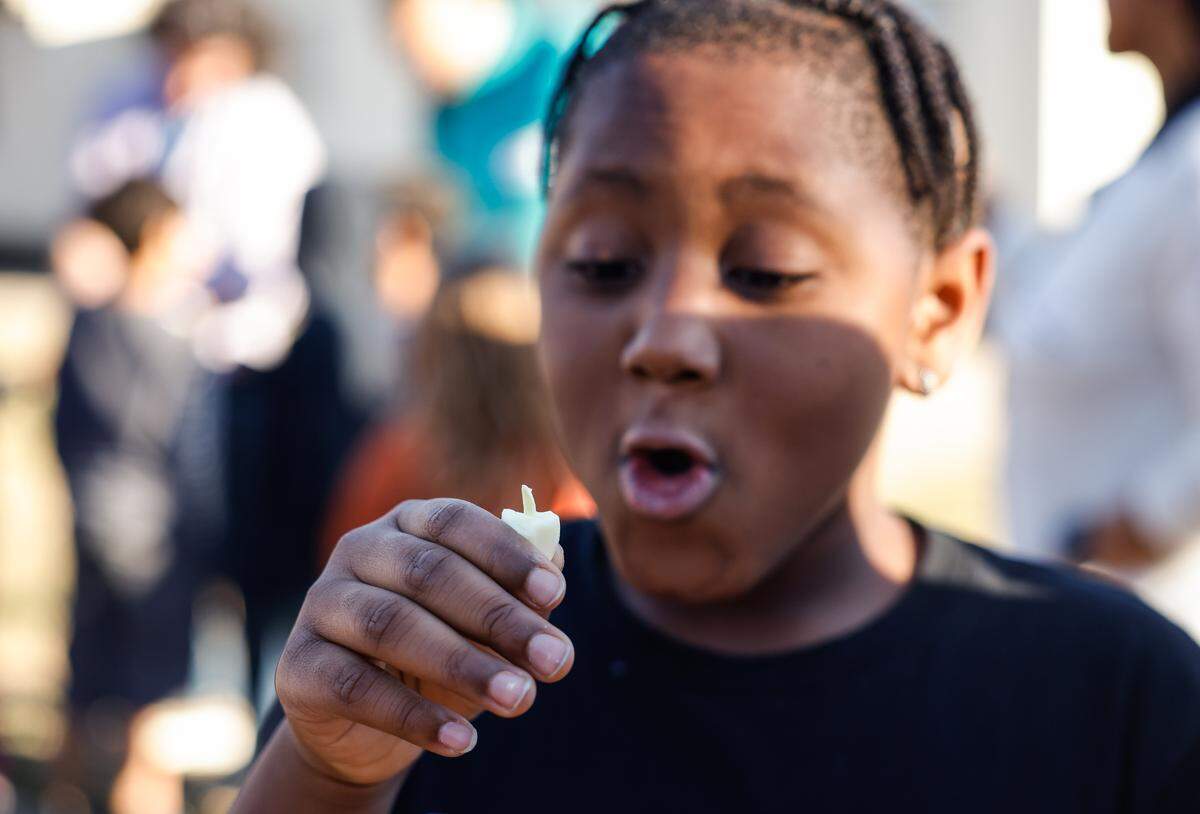
“Who can tell me what this is?” asked Rutwa Patil, holding up a leafy, purple orb. “ME!” sang the class, wiggling their hands above their heads in the crisp afternoon air.
They were standing next to four patches of soil behind the school building, where they’d planted an array of vegetables the week before: heads of garlic, bundles of green onion, cauliflower, green and red cabbage.
These kids don’t know they’re in what’s called a “food desert” — an area where residents have limited access to affordable, nutritious food, often due to a lack of nearby supermarkets and a high proportion of low-income households, according to the U.S. Department of Agriculture.
That’s why Patil, along with three other Charlotte-area students – Claire Chen, Jade Ma and Meadow Palmer, set out to teach elementary schoolers at Charles H. Parker how to grow their own produce.
Around 15% of Mecklenburg County residents live in food deserts, according to research from UNC Charlotte. That’s higher than the national average of 11% and the state average, which hovers around 13%.
That’s similar to the proportion of households in the county that struggle with food insecurity, meaning they often don’t know where their next meal might come from.
Keys to helping those in food deserts
“What we’ve often found is that people struggle with food insecurity because of a confluence of a lot of challenges with the cost of living in our region,” said Colleen Hammelman, professor and director of the Charlotte Action Research Project at UNC Charlotte.
That includes the lack of affordable housing, rising health care costs and many residents lacking the resources necessary to access supermarkets and other places where healthy foods are available.
“That can be really challenging if you don’t have access to funds, transportation or if you don’t have a reliable housing situation where you’re able to prepare that food,” she said.
There are some programs and resources already available, including Mecklenburg County Public Health’s Double Bucks Program, which doubles the value of food stamps at local farmers markets. However, Patil and her classmates wanted to address the problem from a different angle.
“Right next to our school, in the airport area, there’s a food desert, so we knew we wanted to do something to address that. But we wanted to do something different than was already out there,” said Patil, a freshman at Cox Mill High School in Concord. She and her friends started planning the project nearly three years ago, while she was still in middle school at Metrolina Regional Scholars Academy.
They discovered that, while there are programs to help food-insecure households, people often struggle to find transportation. And if the funding stops, they’re often left in the same position as before.
“We wanted to create a system where they would learn how to do stuff by themselves to get out of the cycle,” Patil said.
Started with a farmers market
The team, comprising middle and high schoolers from across the Charlotte area, started by founding a farmers market along the West Boulevard corridor, with help from county commissioner George Dunlap.
“The group initially approached me because they wanted to solve a problem that existed in Mecklenburg County,” Dunlap told The Charlotte Observer. “They brought back several ideas, including the farmers market and a cart that you could drive through the community with fruits and vegetables on it.”
The market ran for about six weeks, but it ultimately wasn’t as sustainable as they had hoped, Patil said. And it still didn’t solve the problem of transportation.
“So, they took what they learned from that and wanted to come up with a way to sustain bringing food to the community, so they came up with the vegetable gardens,” said Dunlap. “They determined that there was some extra land around the schools where they could set up the gardens.”
Meadow Palmer, a seventh grader at Metrolina Regional Scholars Academy, is another member of the team.
“We think it’s better to start with the younger kids because once we educate them, they can pass it on to their friends and families and pass that knowledge on,” Palmer said.
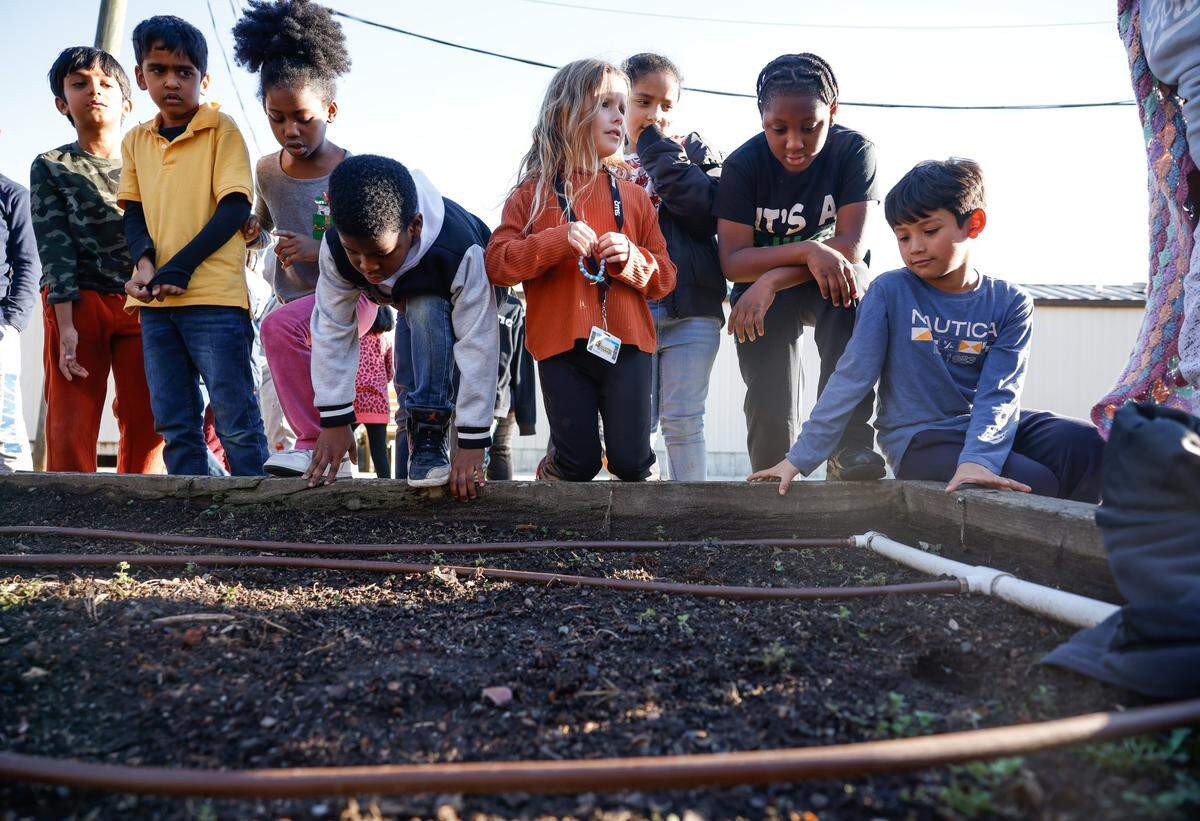
Patil, Palmer and their team meet with two classes of second graders at Charles H. Parker on Thursday afternoons to teach them about what plants to grow at different times of year and how to tend to them, with guidance from volunteers from N.C. State Extension’s Master Gardener Program.
This is the first month the group has begun meeting with students, but they plan to expand the program to third through fifth grade as well. They also want to help the kids set up starter packs to be able to grow their own microgreens at home, complete with seeds, instructions and recipe ideas.
Hammelman said they could be onto something.
“It’s a good opportunity for kids to get their hands on fresh produce, and there’s research out there that says kids who grow their own vegetables are more likely to eat that produce,” Hammelman said. “So, there’s an education piece there.”
This story was originally published December 23, 2024 at 1:00 AM.