‘Lost all of our revenue’: How Trump’s plans to shutter USAID impact Triangle business
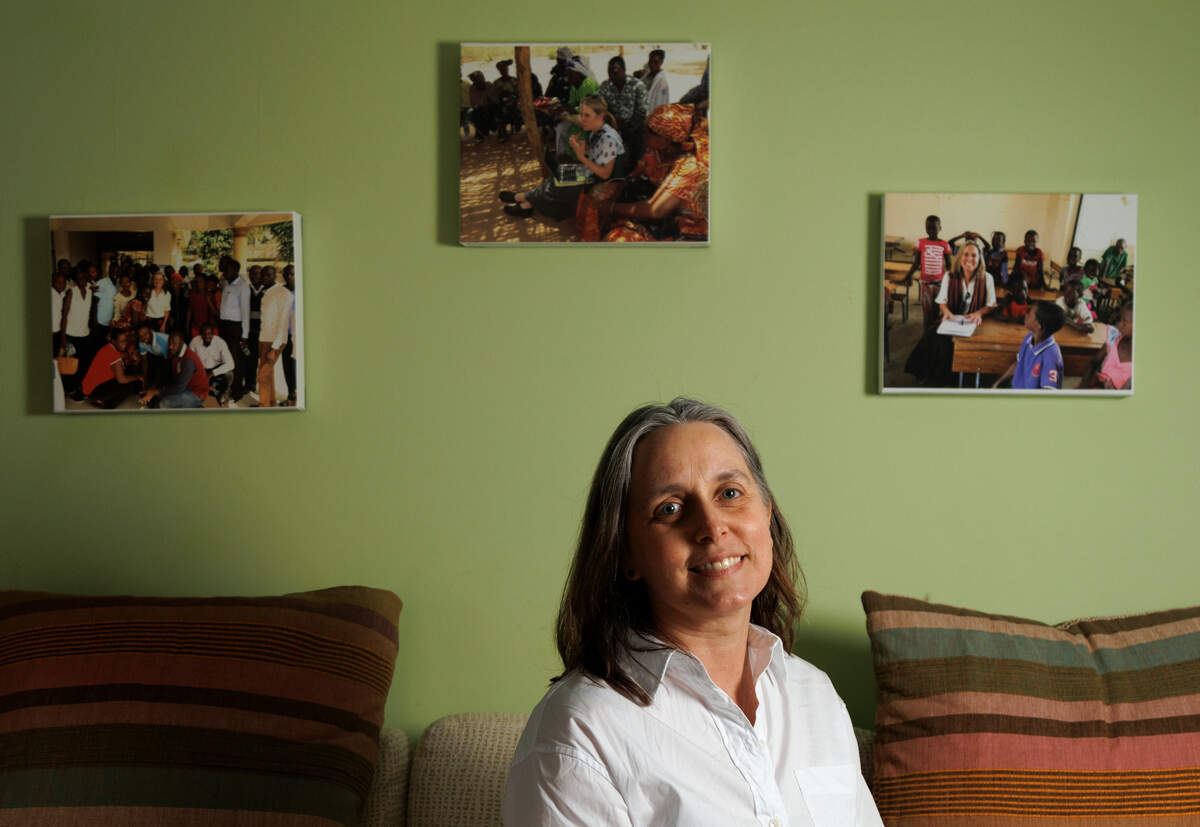
Twelve years ago, Mary Faith Mount-Cors founded her small business, EdIntersect.
The Carrboro-based company’s work has taken Mount-Cors around the world to work hand-in-hand with the ministries of education in countries like Cape Verde and Senegal to study and improve children’s reading and learning abilities, often with the support of funding from various foreign-aid providers.
She hasn’t done the work alone, employing an “incredible group of folks” over the years. Currently, the company’s small staff includes about a dozen employees who offer “very specialized skills,” including proficiency in a variety of languages.
Three weeks ago, as it was in the midst of assisting as a subcontractor on two multiyear projects in Malawi and Tajikistan, EdIntersect lost all of its revenue.
On Jan. 27, Mount-Cors received stop-work orders for the projects, which were funded by the U.S. Agency for International Development, or USAID. The projects accounted for EdIntersect’s entire portfolio at the time of the work stoppage — meaning they also accounted for all of the company’s revenue.
“Essentially, overnight, our work got stopped,” Mount-Cors told The News & Observer, “and so our revenues got stopped.”
Since taking office last month, President Donald Trump and his administration — particularly billionaire technology entrepreneur Elon Musk, who is running the Trump-created Department of Government Efficiency — have quickly worked to dismantle USAID, the independent government agency that has administered humanitarian and developmental aid to foreign countries for more than 60 years. Multiple lawsuits, including at least two filed by dozens of state attorneys general, claim that DOGE and the powers that Trump granted Musk in leading the agency are unconstitutional.
A 90-day review of foreign assistance, ordered by Trump on his first day in office, remains ongoing, forcing contractors and subcontractors with projects funded by USAID to halt their work during that period. The long-term future of the organization could be in further jeopardy as Secretary of State Marco Rubio and Musk have signaled that the agency may be abolished, or at least significantly reorganized.
Foreign aid accounts for roughly 1% of the federal budget.
The freeze on foreign aid is already having direct impacts on North Carolina and the Triangle, which is home to major research nonprofits and universities that receive millions of dollars in funding from USAID each year.
Durham-based FHI 360, which received more than $3.7 billion in foreign assistance between 2013 and 2022, announced Feb. 6 that it would furlough 36% of its U.S. staff, including 200 workers in North Carolina. Research Triangle Park’s RTI International, which received $2.3 billion over the same period, announced Thursday it would temporarily lay off 61 of its North Carolina employees.
Elizabeth Smithwick, a former USAID employee from Chapel Hill who resigned last month as she had long planned to do, said the impact of shuttering USAID would be “huge” for large companies like RTI and FHI.
But “they’re not the only ones,” Smithwick said.
Already, EdIntersect has not received payment for the work its staff completed in December and January, making for two months of lost revenue so far. As the freeze stretches on and the future of USAID remains unclear, Mount-Cors is now faced with the possibility of dissolving her business.
“If I’ve lost all of our revenue,” Mount-Cors said, “there’s not much to retain.”
Review of foreign assistance welcome
In the 12 years since Mount-Cors founded EdIntersect, the company has worked on numerous international projects, generally focused on improving students’ reading and learning skills and the tools that governments’ education agencies use to assess them. For instance, in a project conducted between 2021 and 2022, the ministry of education in Cape Verde contracted EdIntersect to create a Portuguese reading assessment test for students, accompanied by questionnaires on school management and teaching that were administered to principals and teachers.
While the organization has completed projects with funding from a variety of sources, including private foundations and the World Bank, “the bulk, our bread and butter, is USAID-funded work,” Mount-Cors said.
EdIntersect generally works as a subcontractor on larger teams to do its foreign assistance work, contributing a small “scope” of major, multiyear projects led by a “prime” contractor.
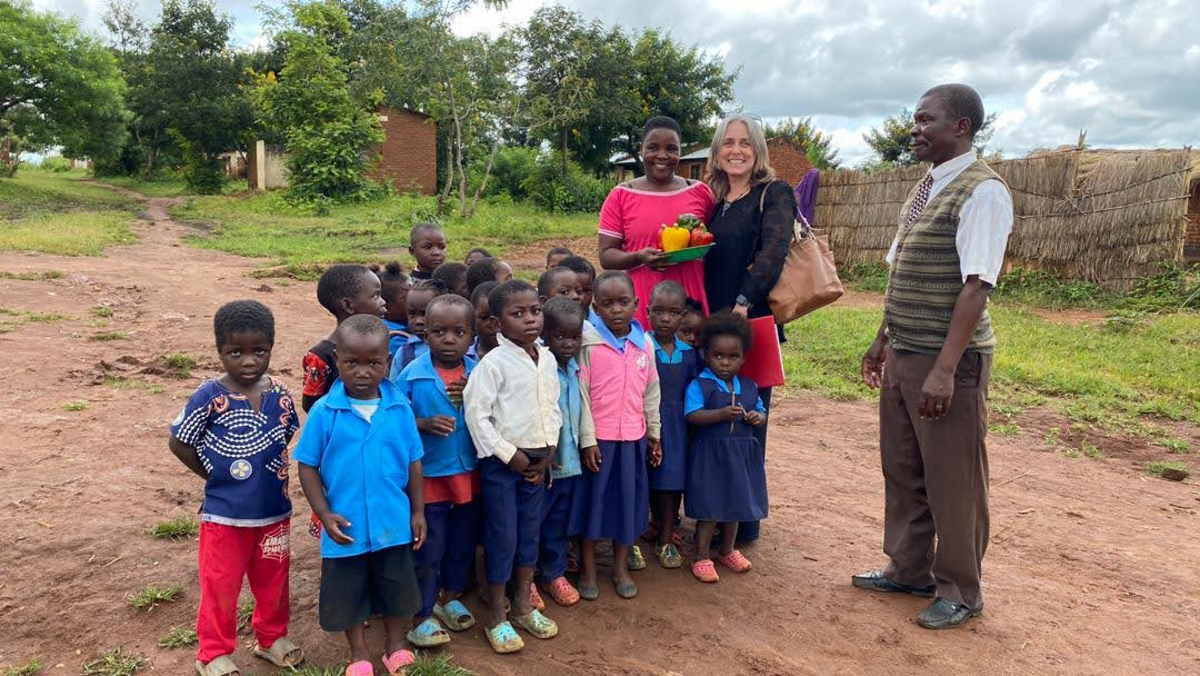
Its paused Malawi- and Tajikistan-based work, for example, was led by Chemonics International, a Washington-based development organization that is one of the top recipients of U.S. foreign aid, according to the Congressional Research Service.
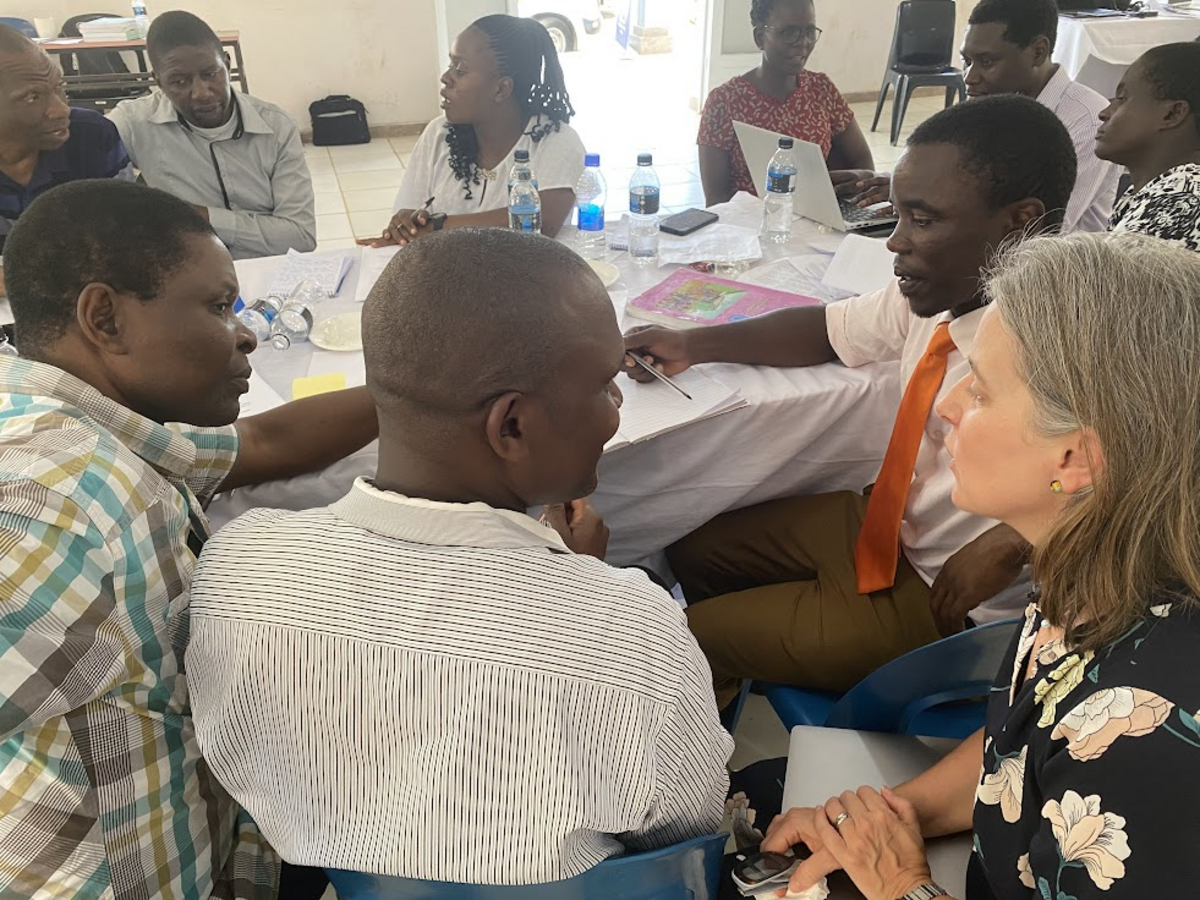
In Malawi, as part of Chemonics’ larger consortium, EdIntersect was tasked with working with the Malawian education ministry to develop data-collection tools that would allow officials to understand the challenges children face in learning to read. In Tajikistan, the company was implementing benchmark reading and math assessments for students and analyzing the results, among other tasks.
Once subcontractors, like EdIntersect, complete work they are contracted to do, they invoice their prime contractors for payment — a process that has been paused under the aid freeze, with payments to contractors currently halted.
Mount-Cors said she has always tried to be “conservative” with the scope EdIntersect seeks to provide on projects, being conscious to use the minimum amount of staff and resources needed to perform its work — never trying to “grow for the sake of growing.”
“We kind of punch above our weight as a small business, because the value that we give, for the small amount of the total project budget that we get, is pretty huge,” Mount-Cors said.
Mount-Cors carries that perspective to the ongoing discussions of reviewing foreign aid, saying that she welcomes a good-faith review of how money is used and spent on the efforts. But so far under Trump’s order, she said, the review process, including how the work and spending will be assessed, largely remains unclear to many subcontractors.
“How do you make a case when you don’t have a review process that is clear or occurring?” Mount-Cors said.
Smithwick, the long-term USAID employee from Chapel Hill, echoed Mount-Cors’ sentiments.
“I think that any bureaucratic organization — virtually any organization — can always benefit from review, from a degree of tightening and reducing waste,” Smithwick said.
But the rapid changes at USAID since Trump took office, including plans to lay off the bulk of the agency’s employees and possibly shut down the agency, have been “cruel,” Smithwick said.
“It has, and will continue to, result in cascading dominoes of effects,” Smithwick said.
Potential consequences of cuts
Those effects are already being felt by Mount-Cors’ business.
“We can’t pay anybody anymore,” she said. “We have no paying work anymore.”
Given the “pretty sizable international development community in North Carolina” — from the large nonprofits it powers, to the universities whose faculty often lead projects, to small businesses who assist in the efforts — Mount-Cors worries about the future of the sector in the state. She predicted that unemployment claims in the state could skyrocket, with layoffs at major companies already beginning and subcontractors like EdIntersect unable to provide reliable income to their employees.
Beyond the immediate impacts of the cuts to USAID, though, both Mount-Cors and Smithwick also have concerns about the global ramifications of the changes.
The genesis of USAID in 1961 was explicitly tied to countering the influence of the Soviet Union during the Cold War and advancing the “soft power” of the United States. By providing humanitarian aid to vulnerable populations abroad, Smithwick explained, “it is usually the case that a much more positive view of the United States is fostered.”
“They see the United States as helping them in a difficult situation, which in turn leads them to turn slightly more towards the U.S. aid than some of the other choices that they have,” Smithwick, whose experience with USAID included on-the-ground work in Afghanistan, said.
If USAID’s efforts stop or are scaled back beyond the 90-day spending freeze, experts and longtime aid workers fear that the lack of help from the U.S. could create a void that counties like Russia or China might fill — potentially impacting foreign relations on a global scale.
Mount-Cors worries that the trust countries previously had in the U.S. is “just decimated,” with numerous examples cropping up of needed medicines, vaccines and other resources that were set to be delivered overseas now sitting idle or stalled in the supply chains.
As the freeze on aid continues, Mount-Cors is working to advocate for the importance of the efforts with North Carolina’s congressional delegation, including by meeting with staff for Sens. Thom Tillis and Ted Budd. Part of her message to elected officials, she said, is that “America First” — one of Trump’s key phrases to describe his foreign-policy agenda — “doesn’t mean America retreats.”
“The absence of the U.S. means we cede all of that soft power to other global powers,” Mount-Cors said, “and it has real, real ramifications for our national security.”
This story was originally published February 18, 2025 at 5:00 AM with the headline "‘Lost all of our revenue’: How Trump’s plans to shutter USAID impact Triangle business."