Why a former Charlotte Democrat joined Trump for an executive order signing
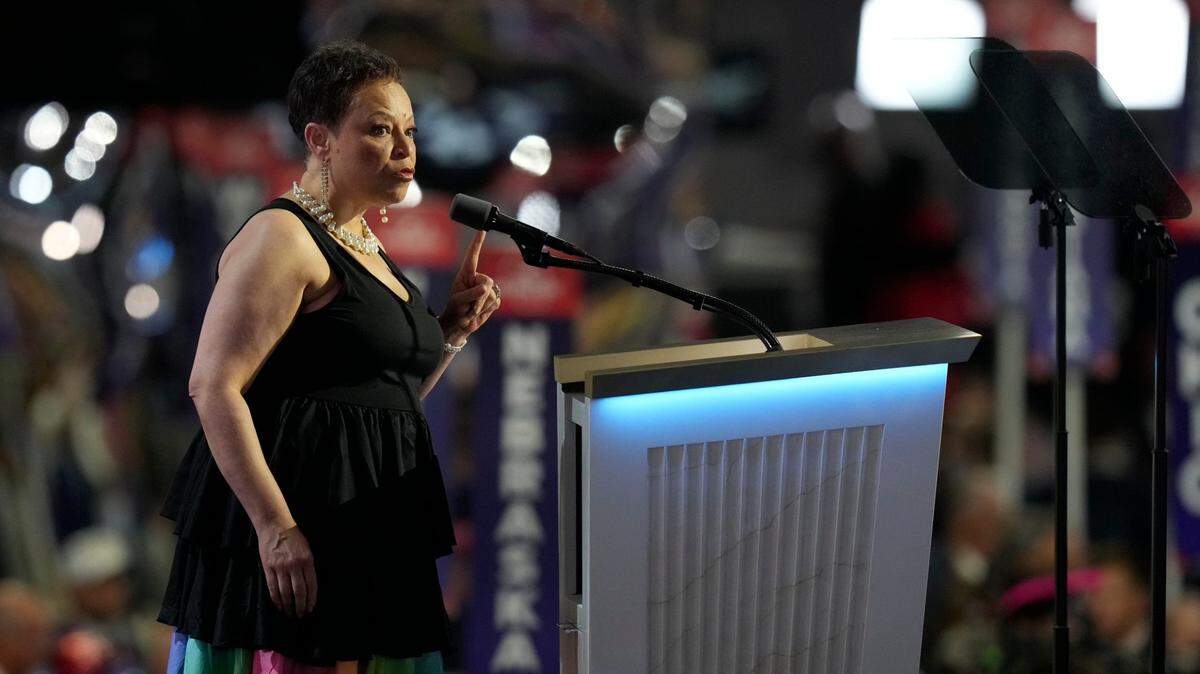
President Donald Trump signed a series of education-related executive orders Wednesday, and a former Democrat and Charlotte-Mecklenburg Schools board candidate was there to watch him do it.
Annette Albright unsuccessfully ran for CMS school board three times on a platform of promoting school safety and discipline, after she was attacked by students at Harding University High in west Charlotte in 2016.
The Trump administration invited her to the White House to view the president sign executive orders that aim to promote stricter school discipline and discourage schools from evaluating whether discipline practices disproportionately impact students of color.
“The thing I really embrace about this executive order is that we have to base suspension rates on behaviors, period,” Albright said. “We have to look at behaviors, see if they align with policies and hand out consequences based on behaviors, not based on a child’s race.”
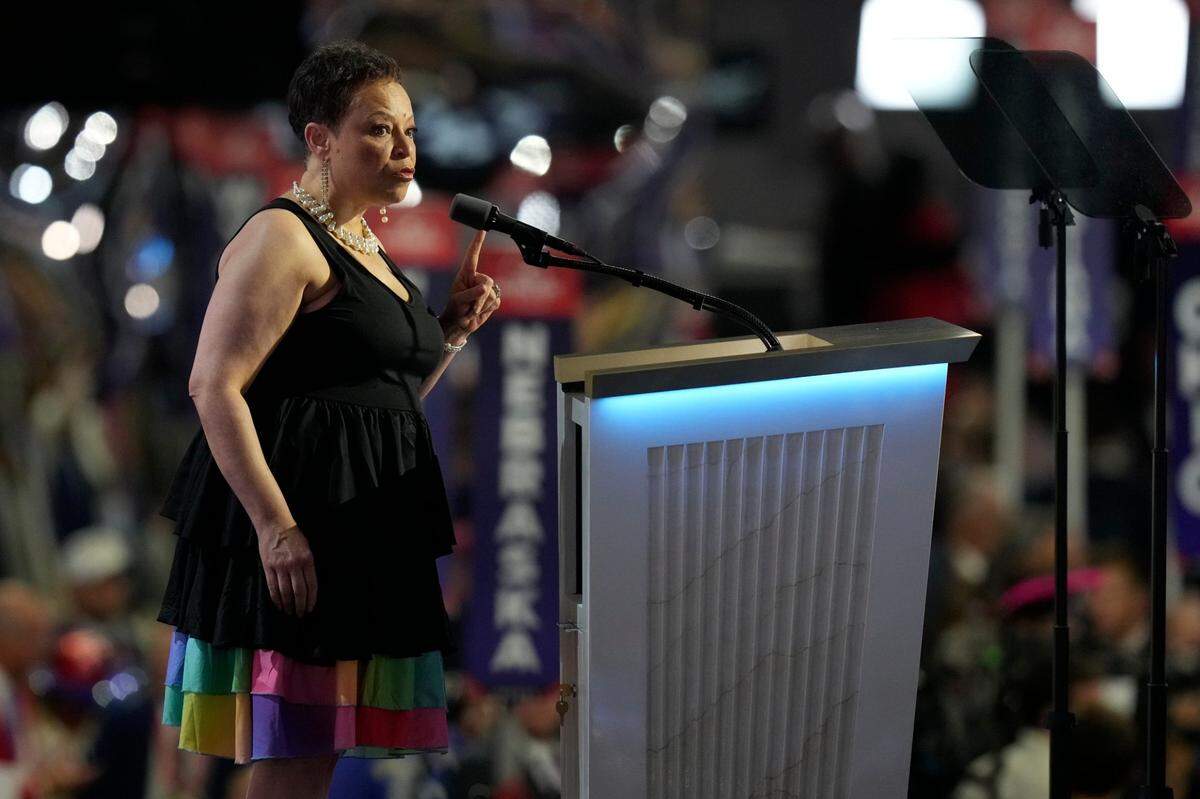
Albright spoke at the Republican National Convention in Milwaukee, Wisconsin, in July where she discussed her experience working in public schools in North Carolina.
Previously a Democrat, Albright came under scrutiny during her most recent school board run in 2023. The race was non-partisan, and she was registered as unaffiliated.
However, Carolina Forward, a progressive policy organization, alleged on social media that three school board candidates, including Albright, were secretly affiliated with Mecklenburg Republicans and Moms for Liberty. The candidates’ campaigns shared a P.O. box and treasurer with some Republican candidates and conservative political action committees.
The Mecklenburg County Democratic Party accused the “Trojan horse candidates” of trying to trick voters, comparing them to State Rep. Tricia Cotham, who switched from Democrat to Republican a few months after being elected in 2023.
Albright had switched her party affiliation from Democrat to unaffiliated in 2017. She told The Charlotte Observer she intends to switch her political affiliation to Republican soon.
“Registering as Republican is something I’m absolutely going to do. I just haven’t gone through the motions,” she said. “I do feel that I’m more conservative and that my values fall more in line with the Republican Party.”
Albright also said she’s now working with officials within the federal Department of Education to reform school discipline practices.
“I’m working one-on-one with personnel within the Department of Education and sharing my experience as well as my ideas,” she said. “You can’t teach in unsafe academic environments, and children can’t learn.”
The executive orders
The executive orders target civil rights guidance from former President Barack Obama’s administration. Some school leaders and conservative education advocates claim it has worsened school safety and encouraged administrators to sweep bad behavior under the rug.
Trump revoked the guidance during his first administration, and Biden never officially restored it.
“Under the Biden-Harris Administration, schools were forced to consider equity and inclusion when imposing discipline,” Education Secretary Linda McMahon said in a statement. “Their policies placed racial equity quotas over student safety — encouraging schools to turn a blind eye to poor or violent behavior in the name of inclusion.”
One executive order bans the use of “disparate impact analysis” in civil rights enforcement. Another threatens consequences for schools that use “racial discrimination and preferencing” in school discipline practices.
Disparate impact analysis is the practice of considering whether policies that are race-neutral on the surface have different impacts on different racial and ethnic groups.
For example, data show Black students are four times more likely than their white peers to be suspended from school. As a result, the Education Department under Obama warned schools that policies that led to students of certain racial groups being suspended or expelled at much higher rates could be discriminatory.
“There are, I’m sure, some biases, and racism will always exist,” Albright said. “But, we have to make sure that school disciplinary policies are written and followed not based on the race or sex of a child but based on the behaviors.”
Some education and civil rights organizations have been critical of the orders.
“This executive order instructs the government to stop enforcing key civil rights protections — in the workplace, at schools, and in all aspects of our society — and to rewrite regulations that have protected the rights of all people for decades,” Fatima Goss Graves, president of the National Women’s Law Center, wrote in a news release Tuesday. “This order is part of Donald Trump’s ongoing efforts to dismantle our freedoms and roll back our rights.
Federal data from the 2021-22 school year, the most recent national data available, show students report fewer assaults and less harassment than they did a decade ago. However, school shootings have increased, and two-thirds of schools reported at least one violent incident on campus that year.
Reports of student misconduct increased around the country after the COVID pandemic, but data show violence and crime rates in North Carolina public schools decreased by 7.7% between the 2022-23 and 2023-24 school years. Meanwhile, suspensions and incidents of assault on school personnel increased in NC schools.
Other executive orders Trump signed Wednesday encourage schools to train students in using artificial intelligence, expand apprenticeships, promote historically Black colleges and universities and reform the university accreditation process.
What Albright had to say
Albright said the executive orders are meant to return “common-sense policies” to school discipline.
“A huge part of this executive order is that we can no longer apply student discipline based on race. We have to do it on behaviors,” she said. “We can’t focus on the race because that’s not fixing anything or moving us toward any solutions.”
She claimed, for example, Black students being suspended at higher rates than white students is not primarily a result of bias or discriminatory school practices. Instead, she pointed to factors like trauma and poverty.
“The problem is not necessarily that the schools are being biased against Black children… All the implicit bias stuff isn’t working because that isn’t the root of the problem,” she asserted. “Black students need more resources, more counselors, more therapy.”
Data from the National Institutes of Health show that Black children are disproportionately more likely than their white peers to experience adverse childhood events, such as the death of a parent, a parent serving time in jail, poverty and witnessing violence. However, multiple studies demonstrate Black children are not more likely to misbehave than white children.
Albright said she does not believe her stance that schools need different resources based on demographics contradicts that of the Trump administration, which has cracked down heavily on diversity, equity and inclusion initiatives.
“What I’m hearing is that we have to get those behaviors under control, and we have to be very open, honest and transparent about where those behaviors are coming from,” she said.
This story was originally published April 26, 2025 at 8:00 AM.