CMS presents $2.1B budget to county. What teachers and parents should know
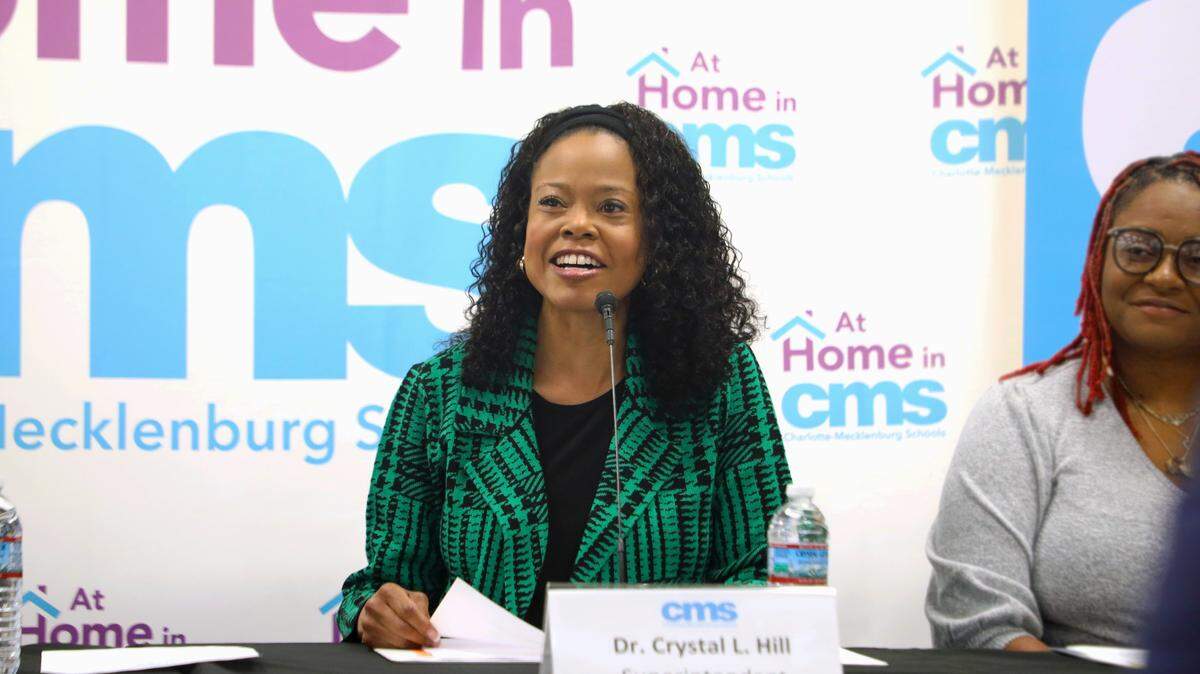
Charlotte-Mecklenburg Schools and Mecklenburg County commissioners have clashed over budget proposals before. This time, they agreed the state isn’t pulling its weight.
CMS leadership presented its $2.1 billion budget proposal to Mecklenburg County commissioners Wednesday afternoon. In years past, the school district’s funding request has provoked heated conversations about how much the county should fund. This year’s discussions, though, have been relatively smooth.
County leaders indicated this would be a tight year for the budget at a joint meeting with CMS board members in January. At that time, the county projected around $49 million in revenue growth to fund new items without a tax increase.
CMS Superintendent Crystal Hill told county commissioners Wednesday she was aware of the county’s limitations when crafting the district’s conservative budget proposal — despite calls from some educators and board members to ask for more.
“Our request is based on what we listened to keenly in the joint meeting,” Hill said Wednesday about the January meeting. “We did not want to ask for more than this board indicated you had the ability to do.”
Around 93% of the district’s local funding request is attached to salaries, which Hill said is necessary to ensure competitive compensation for educators.
The state of North Carolina pays every teacher in the state according to the same salary schedule. Beginning teachers in NC made a base salary of $41,000 this year. Counties can provide an additional supplement to help attract and retain teachers in their area. And for all but four districts, the state provides additional funding for those supplements. CMS is one of the four due to its large tax base.
But local leaders said Wednesday legislation currently in the General Assembly could make CMS one of just two to not receive extra state funding for teacher pay. The other would be Wake County.
“If we are serious about this in Mecklenburg County, we need to think about what we are already doing as residents of North Carolina, which is paying state taxes that should go toward every teacher in the state, including those who live here in Mecklenburg County,” Hill said.
North Carolina currently ranks 48th in the nation for school funding, according to the Education Law Center. Despite a growing economy and tax base, the state currently spends almost $5,000 less per student than the national average and trails behind neighboring states South Carolina and Virginia.
The state ranks 43rd in the nation for teacher pay and is projected to drop to 44th this year.
Commissioner Elaine Powell questioned whether there are other ways to get the message across to the state that CMS needs the supplement, too, due to the high cost of living.
“It’s like shouting into a hurricane when you’re talking to the General Assembly,” she said. “It’s made up of rural counties that might not understand. When they look at our tax base, they think, ‘Mecklenburg can cover it.’”
County Commission Chair Mark Jerrell agreed the county would need to step in where the state is unlikely to.
“It’s clear we have a limited number of friends outside of this bubble called Mecklenburg County,” he said. “Until the tides change, I think we are going to continue to have to find creative ways to reach our goals.”
What’s in the budget
Hill’s $2.1 billion budget proposal for 2025-26 includes operating costs of over $1.95 billion, an increase of less than 1% over this year’s current operating budget.
It calls for $28.3 million more from Mecklenburg County, $26 million of which will go to salary increases. If the county chooses to fully fund Hill’s latest budget recommendation, it would bring the total county appropriation to approximately $668 million.
The district projects a student population of about 141,700 next school year.
The CMS proposal includes an average 5% supplement increase for teachers funded by the county. That’s on top of an assumed 3% pay increase from the state.
The proposed 5% increase from the county would cost a total of around $8 million.
“This budget is strategic, responsible and focused on maintaining services while investing in staff, students and technology,” the CMS Board of Education said in an open letter accompanying the budget April 22. “We have reduced or eliminated funding for programs and expenses that have less direct impact on student outcomes or district goals to free up resources for initiatives with stronger alignment and measurable results.”
Aside from operating costs, the budget request also includes a $32 million ask for facilities improvements to school safety, security, roofing and HVAC systems.
Impact of federal cuts
It’s not just Mecklenburg County: all of CMS’ primary funding sources are expected to be tighter this year.
CMS expects $117.3 million in federal funding in fiscal year 2025-26, according to CMS’ budget proposal, down 27.8% from this year. Most of that reduction is a result of the expiration of COVID relief funding.
President Donald Trump’s administration also has called for nearly $6 billion in cuts to K-12 public education funding in its proposed budget for the 2026 fiscal year. That includes cuts to Title II and Title III funds, both of which affect CMS.
Title II funds go toward teacher training and Title III funds go toward services for multilingual learners.
For Title III, the district is currently allotted $3.3 million, which goes toward 208 positions serving over 32,000 multilingual students. That’s over 20% of the district’s student population.
A large portion of the district’s federal funding comes from Title I grant funds. This year, 105 of the district’s total 186 schools are Title I. During the 2025-26 school year, that number is expected to drop to 103 schools.
In the proposed 2025-26 budget, Hill only allocated 65% of the district’s expected $49.5 million in Title I funds, with the federal Department of Education in flux.
County commissioners are expected to vote on the request in June.
This story was originally published May 7, 2025 at 6:39 PM.