NC Board of Education chairman names ‘biggest issue’ facing state’s public schools
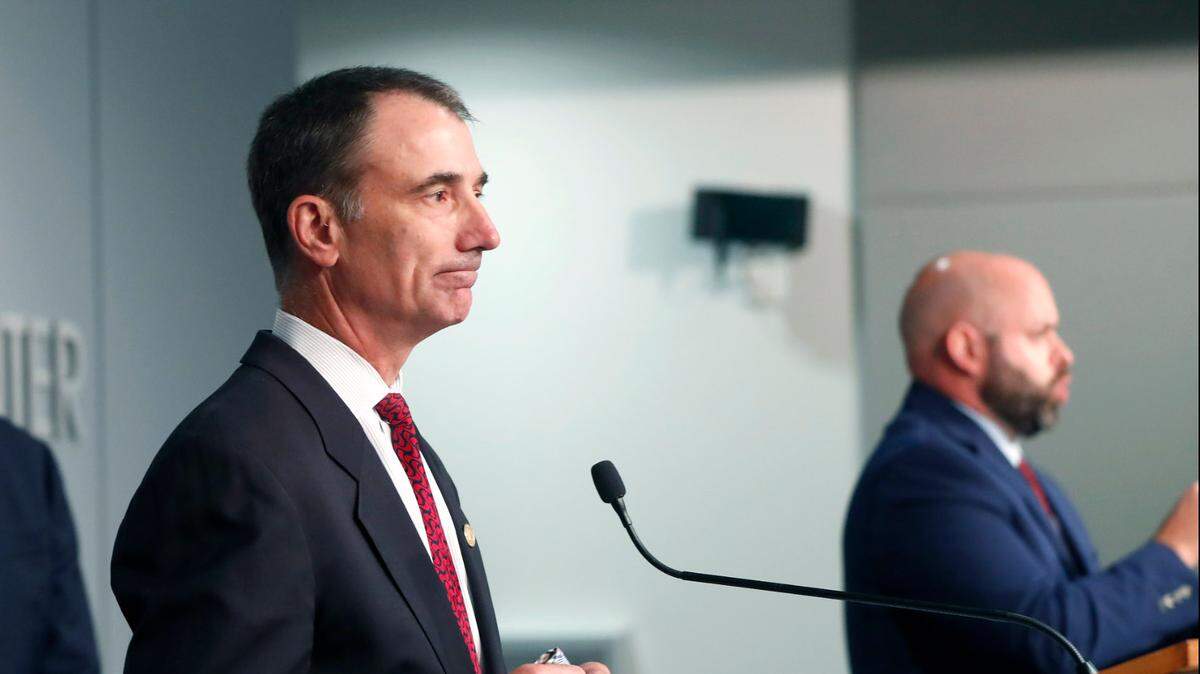
Eric Davis says it’s a myth that public schools are broken. In fact, he said, that mindset is their largest challenge.
The Hood-Hargett Breakfast Club, which holds monthly meetups for Charlotte professionals and business leaders, hosted Davis, chair of the North Carolina Board of Education, as the speaker for this month’s meal on Tuesday. He led a discussion alongside former Charlotte-Mecklenburg Schools Superintendent Peter Gorman.
Gorman and Davis both said there are good things happening in the state’s public schools, which educate about 85% of North Carolina children. Davis said the “good” includes North Carolina’s early literacy program. But, Davis said problems persist with teacher retention, school funding and rhetoric he says undermines the importance of public education and the work of educators.
“It’s the overall climate that we’ve created by bashing our public schools and blaming our teachers for indoctrination. That’s the biggest issue we face,” Davis told the club. “Our schools reflect each and every one of us. I don’t think they’re broken. I think we can make some improvements like more teachers staying with us, better teacher pay, better facilities. But, mostly respecting and revering those who choose as their life calling to educate our children.”
Davis and other board members have previously argued the state legislature does not adequately fund North Carolina public schools but spends hundreds of millions of dollars on private school tuition in the form of school vouchers. After expansion of the program to families of all income levels last year, the state now subsidizes tuition for the majority of private school students in the state, according to an analysis of the latest data from the North Carolina Educational Assistance Authority and the NC Department of Administration.
Proponents of voucher expansion, however, say the move allows families greater choice in their children’s education.
“Families are seeing their tax dollars follow their child to the school of their choice,” Mike Long, president of Parents for Educational Freedom in North Carolina, told The News and Observer last week. “This helps with paying the balances on tuition costs that so many families struggle to pay.”
The State Board of Education and NC General Assembly have not seen eye-to-eye on the issue in recent years — to put it mildly.
“For the past decade, we’ve had a difficult relationship with the General Assembly,” Davis said. “Somewhere along the line, somebody decided that it’s good for our state to discredit and attack our public school system and to not pay our teachers a competitive wage and to send millions of dollars to private schools.”
Davis has been on the state board for 10 years after being appointed by former Republican Gov. Pat McCrory in 2015 and reappointed by former Democratic Gov. Roy Cooper. He previously served on the Charlotte-Mecklenburg Schools Board of Education.
Federal funding problems
Davis said the recent federal funding uncertainties — including $165 million that was frozen for N.C. schools and later restored last month — have exacerbated funding concerns for districts around the state.
“I’m pretty confident that there were enough senators and Republicans in Congress that sent the message over to the White House, ‘You need to turn those funds loose,’ so they did,” Davis said. “But, in the process, they created uncertainty and confusion.”
If the funds weren’t released, Davis said it would put 400 teaching jobs and 89 positions at the NC Department of Public Instruction at risk of being cut. Charlotte-Mecklenburg Schools stood to lose $12.5 million.
“For our students to get the education they need, we need to provide our educators certainty, safety and confidence so that they are not worrying about how they’re going to pay their next bill so they can stand in front of our children and provide them the education they need,” Davis said. “That’s one of the challenges with the current situation in Washington is that’s adding to the financial strain that we already feel in North Carolina.”
Gorman noted that it’s not yet clear how the state would disburse federal funds if the Department of Education is eliminated – or who would be responsible for those decisions.
“Does it come directly to the state? Does the state board or state superintendent decide? Does the state legislature engage them and do they do things with that money? Do they trade off for dollars that come in and pull other dollars away?” Gorman asked. “There’s a great deal of uncertainty right now. So, what we’re seeing across the nation is school districts are saying we’re going to hold back on some expenditures because we don’t know what is coming.”
In the 2025-26 budget, CMS Superintendent Crystal Hill only allocated 65% of the district’s expected Title I funding, in anticipation of cuts or delays with a federal Department of Education in flux.
Meanwhile, North Carolina lags behind other states in the Southeast, and most of the country, when it comes to teacher pay and per-student funding. The state ranks 43rd in the nation for average teacher pay, according to the latest data from the National Education Association.
The state board listed raising teacher salaries “so North Carolina leads the Southeast in educator compensation,” as a goal in its latest five-year strategic plan approved last week. That will, however, require action from the General Assembly, which holds the purse strings.
The new strategic plan also lists raising the four-year high school graduation rate, ACT scores, participation in advanced placement exams and career and technical education courses and the overall enrollment in public schools as markers the state board will use to assess performance in the coming years.