CMS principals reveal not-so-secret methods to ‘historic’ growth in new NC data
When Latresha Wilson started as principal at Tuckaseegee Elementary School in 2023, it had a D performance grade and was on the state’s low-performing list.
Two years later, the school received a B rating and had a growth index of 10.26, according to new state data. For reference, a growth index of 2 is considered going above and beyond state targets.
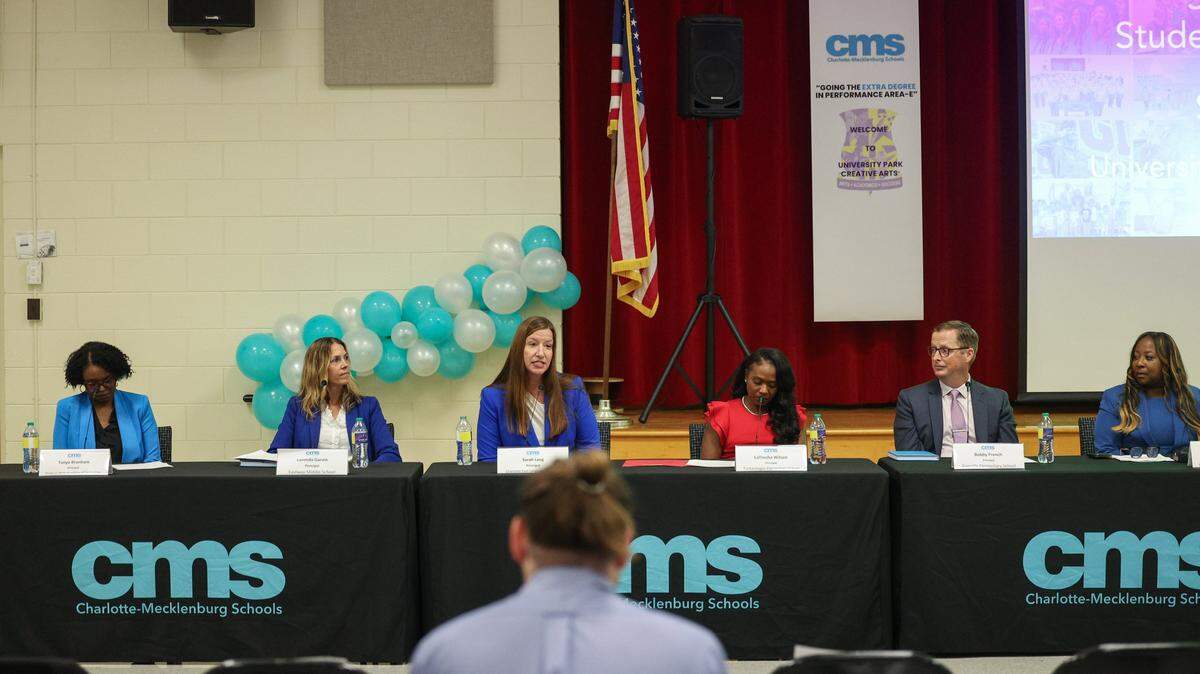
Wilson is one of many CMS principals celebrating academic gains this week after the North Carolina Department of Public Instruction released its latest school performance grades. Wilson, along with five other CMS principals, addressed reporters at a news conference Wednesday.
“My career began at Tuckaseegee, where I started as a teacher, the same neighborhood I grew up in, where my parents still reside and where I attend church,” Wilson said. “I’m not just educating any child; I’m educating my neighbor’s children, and I’m giving back to the community that raised and believed in me.”
Charlotte-Mecklenburg Schools officials called this year’s progress nothing short of “historic,” with the district outperforming state averages and reducing the number of schools on the state’s low-performing list by 43% in one year.
Fifty-five of 186 campuses saw their letter grades improve, while 115 schools exceeded their growth targets for the year, placing CMS 10th out of 115 total North Carolina School districts for student performance growth.
Principals said the key to improving schools lies in a few strategies: following the data, developing teachers and believing whole-heartedly that every kid can succeed.
Data-driven instruction
At each school, teachers have access to data for each student and assessment, which they monitor throughout the week. The hope is that, by monitoring each child’s performance, they can cater to their needs and catch problems before they get bigger.
“They’re tracking kid by kid,” Wilson said. “We’re looking at those trends and we’re looking at subgroups to make sure that we’re giving them what we need.”
Part of that entails giving educators extra time to review data, making specialized plans and trading ideas with other teachers, said Bobby French, principal of Pineville Elementary School. His campus improved from a C to a B last school year and has surpassed its growth targets for three years in a row. It’s also home to what may be the most fearsome mascot in the district: the Pineville Smilers.
“Our school is centered on meeting the needs of all students through the use of data, rigorous instruction and collaboration of teachers and community,” French said. “Pineville has a strong collaborative professional culture. Educators learn from one another.”
That includes peer observation and a coach for each teacher. Experienced educators called “multi-classroom leaders” lead a small team of teachers through data monitoring, goal setting and lesson planning. Small groups of educators also regularly meet in what schools call “Professional Learning Communities” to discuss the needs of individual students and student groups.
“The number one way to keep teachers in schools is to value their work,” French said. “And professional development opportunities and support are part of how we do that.”
Many schools in CMS, including Pineville Elementary, also have “advanced teaching roles,” through the district’s Teacher-Leader Pathway. It allows schools to reallocate resources to develop teachers at high-need schools. Teachers there receive additional professional development opportunities and up to $18,250 more than their regular salary.
The programs weren’t new last school year, but in 2023-24, CMS didn’t see the same number of schools come off the low-performing list that it did in the 2024-25 school year. In fact, while 19 schools got off the low-performing list in 2023-24, 17 more were added. CMS Chief Strategy and Innovation Officer Beth Thompson said leadership learned they couldn’t just focus on a small set of schools.
“We learned that if we focus all our support only on the schools with the low-performing designation, we run the risk of neglecting the ones who needed the support that would cause other schools to receive that designation,” Thompson said Wednesday. “So, we said, ‘In 2024-25, we’ve got to monitor progress across every school.’”
The student experience
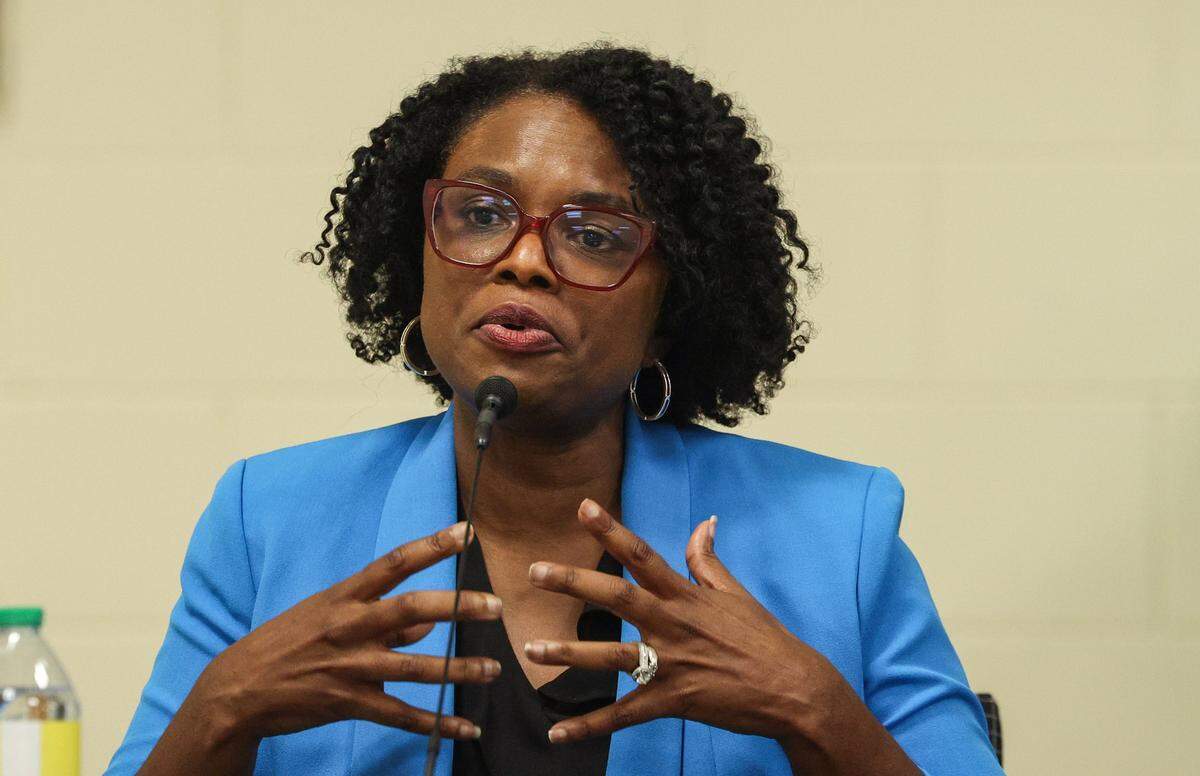
At Philip O. Berry Academy of Technology, Principal Tanya Branham said she involves her high school students in monitoring their own data. She said that helps build trust and gives students ownership over their learning.
“They knew where they were when they entered into the classroom and where they needed to grow,” Branham said. “For some of our students, it was quite daunting... looking at the growth that they needed to make, it could be a little scary for our students, which is why building trust was so important.”
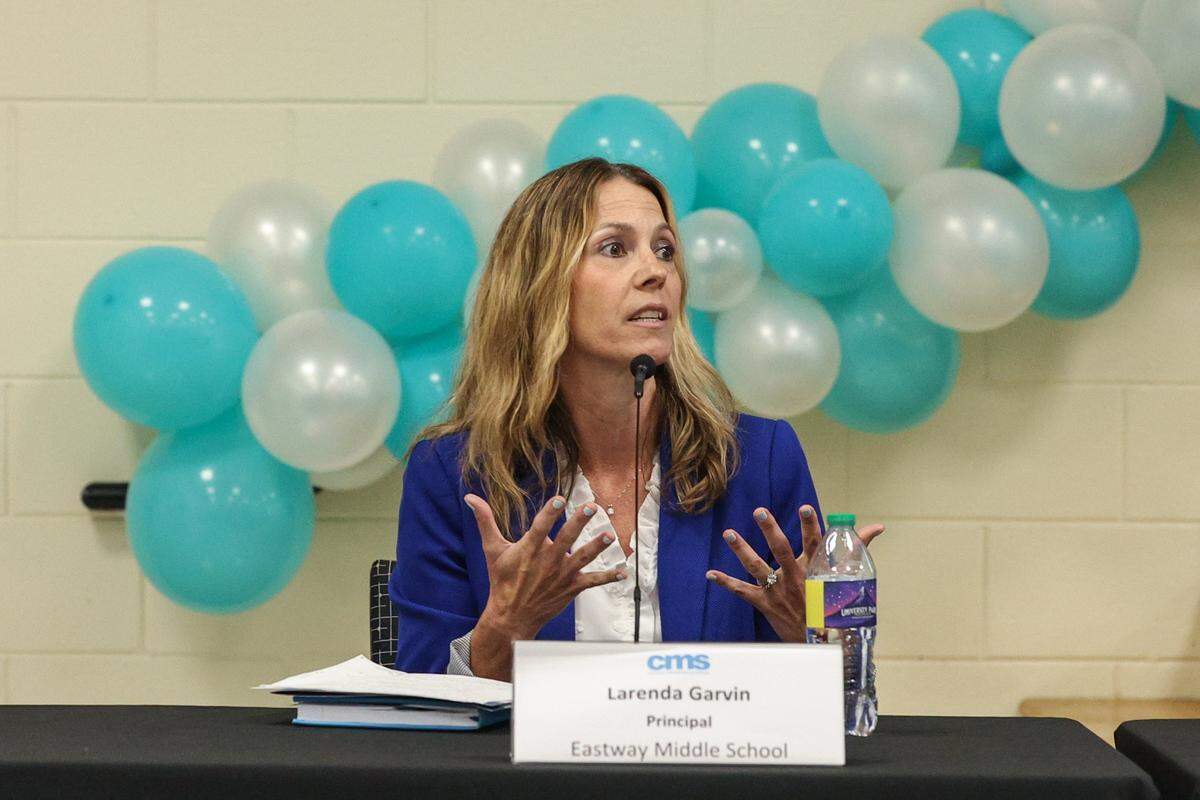
Larenda Garvin is the principal of Eastway Middle School, which exceeded its growth target and improved from an F to a D. She said relationship building has been integral to improvements.
“If you look at any of the research on adverse childhood experiences, the number one way that you can turn those around and improve lives and really change the trajectory of a child’s life forever is through trusted relationships,” Garvin said.
Part of that work has been training all staff, herself included, about cultivating students’ social and emotional skills.
Over 75% of the student body at Eastway speaks a first language other than English, with many students who do not yet speak English proficiently. Garvin said building student confidence is key.
“I don’t believe in just focusing on punitive and negative consequences for behavior, but really highlighting, recognizing and rewarding the students who come and do the right thing every day because the vast majority of our kids are doing just that and they deserve to be honored and recognized,” Garvin said.
Garvin said she communicates with families when students are doing particularly well — not just when they’re struggling. Students can also win prizes.
“They can decide what their prizes are, and to be honest, I’ve gone broke on Starbucks drinks and pizza,” Garvin said.
In fact, cultivating students’ self-belief is often the biggest hurdle school leaders face, Branham said.
“Once you do that, there’s no limit to what they can do,” she said.
Challenges ahead
Amid the wins in this year’s state data report, CMS still faces challenges.
The overall graduation rate in the district dropped 0.1% to an average of 84.3%, which falls below the state average and the averages of the other three largest school districts in North Carolina. Overall scores on Math I among high schoolers also dropped by 0.1%.
Thirty-two schools landed on the state’s low-performing list in the 2024-25 school year, and six CMS campuses got F ratings from the state.
But Thompson, along with CMS Superintendent Crystal Hill, said next year, there will be no F-rated campuses.
“We do not have failing schools, teachers, communities, or students,” Hill said. “What we have are schools that need more intensive support so they can grow in an accelerated rate.”
This story was originally published September 4, 2025 at 12:52 PM.