It’s not just Queens alums. Elon grads also have concerns about NC college merger
AI-generated summary reviewed by our newsroom.
- Elon alumni group launched "No Elon Merger” and ran ad to oppose the proposed merger.
- Critics warn Elon risks losing its small undergraduate liberal arts identity.
- Supporters cite resource gains and demographic pressure driving more mergers.
On Sept. 17, the day after Elon University and Queens University of Charlotte announced plans to merge, a full-page ad appeared in Elon’s student newspaper, The Pendulum.
In bold, with white letters against a black banner, it said: “The Elon/Queens University Merger: The Worst Idea in Elon’s History.”
Jack Duval, an Elon alumnus and former Elon Alumni Board president, was behind it. Since hearing the merger news, he’s assembled a group opposed to the plan called “No Elon Merger,” which has about 20 to 30 members. Duval said a corresponding group of Queens alumni opposed to the merger currently has about 300.
With Elon’s plans to push its footprint further into Charlotte, largely to expand its graduate program offerings, Duval is concerned his alma mater is straying from its longtime brand as a small, undergraduate-focused liberal arts school.
“It’s an absurdity,” Duval told The Charlotte Observer. “I think we’ve taken our eye off the ball here – off the undergraduate ball.”
Supporters of the plan, including state and city leaders such as Gov. Josh Stein and Charlotte Mayor Vi Lyles, say it will fortify both universities. Elon is located in a town by the same name adjacent to Burlington. Queens is located in south Charlotte.
“We are definitely stronger together,” Elon President Connie Book said in September.
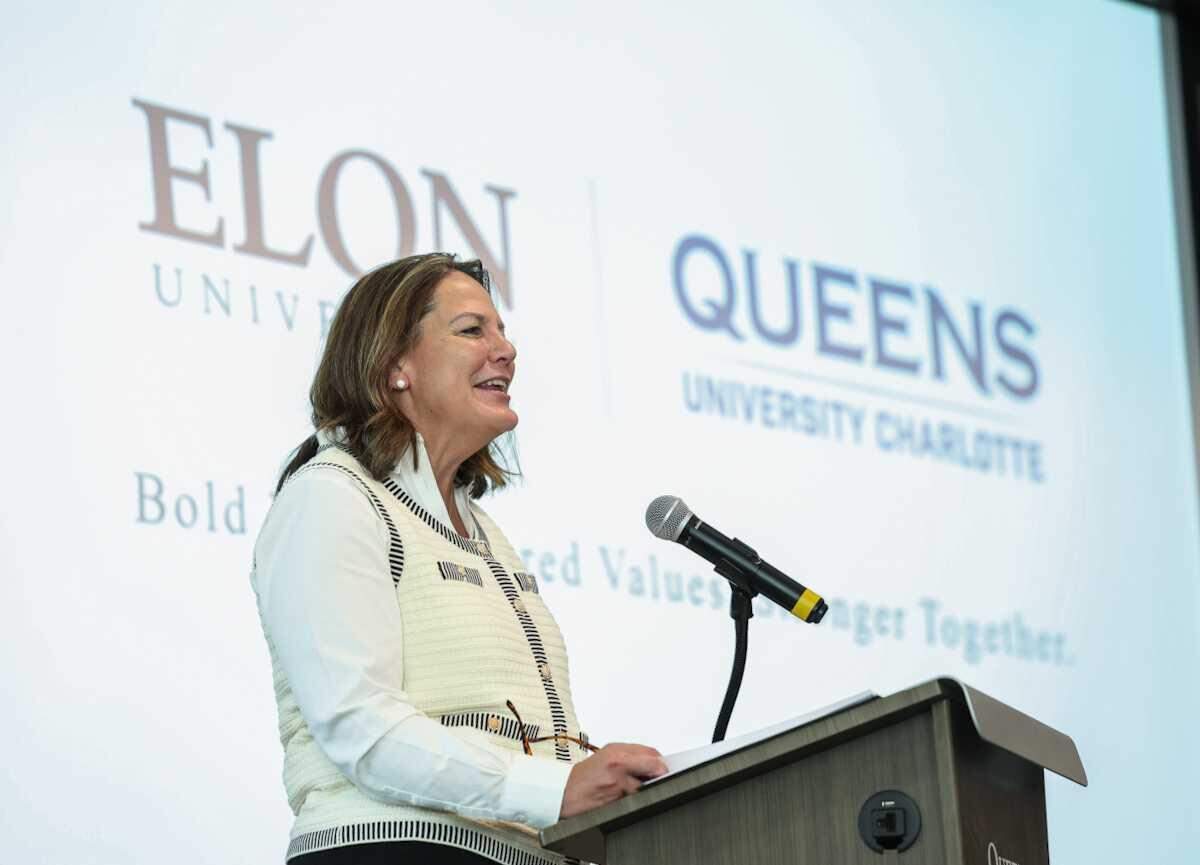
Schools typically merge as a means of increasing their resources and value when looking ahead 10-20 years, said Mark Heckler, a merger expert at the Association of Governing Boards of Universities and Colleges. A merger is rarely a one-sided venture, he said.
“Let’s say you’re a trustee at either of these institutions. You have to think ‘Where will we be in 10-20 years if we make no changes?’” said Heckler. “You’re thinking, ‘What do we need in terms of academic programs to be well-prepared for the future? Do we have the money to build these programs on our own, or has someone else already built this up and can they be a partner?’”
The birthrate began to decline around 2007, and now the number of 18-year-olds is declining. There’s a supply and demand issue in the higher education sector, and Heckler expects mergers like this one will become more common.
Merger opponents’ concerns
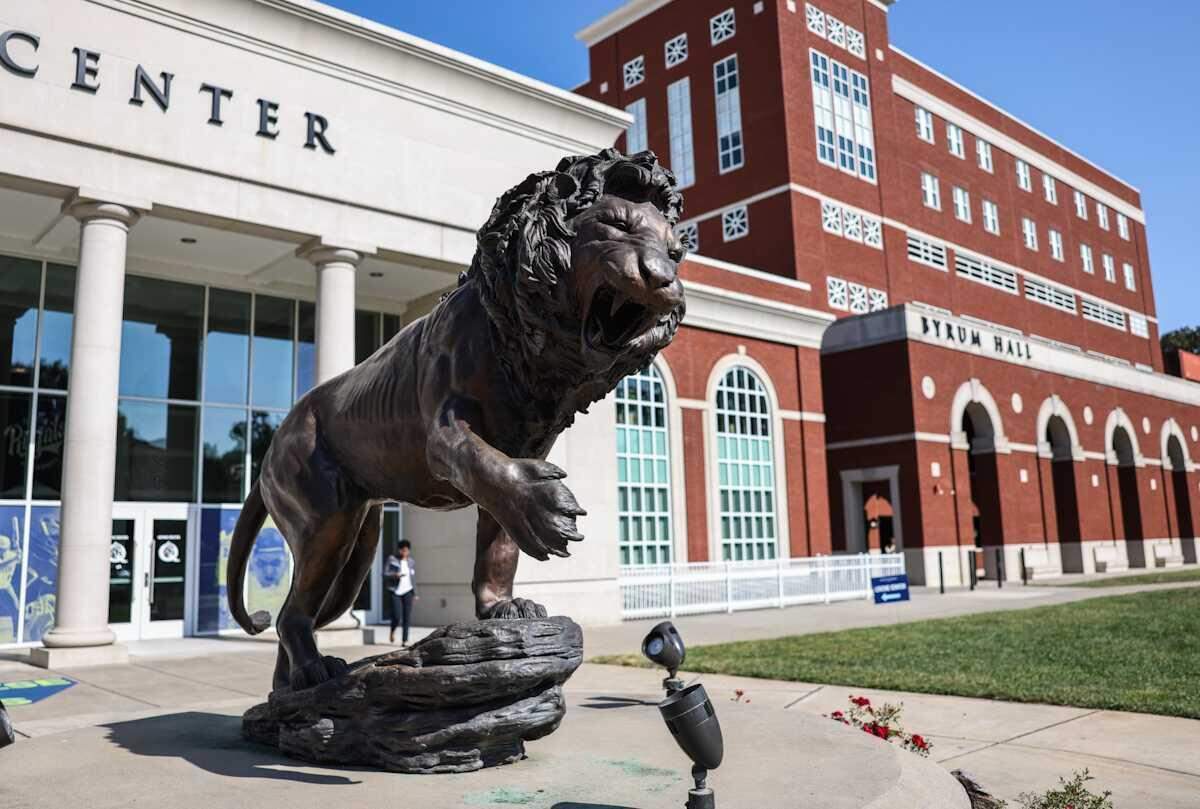
Duval’s criticism comes from a place of “deep love and commitment,” he said.
When he attended Elon in the early 1990s, he was a captain of the football team and wrote for The Pendulum. He plans to attend the school’s homecoming this weekend, despite having lived in New York since 1994.
During Duval’s time at the school, Elon was well-known regionally, largely branded around its focus on well-rounded liberal arts education for undergraduates. When he graduated in 1993, the school was embarking on a mission to gain more national and international acclaim.
More recently, Elon has focused on expansion, both on its campus in Burlington and planting its flag over 100 miles away in Charlotte. In September 2023, Elon opened its Charlotte regional center in South End — where it offers classes to law students as part of the university’s part-time Law Flex Program. A new physician assistant program will open at the facility in 2027, and Elon undergraduates majoring or minoring in sport management can also take classes at the Charlotte regional center.
Book said in a message to faculty and staff Sept. 16 that the merger with Queens will “create an urban campus to support Elon’s graduate programs.” A staff member shared it with the Observer.
“Graduate and professional programs will certainly grow, especially to meet Charlotte’s workforce needs,” Book told the Observer in an email. “But this merger strengthens the undergraduate experience, too, ensuring stability and enriching opportunities at both institutions.”
As part of the merger, Elon would operate Queens beginning in August 2026, university leaders said. The Queens board of trustees will continue to operate for around four years and then will be absorbed into a combined Elon-Queens board with 37 members from Elon and 10 from Queens.
Duval said he and others in “No Elon Merger” believe the change will be a “wildly brand-dilutive debacle” that will distract the university from its “core mission.” In the face of declining new student enrollment, Duval said the university should instead focus on beefing up its endowment and attracting undergraduates.
“I think we need to refocus on excellence in undergraduate education and focus on dominating the North Carolina market,” Duval said.
Book, however, said increasing graduate school offerings is not at odds with excellence in undergraduate education.
“Elon remains nationally recognized for undergraduate excellence and engaged learning. Graduate growth complements that strength, not competes with it,” she said in a statement to the Observer. “This merger allows us to expand without losing sight of what makes an Elon degree so valuable.”
Meanwhile, Duval suspects Elon’s longterm plan is to close Queens altogether. University officials say they have no plans to do so.
“The merger is designed to preserve and amplify Queens’ nearly 170-year legacy, not erase it,” Book said. “The Queens identity remains central to our vision, and we see this merged institution serving as a hub for education in Charlotte and a vital part of the region’s future.”
Some Queens alumni are concerned about preserving their alma mater’s identity amid the change.
“Does that mean Queens University will then be renamed to Elon and we’ll lose our legacy, our place in history and our mark in the city of Charlotte?” Queens Class of 2020 alumnus J.D. Mazuera Arias told The Observer in September. “That was very unclear to me, and that is the main question I have, because I do not want Queens University of Charlotte’s name to go away, or our legacy and our traditions and the fabric of the school that helped a lot of alumni get to where they are today.”
How Queens University’s name will change is still uncertain, though Book has said she is “committed” to keeping the Queens name as part of the school’s naming structure.
It’s a good move, said Heckler, the merger expert. He pointed to recent examples of school mergers in other parts of the country, such as when Boston’s Northeastern University merged with Mills College in Oakland, California, in 2022. Northeastern opted to call the California campus “Mills College at Northeastern University” in order to retain the Mills name and founded the Mills Institute, an organization focused on issues of racial and gender equity, which have long been a facet of Mills’ legacy.
“There’s great attention being given to the history of the institution, so that it’s still a place alumni can come back to and recognize and be able to celebrate the tradition of the institution,” Heckler said.
Recent enrollment challenges
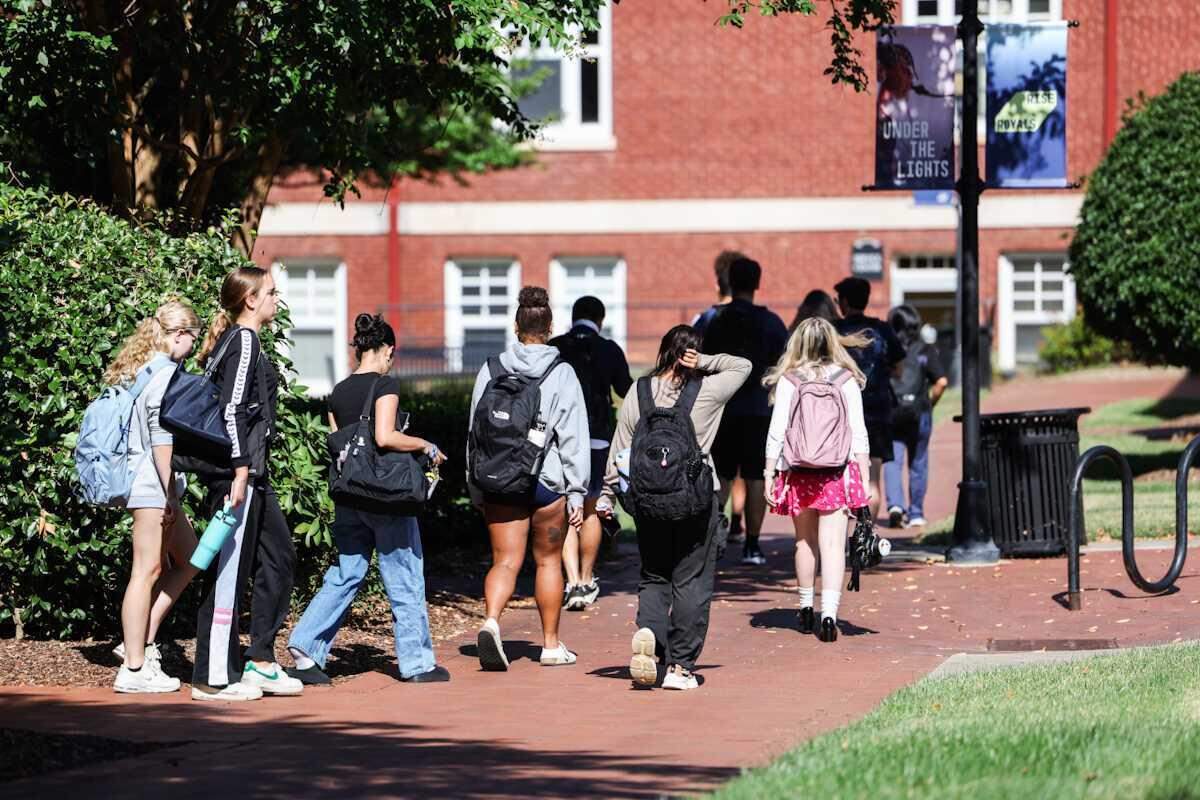
Elon saw an 11% decrease in its new student enrollment this fall, and the number of new undergraduates enrolling at the school has been dropping since 2023. Queens saw enrollment drop 13% between fall 2024 and fall 2025 and had over $104 million in outstanding debt at the end of the 2024 fiscal year.
The number of 18-year-old high school graduates is expected to peak between 3.8 and 3.9 million this year and then decline until 2041, according to a 2024 report from The Western Interstate Commission on Higher Education.
For schools like Elon and Queens that are heavily dependent on tuition, that’s a problem.
Heckler said he expects this, along with a decrease in the country’s immigrant population, will lead to an increase in college closures and consolidations around the country. Current data suggests the higher education sector could shrink by 30% over the next 15 years.
“What we currently have is an oversupply of higher education seats as opposed to demand,” he said.
Investing in graduate education programs is part of Elon’s strategy to offset the decline in new student enrollment, though grad students still make up a relatively small portion of Elon’s student body.
Elon has 879 graduate students this semester, according to Elon News Network. That’s 92 more than it had in fall 2024 and 74 more than it had in fall 2023, according to yearly reports from the school’s registrar’s office. Elon’s total current student body is projected to be around 7,300.
This strategy is one other schools are also trying, but Heckler said its effectiveness is contingent on how many other graduate programs are already in the area.
“That will work in some markets, but in other markets, they’re fairly well saturated already,” Heckler said. “Increasing graduate education will only work in some markets where there’s capacity.”
And Queens’ location may prove to be a plus for Elon’s undergraduate recruitment, Heckler said, as college-age students are gravitating more toward schools in urban areas than rural or suburban locales in recent years.
Duval said he’d like to see Elon move away from tuition dependence. He suggests investing in its athletic programs, growing the endowment and doubling down on recruitment efforts.
“Why not offer a full scholarship to every high school valedictorian in North Carolina?” Duval said. “Let’s buy the talent.”
But Heckler said he suspects expanding graduate offerings is just one spoke of the school’s approach to mitigating the demographic cliff.
“I doubt that they’re putting all their eggs in one basket,” he said. “And, this is another lever that they may be choosing to pull.”
Book said endowment growth and student recruitment “always remain priorities.”
This story was originally published October 9, 2025 at 10:13 AM.