How a false belief about west Charlotte kids sparked new CMS board member’s passion
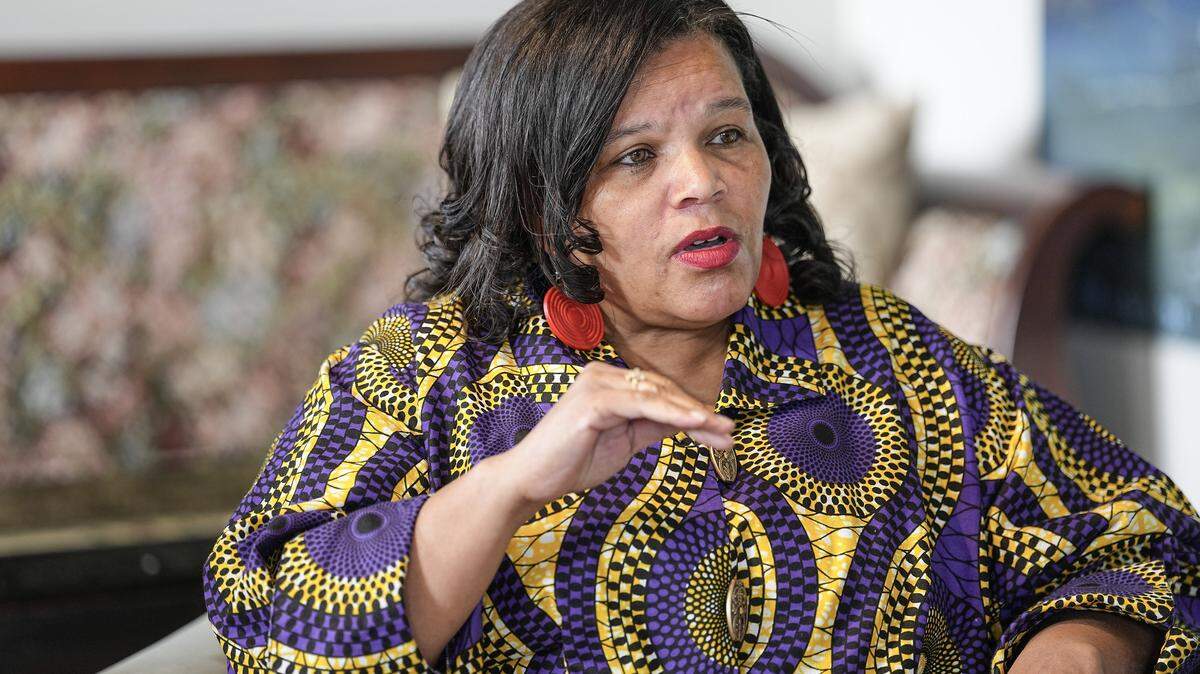
Shamaiye Haynes has long been a trusted community organizer in west Charlotte, determined to hold elected officials to account. Then, she became one herself.
That, she said, presents one of the greatest challenges ahead of her as the newly elected representative for District 2 on the Charlotte-Mecklenburg Board of Education, which covers parts of uptown, north and west Charlotte.
“There were people who really felt positively about the things I’ve done in the community, but the moment I stepped out to run, they felt like, ‘You’re one of them now,’” she said. “I care about what my neighbor thinks.”
But Haynes understands the skepticism.
“I’ve watched the progression with people that I’ve helped get in office, where they start super passionate about something, thinking about how we change things and fix things, but then you have that conversation three months after the election, and they don’t have the same mindset,” she said. “You can’t burn the system down and then be a part of it at the same time.”
It’s now her job, Haynes said, to preserve the trust she built up from the ground within her community while occupying a seat at the table.
Haynes, a Cincinnati, Ohio, native, has lived in Charlotte since 2012. The 54-year-old was born the oldest of four girls, and has continued to take her role as a protector, both in her family and her community, seriously. Haynes first got involved with education advocacy at her children’s school, where she felt her voice wasn’t fully accepted.
“What really drew me to the work was anger and frustration around the narrative around children on the west side and their families and the way I felt I was being treated as a parent,” she said.
A pervasive – and inaccurate – narrative, she said, was that families on the west side were “disengaged.” In reality, Haynes said, there were many parents such as herself who valued their children’s education and wanted to get involved but whose help wasn’t always welcomed.
“I never wanted to run for political office,” Haynes said at Tuesday’s CMS board meeting after her swearing in. “If the school I sent my children to had just let me do the little things I wanted to do, it wouldn’t have been this, let me tell you.”
She set out to start a foundation to promote reading interventions and community engagement just at her kids’ school. Eventually, her efforts evolved into a bigger movement – she founded the Thomasboro Foundation in 2016 and the Charlotte Community Think Tank (formerly, the Westside Education Think Tank) in 2017.
“What we were trying to identify was what is the single thing that we can impact as a community that will change the trajectory for our children in a positive way?” she said. “We were trying to identify barriers, to identify a solution, to bring parents in and to get them involved in the school system.”
Haynes isn’t a professional teacher, but a passion for education has always been in her bones. Her great-grandmother established and taught in one-room school houses in the deep South. Her great uncle helped establish Howard University’s physics department, the oldest physics program at any historically Black college or university in the United States.
Her family taught her to view education as a fundamental tool of liberation, particularly Black liberation.
“Black people in particular have had to fight very hard for a sound, basic education,” she said. “I use the word liberation because you can be free but not liberated. If a person is free but can’t read and write, they can’t be truly liberated in America.”
That’s why she’s taken on this role, her newest challenge.
“You can see how people who had the privilege of education are still thriving after generations in this country,” she said. “I want to see everybody have that.”
She’s one of four new members on the nine-member board after two incumbents were swept out of office Nov. 4 and two opted not to seek reelection. Haynes handily won her bid for the open District 2 seat after longtime board member Thelma Byers-Bailey announced she wouldn’t run again and put her support behind Haynes instead.
Charlitta Hatch, Cynthia Stone and Anna London were also sworn in Tuesday, representing Districts 1, 5 and 6, respectively.
The campaign
Haynes previously ran for an at-large seat on the school board in 2023. With a crowded field competing for three total positions, Haynes narrowly fell short of claiming a seat, coming in fourth.
This time, she ran to represent her community, and she said the campaign “felt good from day one.”
“There were so many things that confirmed that I should run in District 2,” she said. “It feels really good to be able to stand up for the community where I started.”
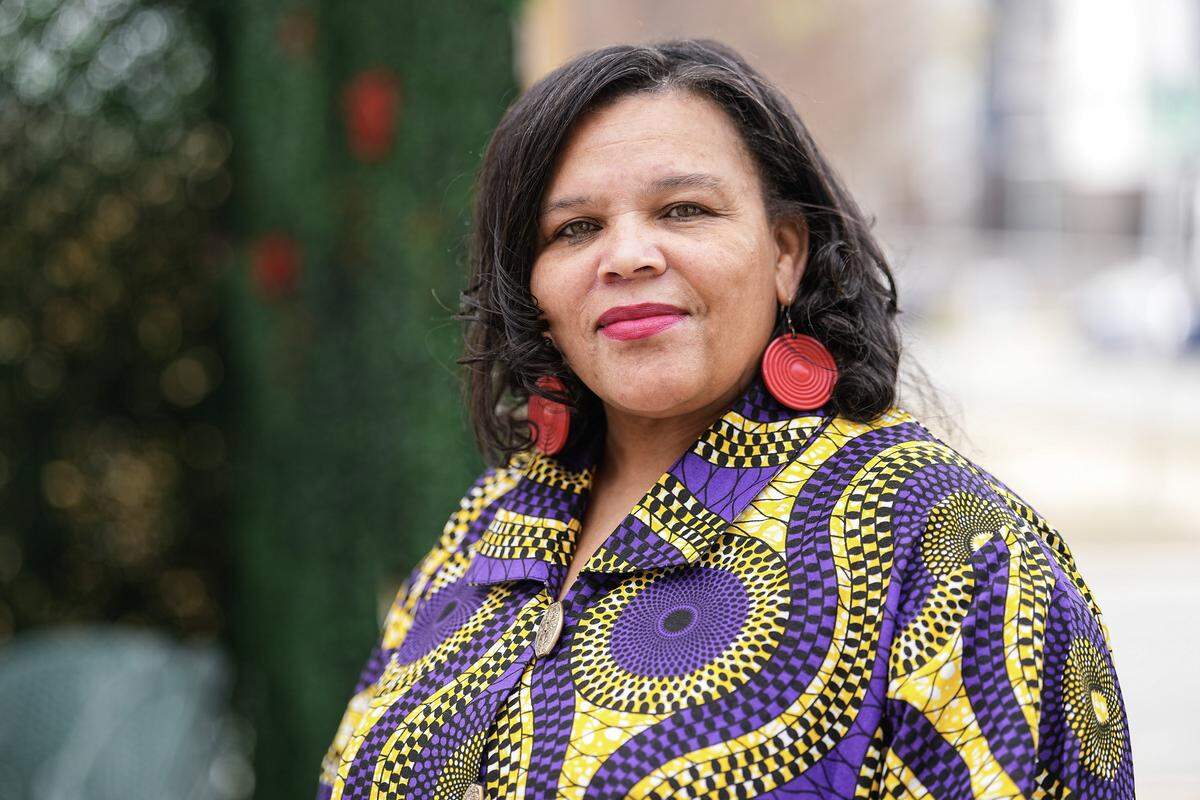
When it comes to her 2023 loss, Haynes chalks it up to politics.
While CMS school board races are ostensibly nonpartisan, the Mecklenburg County Democratic and Republican parties still regularly make endorsements. And in North Carolina, it’s easy to look up any voter’s registered political affiliation.
Three candidates endorsed by Meck Dems last election claimed seats: Liz Monterrey Duvall, Monty Witherspoon and Lenora Shipp. Haynes is a registered Democrat, but she wasn’t included on the party’s “blue ballot” in 2023.
“That had a significant negative impact,” she said. “I would go on the record to say that, in 2023, I got screwed by the Democratic Party.”
It’s still something of a sore spot for Haynes, who doesn’t believe school board elections ought to be politicized.
“When we frame a school board race around politics, there’s something wrong with that,” she said.
But it would be hard to argue politics didn’t play some role in her 2025 victory. She ran against Juanrique Hall, a registered Republican, and this time, she got the Democratic endorsement.
Democrats around the country saw overwhelming success on Nov. 4, and a blue wave washed over Mecklenburg County as well. Every school board candidate that was endorsed by the Mecklenburg County Democratic Party won their race, and the board’s only Republican, Lisa Cline, lost her bid for reelection.
Haynes attended the Meck Dems election night watch party at Dilworth Neighborhood Grille Nov. 4.
“Although I always feel like I have something to prove, it’s become really clear to me that I am going to spank a MAGA’s tail tonight,” she said before results started rolling in, drawing applause from the crowd.
The issues
Haynes is a big believer in the “community schools model.”
It’s a framework that evolved from early 20th century thinkers like John Dewey, Jane Addams and Booker T. Washington that comes down to the idea that schools should function like community hubs. They should be places where students can access not just education, but other resources they need to thrive, and where families can collaborate and engage with teachers and school leaders in decision-making.
At community schools, academics, health, well-being and family engagement are all part of the school’s everyday mission.
“This model takes everything outside of the academic portion of a student’s experience and gives that to the community,” she said. “It uplifts parent voices, community voices and has built-in equity.”
It’s shown evidence in communities where it’s been embraced, such as in New York City schools, as having a positive impact on attendance, on-time grade progression, behavior and students’ feelings of connectedness to peers and adults.
During her campaign, Haynes said inequity, gaps in trust, and student well-being were areas CMS needed to prioritize. That’s in large part because she believes the district needs a sense of long-term stability.
“We cannot afford to keep putting out fires. We need to address the foundational and structural needs of our children,” Haynes said. “If we don’t stabilize schools to function no matter who is in charge, we’re always going to be in a state of influx or chaos.”
This story was originally published December 12, 2025 at 5:00 AM.